Some glassware quietly waits in the cabinet. Milena Kling’s mouth-blown glassware does not. It catches the light, bends it, tosses it across the table, and politely asks why your regular tumblers are dressed for a tax seminar. These are not anonymous drinking vessels. They are small, tactile sculptures designed for water, wine, cocktails, flowers, candlelight, and the kind of dinner party where someone inevitably says, “Wait, can I hold that?”
Berlin-based Studio Milena Kling has become known for experimental glass objects that live somewhere between functional tableware and collectible design. Kling’s pieces are mouth-blown, hand-finished, and shaped through unusual processes involving copper sheets, copper mesh, wild stones, sand-softened surfaces, and rescued glass remnants. The result is glassware that feels contemporary without going cold, artistic without becoming fussy, and luxurious without screaming, “Please insure me separately.”
The title “Object of Desire” fits because these glasses are not just useful. They create desire through texture, imperfection, color, and atmosphere. A Milena Kling tumbler turns water into an event. And frankly, hydration deserves better public relations.
Who Is Milena Kling?
Milena Kling is a designer and glass artist working from Berlin, where her studio develops glass objects, interior concepts, light pieces, mirror sculptures, vases, and fine dining tableware. Her background in product and process design is important because her work is not simply about making pretty objects. It is about rethinking how glass can be formed, how a surface can remember its mold, and how a household object can feel alive in the hand.
Kling’s studio combines traditional hot-shop glass techniques with a spirit of research. Instead of treating the mold as a hidden industrial tool, she often lets it become part of the final personality of the object. Pleated copper, woven copper mesh, rough stones, and sand do not merely shape the glass. They leave fingerprints, ridges, seams, waves, and soft distortions. The finished piece looks refined, but it also shows evidence of heat, pressure, gravity, timing, and chance.
That balance is the charm. Her glassware does not pretend to be machine-perfect. It celebrates the moment of making. One glass may lean into a slightly oval silhouette. Another may hold a deeper color gradient. A third may reveal a delicate seam where molten glass settled into a mold and cooled. These differences are not flaws; they are the design’s pulse.
Why Mouth-Blown Glassware Feels Different
Mouth-blown glassware has a physical presence that mass-produced glass often lacks. It can be lighter, warmer in character, more irregular, and more expressive. You do not just see it; you feel the making process through the rim, the weight, the curve, and the surface.
In traditional glassblowing, molten glass is gathered from a furnace, inflated through a blowpipe, shaped by hand or in a mold, and carefully cooled. The process requires speed and patience at the same time, which is rude but impressive. Glass moves quickly when hot, yet it punishes rushing. The maker must understand heat, timing, breath, tools, and material behavior. That is why hand-blown glass carries a sense of performance. It is a finished object, but also a frozen record of a very hot conversation.
Kling’s studio pushes that conversation further by using experimental molds and surface-forming methods. Her work often explores how glass interacts with other materials before cooling into permanence. Copper creates fine linear markings. Mesh produces tactile patterns. Stones imprint natural texture. Sand suggests erosion and time. This is not decoration added afterward; it is design born during formation.
The Circle Glass: A Tumbler That Refuses Perfect Geometry
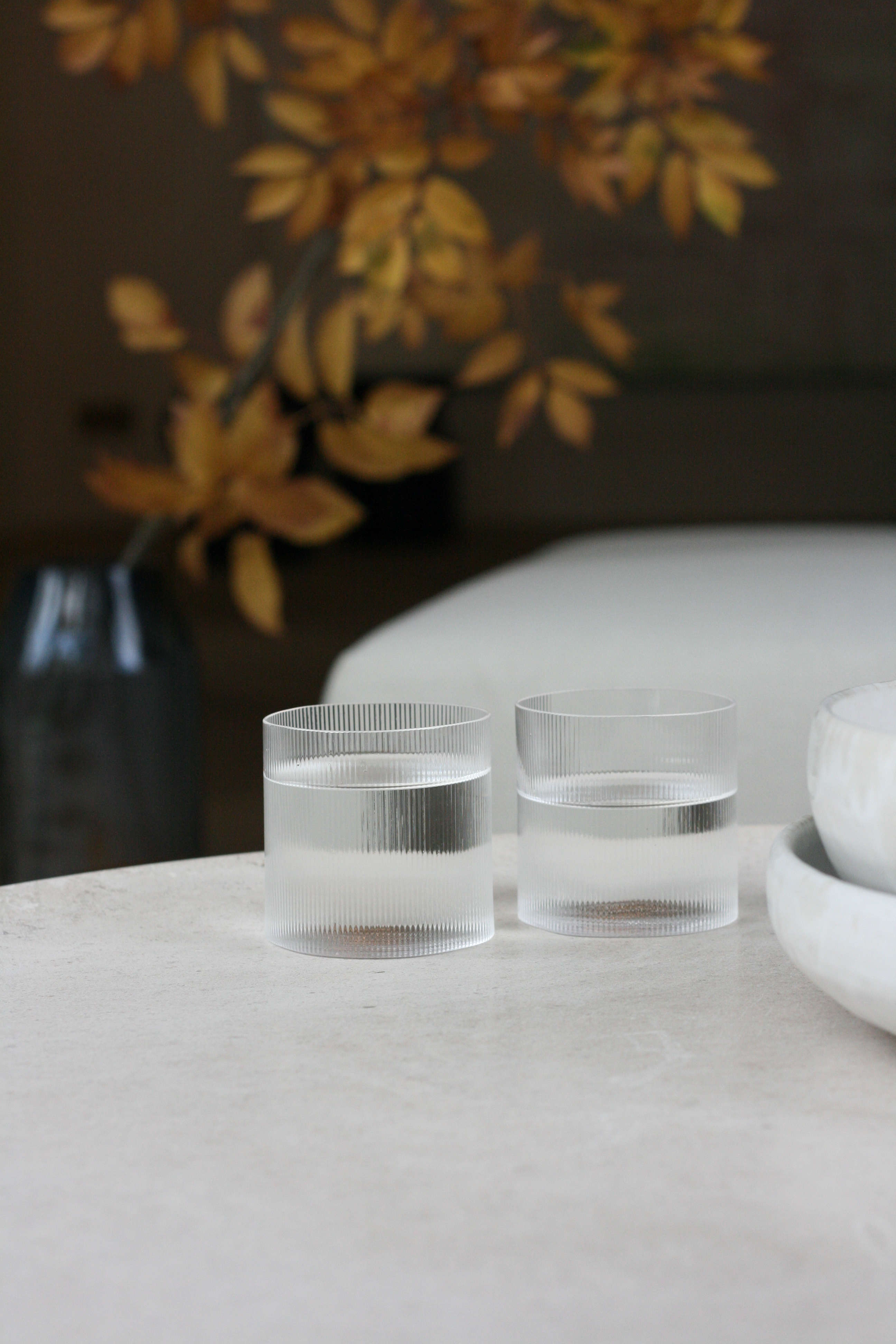
The Circle Glass is one of Milena Kling’s most recognizable designs. It is a mouth-blown table glass with an off-round silhouette and fine linear engravings created through pleated copper sheets. The shape is soft, slightly irregular, and beautifully controlled. It looks simple at first, then the details begin to announce themselves like guests arriving fashionably late.
The Circle Glass is designed around water, which sounds modest until you hold one. The idea is not to overwhelm the table but to make the act of drinking feel more elemental. The form suggests fluidity rather than rigid symmetry. A regular cylinder says, “I contain liquid.” A Circle Glass says, “Liquid and I have discussed this arrangement.”
Because each piece is handmade, the glasses vary subtly. That is part of the appeal for collectors, design lovers, and anyone tired of objects that look like they were born in a spreadsheet. The Circle Glass fits beautifully on minimalist tables, rustic wood surfaces, marble counters, linen runners, or bare breakfast nooks where the coffee is strong and the lighting is accidentally perfect.
RAW Glassware: Texture, Color, and Copper-Mesh Drama
If the Circle Glass is quiet poetry, RAW Glassware is poetry wearing excellent boots. The RAW tumblers are mouth-blown into fine copper mesh molds, producing a surface that carries delicate texture and a visible sense of movement. These pieces are available in rich colors, including warm amber tones, ruby hues, blues, smoky grays, and earthy shades.
RAW Glassware is especially compelling because it makes the process visible. You can see and feel the copper-mesh influence in the surface. The glass seems both soft and solid, like a liquid memory that agreed to become a tumbler. The tactile quality matters. In an era when many objects are smooth, seamless, and slightly soulless, RAW glassware brings back touch.
These tumblers are excellent for water, sparkling drinks, low cocktails, iced coffee, or a dramatic pour of juice that suddenly feels like it should be served with a soundtrack. Their colors also make them useful styling pieces. A set of amber glasses can warm up a neutral dining room. Smoky tones add depth to a modern kitchen. Ruby or sunrise shades can make a simple table look curated rather than merely “we had plates.”
WANDER Tumblers: Glass Meets Stone
The WANDER tumbler is one of Kling’s most poetic ideas. Each piece is mouth-blown into rough stones, allowing the base of the glass to capture the texture and silhouette of natural rock. The result is a tumbler with a grounding, irregular base that feels almost geological. It is glassware with hiking boots, but make it collectible.
Because the stone interaction varies, no two WANDER tumblers are identical. Each base has its own imprint, shape, and personality. The design connects the fluidity of molten glass with the rough permanence of stone. That contrast gives the tumbler emotional weight. It feels less like a product and more like a small landscape you can drink from.
WANDER works especially well for people who appreciate organic modern interiors: clay walls, linen upholstery, stone counters, hand-thrown ceramics, walnut furniture, and plants that are somehow still alive. The tumbler introduces natural irregularity without looking rustic or unfinished. It is elegant, but it still remembers the outdoors.
OVERFLOW Glassware: Sustainability with a Sculptural Twist
One of the most intriguing Studio Milena Kling concepts is OVERFLOW Glassware, which gives new life to glass forms that would normally be treated as byproducts of production. Instead of discarding these irregular remnants, the studio rescues them and adds a fluid glass base, transforming accidental shapes into functional, one-of-a-kind drinking vessels.
This is sustainability with imagination, not sustainability as a beige lecture. OVERFLOW celebrates the “almost lost” part of the glassmaking process. The pieces can look spontaneous, playful, and slightly rebellious, as if they escaped the factory bin and enrolled in art school. They also reflect a broader design shift: buyers increasingly want objects that carry evidence of responsible material use, not just polished perfection.
For restaurants, collectors, and design-conscious homes, OVERFLOW offers a strong story. A guest can pick up the glass and immediately sense that it did not come from a conventional production line. It has a beginning, a rescue mission, and a second life. That is a lot of narrative for something that also holds sparkling water.
Seaglass, Flow Vases, and the Expanding Kling Universe
Although this article focuses on mouth-blown glassware, Kling’s wider practice helps explain the appeal of her table pieces. Her Seaglass objects and lights use sand-softened finishes inspired by sea glass, creating matte surfaces that feel weathered, calm, and quietly luminous. Flow Vases and RAW Vases extend the copper-mesh language into larger sculptural forms, using texture, color, and asymmetry to create objects that feel both designed and discovered.
The common thread is atmosphere. Kling is not only making glasses, bowls, vases, or lights. She is designing moments: the reflection on a wall, the glow on a dinner table, the way fingers move across a ridged surface, the way a colored tumbler changes when filled with water or wine. Her pieces are functional, but their real function may be attention.
How to Style Milena Kling Glassware at Home
1. Let the Glassware Be the Color Story
Because many Milena Kling pieces come in expressive tones, you do not need a complicated tablescape. Pair colored mouth-blown glasses with white plates, linen napkins, and simple flatware. The glassware will do the heavy lifting while everyone else pretends the table “just came together.”
2. Mix, But Do Not Overcrowd
Handmade glass thrives with variation. Try mixing two colors from the same family, such as smoke and clear, amber and gold, or blue and gray. Avoid adding too many competing patterns. The goal is collected, not carnival tent after espresso.
3. Use Them Beyond Dinner
A beautiful tumbler does not need to wait for guests. Use it for morning water, afternoon iced tea, evening wine, or a small bunch of herbs on the kitchen counter. Luxury becomes more meaningful when it participates in daily life instead of hiding in a cabinet like a shy heirloom.
4. Pair With Natural Materials
Kling’s work looks especially good with wood, stone, linen, ceramic, brushed metal, and plaster. These materials echo the natural and experimental processes behind the glass. A RAW tumbler beside a hand-thrown ceramic plate looks intentional without looking staged.
What Makes the Glassware Worth Wanting?
The appeal of Milena Kling mouth-blown glassware comes from four qualities: process, texture, individuality, and emotional utility. Process gives the pieces depth. Texture invites touch. Individuality makes each object feel personal. Emotional utility is the secret ingredient: these glasses make ordinary rituals feel slightly more special.
That matters because tableware is intimate. We hold it. We lift it to our mouths. We see it in morning light and under dinner candles. We remember meals partly through the objects around them. A well-designed glass can make water feel colder, wine feel warmer, and a table feel more alive. Does it technically improve your sparkling water? No. Does it improve your relationship with sparkling water? Absolutely.
For collectors, Kling’s glassware also sits in an interesting space between design object and usable item. It is not so precious that it must remain untouched, yet it carries enough craft and concept to feel collectible. That tension is attractive. A glass you can use and admire is far more engaging than a decorative object that only judges you from a shelf.
Care Tips for Mouth-Blown Glassware
Mouth-blown glass should be treated with respect, but not fear. Hand-wash delicate or collectible pieces unless the maker specifically says otherwise. Use mild soap, lukewarm water, and a soft cloth. Avoid sudden temperature shocks, such as pouring boiling liquid into a cool glass or placing a warm glass under cold water. Handmade glass is strong enough for daily rituals, but it is not auditioning for a superhero franchise.
Store pieces with a little breathing room so rims do not knock together. If your glassware has textured surfaces, dry it carefully to avoid water spots. Most importantly, use it. The pleasure of handmade glass is not only visual. It lives in the hand, at the table, in conversation, and in the small pause before someone asks where you found it.
Experience Notes: Living with Mouth-Blown Glassware by Milena Kling
Using mouth-blown glassware changes the rhythm of a room in a way that is hard to understand until the object is in your hand. The first experience is usually tactile. You reach for the glass expecting a standard smooth cylinder, and instead your fingers meet ridges, gentle waves, tiny shifts in thickness, or a base that feels shaped by something older than design software. There is a pleasant little brain hiccup: this is a drinking glass, yes, but it is also a surface, a sculpture, a record of heat and decision.
With Milena Kling’s pieces, the experience is especially tied to ritual. A Circle Glass makes water feel considered. You pour from a carafe, and the off-round silhouette catches the liquid in a way that looks softer than usual. The glass almost disappears and then suddenly returns when light hits the fine engravings. It is subtle, but the effect is real. The table feels calmer, more intentional, and slightly more European, which is convenient if your dinner is just pasta and a salad you bravely assembled from refrigerator odds and ends.
RAW Glassware creates a more dramatic experience. The texture gives the hand something to notice, and the colors shift throughout the day. In morning light, an amber tumbler can look honeyed and warm. At night, under a pendant lamp, the same piece may appear deeper and moodier. Fill it with water and the color becomes more luminous. Fill it with a cocktail and suddenly your living room has opinions about jazz.
The WANDER tumbler has a different energy. Its stone-shaped base makes it feel grounded, almost meditative. Setting it down on a table feels less like placing a cup and more like parking a small landscape. It suits slow drinking: mineral water, herbal tea cooled over ice, a neat pour of something special, or even a simple glass of tap water that now appears to have completed a design residency.
One of the nicest experiences with handmade glassware is how guests respond. People often pick up a piece and rotate it in their hands before drinking. They ask about the maker. They notice the texture. They compare one glass to another. The object becomes a conversation starter, but not in a loud, showroom way. It invites curiosity. It makes the table more social because everyone is suddenly paying attention to the same small miracle: molten material turned useful, beautiful, and a little unpredictable.
There is also a private pleasure in using this kind of glassware when no one else is around. It makes a weekday lunch feel less like a pit stop. It makes a desk-side glass of water feel like a pause rather than a chore. It encourages slower habits: hand-washing instead of tossing everything into the dishwasher, setting the table even for one person, noticing how evening light passes through colored glass. These are small things, but homes are built from small things. A mouth-blown tumbler cannot solve your inbox, but it can make the water beside your keyboard look like it belongs in a design magazine. That counts.
Conclusion: A Small Object with a Big Atmosphere
Milena Kling’s mouth-blown glassware proves that everyday objects can still surprise us. Her Circle, RAW, WANDER, and OVERFLOW designs are not merely vessels; they are studies in material, touch, light, and process. They reveal how traditional glassblowing can feel fresh when paired with experimental molds, natural textures, bold colors, and a willingness to let imperfection become character.
For anyone building a thoughtful home, these pieces offer more than decoration. They bring atmosphere to the table. They make daily rituals more deliberate. They remind us that useful objects do not have to be boring, and beautiful objects do not have to be locked away for special occasions. Sometimes the object of desire is not a diamond, a chair, or a dramatic chandelier. Sometimes it is a mouth-blown glass that makes water look like it finally hired a stylist.