Note: This article is a fully rewritten, publication-ready synthesis based on public reporting, official theater policy pages, entertainment news coverage, and box office information from reputable U.S. sources.
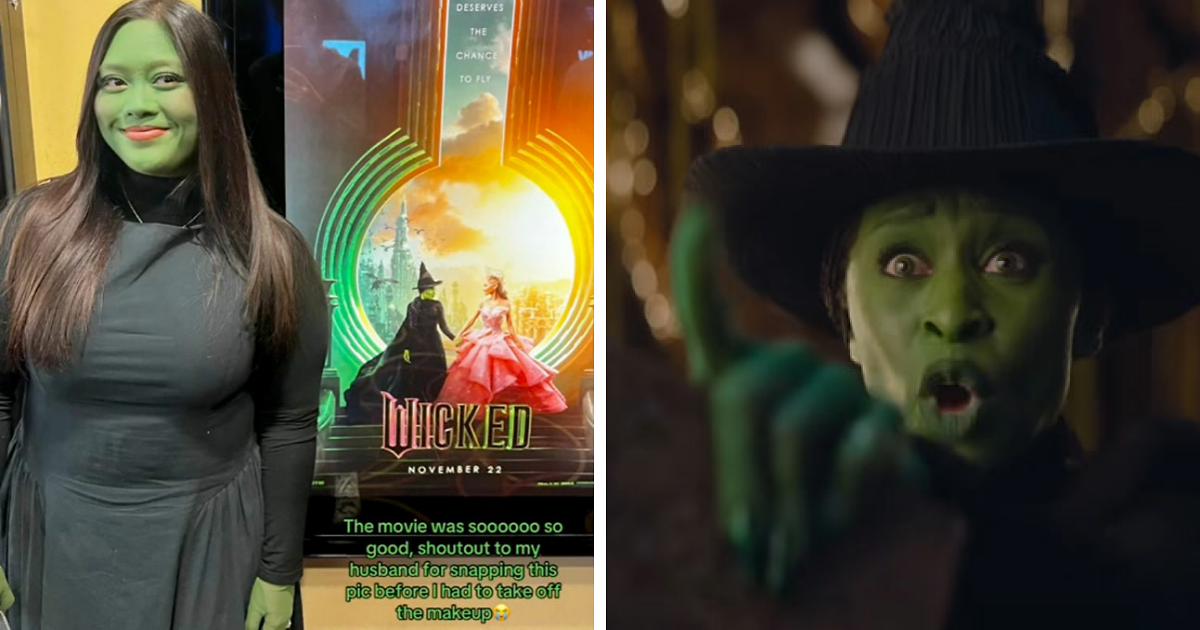
When Wicked finally flew into movie theaters, fans arrived prepared. Some wore pink. Some wore black. Some brought friendship bracelets, themed outfits, and enough emotional readiness to survive “Defying Gravity” without openly turning into a puddle. But a few especially dedicated fans took the Elphaba tribute one step further: green face paint.
That is where the magic hit a very ordinary wall called “theater policy.” Reports spread across social media that certain Wicked fans were told to remove full-face green makeup before entering screenings, especially at AMC locations. To many fans, the rule felt unnecessary, frustrating, and, in the words of one disappointed moviegoer online, “dumb.” To theater chains, however, the policy was not new, not personal, and definitely not a secret anti-Elphaba conspiracy cooked up by the Wizard.
The situation quickly became one of the funniest and most revealing pop-culture debates of the Wicked release: where does fan enthusiasm end and public safety policy begin? And more importantly, can a person truly honor Elphaba without looking like they lost a wrestling match with a tub of green frosting?
The Rule That Left Some ‘Wicked’ Fans Seeing Green
The controversy centered on moviegoers who showed up to screenings with their faces painted green in tribute to Elphaba, the misunderstood witch played by Cynthia Erivo in the film adaptation. For fans of the Broadway musical, Elphaba’s green skin is not just a costume detail. It is the symbol of her outsider status, her power, her vulnerability, and her refusal to shrink herself for a world that keeps judging her by appearance.
So when some fans were reportedly asked to wash off their makeup before entering the auditorium, the reaction was immediate. Videos and posts circulated showing frustrated viewers in theater bathrooms wiping away carefully applied green makeup. Anyone who has ever spent an hour blending costume paint knows this is not a casual request. That is not “just wipe it off.” That is a tiny emotional funeral for your cheekbones.
According to multiple reports, AMC’s policy prohibits face paint, helmets, masks, and anything else that covers or obscures the face, with exceptions for standard health-related face masks. Other major chains, including Regal, Cinemark, and Marcus Theatres, have similar rules involving masks, face paint, costumes, props, and items that could interfere with guest identification or safety.
Why Theaters Ban Face Paint and Masks
To fans, green makeup may feel harmless. After all, Elphaba is not exactly sneaking into the theater unnoticed when she is glowing like a lime popsicle under lobby lighting. But theater policies are usually written broadly, not character by character. A rule that bans full-face paint does not stop to ask whether the paint is spooky, superhero-themed, witchy, glittery, or “I bought this at the last minute and now my pores are negotiating for freedom.”
Theater chains generally frame these policies around safety, security, and guest comfort. Employees need to be able to identify customers, respond to problems, and keep the lobby and auditoriums manageable during crowded events. Big franchise releases often inspire costumes, props, and fan gatherings, which can be wonderfulbut also chaotic if not handled consistently.
These rules became more visible after past theater safety concerns pushed chains to tighten restrictions on face coverings and prop weapons. Without going into unnecessary detail, the basic idea is simple: theaters want costumes to stay fun while avoiding anything that makes security harder. That is why many chains allow themed outfits but draw the line at masks, face-obscuring hoods, simulated weapons, and full-face paint.
Why Fans Thought the Rule Felt Unfair
Part of the frustration came from inconsistent enforcement. Some fans reported being turned away or asked to remove makeup, while others claimed their local theater allowed full Elphaba looks and even celebrated the outfits. That kind of uneven experience is exactly how a policy becomes internet drama. One person gets a cheerful photo with staff; another gets a paper towel and a sink. Naturally, the second person is going to post about it.
Fans also argued that green face paint is central to the character. Unlike a random mask or oversized prop, Elphaba’s green skin is the costume. Asking a fan to remove it can feel like asking a Spider-Man fan to remove the spider or a Barbie fan to “tone down the pink.” Technically possible, emotionally rude.
There is also the larger issue of modern fandom. Movie releases are not just screenings anymore; they are events. Fans dress up, take photos, make TikToks, coordinate outfits, and treat opening weekend like a mini-convention with popcorn. For a musical as beloved as Wicked, the desire to participate was especially intense. Many fans had waited years for the film adaptation, and arriving as Elphaba was their way of stepping into Oz for a few hours.
The Movie Was Already a Full-Blown Event
The Wicked movie was not a quiet little release tiptoeing into theaters. Directed by Jon M. Chu and starring Cynthia Erivo as Elphaba and Ariana Grande as Glinda, the film arrived with massive anticipation from Broadway fans, musical lovers, pop culture watchers, and people who had suddenly found themselves emotionally invested in pink-and-green marketing displays at Target.
The movie opened strongly at the box office, becoming one of the biggest Broadway musical adaptations ever released. Its success was powered not only by loyal theater fans but also by a wider audience curious to see how the beloved stage production would translate to the screen. With its elaborate production design, emotional performances, and instantly recognizable songs, Wicked was built for spectacle.
That spectacle spilled into theaters. Fans wanted outfits. They wanted photos. They wanted themed drinks. They wanted to experience the movie as something bigger than a normal night out. In that context, the face paint dispute was not just about makeup. It was about whether theaters were prepared for the way fans now celebrate major releases.
The “No Singing” Debate Made Things Even Spicier
The face paint controversy did not happen in isolation. Around the same time, AMC also drew attention for a playful preshow reminder asking audiences not to talk, text, sing, wail, flirt, or disrupt the screening. The “no singing” rule became its own debate because Wicked is, obviously, a musical. Asking theater kids not to sing along to “Popular” is like asking a golden retriever not to wag its tail when someone says “walk.”
Still, many moviegoers supported the reminder. They bought tickets to hear Cynthia Erivo and Ariana Grande, not the person in row G attempting a one-person Broadway revival with nacho cheese breath. A regular screening is different from a sing-along screening. In a regular screening, silence helps everyone enjoy the performances. In a sing-along screening, the audience becomes part of the event.
Universal and theaters eventually offered official sing-along screenings, giving enthusiastic fans a designated space to belt responsibly. That solution highlights the same tension behind the face paint issue: fans want immersion, theaters want order, and everyone wants to avoid spending $18 to listen to someone’s cousin attack the high notes like a malfunctioning smoke alarm.
Was the Rule Really “Dumb”?
The answer depends on where you stand in the lobby.
From a fan’s perspective, the rule can feel overly rigid. Green face paint is part of the character. It is creative, harmless in intention, and deeply tied to the story’s themes of identity and acceptance. There is something painfully ironic about a movie centered on a green-skinned woman being misunderstood, while fans dressed like her are told to go remove the very feature that makes the tribute recognizable. The jokes practically write themselves: congratulations, you got the full Elphaba experience before the trailers even started.
From a theater’s perspective, the rule is not about Wicked at all. It is about applying a consistent safety policy to thousands of guests across many locations. If employees start making exceptions based on whether a costume seems friendly, famous, or photogenic, the rule becomes harder to enforce. Consistency may feel cold, but it is often how large chains avoid confusion.
So, is it dumb? Maybe emotionally. Operationally, not really. The better criticism is not that theaters have safety rules, but that they need to communicate those rules clearly before fans arrive. A simple warning on ticket pages, confirmation emails, lobby signage, and social media could prevent a lot of bathroom sink heartbreak.
What Fans Should Know Before Dressing Up for a Movie
The lesson for future movie events is straightforward: costumes are usually welcome, but face coverings and full-face paint may not be. Fans should check the policy of their specific theater before going all-in on makeup. A green outfit, black dress, witchy hat, themed accessories, or dramatic cape may be safer choices than full Elphaba face paint.
That does not mean fans have to show up boring. Nobody is asking the Wicked crowd to dress like they are attending a quarterly tax seminar. The trick is to keep the tribute visible without violating policies. Green eyeshadow, green lipstick, hair accessories, themed nails, a black-and-green outfit, or a Glinda-level pink explosion can still deliver the magic.
For theaters, the lesson is also clear: fandom is now part of the moviegoing economy. If a studio markets a film as a cultural event, theaters should expect fans to arrive dressed for one. Clearer communication, special costume-friendly photo areas, and designated fan-event screenings could help turn potential conflict into celebration.
The Bigger Conversation: Fandom, Safety, and Shared Space
The Wicked face paint debate is funny, but it points to something bigger. Movie theaters are shared spaces. They are one of the few places where strangers still gather in the dark to experience the same story at the same time. That shared experience is powerful, but it also requires rules. Nobody gets to turn the auditorium into their private stage unless the ticket specifically says sing-along, quote-along, or “please be as dramatic as possible.”
At the same time, theaters need fans. The movie industry has spent years trying to remind audiences that seeing a film in theaters is special. Fans who dress up, post videos, buy tickets early, and bring friends are not a nuisance by default. They are often the heartbeat of opening weekend. Treating them like problems instead of partners can make the theater experience feel less magical.
The best answer is balance. Let fans celebrate. Let staff enforce reasonable safety policies. Let regular screenings stay respectful. Let special screenings become joyful chaos. And for the love of Oz, tell people about the face paint rule before they spend 45 minutes turning themselves into a Broadway vegetable.
Specific Examples From the ‘Wicked’ Screening Drama
Several viral posts described fans being asked to remove green makeup before entering AMC screenings. In one widely discussed example, a fan said they were told to wash off their face paint in the bathroom before being allowed inside. Another post claimed a Burbank-area AMC location would not permit a viewer with full Elphaba-style makeup to enter as-is.
At the same time, other fans said their theaters allowed costumes or face paint without issue, showing how local enforcement can vary. That inconsistency fueled much of the backlash. People were not only upset about the policy; they were confused about why one theater seemed strict while another appeared relaxed.
The situation became even more meme-worthy because of Wicked itself. Elphaba’s story is about being judged, excluded, and misunderstood because of how she looks. So when fans dressed like Elphaba were stopped at the entrance, the internet did what the internet does best: turned irony into a full buffet.
How Theaters Can Improve Fan Events
Theaters do not need to abandon safety policies to improve the experience. They need better anticipation. For major releases with obvious costume potential, chains can post clear rules on ticket pages and mobile apps. They can add short reminders to confirmation emails. They can train staff to explain policies politely and consistently. Nobody wants to be scolded at the box office while holding popcorn and slowly realizing their forehead is about to become a cleaning project.
Studios and theaters can also coordinate official fan screenings where dress-up rules are explained in advance. Some events might allow themed outfits but no full-face paint. Others could provide photo backdrops in the lobby so fans can capture the moment before adjusting their look. A little planning would go a long way.
Most fans are not trying to cause trouble. They are trying to participate. Theaters that understand this can protect safety while still making guests feel welcomed. The difference between “Take that off” and “We love the costume, but full-face paint is not allowed under our safety policy” is enormous. One sounds like rejection. The other sounds like hospitality with boundaries.
Fan Experience: What This ‘Wicked’ Controversy Feels Like in Real Life
Imagine planning your Wicked movie night for weeks. You buy tickets early because every good seat disappears faster than Glinda can say something accidentally insulting. You coordinate outfits with friends. One person goes full pink. Another chooses dramatic black. You decide to become Elphaba, because subtlety has never won a standing ovation.
You spend the afternoon preparing. The green makeup goes on carefully, layer by layer. You check the mirror. You fix the edges. You take approximately 73 photos because the lighting finally understands your vision. By the time you leave for the theater, you feel less like a regular moviegoer and more like an ambassador from Oz with a rewards account.
Then you arrive, and everything is buzzing. The lobby is full of fans. Someone is wearing a Glinda crown. Someone else has a black cape. There are pink sweaters, green nails, sparkly shoes, and people humming under their breath because they are trying very hard to be normal about “Defying Gravity.” You feel seen. You feel part of something.
Then a staff member explains that full-face paint is not allowed. Suddenly, the evening changes. You are not being dramatic for feeling embarrassed; costume is part of the emotional build-up. Removing the makeup is not just a practical inconvenience. It feels like losing the version of yourself you planned to bring to the event.
But from the staff member’s side, the moment probably feels very different. They did not write the policy. They are not personally anti-Elphaba. They are working a packed release weekend, trying to keep lines moving and enforce rules that may have been handed down by corporate management. They may have already had the same conversation ten times that night. They are also likely hoping nobody starts filming them for a viral post titled “The Wizard’s Minion Ruined My Night.”
That is why the experience is so relatable. Both sides can be understandable at the same time. The fan feels disappointed because their celebration was interrupted. The theater employee is trying to apply a rule designed for safety and consistency. The real villain is not the fan or the employee. It is unclear expectations.
The best movie nights happen when everyone knows the rules before they arrive. If a theater says no full-face paint, fans can plan around it. If a screening is a sing-along, everyone can warm up their voices and emotionally apologize to the people sitting nearby. If it is a regular screening, fans can save the vocals for the car ride home, where the only victim is the Bluetooth speaker.
For future events, fans can still make the night special without risking entry problems. Try themed clothing, bold eye makeup, green accessories, character-inspired outfits, pins, bows, hats, or friendship bracelets. Take photos before leaving home. Check the theater’s costume policy. And remember: the goal is to enjoy the movie, not spend the opening number scrubbing your chin in a public restroom while questioning the entire concept of civilization.
In the end, the Wicked face paint controversy became part of the film’s larger cultural moment. It showed how deeply fans care, how strongly theaters value policies, and how quickly a small lobby conflict can become a national conversation. It also proved that Wicked fans are nothing if not committed. Some people show up for a movie. These fans showed up ready to defy gravity, corporate guidelines, and possibly the waterproof label on a face-paint jar.
Conclusion
The uproar over the so-called “dumb rule” before Wicked screenings was never just about green face paint. It was about fandom, safety, communication, and the changing nature of moviegoing. Fans wanted to celebrate Elphaba in the most visible way possible. Theaters wanted to enforce policies that keep guests identifiable and screenings manageable. Both positions make sense, even if the bathroom makeup removal videos made the whole thing look painfully awkward.
The smartest path forward is not less enthusiasm. It is clearer rules. Fans should check theater policies before arriving in costume, and theaters should communicate restrictions early, especially for movies that practically beg audiences to dress up. With better planning, everyone can enjoy the magic of Oz without turning the lobby into a policy debate with cupholders.
Wicked proved that the movie theater experience still matters. People want to gather, dress up, react, laugh, cry, and feel part of something bigger. The challenge is making room for that joy while respecting the shared space. After all, the best kind of movie magic is the kind everyone in the auditorium gets to enjoy.