Salt is great on french fries. In your flowerbeds? Not so much.
Whether you’re landscaping a breezy beach property or the strip of ground next to a winter-salted road,
salt can turn a “low-maintenance” planting into a “why is everything crispy?” situation.
The good news: you don’t have to surrender to gravel and regret. You just need plants that can handle
salty air, salty soil, salty splash, andif you live where winter is basically a long pranksalty de-icing brine.
This guide breaks down how salt stress works, how to design smarter for salty sites, and (most importantly)
24 plant types that have a reputation for showing up, rooting in, and thriving where other plants throw a tantrum.
You’ll see options for dune stabilization, seaside curb appeal, roadside toughness, and “please stop my sand from migrating to the neighbor’s porch.”
Why Salt Wrecks Landscapes (and Why Some Plants Don’t Flinch)
Salt causes problems in two main ways:
salt in the soil (salinity) and salt on the plant (spray/splash).
Coastal sites get wind-driven salt spray and sometimes storm overwash. Roadsides get de-icing salt
that splashes onto stems and buds, then melts into soil and concentrates where roots live.
In plants that can’t cope, salt pulls water away from roots (even when soil looks damp),
disrupts nutrient uptake, and can burn leaf edges. One classic clue is that salt damage may show up more strongly
on the “splash side” facing the road or prevailing wind, while drought stress tends to look more uniform.
(Translation: if only the street-facing side is crunchy, winter road brine is a prime suspect.)
Salt-tolerant plants succeed because they have strategiessome exclude salts at the root,
some compartmentalize salts in tissues, and some have leaf traits (waxy coatings, scaled buds) that reduce injury.
True “salt plants” (often called halophytes) are naturally adapted to saline environments like dunes and marsh edges.
Design Rules for Salty Sites (Aka: Work Smarter, Not Saltier)
1) Match the plant to the kind of salt exposure
A plant that tolerates salty soil isn’t always happy with salt sprayed directly onto its leavesand vice versa.
For beach landscapes, assume wind + spray + sand + drought. For roadsides, assume
salt splash + compacted soil + polluted runoff. Choose plants that fit your worst day, not your best day.
2) Create a “salt shield” with layers
Think like a bouncer at a club: you want the toughest plants at the front.
Put the most salt- and wind-tolerant plants closest to the ocean or roadway.
Then place moderately tolerant shrubs and perennials behind them, where they’re protected.
3) Improve drainage and dilute salts whenever possible
Salt problems get worse when water can’t move through soil. Where it’s practical, build slightly raised beds,
loosen compacted ground, and add organic matter to improve structure. After heavy salt events (storms or winter),
a deep watering during a thaw or rainy stretch can help leach salts below the root zoneespecially in sandy soils.
4) Don’t invite trouble with winter habits
Along roads and walkways, position beds farther from pavement, redirect salty runoff away from planting areas,
and consider physical barriers (even a low fence or burlap in winter) to reduce salt spray.
Also: shovel first, salt second. Your plants will silently thank you.
The 24 Salt-Tough Plant Types to Know
Below are 24 options grouped by how they’re commonly used in beach and roadside landscaping.
Use them as a menu: pick the species that fit your climate, sun exposure, and the specific type of salt stress you face.
Coastal Grasses & Dune Stabilizers (movement-friendly, erosion-fighting)
-
Sea oats (Uniola paniculata)
A top-tier dune plant known for handling salt spray, wind, drought, and shifting sand. Its deep roots and rhizomes help bind dunes,
making it a classic choice for beachfront stabilization. Best in sunny, sandy spots where other plants struggle. -
American beachgrass (Ammophila breviligulata)
A workhorse for Atlantic coast dunes and sandy blowouts. It’s used widely to trap sand and reduce erosion.
If your goal is “keep the dune in the same ZIP code,” this is a strong contender. -
Saltmeadow cordgrass (Spartina patens)
A salt-tolerant grass often associated with coastal areas and brackish edges. It forms tough mats that help stabilize soil,
and it looks great when it gets that wind-swept, naturalistic “coastal prairie” vibe. -
Muhly grass (Muhlenbergia capillaris)
Loved for its airy, pinkish fall plumes and its ability to cope with coastal conditions in many regions.
Use it in mass plantings for movement and texture in seaside beds (and for the “wow, what is that?” factor). -
Switchgrass (Panicum virgatum)
A tough native grass that shows up on many “salt-tolerant” and roadside-appropriate lists.
It handles stress, provides habitat value, and looks intentional even when it’s basically living on grit and determination. -
Tall fescue (Festuca arundinacea)
Not glamorous, but practical for roadside zones where de-icing salts are used.
Often included among grasses with enough tolerance for salt-affected edges, especially where durability matters more than show.
Flowering Perennials & Groundcovers (color that can handle the coast or curb)
-
Dune sunflower / Beach sunflower (Helianthus debilis)
A sunny, fast-spreading coastal favorite that brings cheerful blooms and handles sandy soils and salty exposure.
It’s a great “front line” plant near dunes or coastal walkways where you want color without fragility. -
Railroad vine / Beach morning glory (Ipomoea pes-caprae)
A creeping vine with high tolerance for salty air and sandy soils, often used to cover ground and help stabilize dunes.
Great for hot, bright locations where you want living mulch that doesn’t panic in ocean wind. -
Seaside goldenrod (Solidago sempervirens)
A pollinator-friendly native often associated with dunes and coastal zones.
It adds late-season flowers and a wild-but-not-weedy lookperfect for naturalized seaside borders. -
Blanketflower (Gaillardia pulchella)
A hardy bloomer frequently recommended for sandy, coastal landscapes.
It’s bright, heat-tolerant, and looks like it belongs near the beachbecause it often does. -
Prickly pear cactus (Opuntia spp.)
In the right climates and sunny sites, prickly pear handles drought and tough soils exceptionally well,
and some species are used in coastal-adjacent plantings. Use thoughtfully (nobody wants a surprise cactus encounter on a flip-flop walk). -
Stonecrop (upright sedum) (Sedum (Hylotelephium) cultivars such as ‘Autumn Joy’)
A reliable option for many salt-stressed urban and roadside beds. It’s drought-leaning, durable, and attractive to pollinators.
Great where you want a tidy perennial that doesn’t melt down when conditions get harsh. -
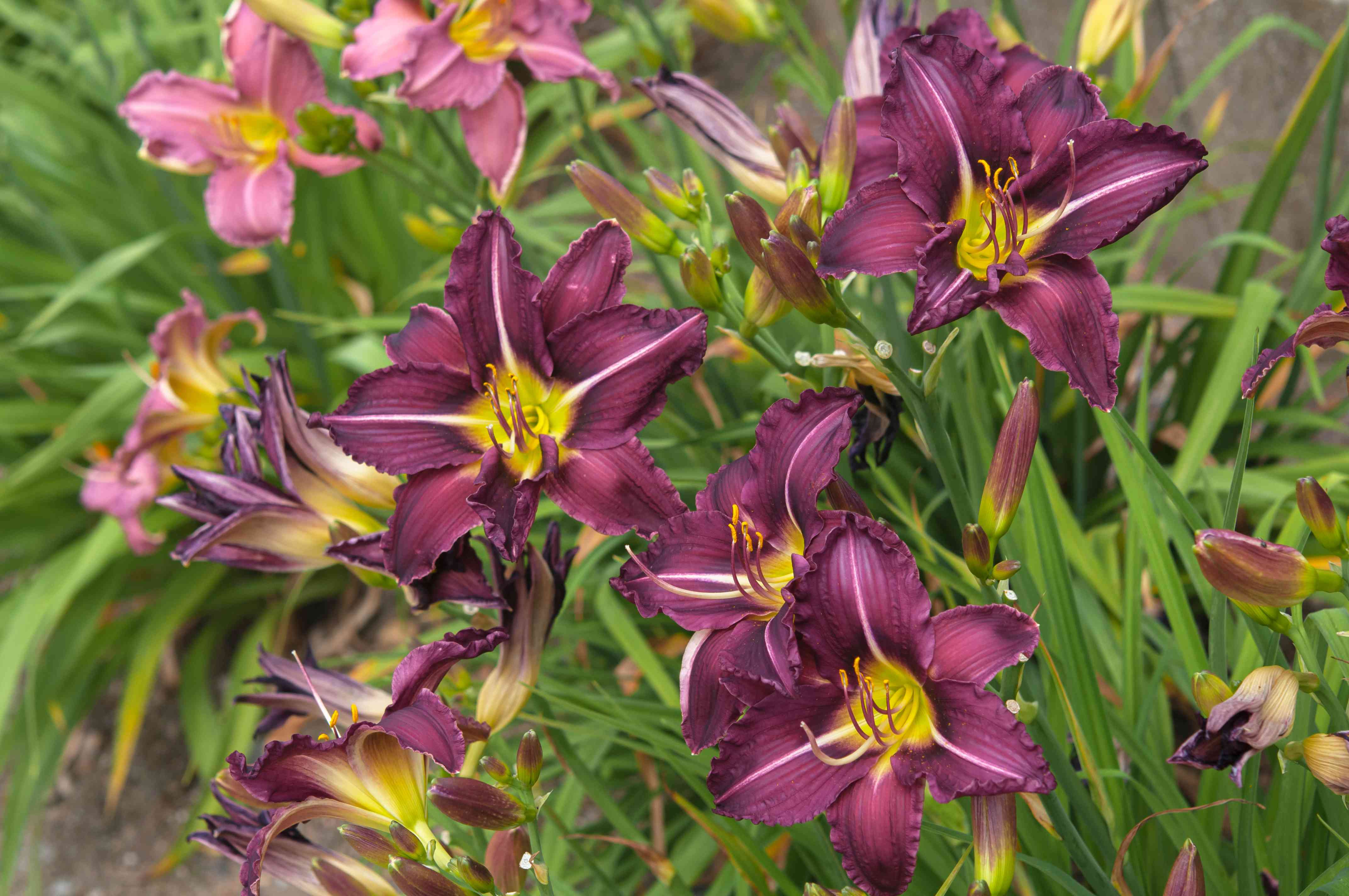
Daylily (Hemerocallis spp.)
Classic roadside tough-guy energy. Many daylilies tolerate a wide range of conditions and can perform in salty roadside environments,
making them useful for low-fuss color and erosion control on slopes. -
Spotted beebalm (Monarda punctata)
A more naturalistic, coastal-friendly bee balm with character. It’s often associated with sandy sites and can be a good fit
for beach-adjacent pollinator plantings where soil is lean and conditions are intense. -
Moss rose (Portulaca grandiflora)
A sun-loving annual that handles heat and sandy soils and is frequently used in beach towns for bright color in harsh spots.
It’s a good “seasonal pop” plant where perennials might struggle to establish right at the edge.
Shrubs for Screens, Structure, and “Please Stop the Wind”
-
Northern bayberry (Morella pensylvanica)
A coastal staple known for tolerating salt spray and low water availability, often used for dune and shoreline stabilization.
It’s also valued for wildlife support and its ability to form dense thicketsexcellent as a tough hedge in salty air. -
Southern wax myrtle (Morella cerifera)
A warm-region cousin to northern bayberry, frequently recommended for coastal landscapes.
Fast-growing and useful as a screen, it’s a strong pick for beach neighborhoods where salt and wind are part of daily life. -
Yaupon holly (Ilex vomitoria)
An evergreen shrub/small tree often listed as highly salt tolerant in coastal guides.
It can be shaped into hedges, left natural for wildlife value, and used as a durable backbone plant near salty air. -
Beach plum (Prunus maritima)
A classic coastal shrub associated with dunes and sandy, salty environments. It provides spring flowers, edible fruit,
and a rugged, natural look that fits perfectly in seaside and maritime landscapes. -
Rugosa rose (Rosa rugosa)
Known for handling salt spray and sandy conditions better than many roses.
It’s often used as a hardy barrier shrub in coastal settings (with fragrant blooms and large hips),
though it can spreadso treat it like a talented friend who sometimes overstays their welcome. -
Groundsel tree / Saltbush (Baccharis halimifolia)
A shrub frequently associated with coastal and salt-influenced habitats.
Useful for tough sites and naturalized plantings where you need resilience more than formality.
Great for ecological edges; less ideal if you want a prim, boxwood-style hedge.
Trees for Shade, Windbreaks, and Road-Edge Endurance
-
Eastern red cedar (and coastal forms) (Juniperus virginiana)
A durable evergreen used in many landscapes, including tough roadside and coastal-adjacent sites.
Its evergreen mass makes it useful as a windbreak and visual screen where salty conditions limit options. -
Live oak (Quercus virginiana)
In warm coastal regions, live oak is legendary: broad canopy, strong presence, and a reputation for high salt tolerance.
It’s ideal for creating shade and structure in seaside neighborhoodsjust give it the space it deserves. -
Honeylocust (Gleditsia triacanthos)
A commonly recommended “street tree” type for challenging urban conditions, including areas affected by de-icing salts.
Its light, filtered shade and adaptable nature make it a practical choice for roadside planting strips and parking-lot edges.
(Choose thornless cultivars for obvious reasonsno one wants landscaping that bites back.)
How to Put These Plants Together: Two Quick “Real-World” Layout Ideas
Beachfront or Bayfront (salt spray + wind + sand)
Start with a front line of dune stabilizers like sea oats, railroad vine,
and beach sunflower. Behind them, build a tough shrub layer with bayberry
and yaupon holly. If your climate allows, anchor the back layer with a canopy tree like
live oak to create shelter and reduce wind exposure for everything else.
Roadside or Driveway Edge (de-icing splash + compacted soil)
Closest to the pavement, favor durable perennials and grasses like sedum, daylilies,
and switchgrass. Use shrubs like bayberry (where suited) as a buffer,
and place salt-sensitive ornamentals farther back. If you want a tree, pick something known for resilience
like honeylocustand keep it far enough from plow piles that it’s not getting brined weekly.
Maintenance Tips That Make Salt-Tolerant Planting Even More Successful
- Rinse when you can: After coastal storms or winter salt events, a gentle rinse of foliage (when temperatures permit) can reduce lingering salt.
- Water deeply during thaws/rainy periods: Leaching salts downward is often more effective than frequent light watering.
- Mulch wisely: Mulch helps regulate moisture and reduces salt splash from bare soil (but keep it off trunks and crowns).
- Watch the “splash zone”: The first few feet from pavement can be the harshest. Put your toughest plants there.
- Expect some cosmetic burn: “Salt-tolerant” doesn’t always mean “never shows a brown tip.” The goal is survival and recovery, not perfection.
Experience Notes: What Salty-Site Gardeners Learn Fast (and Wish They’d Known on Day One)
Landscapes in salty environments tend to teach the same lessonsquickly, repeatedly, and with the confidence of a middle-school science experiment.
Here are the most common “experience-based” takeaways shared by coastal gardeners, municipal crews, and anyone who has ever looked at a roadside bed in April and said,
“Well… that escalated.”
First: salty sites are rarely uniform. One corner of a yard may be protected by a fence or a dune, while another corner catches full wind and spray.
On roadsides, the side facing traffic often takes the worst splash, especially where snow piles linger.
The practical move is to treat your space like a weather map: identify the harshest micro-zones and place your toughest plants there.
That’s why grasses and dune groundcovers are so often used up frontbecause they’re willing to be the shield.
Second: drainage is the quiet hero. People often assume salt is the only problem, but compacted, poorly drained soil can make salt injury worse by
keeping salts concentrated in the root zone. The fix doesn’t have to be complicated: loosen the soil where possible, avoid creating low spots that collect salty runoff,
and use plants that tolerate both stress and the reality that roadside soil can be… let’s call it “architecturally challenged.”
If you can slightly raise beds or redirect drainage, you’re not just helping plantsyou’re changing the chemistry of the whole situation.
Third: timing matters. Many failures don’t happen because the plant can’t tolerate salt at all, but because it was planted too small, too late,
or without enough water to establish. Salt-tolerant plants still need establishment careconsistent watering and protection while they root in.
Once established, many of the plants on this list become impressively low-maintenance, but early neglect can make even the toughest plant look weak.
It’s a bit like training for a marathon: the “toughness” shows up after the base is built.
Fourth: don’t confuse “green in June” with “fine forever.” Coastal and roadside landscapes often look great in early summer,
then start showing stress after a hot, dry stretchbecause salts and drought team up like cartoon villains.
Experienced growers plan for that: they mulch, they water deeply (not frequently), and they accept that a small amount of leaf-edge burn may happen,
especially after big events like storms or heavy winter salting. The goal is resilience: plants that rebound, keep growing, and don’t require constant rescue missions.
Finally: the best salty-site landscapes aren’t built from one “miracle plant.” They’re built from plant communities.
Use a tough front line (grasses and groundcovers), a sturdy middle layer (shrubs), and structural anchors (trees where appropriate).
When you stack salt tolerance with wind tolerance, drought tolerance, and good design, you get a landscape that looks intentionalnot like a science experiment that escaped.
And if you ever feel discouraged, remember: in salty environments, “thriving” sometimes looks like “still here, still growing, and not angry about it.”
That’s a win.