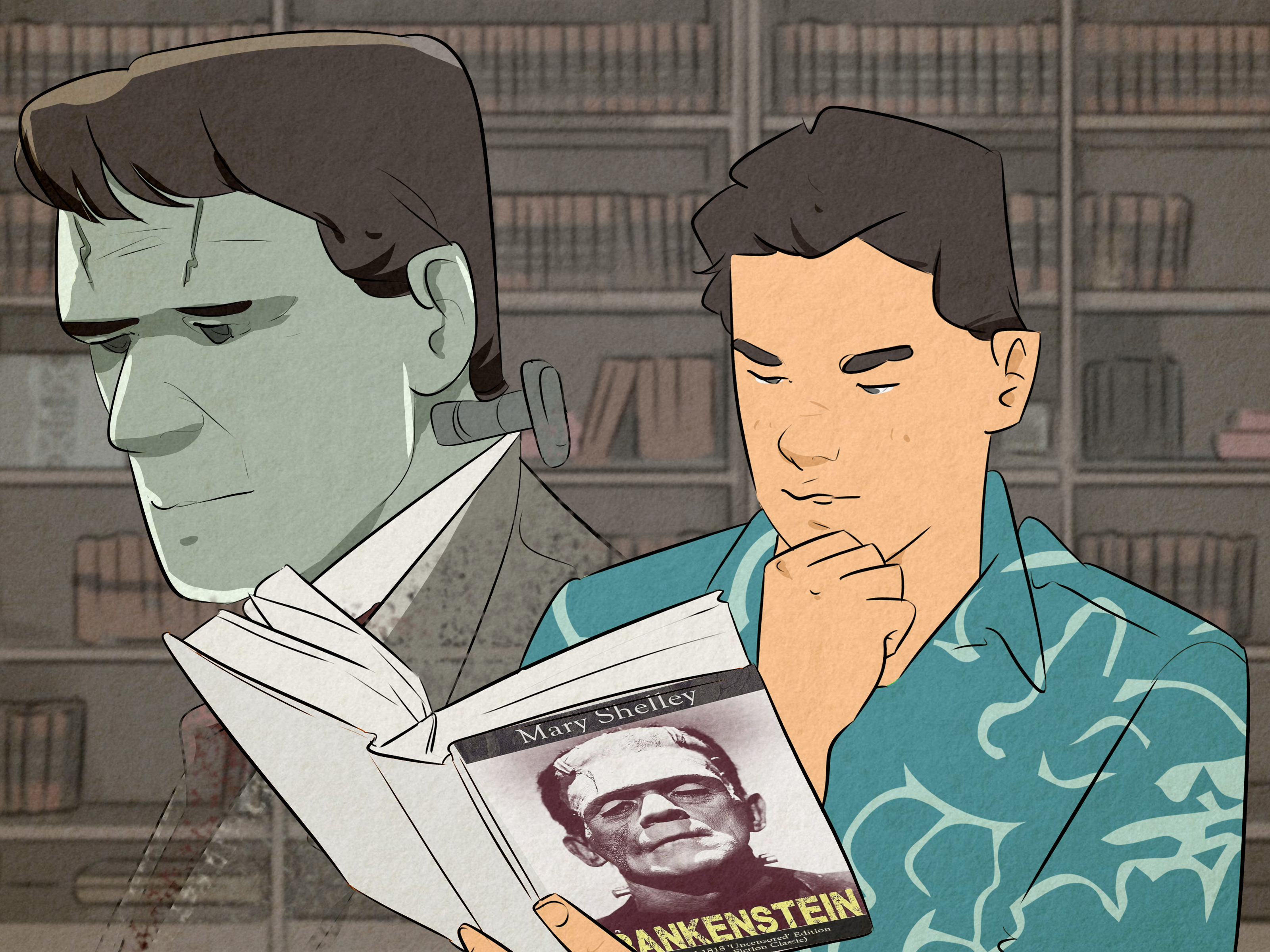
Frankenstein is often remembered as the book with the stitched-together creature, the lightning, and the laboratory drama. Fair enough. Pop culture has worked very hard to make the story look like a Halloween decoration with a graduate degree. But Mary Shelley’s novel is far richer than its monster-movie reputation. Published in 1818 as Frankenstein; or, The Modern Prometheus, the book explores revenge, ambition, isolation, responsibility, prejudice, family, nature, and the uncomfortable question of what happens when human beings create something powerful and then refuse to care for it.
That is why the major themes in Frankenstein still feel so modern. Victor Frankenstein is not merely a scientist who makes a mistake. He is a warning label in human form. The Creature is not simply a monster. He is a lonely, intelligent, wounded being who becomes violent after repeated rejection. Together, creator and creation turn the novel into a tragic argument about ethics, love, knowledge, and consequences. In other words, Frankenstein is not just a scary story. It is a scary story with homework.
Why the Themes in Frankenstein Still Matter
The power of Frankenstein comes from the way its themes overlap. Ambition leads Victor to create life. Irresponsibility leads him to abandon that life. Isolation makes the Creature miserable. Misery becomes revenge. Revenge destroys families, friendships, and futures. By the end, the Arctic setting feels less like an adventure backdrop and more like the emotional temperature of every surviving character: frozen, exhausted, and very much regretting earlier choices.
Mary Shelley wrote during the Romantic period, when writers were questioning industrial progress, scientific confidence, political power, and the limits of reason. The novel reflects those concerns, but it also speaks directly to contemporary readers. Today, people still debate artificial intelligence, genetic engineering, social rejection, parental responsibility, and the ethics of innovation. Victor Frankenstein may not have had a smartphone, but his problem is painfully familiar: he builds something impressive before asking whether he can handle what comes next.
Unchecked Ambition: Victor Frankenstein’s Dangerous Dream
Ambition is one of the most important themes in Frankenstein. Victor wants glory, discovery, and power over nature. He does not merely want to understand life; he wants to manufacture it. His desire begins as intellectual curiosity, but it quickly becomes obsession. He isolates himself from family, friends, health, and ordinary human affection while pursuing his experiment. This is not healthy work-life balance. This is what happens when “just one more breakthrough” turns into “oops, I created a being and ran away.”
Victor’s ambition is dangerous because it is not paired with responsibility. Shelley does not suggest that learning itself is evil. The novel is not anti-science in a simple sense. Instead, it criticizes knowledge pursued without wisdom, compassion, or moral preparation. Victor wants the applause of humanity, but he does not want the duties of creation. He imagines himself as a heroic discoverer, yet when his Creature opens its eyes, Victor responds with horror and abandonment.
Ambition and the “Modern Prometheus”
The subtitle, The Modern Prometheus, connects Victor to the Greek myth of Prometheus, who gave fire to humanity and suffered punishment for defying divine limits. Victor also crosses a boundary. He steals, or at least imitates, the power of creation. But unlike Prometheus, who helps humanity, Victor’s act is selfish and poorly considered. He wants to be remembered as a genius. Instead, he becomes a cautionary tale with excellent dramatic lighting.
Through Victor, Shelley asks a timeless question: Should human beings do everything they are capable of doing? The answer in Frankenstein is not a flat “no.” It is more precise: power without care becomes cruelty, and discovery without responsibility becomes disaster.
Revenge: The Fire That Consumes Creator and Creation
Revenge drives much of the second half of Frankenstein. After the Creature is rejected again and again, he turns his pain outward. He kills Victor’s younger brother William, frames Justine, and later murders Henry Clerval and Elizabeth. These acts are horrifying, and Shelley never asks readers to excuse them. But she does invite readers to understand how the Creature’s bitterness develops. He begins life curious, sensitive, and eager for affection. He becomes vengeful after society teaches him that his appearance matters more than his heart.
The Creature’s revenge is personal. He wants Victor to feel the loneliness he has endured. When Victor refuses to make him a companion, the Creature promises to be with him on his wedding night. That threat becomes one of the novel’s cruelest moments because Victor misunderstands it. He assumes the Creature means to kill him, but the Creature targets Elizabeth, the person Victor loves most. Revenge in the novel is not random violence. It is calculated emotional punishment.
Victor’s Revenge Mirrors the Creature’s
Victor also becomes consumed by revenge. After Elizabeth’s death, he pursues the Creature across land and sea, determined to destroy him. At this point, creator and creation begin to resemble each other. Both are isolated. Both are grieving. Both blame the other for their suffering. Both believe revenge will give their lives meaning. Spoiler alert: it does not.
Shelley presents revenge as a cycle that feeds on itself. The Creature harms Victor because Victor harmed him. Victor hunts the Creature because the Creature harmed his family. Each act of vengeance creates another wound, and each wound demands another answer. By the end, revenge has not restored justice. It has only emptied the world of nearly everyone Victor loves.
Isolation and Loneliness: The Real Monsters in the Novel
Isolation is one of the most emotionally powerful themes in Frankenstein. Victor isolates himself while creating the Creature. The Creature is isolated because people fear and reject him. Robert Walton, the Arctic explorer who frames the story through letters to his sister, is also lonely and desperate for a friend. Shelley uses these three figures to show that isolation can distort judgment, deepen suffering, and make people vulnerable to obsession.
Victor’s solitude is self-chosen at first. He withdraws from his family and studies obsessively at Ingolstadt. But after the Creature comes to life, Victor’s isolation becomes psychological. He cannot confess what he has done, even when silence allows innocent people to suffer. His secrecy becomes a prison. He is surrounded by loved ones, yet he remains emotionally alone.
The Creature’s Loneliness
The Creature’s isolation is even more tragic because he does not choose it. From the moment of his birth, he is abandoned. When he tries to enter human society, he is attacked, feared, or driven away. His time observing the De Lacey family teaches him language, sympathy, and moral feeling. He learns to admire kindness. He secretly helps the family by gathering firewood. Yet when he finally reveals himself, he is rejected again.
This is one of Shelley’s sharpest insights: people are not born monsters simply because they look different. The Creature becomes monstrous after being denied love, education, companionship, and dignity. His loneliness is not background sadness. It is the engine of the plot.
Responsibility and Abandonment: Victor’s Greatest Failure
If ambition is Victor’s first mistake, abandonment is his worst. The moment the Creature comes alive, Victor flees. He does not teach him, protect him, name him, guide him, or even try to understand him. This failure makes responsibility one of the central themes in Frankenstein. The novel asks: What do creators owe to what they create?
Victor behaves like someone who wants the title of “creator” without the inconvenience of caregiving. He is thrilled by the idea of making life, but horrified by the living being he actually makes. This gap between fantasy and responsibility is where the tragedy begins. The Creature’s violence is his own moral failure, but Victor’s neglect helps create the conditions for it.
Creation Without Care
Mary Shelley connects creation to parental responsibility. Victor is often read as a failed parent. He brings a being into existence and then refuses the basic obligations of nurture. The Creature repeatedly asks for sympathy, guidance, and companionship. Victor repeatedly answers with fear, disgust, or delay. No one wins. Not Victor, not the Creature, and certainly not the unfortunate people standing nearby when their conflict escalates.
This theme remains especially relevant today. Whether people are discussing technology, parenting, leadership, art, or social systems, Frankenstein reminds readers that creating something is only the beginning. The harder question is whether we are willing to care for the consequences.
Prejudice and Appearance: Who Is the Real Monster?
One of the most famous questions raised by Frankenstein is simple but uncomfortable: Who is the real monster? The Creature looks terrifying, but he begins with tenderness and curiosity. Victor looks respectable, educated, and civilized, yet he lies, abandons, and refuses accountability. Shelley challenges readers to look beyond surfaces and examine behavior.
The Creature is judged almost entirely by appearance. People attack him before he speaks. They assume his body reveals his character. This prejudice becomes a self-fulfilling tragedy. Because he is treated as evil, he eventually embraces evil actions. Shelley does not excuse his crimes, but she shows how social cruelty can shape identity.
Monstrosity as a Social Label
In the novel, monstrosity is not only physical. It is ethical. Victor becomes monstrous when he refuses compassion. Society becomes monstrous when it rejects someone without understanding him. The Creature becomes monstrous when he chooses revenge over mercy. Shelley’s genius lies in making monstrosity move from one character to another. It is not a fixed category. It is a moral condition.
This theme gives Frankenstein lasting emotional force. Readers may come for the Creature, but they stay for the unsettling realization that the most frightening thing in the book is not a stitched body. It is the human ability to deny humanity to others.
Nature vs. Science: The Sublime and the Laboratory
Nature plays a major role in Frankenstein. The mountains, lakes, storms, ice fields, and vast landscapes often reflect the characters’ emotional states. When Victor is overwhelmed, he turns to nature for relief. The Alps and Mont Blanc offer him moments of awe, humility, and temporary peace. Nature appears grand, mysterious, and spiritually restorative.
Science, by contrast, is associated with enclosed spaces, secrecy, and unnatural ambition. Victor’s laboratory is not a place of shared discovery. It is a hidden chamber of obsession. Shelley does not portray science as automatically corrupt, but she contrasts Victor’s narrow, controlling ambition with the vastness of the natural world. Nature reminds human beings that they are not as powerful as they like to think. Victor, unfortunately, misses that memo until it is much too late.
The Romantic View of Nature
As a Romantic novel, Frankenstein treats nature as more than scenery. It is a moral and emotional force. The sublime landscapes make human pride look small. Victor’s tragedy comes partly from forgetting his place within the natural order. He tries to dominate life rather than understand it. The result is not mastery but misery.
Knowledge and Dangerous Discovery
Another major theme in Frankenstein is dangerous knowledge. Victor’s story becomes a warning to Walton, who also seeks glory through exploration. Walton wants to reach unknown regions and achieve fame. Victor recognizes the same hunger in him and tells his history as a cautionary tale. The message is clear: curiosity can be noble, but obsession can become fatal.
Shelley uses layered narration to reinforce this theme. Walton writes letters. Victor tells his story. The Creature tells his own history inside Victor’s narrative. This structure creates a chain of listeners and storytellers, as if the novel itself is asking readers to learn before repeating the same mistakes. Knowledge is valuable, but it must be accompanied by humility.
Family, Love, and the Need for Connection
Family is another essential theme in Frankenstein. Victor comes from a loving household, yet he repeatedly separates himself from it. Elizabeth, Alphonse, William, and Henry represent affection, loyalty, and ordinary human happiness. Victor’s tragedy is that he sacrifices these relationships for ambition and then spends the rest of the novel mourning what he neglected.
The Creature also longs for family. He watches the De Laceys with deep yearning because they embody the warmth he has never known. His request for a female companion is not only romantic; it is social and emotional. He wants someone who will not recoil from him. He wants a witness to his existence. He wants, in the simplest terms, not to be alone.
Through both Victor and the Creature, Shelley suggests that human beings need connection to remain fully human. Without love, intelligence is not enough. Without community, pain curdles. Without responsibility, even brilliance becomes dangerous.
Women and Powerlessness in Frankenstein
The women in Frankenstein are often loving, virtuous, and central to the emotional life of the novel, but they have limited power. Elizabeth, Justine, Caroline, Safie, and the unfinished female creature all reveal how women are idealized, controlled, silenced, or sacrificed. Elizabeth becomes the symbol of domestic happiness Victor hopes to return to, but she is also endangered by conflicts she did not create. Justine is executed for a murder she did not commit. The female creature is destroyed before she can live.
This theme adds another layer to Shelley’s critique of creation and control. Victor attempts to create life without women, removing birth from the female body and placing it in the male laboratory. Yet his experiment does not free anyone. Instead, it produces abandonment, fear, and violence. The novel quietly but powerfully questions male ambition that excludes female agency and emotional responsibility.
Guilt and Secrecy: The Weight Victor Refuses to Share
Victor’s guilt is intense, but it is also strangely selfish. He feels tortured by what he has done, yet he often fails to act in ways that would protect others. After William’s death, Victor suspects the Creature is responsible. Still, he does not speak clearly enough to save Justine. His silence allows an innocent woman to die. This makes guilt another major theme in Frankenstein: feeling bad is not the same as doing right.
Victor’s secrecy isolates him and increases the damage around him. He believes his story is too unbelievable to tell, but his silence also protects his reputation. Shelley shows that hidden guilt does not stay hidden. It leaks into relationships, decisions, and eventually tragedy.
Personal Experiences and Reflections Related to Frankenstein’s Themes
Reading Frankenstein can feel surprisingly personal because its themes show up in everyday life, just without the grave-robbing and Arctic chase scenes. Most people have seen ambition turn unhealthy. A student pulls all-nighters for perfect grades and forgets why learning mattered in the first place. A professional chases promotion after promotion until success begins to look like a very expensive form of loneliness. Someone launches a project, business, or relationship with excitement, then discovers that creating something is easier than sustaining it. Victor Frankenstein’s laboratory may be fictional, but the pattern is familiar: dream big, ignore limits, panic when the dream develops needs of its own.
The theme of revenge is also painfully recognizable. In real life, revenge usually does not look like a Gothic murder plot. It looks like a cold text, a public insult, a grudge carefully watered like a poisonous houseplant, or the quiet desire to make someone feel exactly as hurt as we felt. Frankenstein shows why that impulse is so dangerous. The Creature wants Victor to understand his pain, but his revenge only creates more suffering. Victor wants to destroy the Creature, but his pursuit empties his life of purpose beyond hatred. The novel reminds readers that revenge may feel like justice at first, but it often becomes a second prison.
Isolation may be the most relatable theme of all. Many readers understand the Creature’s longing to be seen beyond appearances. People are judged every day by looks, background, accent, social status, disability, age, or mistakes they made years ago. Shelley gives that experience a dramatic form. The Creature’s tragedy begins when others refuse to imagine that he has feelings. That lesson matters in classrooms, workplaces, families, and online spaces. The internet, in particular, can turn people into “monsters” quickly: one bad photo, one awkward sentence, one unpopular opinion, and suddenly a complex person becomes a label.
The novel also speaks to anyone who has ever felt responsible for something they were not fully prepared to handle. Parents, teachers, managers, artists, inventors, and community leaders all face the same uncomfortable truth: bringing something into the world creates obligations. A child, an idea, a team, a technology, or even a public platform requires care. Victor fails because he wants achievement without attachment. That failure feels modern because society often celebrates launching, scaling, and disrupting more than nurturing, repairing, and listening.
Finally, Frankenstein encourages humility. It does not say, “Never explore.” It says, “Do not confuse intelligence with wisdom.” It does not say, “Ambition is evil.” It says, “Ambition needs a conscience.” It does not say, “Pain makes people monsters.” It says, “Pain ignored, mocked, and abandoned can become destructive.” That is why the novel still matters more than two centuries after publication. It gives readers a dramatic, eerie, unforgettable way to ask better questions about how we treat what we create, how we respond to rejection, and how much responsibility we are willing to accept when our bright ideas start breathing on their own.
Conclusion
The major themes in Frankenstein make Mary Shelley’s novel far more than a classic horror story. Revenge, ambition, isolation, responsibility, prejudice, dangerous knowledge, nature, family, and guilt all work together to create a tragedy that still feels urgent. Victor Frankenstein’s ambition leads him to create life, but his lack of compassion turns discovery into disaster. The Creature’s loneliness makes him sympathetic, while his revenge makes him terrifying. Shelley refuses to give readers an easy hero or villain. Instead, she offers a world where suffering spreads when people abandon responsibility and deny empathy.
That complexity is why Frankenstein remains essential reading. It is a novel about science, but also about parenting. It is about monstrosity, but also about society’s habit of creating outsiders. It is about revenge, but also about grief. Most of all, it is about the consequences of separating power from care. Victor builds a life and then runs from it. The Creature asks for love and receives horror. Between them, Shelley creates one of literature’s greatest warnings: what we reject may return, and what we create may demand more from us than applause.
Note: This article is written as an original, publication-ready analysis based on widely accepted literary scholarship, educational resources, and the public-domain text of Mary Shelley’s Frankenstein.