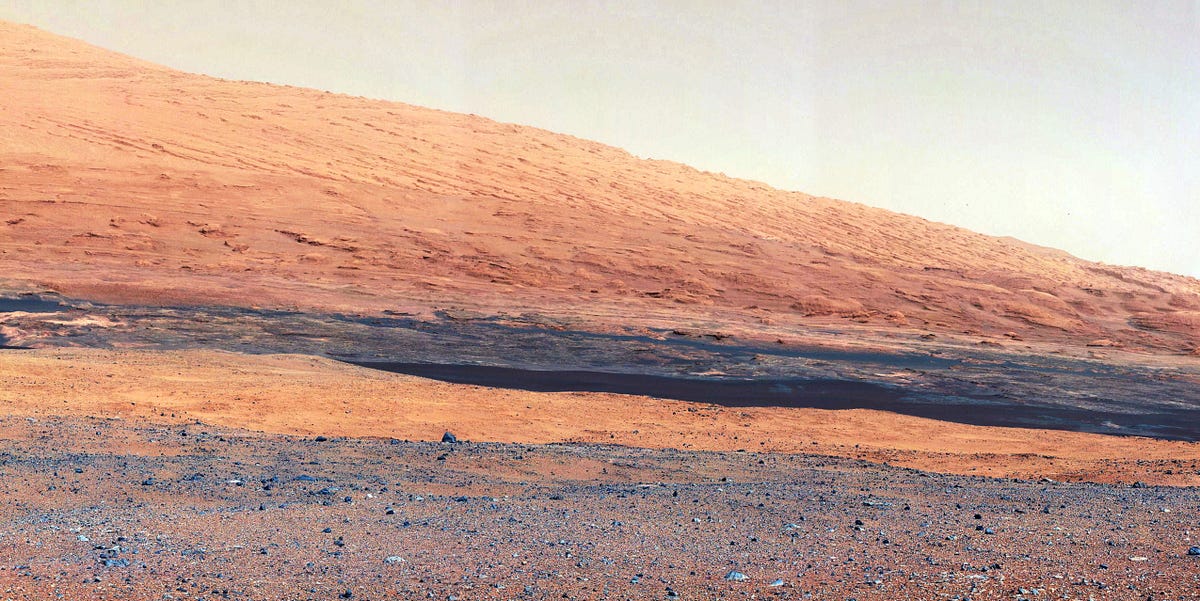
For decades, Mars has been typecast as the solar system’s dusty introvert: cold, dry, reddish, and apparently very committed to the “desert planet” lifestyle. But the more scientists study it, the more Mars starts looking like a planet with a surprisingly soggy backstory. Ancient rivers, deltas, clay minerals, lakebeds, salt-rich mudstones, and mineral ripples all point to a world where liquid water once did more than make a cameo appearance.
Now, researchers increasingly suspect that Mars may have had far more ancient lakes than previously counted. Not just a few famous watery neighborhoods like Jezero Crater and Gale Crater, but potentially many smaller, harder-to-detect lakes scattered across the Martian surface. In other words, Mars may not have been a planet with a couple of puddles. It may have been a planet with an entire lost lake district.
This matters because ancient Martian lakes are among the best places to search for clues about past habitability. Lakes can collect sediments, preserve organic molecules, trap chemical signatures, and create stable environments where microbial lifeif it ever existed on Marsmight have had a fighting chance. Think of them as planetary memory cards, except instead of vacation photos, they may hold evidence from billions of years ago.
Why Scientists Think Mars Had More Ancient Lakes
The basic reason is surprisingly simple: the lakes we can easily see are probably not the whole story. Many known Martian paleolakes are large, obvious crater basins with visible inlet valleys, outlet channels, deltas, or layered sediment deposits. These are the show-offs of Martian geology. They practically wave from orbit and say, “Yes, water was here.”
But smaller lakes are harder to detect. On Earth, most lakes are not gigantic. Many are modest basins, seasonal ponds, glacial lakes, or short-lived bodies of water that leave subtler geological fingerprints. If Mars followed a similar pattern, scientists may have cataloged only the most obvious ancient lakes while missing a much larger population of smaller ones.
A global analysis of Martian lake evidence has suggested that hundreds of ancient lakes are already recognized, but many of those are larger than about 100 square kilometers. By comparison, Earth has a huge number of smaller lakes, especially in cold environments shaped by glaciers. If ancient Mars had many small lakes too, then the known inventory could be dramatically incomplete.
The tricky part is that Mars does not make lake-hunting easy. Wind erosion, dust cover, volcanic resurfacing, impact events, and billions of years of chemical weathering can blur or bury evidence. A small lake that existed for only a few thousand years might not leave an obvious shoreline visible from orbit. It may leave behind a few sediment layers, clay minerals, salts, or chemical signatures that require close-up rover work to identify.
The Mars Lake Evidence We Already Have
The strongest evidence for ancient lakes on Mars comes from a combination of orbital imaging, rover observations, mineral analysis, radar data, and sedimentary geology. Each method tells part of the story. Together, they create a picture of a planet that once had active water systems, even if those systems were not always warm, permanent, or Earth-like.
Gale Crater: Curiosity’s Long Walk Through an Ancient Lakebed
NASA’s Curiosity rover has spent years exploring Gale Crater, a massive impact basin with Mount Sharp rising from its center. Curiosity found layered sedimentary rocks that indicate water once transported and deposited material inside the crater. Scientists concluded that Gale hosted streams and lakes billions of years ago, with water helping build the lower layers of Mount Sharp over time.
Gale Crater is especially important because it shows that some Martian lake environments may have lasted long enough to deposit thick sequences of sediment. That does not mean Gale was a tropical resort with umbrella drinks and a cheerful beach playlist. Ancient Mars was still a harsh place. But the evidence suggests repeated or sustained wet episodes capable of shaping the landscape in major ways.
Recent Curiosity findings have added even more texture to this story. The rover has detected metal-rich deposits and preserved ripple features in rocks, signs that shallow lake environments may have existed in areas linked to Mars’ drying climate. These discoveries suggest that even as the planet became colder and drier, small or short-lived lakes may have persisted in isolated pockets.
Jezero Crater: The Delta That Made NASA Park a Rover There
Jezero Crater is one of the best-known ancient lake sites on Mars because NASA selected it as the landing site for the Perseverance rover. From orbit, Jezero showed a fan-shaped delta, the kind of feature that forms when a river flows into standing water and drops its sediment load. On Earth, deltas are excellent at preserving organic material. That made Jezero a prime target in the search for ancient habitable environments.
Perseverance has helped confirm that Jezero’s watery past was complex. The crater formed from an impact nearly four billion years ago. Later, rivers brought in sediment, forming sandstone and mudstone. Salt-rich mudstones indicate a shallow lake that experienced evaporation. NASA researchers estimate that the lake may have grown roughly 22 miles wide and about 100 feet deep at one stage.
Ground-penetrating radar from Perseverance has also revealed subsurface sediment layers consistent with lake deposition and delta growth. This is like giving Mars a geological ultrasound. Instead of relying only on what is visible at the surface, scientists can peer below and see buried structures that confirm the crater’s long environmental history.
Why Small Martian Lakes Could Be a Big Deal
Large lakes are easier to find, but smaller lakes could be just as scientifically valuable. In some cases, they might be even better. Small lakes can respond quickly to climate changes, preserve local environmental conditions, and concentrate minerals or organic compounds in ways that reveal details about ancient chemistry.
If many small lakes existed on Mars, they could help scientists answer major questions: Was ancient Mars warm and wet for long stretches, or mostly cold and dry with brief melting episodes? Did water come from rainfall, snowmelt, groundwater, impact heating, volcanic activity, or glacial melting? Were lake environments widespread enough to make habitability common, or were they rare oases in a mostly frozen desert?
Small lakes may also explain why Mars gives mixed signals. Some evidence suggests persistent liquid water. Other evidence points to a planet that was often cold and dry. The answer may be that Mars had episodic wet periods. It may have warmed up briefly, produced runoff, filled crater basins, formed lakes, then returned to deep freeze. Basically, Mars may have been less “endless ocean world” and more “climate drama queen with occasional lake episodes.”
How Ancient Lakes Formed on Mars
Martian lakes likely formed in several ways. Some crater basins filled when rivers or streams delivered water from surrounding terrain. Others may have been fed by groundwater. Some could have formed from melting snow or ice during temporary warming events. A few may have been associated with glacial environments, where ice melt created proglacial lakes similar to those found in cold regions on Earth.
Impact craters were natural lake bowls. Mars is covered with them, and many have enclosed basins that could collect water. If precipitation, snowmelt, or groundwater flowed into those basins, lakes could form. When lake levels rose high enough, water sometimes overtopped crater rims, carving outlet valleys in sudden floods.
Research from the University of Texas at Austin found that overflowing crater lakes played a major role in shaping Martian river valleys. Some lake breach floods may have happened quickly, carving deep channels and moving huge amounts of sediment in a matter of weeks. That means Mars’ watery history was not always gentle. Sometimes it was less “peaceful lakeside picnic” and more “geological fire hose.”
What Ancient Lake Sediments Can Preserve
Lake sediments are valuable because they act like archives. Fine-grained mud can settle quietly at the bottom of a lake, burying minerals, organic molecules, and chemical signals. On Earth, lakebeds often preserve fossils, pollen, microbial mats, climate records, and volcanic ash layers. Mars is different, of course, but the same basic principle applies: calm water plus sediment can create excellent preservation conditions.
Clay minerals are especially important. They form in the presence of water and can trap organic compounds within their structures. Mars Reconnaissance Orbiter data has revealed clay-rich regions across ancient terrains, suggesting that water altered rocks over large parts of the planet’s early history. Curiosity has also studied clay-bearing rocks in Gale Crater, where organic molecules have been detected in ancient sediments.
Organic molecules are not proof of life. This is worth saying loudly, preferably with a megaphone and a responsible scientist holding a clipboard. Organic chemistry can form through non-biological processes. Still, finding diverse organic molecules in ancient Martian rocks is exciting because it shows that some of the chemical ingredients associated with life can survive on Mars for billions of years under the right conditions.
Ancient Lakes and the Search for Life
The reason ancient Martian lakes attract so much attention is simple: on Earth, where there is water, chemistry, and energy, life tends to show up wearing metaphorical party shoes. Lakes provide water, nutrients, sunlight near the surface, and chemical gradients that microbes can use. If Mars ever hosted microbial life, lake environments would be logical places to look for traces.
That does not mean every Martian lake was habitable. Some may have been too salty, too acidic, too short-lived, too muddy, too cold, or too dark for photosynthesis. Researchers have noted that Martian lakes may have been murky because of fine-grained sediments and lower gravity, which could keep particles suspended longer. A murky lake might make life more challenging near the surface, especially for organisms depending on sunlight.
But life does not always need sunshine. On Earth, microbes can use chemical energy from minerals, metals, and redox reactions. That makes findings like iron- and manganese-rich lake deposits especially interesting. Such environments could have provided energy sources for microbial metabolism, assuming life ever got started on Mars in the first place.
Why Mars Lost Its Lakes
Today, Mars is too cold and its atmosphere too thin for stable liquid water to last on the surface for long. Water ice exists, and briny liquid water may appear under limited conditions, but open lakes are not part of modern Martian scenery. So what happened?
The leading explanation involves atmospheric loss. Mars once had a thicker atmosphere that helped keep the planet warmer and allowed liquid water to persist. Over time, because Mars is smaller than Earth and lost its global magnetic field, the solar wind helped strip away much of its atmosphere. With less air pressure and reduced greenhouse warming, surface water became unstable. Some escaped to space, some froze, and some may remain locked underground as ice or hydrated minerals.
This transition from wet Mars to dry Mars was not instant. Evidence suggests a long, uneven decline. Some regions may have dried earlier than others. Some lakes may have formed during brief warm intervals even after the planet was already trending toward cold desert conditions. That makes Mars less like a light switch and more like a dimmer that flickered, faded, and occasionally sparked back to life.
What This Means for Future Mars Exploration
If Mars had many more ancient lakes than we thought, future exploration strategies may need to widen their focus. Jezero and Gale are famous for good reason, but smaller, less obvious lake deposits could also be excellent targets. They may preserve different time periods, different climates, and different chemical environments.
Future orbiters with sharper instruments could identify subtle lake features that are currently missed. Rovers and landers could investigate smaller basins, clay deposits, evaporite minerals, and buried sediments. Sample return missions could bring carefully selected rocks back to Earth, where laboratories can analyze them with tools far more powerful than anything currently sitting on a rover.
The search is not only about life. Ancient lakes can help scientists understand planetary climate evolution. Mars is a natural experiment in how a once-wet rocky planet can become dry and cold. Studying its lost lakes may teach us not only about Mars, but also about what makes Earth’s climate and biosphere so unusually stable.
Specific Examples That Changed the Mars Lake Story
Jezero’s Lake and Delta System
Jezero shows how a crater lake can preserve a layered record of environmental change. Sandstone, mudstone, salts, delta deposits, and subsurface radar layers all point to a changing lake system influenced by rivers, evaporation, sedimentation, and erosion.
Gale Crater’s Long-Lived Water Record
Gale Crater shows that Mars had environments where water could persist long enough to build thick sedimentary layers. Curiosity’s work there has provided some of the strongest evidence that ancient Mars had repeated lake and stream activity.
Overflowing Crater Lakes
Breached crater lakes show that Martian lakes did not merely sit quietly. Some overflowed catastrophically, carving valleys and moving sediment across the planet. These events reveal that water could shape Mars quickly and dramatically.
Clay-Rich Ancient Terrains
Clay deposits identified from orbit and studied by rovers suggest long-term interactions between rock and water. These clay-rich environments are among the best places to search for preserved organic chemistry.
Experience-Based Reflections: What the Ancient Lakes of Mars Teach Us
Thinking about ancient Martian lakes changes how we experience Mars as a place. It is easy to look at rover images and see only rocks, dust, and an endless rusty horizon. At first glance, Mars can seem almost boring, like a construction site abandoned by a very ambitious civilization that forgot to leave instructions. But once you understand that some of those rocks were shaped by rivers, lakebeds, mud, salts, and slow sedimentation, the landscape becomes more alive in the imagination.
One useful way to picture it is to compare a Martian crater to a dry lakebed in the American Southwest. If you have ever seen a desert basin after rain, you know how quickly a harsh landscape can change. A place that looked lifeless can suddenly hold pools, streams, soft mud, mineral crusts, and reflected sky. Mars may have experienced something similar, except on a planetary timescale and under far more extreme conditions. Its lakes may have appeared during warmer periods, lingered for thousands of years, then vanished, leaving behind minerals and sediments like receipts from a very old water bill.
There is also something humbling about the scale of the investigation. Scientists are trying to reconstruct lakes that disappeared billions of years ago on another planet using rover wheels, orbital cameras, radar pulses, laser chemistry, and patient geological reasoning. That is not just science; that is detective work with a commute of tens of millions of miles. Every ripple mark or mudstone layer becomes a clue. Every clay deposit is a witness. Every crater basin is a possible crime scene where the missing suspect is water.
For readers, the most exciting lesson is that exploration often begins with undercounting. We thought we knew the big Martian lakes because we could see the big basins. Then researchers asked a better question: what about the small ones? That shift matters far beyond Mars. In science, the obvious evidence is rarely the entire story. The quiet, subtle, easily missed details often change the conclusion.
The idea of many undiscovered Martian lakes also makes the search for life feel both more realistic and more complicated. More lakes mean more possible habitats, but not all habitats are equal. Some may have been too brief or chemically harsh. Others may have had the right mix of water, minerals, organic chemistry, and energy. The challenge is finding which ancient lakebeds were merely wet and which were genuinely friendly to life.
From a human perspective, Mars’ ancient lakes are a reminder that planets change. Mars may once have had rivers feeding crater lakes under a thicker atmosphere. Today, it is a cold desert where liquid water struggles to exist at the surface. Earth, by contrast, still has oceans, lakes, rainfall, breathable air, and a climate system that supports life. Studying Mars is partly an act of curiosity, but it is also a mirror. It shows us how precious stable conditions can be.
So when scientists say Mars may have had many more ancient lakes than we thought, they are not just adding dots to a map. They are expanding the story of a planet. Mars becomes less like a dead rock and more like a world with chapters: impact, water, lakes, drying, freezing, erosion, and discovery. The ending is not written yet, because every rover track and orbital image keeps adding new pages.
Conclusion: Mars’ Lost Lakes May Be the Key to Its Biggest Mystery
The idea that Mars may have had many more ancient lakes than previously recognized is more than a fun scientific twist. It changes how we think about the Red Planet’s climate, geology, and potential for past life. Known sites like Gale Crater and Jezero Crater already show that lakes, rivers, deltas, mudstones, salts, clays, and organic chemistry were part of Mars’ ancient story. But if smaller lakes remain hidden across the planet, then Mars’ wet history may be broader, more complex, and more interesting than the current map suggests.
These ancient lakes may not prove that life existed on Mars. Science is not quite ready to roll out the tiny Martian welcome banner. But they do show that Mars had environments where water, sediment, minerals, and chemistry came together in ways that deserve close attention. The next great discovery may not come from the biggest crater or the most obvious delta. It may come from a smaller, quieter lakebed that has been waiting billions of years for someone to notice.