Note: This article is written in standard American English for web publishing and focuses on practical, real-world use of the Everbilt 3/4 in. Brass-Plated Cup Hook for home organization, kitchen storage, craft rooms, cabinets, and light-duty hanging projects.
Small Hook, Big Household Energy
The Everbilt 3/4 in. Brass-Plated Cup Hook is one of those tiny pieces of hardware that does not look dramatic in the package, yet somehow ends up solving five annoying household problems before lunch. It is not a power tool. It does not come with a Bluetooth app. It will not ask for a firmware update while you are trying to hang coffee mugs. It is simply a small screw-in hook with a brass-plated finish, designed for light-duty hanging in wood, shelves, cabinets, walls, and other suitable surfaces.
That simplicity is exactly why cup hooks remain useful. The Everbilt 3/4 inch brass-plated cup hook is commonly used for hanging cups, small kitchen tools, keys, jewelry, lightweight decorations, craft supplies, and other everyday items that deserve a better life than being lost in a drawer. It is especially handy in small kitchens, apartments, laundry rooms, garages, hobby corners, and entryways where every inch of vertical space matters.
At first glance, a cup hook may seem too ordinary to deserve a full discussion. But smart home organization often depends on modest hardware. A shelf becomes more useful when the underside can hold mugs. A cabinet becomes less chaotic when measuring spoons hang neatly inside the door. A coffee station looks more intentional when cups are displayed instead of stacked into a ceramic avalanche. The Everbilt 3/4 in. Brass-Plated Cup Hook is built for exactly these small but satisfying upgrades.
What Is the Everbilt 3/4 in. Brass-Plated Cup Hook?
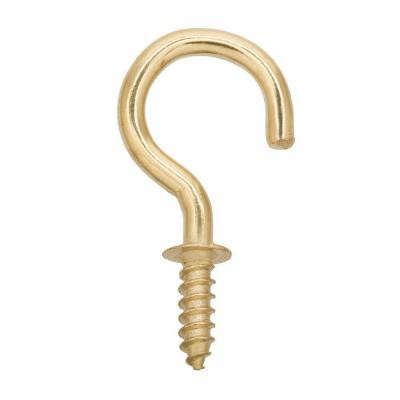
The Everbilt 3/4 in. Brass-Plated Cup Hook is a small metal hook with a screw point on one end and a curved hook on the other. This “half screw, half utility hook” design allows it to twist directly into wood or another compatible material, creating a simple hanging point without brackets, rails, or bulky hardware.
The product is typically sold in small packs for quick household fixes, and similar Everbilt brass-plated cup hook options are also found in larger multi-packs for bigger organizing projects. The 3/4 inch size makes it best for compact jobs where a full-size wall hook would look oversized. Think coffee mugs under a cabinet, keys inside an entry cabinet, necklaces on a closet wall, or lightweight seasonal decorations under a shelf.
Key Product Characteristics
The most important features of this cup hook are its compact size, steel construction, brass-plated finish, screw-in design, and light-duty purpose. The brass-plated appearance gives it a warm gold tone that pairs well with traditional wood cabinets, vintage-inspired kitchens, craft-room shelving, and decorative storage displays. It is not the same as solid brass, but the brass-plated finish gives the look of brass at a budget-friendly price point.
The sharp screw end helps the hook bite into wood. In many softwood or pre-drilled applications, installation can be done by hand. In harder wood, old cabinetry, dense shelving, or near cabinet edges, a pilot hole is strongly recommended. Pre-drilling makes installation cleaner, reduces splitting, and saves your fingers from the classic “why did I start this project at 10:47 p.m.?” regret spiral.
Best Uses for Everbilt 3/4 in. Brass-Plated Cup Hooks
The best use for the Everbilt 3/4 in. Brass-Plated Cup Hook is light-duty organization. It is not intended for heavy shelves, large hanging plants, cast-iron pans, bicycles, or anything that could make gravity file a complaint. But for small household objects, it is impressively useful.
1. Hanging Coffee Mugs Under Cabinets
The classic use is hanging mugs under a kitchen cabinet or open shelf. This frees up cabinet space and turns everyday cups into part of the room’s decor. It works especially well near a coffee maker, tea station, breakfast nook, or small bar area. Place the hooks evenly, leave enough room between mugs so handles do not collide, and make sure the cabinet bottom is thick enough to accept the screw without poking through.
For best results, mark each hook location with a pencil before installation. A row of evenly spaced cup hooks looks intentional and polished. A crooked row looks like the mugs were installed during an earthquake. Measure twice, twist once.
2. Organizing Measuring Cups and Spoons
Measuring spoons and cups are notorious drawer gremlins. They tangle, disappear, and somehow hide the one tablespoon measure exactly when pancake batter is already happening. Small brass-plated cup hooks can be installed inside a cabinet door or pantry wall to hold measuring spoons, measuring cups, small strainers, or lightweight baking tools.
This setup works beautifully for bakers because it keeps frequently used tools visible. It also helps prevent the drawer from becoming a metal maraca every time you open it.
3. Creating an Entryway Key Station
A few Everbilt cup hooks inside a small wooden board, wall-mounted mail organizer, or cabinet panel can create a simple key station. Use one hook for house keys, one for car keys, one for spare keys, and one for the mystery key that nobody in the house recognizes but everyone is afraid to throw away.
Because the 3/4 inch size is compact, it is better for individual key rings than bulky bags or heavy accessories. Install the hooks at eye level near the door, and suddenly the morning key hunt becomes much less dramatic.
4. Displaying Jewelry and Accessories
The brass-plated finish makes these hooks attractive enough for visible storage. Install them on a small painted board, inside a closet, behind a vanity door, or on the side of a wardrobe to hang necklaces, bracelets, hoop earrings, hair ties, lanyards, or lightweight scarves.
For jewelry, spacing matters. Necklaces need enough room to hang without tangling. If you are organizing delicate chains, place hooks slightly farther apart and avoid overloading each hook. The goal is boutique display, not pirate treasure knot.
5. Improving Craft Room Storage
Craft rooms love cup hooks. Use them for scissors, embroidery hoops, ribbon spools, washi tape loops, small baskets, thread cards, templates, measuring tapes, and lightweight tools. Mounted under shelves, these hooks use empty space that normally sits there doing absolutely nothing.
For a clean craft setup, install hooks along the underside of a shelf above your worktable. Keep the most-used items closest to your dominant hand. This tiny change can make the workspace feel faster, cleaner, and less like a glitter tornado passed through town.
Where These Hooks Work Best
The Everbilt 3/4 in. Brass-Plated Cup Hook performs best in wood or wood-like surfaces that can hold the screw threads securely. Cabinet bottoms, wood shelves, pantry panels, peg rails, trim boards, and craft boards are excellent candidates. The hook may also be used with proper anchors in some wall applications, but the anchor must be matched to the wall type and the weight of the item.
Wood Cabinets and Shelves
Wood is the easiest and most reliable surface for this hook. The screw end can grip the fibers directly. If the wood is soft, you may be able to twist the hook in by hand. If the wood is hard, old, thin, painted, or close to an edge, drill a small pilot hole first.
Drywall and Hollow Walls
For drywall, a screw-in cup hook alone is usually not the best choice unless it reaches a stud or is paired with an appropriate anchor. Drywall does not grip threads the way wood does. If you are hanging anything from drywall, choose a wall anchor rated for the item’s weight and follow the anchor manufacturer’s instructions. For very lightweight decor, small anchors may work. For anything heavier, find a stud or choose stronger hardware.
Cabinet Doors
Inside cabinet doors are excellent for small hooks, but thickness matters. Before installing, check that the screw portion will not pierce through the front of the door. This is especially important with thin cabinet panels. Use painter’s tape on the drill bit as a depth guide if pre-drilling, and install slowly.
How to Install Everbilt 3/4 in. Brass-Plated Cup Hooks
Installing cup hooks is usually simple, but a little preparation makes the final result look much better. The process is quick enough for beginners and satisfying enough for experienced DIYers who enjoy tiny victories.
Tools and Materials
- Everbilt 3/4 in. Brass-Plated Cup Hooks
- Pencil
- Tape measure or ruler
- Painter’s tape
- Small drill bit for pilot holes
- Drill or hand drill
- Small pliers or a spare screw eye for turning, if needed
Step-by-Step Installation
- Choose the location. Decide where the hooks should go. For mugs, check handle size and cup height before marking.
- Measure the spacing. Space hooks evenly so items hang without touching. For mugs, wider spacing usually looks cleaner.
- Mark the points. Use a pencil dot for each hook. Painter’s tape can help protect finished surfaces and make marks easier to see.
- Drill pilot holes. Use a bit slightly smaller than the screw portion of the hook. Drill only as deep as needed.
- Twist in the hook. Start by hand, keeping the hook straight. Turn clockwise until secure.
- Align the openings. Finish with all hook openings facing the same direction for a neat, uniform look.
- Test gently. Hang the intended item and check for wobble, splitting, or looseness.
Do not overtighten. If the hook keeps spinning without getting tighter, the hole may be too large or the material may not be strong enough. In that case, move to a new spot or use a suitable anchor or filler repair method.
Design Benefits of a Brass-Plated Finish
The brass-plated finish gives this small hook a decorative advantage. While plain steel or zinc hooks are practical, brass plating adds warmth. It works nicely with wood tones, cream cabinets, dark green kitchens, vintage decor, farmhouse shelves, and classic pantry storage.
Because brass and gold-tone hardware remain popular in kitchens and home decor, these cup hooks can blend into a room rather than looking like an afterthought. They are especially attractive when paired with butcher-block counters, natural wood shelving, white cabinets, or glass mugs.
That said, brass-plated steel should be treated as decorative light-duty hardware. In damp or outdoor environments, the finish may wear faster over time. For bathrooms, outdoor use, or high-moisture areas, consider whether stainless steel, solid brass, coated hooks, or hardware rated for exterior use would be a better match.
What Not to Hang on a 3/4 Inch Cup Hook
A small cup hook is useful, but it is not magic. Avoid using it for heavy plants, large cookware, hanging baskets full of produce, tools with serious weight, ceiling-hung items above people, or anything fragile and expensive. If the item would make a painful sound when it hits the floor, choose stronger hardware.
Also avoid installing these hooks into crumbly drywall without anchors, very thin panels, particleboard that is already damaged, or surfaces exposed to constant vibration. A cup hook is only as strong as the material holding it.
Buying Tips: Is This Cup Hook Right for Your Project?
The Everbilt 3/4 in. Brass-Plated Cup Hook is a smart choice when you need small, affordable, attractive hooks for light objects. It is especially useful if you want a traditional brass-tone look without paying for decorative specialty hardware.
Choose this hook if your project involves mugs, keys, jewelry, measuring spoons, lightweight ornaments, craft supplies, or small kitchen tools. Choose a larger hook, safety hook, wall-mounted rack, or heavy-duty anchor system if your project involves weight, movement, outdoor exposure, or overhead safety concerns.
Practical Examples for Homeowners and Renters
Homeowners can install cup hooks permanently under cabinets, along pantry shelves, inside closets, and on custom wood boards. Renters should be more cautious. If drilling into cabinets or walls is not allowed, consider using a removable board that sits on a shelf, an over-cabinet organizer, or no-drill hooks instead. Cup hooks are small, but lease agreements have the emotional range of a smoke alarm.
For a renter-friendly approach, mount the cup hooks into a separate wood strip, then attach the strip only where permitted or place it inside a freestanding organizer. This gives the look and function of installed hooks with less risk to cabinets or walls.
Care and Maintenance
Maintenance is minimal. Wipe the hooks with a dry or slightly damp cloth when dust builds up. Avoid harsh abrasives that could scratch the brass-plated finish. If used in a kitchen, occasional cleaning may be needed to remove grease or steam residue. Dry the hooks afterward to protect the finish.
Check the hooks occasionally to make sure they remain tight. Mugs and tools get moved on and off repeatedly, and small hardware can loosen over time. If a hook feels wobbly, remove the item and inspect the installation point before using it again.
Experience Section: Real-Life Lessons From Using Everbilt 3/4 in. Brass-Plated Cup Hooks
After using small brass-plated cup hooks in different home organization projects, one thing becomes obvious: the success of the project depends less on the hook itself and more on planning. The hook is tiny, but the layout matters. A beautiful row of mug hooks can make a coffee corner feel custom. A poorly spaced row can make every mug bang into its neighbor like a tiny ceramic traffic jam.
The first experience worth sharing is about under-cabinet mug storage. Before installing the hooks, it helps to place the mugs on the counter below the cabinet and test spacing visually. Some mugs have narrow handles. Others have chunky, oversized handles that demand personal space. If all the hooks are spaced the same without checking the actual mugs, the result may look neat while empty but awkward once loaded. A good rule is to hang the largest mug first in your imagination, then space the hooks around that. The cabinet may look like it is getting a dental exam while you measure, but the result is worth it.
The second lesson is to pre-drill. Even when the package suggests installation can be done by hand, a pilot hole makes life easier. On soft pine, twisting by hand may be fine. On older hardwood cabinets, painted trim, or dense shelving, trying to force the hook directly into the wood can bend the hook, scrape the finish, or inspire language not suitable for a family-friendly home improvement blog. A small pilot hole keeps the hook straight and reduces the chance of splitting the wood.
The third lesson is to avoid placing hooks too close to the front edge of a shelf or cabinet bottom. It may seem logical to keep mugs easy to grab, but if the hook is too close to the edge, the wood has less material to grip the screw. Moving the hook slightly back usually looks better and feels stronger. It also helps the mugs hang under the cabinet instead of sticking out like they are trying to escape.
The fourth lesson is that cup hooks are wonderful for hidden storage. Some of the best uses are not visible at all. Inside a pantry door, they can hold measuring spoons. Inside a broom closet, they can hold dustpan brushes or small cleaning accessories. Inside a craft cabinet, they can hold scissors, rolls of ribbon, and templates. These hidden installations may not win design awards, but they make daily life smoother. There is a special kind of happiness in opening a cabinet and finding exactly what you need without excavating a drawer.
The fifth lesson is to respect weight limits and surface strength. A small cup hook feels sturdy when installed correctly, but that does not mean it should hold everything that physically fits on it. Lightweight mugs, keys, jewelry, and small tools are reasonable. Heavy planters, cast-iron cookware, and overloaded baskets are not. The hook may be metal, but the cabinet, shelf, or wall material is often the real limitation. When in doubt, use stronger hardware.
Finally, the brass-plated finish is more charming than expected. In a kitchen with warm wood tones or gold cabinet pulls, these small hooks look intentional. They do not scream for attention, but they quietly match the room. That is the beauty of this product: it is practical hardware with just enough style to be seen. The Everbilt 3/4 in. Brass-Plated Cup Hook may not be glamorous, but it is the kind of small upgrade that makes a home feel more organized, more personal, and slightly less controlled by random drawer clutter.
Final Thoughts
The Everbilt 3/4 in. Brass-Plated Cup Hook proves that useful home improvement does not always require a major renovation. Sometimes it takes one small hook, a pencil mark, and five quiet minutes with a drill. This compact brass-plated hook is best for light-duty hanging, especially in kitchens, cabinets, craft rooms, closets, and entryways. It helps create storage where there was only unused space before.
For homeowners, renters with permission, DIY beginners, and organization enthusiasts, this cup hook is a practical little problem-solver. Use it thoughtfully, install it correctly, avoid overloading it, and it can turn overlooked spaces into clean, functional storage. Not bad for a piece of hardware small enough to disappear in your junk drawerwhich, ironically, it may help you organize.