There are dining tables, and then there are farmhouse tablesthe kind of furniture that looks like it has hosted Sunday suppers, homework battles, birthday cupcakes, half-finished craft projects, and at least one dramatic family announcement involving a casserole. A farmhouse table is not just a flat surface with legs. It is the heart of a room, the unofficial family conference center, and, on a good day, the most charming piece of furniture in the house.
Welcome to Farmhouse Friday, where rustic wood, warm finishes, and “please pass the biscuits” energy all come together. Whether you love a traditional trestle table, a modern farmhouse dining table with clean lines, or a reclaimed wood table full of knots and character, this guide will help you choose, style, and care for a farmhouse table that feels beautiful without trying too hard.
The best farmhouse tables have a relaxed confidence. They do not need to sparkle. They do not need to match every chair in the room. They simply need to feel sturdy, useful, welcoming, and personal. In other words, they should look like they can handle both Thanksgiving dinner and a spilled glass of grape juice without needing emotional support.
What Makes a Farmhouse Table So Special?
A farmhouse table is usually defined by its practical shape, generous proportions, and natural wood presence. Traditional versions were built for working homes, where the table had to serve many roles: food prep station, family dining spot, sewing surface, writing desk, and neighborhood gossip headquarters. That useful heritage is why farmhouse tables still feel so comfortable in today’s homes.
Modern farmhouse style has evolved. The old formula of distressed white paint, mason jars, and “Gather” signs has calmed down a bit, which is good news for everyone who accidentally bought seven galvanized buckets in 2016. Today’s farmhouse dining spaces often mix rustic wood with cleaner silhouettes, soft neutral colors, black metal accents, woven textures, vintage pieces, and a little polish.
Classic Farmhouse Table Features
Most farmhouse tables include at least a few of these familiar details:
- Solid wood or wood-look construction
- A rectangular, round, oval, or extension-table shape
- Trestle, turned-leg, pedestal, or X-base support
- Natural, weathered, stained, or painted finishes
- Visible grain, knots, saw marks, or reclaimed character
- A comfortable, casual look that works with mixed seating
The beauty of this style is that perfection is not the goal. A farmhouse table should feel lived-in. A small scratch does not ruin the story; it joins the plot.
Popular Farmhouse Table Styles
1. The Traditional Trestle Table
The trestle table is one of the most iconic farmhouse table designs. Instead of four corner legs, it uses two or more supports connected by a horizontal beam. This design creates a strong architectural look and often gives diners more legroom along the sides.
A trestle farmhouse table works beautifully in a large dining room, open kitchen, or breakfast area where you want the table to act as the visual anchor. Pair it with Windsor chairs for a classic look, linen slipcovered chairs for softness, or a bench on one side for a casual, family-friendly setup.
2. The Turned-Leg Farmhouse Table
Turned legs bring a more traditional country feeling. These rounded, carved legs add detail without becoming too fancy. A turned-leg table is perfect if you like farmhouse charm with a slightly antique personality. It says, “I bake pies,” even if the closest you get to baking is warming up store-bought cookies and calling it hospitality.
3. The Modern Farmhouse Table
Modern farmhouse tables keep the warmth of wood but simplify the silhouette. You might see a straight plank top, a black metal base, a clean X-frame, or a pale oak finish. This style works well in homes that lean transitional, coastal, Scandinavian, or industrial.
The key is balance. If the table is rustic, keep the chairs simple. If the base is sleek and modern, add texture with woven placemats, linen napkins, or a vintage bowl. The goal is not to make the dining room look like a showroom. The goal is to make it look like people actually enjoy being there.
4. The Reclaimed Wood Farmhouse Table
Reclaimed wood tables are popular because they bring instant history. The boards may come from old barns, beams, flooring, or other salvaged sources. Each mark and color variation gives the table character that cannot be faked easily.
A reclaimed wood farmhouse table is ideal for people who like depth, texture, and imperfection. It is also practical for busy households because small dents and scratches blend into the existing character. In a home with kids, pets, or enthusiastic dinner guests, that is not just styleit is survival.
How to Choose the Right Farmhouse Table Size
Before falling in love with a table online, measure your room. Yes, measuring is less exciting than choosing finishes, but so is discovering your dream table blocks the pantry door. A comfortable dining layout needs room for chairs to slide out and people to walk around without performing a sideways shuffle worthy of a spy movie.
Standard dining tables are usually about 28 to 30 inches high. For seating, allow roughly 24 inches of table width per person. Around the table, try to leave about 36 inches of clearance between the table edge and walls or other furniture. If people need to walk behind seated guests often, more space is even better.
Quick Farmhouse Table Size Guide
- Small kitchen nook: A 36- to 42-inch round table or compact rectangle can seat two to four people.
- Average dining area: A 60- to 72-inch rectangular table usually seats four to six.
- Family dining room: An 84-inch table often seats six to eight comfortably.
- Large gathering space: A 96-inch or longer table can seat eight to ten, depending on chair width and table legs.
- Flexible entertaining: An extension farmhouse table is a smart choice if your guest list grows during holidays.
Also consider the table base. Corner legs can limit seating at the ends. A pedestal or trestle base may offer more flexibility, especially when you are trying to squeeze in “just one more chair” because Aunt Linda brought a surprise guest.
Best Materials for Farmhouse Tables
Solid Wood
Solid wood remains the gold standard for farmhouse tables. Oak, maple, pine, walnut, and spruce are common choices. Oak feels strong and timeless. Pine is softer and more rustic. Walnut adds richness and depth. Maple is clean and durable. Each wood species has a different grain pattern, color, hardness, and personality.
If you want a table that can last for years, solid wood is a strong investment. It can often be refinished, repaired, and refreshed instead of replaced. That matters because a good farmhouse table is not supposed to be disposable. It is supposed to become part of the family story, right next to the holiday recipes and the mysterious missing serving spoon.
Reclaimed Wood
Reclaimed wood offers sustainability and character. Because the material has already lived a life, it often comes with color variation, nail marks, knots, cracks, and texture. These details make every table unique.
However, reclaimed wood needs thoughtful care. Keep it away from extreme moisture, prolonged direct sunlight, and intense heat. Use coasters, placemats, and trivets to protect the surface. Think of them as tiny bodyguards for your table.
Veneer and Engineered Wood
Not every home needs a heavy solid wood table. Veneer and engineered wood tables can be budget-friendly and attractive, especially for apartments, starter homes, or spaces where the table will not face daily rough use. The important thing is to check construction quality, finish durability, weight, and customer reviews before buying.
Farmhouse Table Finishes: Rustic, Natural, or Painted?
The finish can completely change the mood of a farmhouse table. A light natural oak table feels airy and modern. A dark walnut or espresso finish feels rich and dramatic. A whitewashed finish leans coastal farmhouse. A painted black base with a wood top adds contrast and works well in modern farmhouse dining rooms.
For long-term style, choose a finish that complements your flooring and cabinets without matching them exactly. Mixed wood tones can look layered and intentional when they share a similar undertone. For example, warm oak floors can pair beautifully with a medium brown table, while cooler gray floors may work better with a neutral or black-stained table.
How to Style a Farmhouse Table Without Overdecorating
Farmhouse style can go from charming to cluttered faster than someone can say “distressed lantern centerpiece.” The table should remain usable. If guests need to relocate an entire decorative forest before setting down a plate, the centerpiece has staged a hostile takeover.
Keep the Centerpiece Low and Simple
A low bowl, a pitcher of branches, a small vase of flowers, or a row of candles can add beauty without blocking conversation. Seasonal touches are welcome, but keep them edited. One ceramic pumpkin is cozy. Twelve ceramic pumpkins may require their own zip code.
Mix Seating for a Collected Look
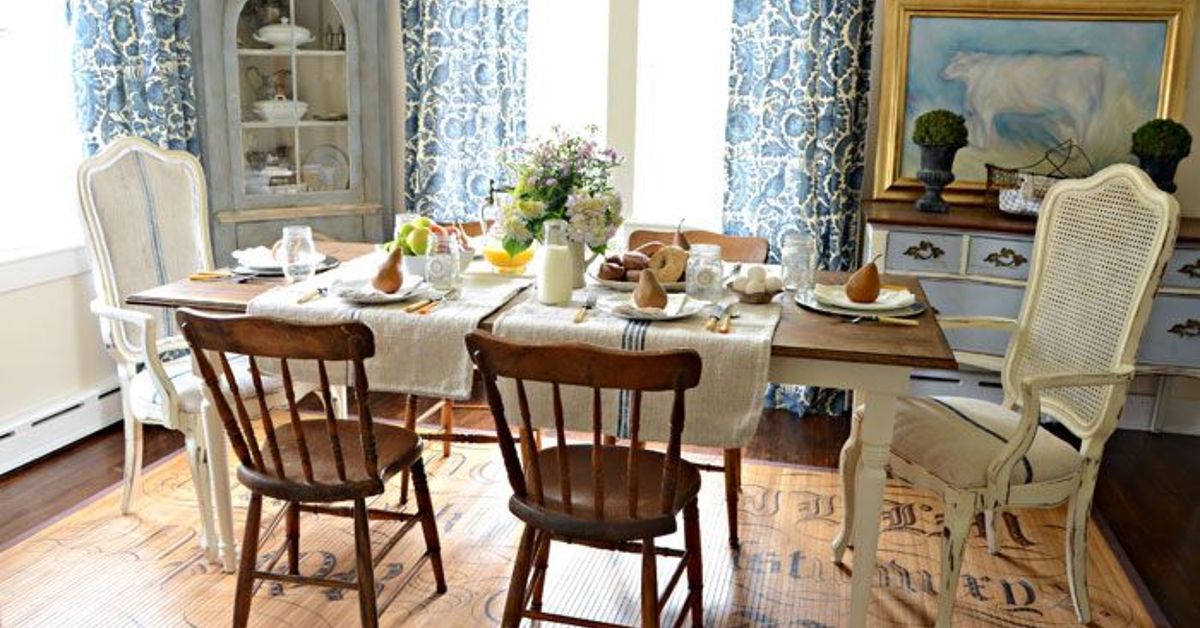
Farmhouse tables look great with mixed seating. Try chairs on one side and a bench on the other. Combine black Windsor chairs with woven end chairs. Use upholstered host chairs for comfort and wood side chairs for practicality. The trick is to repeat at least one element, such as color, shape, or material, so the mix feels intentional.
Add Texture Through Linens and Lighting
Natural textures help a farmhouse table feel warm. Linen runners, cotton napkins, jute rugs, woven shades, aged brass lighting, matte black fixtures, and handmade ceramics all support the style. Good lighting is especially important. A dining room chandelier or pendant should feel welcoming, not like an interrogation lamp over mashed potatoes.
Farmhouse Tables in Small Spaces
You do not need a giant dining room to enjoy farmhouse style. A small round pedestal table can bring the same warmth to a breakfast nook or apartment dining corner. Round tables are especially useful in tight spaces because they soften traffic flow and make conversation easy.
For small rooms, choose slimmer chairs, avoid bulky table bases, and keep the tabletop decor minimal. A bench against a wall or built-in banquette can also save space. If you love the farmhouse look but have limited square footage, scale is your best friend. Rustic charm is lovely; furniture that traps you in a corner is less lovely.
How to Care for a Farmhouse Table
A farmhouse table is built for use, but that does not mean it should be treated like a cutting board, ironing station, and science experiment table all at once. A few simple habits can keep it beautiful for years.
- Dust regularly with a soft microfiber cloth.
- Wipe spills quickly to prevent stains or water marks.
- Use coasters under glasses and mugs.
- Use trivets under hot pans and serving dishes.
- Avoid harsh chemical cleaners and abrasive scrubbers.
- Keep the table away from extreme sunlight, heat, and humidity changes.
- Refresh waxed or oiled finishes as recommended by the maker.
For everyday cleaning, a slightly damp cloth followed by a dry cloth is often enough. If your table has a special finish, follow the manufacturer’s care instructions. When in doubt, test any cleaner in a hidden spot first. Your table will thank you quietly, because tables are polite like that.
DIY Farmhouse Tables: Worth It or Not?
A DIY farmhouse table can be a rewarding project for anyone who enjoys woodworking, measuring twice, and discovering that lumber has opinions. Many farmhouse table plans are beginner-friendly compared with more complicated furniture builds. Basic designs often use common boards, pocket holes, screws, glue, sanding, stain, and a protective finish.
The biggest advantages of building your own table are customization and pride. You can choose the exact size, finish, leg style, and level of distressing. The biggest challenges are time, tools, workspace, and patience. If you want a perfectly smooth professional finish, buying may be easier. If you want a table with a story and do not mind a few “handmade quirks,” DIY can be wonderful.
Common Farmhouse Table Mistakes to Avoid
Choosing a Table That Is Too Big
A large farmhouse table can look impressive, but not if it swallows the room. Always measure the space, including chair clearance and walking paths. A slightly smaller table that functions well is better than a massive table that makes every meal feel like a furniture obstacle course.
Matching Everything Too Perfectly
Farmhouse style works best when it feels collected. Matching table, chairs, sideboard, shelves, and lighting can make the room feel flat. Mix materials and finishes for more depth.
Going Too Theme-Heavy
Farmhouse style does not require chicken signs, faux milk cans, or a wall clock large enough to be seen from a neighboring county. Choose authentic materials, comfortable seating, and a few meaningful accents. Let the table do the talking.
Farmhouse Friday Experiences: Living With a Farmhouse Table
The best thing about a farmhouse table is that it gets better when life happens around it. A glossy formal table can make people nervous. A farmhouse table relaxes the room. It invites elbows. It welcomes mismatched mugs. It can handle a laptop, a loaf of bread, a stack of mail, and a child’s art project involving glue, glitter, and questionable confidence.
One of the most useful experiences with farmhouse tables is learning how quickly they become the default gathering spot. Even when a home has a living room, kitchen island, office desk, and perfectly good sofa, people drift toward the table. Someone opens a notebook there. Someone else folds laundry there. A friend drops by and somehow ends up sitting there for two hours with coffee. The table becomes less like furniture and more like a friendly stage for everyday life.
A reclaimed or rustic wood table is especially forgiving. The first scratch may feel tragic for about three minutes. Then you realize it blends into the grain, right beside the knot that looks vaguely like a tiny owl. Over time, the marks become memories. There is the faint ring from the summer lemonade pitcher, the tiny dent from the dropped serving spoon, and the corner where holiday wrapping paper is always measured. None of these marks ruin the table. They make it yours.
Another lesson is that seating matters more than people expect. A beautiful farmhouse table with uncomfortable chairs is like a charming restaurant that serves soup with a fork. Benches are great for kids and casual meals, but adults often appreciate chairs with real back support. A practical mix works well: a bench for flexible seating, sturdy side chairs for daily meals, and more comfortable end chairs for long dinners.
Lighting also changes the entire experience. A farmhouse table under harsh overhead lighting can feel like a cafeteria with better wood grain. Add a warm pendant, a dimmer switch, or candles, and suddenly dinner feels slower, softer, and more intentional. The table did not change, but the mood did.
Seasonal decorating becomes easier, too. In spring, a simple vase of branches looks fresh. In summer, a bowl of lemons or wildflowers feels cheerful. In fall, a linen runner and a few small pumpkins are enough. In winter, greenery and candles make the whole room feel cozy. The secret is restraint. Farmhouse style works best when it whispers “welcome home,” not when it shouts “the craft store had a sale.”
Most of all, living with a farmhouse table teaches you to value usefulness. It does not have to be precious to be beautiful. It can be sturdy, imperfect, warm, and hardworking. That is the charm. A farmhouse table is where meals are served, stories are told, plans are made, and crumbs mysteriously multiply. It is not just part of the dining room. It is part of the rhythm of the home.
Conclusion: Why Farmhouse Tables Still Belong at the Center of the Home
Farmhouse tables remain popular because they combine beauty with purpose. They are practical enough for everyday meals, stylish enough for special gatherings, and warm enough to make a house feel more like home. Whether you choose a traditional trestle table, a reclaimed wood design, a modern farmhouse table, or a DIY build, the right table should match your space, support your lifestyle, and invite people to sit down and stay awhile.
The best farmhouse table is not the one that looks perfect in a catalog. It is the one that works for your family, your room, your routines, and your favorite way to gather. Add comfortable chairs, simple decor, good lighting, and a little common-sense care, and your farmhouse table can become the most loved piece in the house. Just do not be surprised when everyone starts leaving their keys, coffee, and life decisions on it.