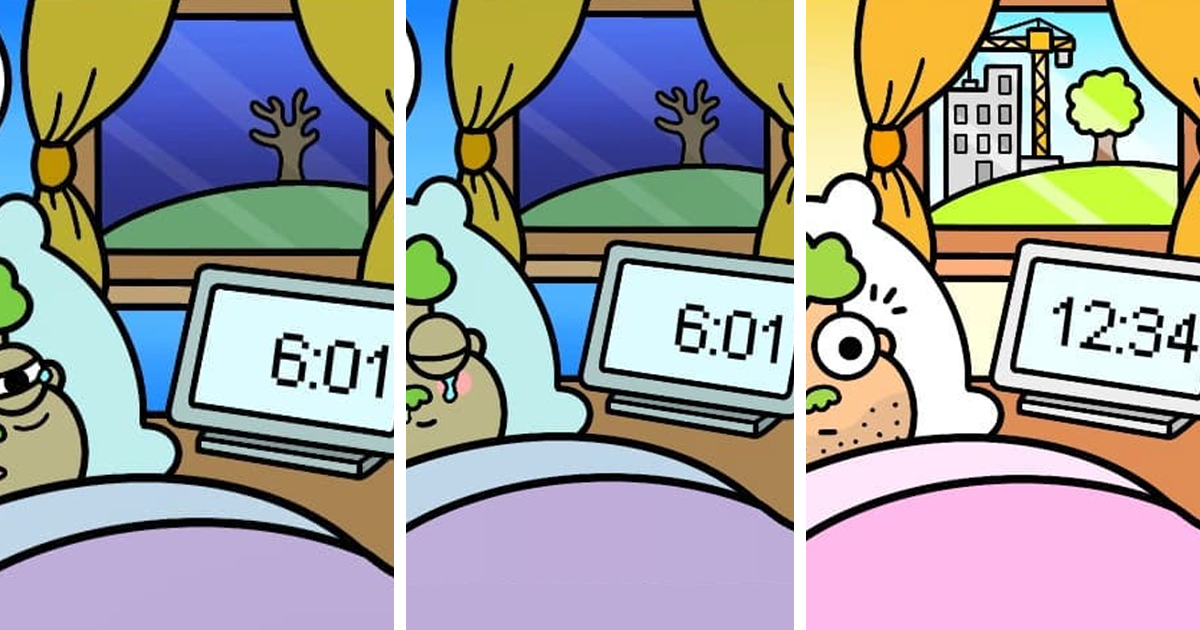
Some days need a heroic rescue. Other days need coffee, a nap, and a comic strip that understands why your brain has 47 browser tabs open and not one of them is helpful. That is where cheerful webcomics step in like tiny paper superheroes wearing sneakers. “Artist Creates Comics That Might Make Your Day Better (30 New Pics)” celebrates the kind of funny, colorful, and slightly absurd comic art that can turn a gloomy scroll session into a small emotional reset.
The artist behind the popular “Say Hey Simon” comics has built a style that feels instantly friendly: bright colors, simple shapes, expressive characters, and punchlines that often sneak up on you like a cat deciding your keyboard is now a luxury bed. The result is a collection of short comics that do not try to be loud, edgy, or complicated. Instead, they aim for something surprisingly powerful: a quick smile, a relatable moment, and sometimes a tiny message tucked inside the joke.
In the modern internet jungle, where everyone is competing for attention with hot takes, dramatic headlines, and recipes that require reading someone’s life story before finding the oven temperature, short comics feel refreshing. They are easy to understand, fast to enjoy, and perfect for readers who want a break without committing to a 600-page fantasy trilogy. These 30 new pics continue that tradition, offering bite-sized humor for people who could use a little brightness in their day.
Why Feel-Good Comics Work So Well Online
Comics have always had a special relationship with everyday life. Newspaper strips once gave readers a little laugh with breakfast. Today, webcomics do the same job on phones, tablets, and laptops. The delivery has changed, but the magic is familiar: a few panels, a recognizable situation, and a twist that makes the ordinary feel delightfully strange.
Online comics work because they respect the reader’s time. You can read one in ten seconds while waiting for your coffee, standing in line, or pretending not to check your phone during a meeting that could have been an email wearing a tie. A four-panel comic has to move quickly. It sets up a scene, introduces a small conflict, and lands the joke before your attention wanders. That compact structure is part of the charm.
Say Hey Simon comics are especially suited to this format. The illustrations are clean and colorful, the ideas are playful, and the humor often comes from everyday situations pushed just far enough into silliness. Talking objects, emotional animals, strange social interactions, and cheerful visual gags all become part of the artist’s world. It is a universe where a simple problem can become a joke, and a joke can become a surprisingly thoughtful observation.
The Style: Bright Colors, Friendly Characters, and Big Expressions
One reason these comics are so easy to love is their visual warmth. The characters are not overdesigned. They do not need hyper-realistic shading, cinematic lighting, or cheekbones sharp enough to slice bread. Instead, they rely on clear expressions and body language. A raised eyebrow, a tiny mouth, a nervous posture, or an exaggerated reaction can carry the whole punchline.
The use of bright colors also helps create a welcoming mood. Colorful comics feel approachable, especially when paired with soft humor. They invite readers in rather than shouting for attention. In a feed full of heavy news and polished influencer perfection, a silly cartoon can feel like a friendly neighbor waving from across the street while holding a balloon for no practical reason.
The characters often appear in simple settings, which keeps the focus on the joke. That simplicity is not laziness; it is smart storytelling. Good comics do not need every background detail explained. They need clarity. The reader should know who is speaking, what is happening, and why the final panel is funny. Say Hey Simon’s style understands that timing matters as much as drawing skill.
The Humor: Mild, Absurd, and Surprisingly Relatable
The humor in these comics is generally mild and accessible, which makes the collection appealing to a wide audience. Not every comic needs to kick down the door and shout, “Behold, satire!” Sometimes the best joke is a small absurdity: a fruit with feelings, an animal facing a very human problem, or a familiar situation flipped upside down.
That combination of innocence and weirdness is powerful. The comics can be sweet without becoming sticky, funny without becoming mean, and strange without becoming confusing. This balance matters because humor travels better when readers feel included. A joke that depends on cruelty may get a laugh, but a joke that depends on recognition often gets shared.
Many of the best webcomics are built on that “I know exactly what that feels like” reaction. Maybe it is procrastination. Maybe it is social anxiety. Maybe it is the quiet tragedy of deciding to clean your room and somehow making it worse. These little moments are universal. The comic gives them a face, a punchline, and sometimes a ridiculous hat.
Why a Four-Panel Comic Can Change the Mood of a Day
A four-panel comic may look simple, but it is a tiny machine with moving parts. The first panel introduces the situation. The second builds expectation. The third sharpens the direction. The fourth delivers the surprise. When that structure works, the reader gets the pleasure of both recognition and reversal. The brain thinks it knows where the story is going, then the comic gently steals the steering wheel.
This is why short comics can feel so satisfying. They are small stories with a payoff. Unlike long-form entertainment, they ask for almost nothing from the reader. No subscription plan, no dramatic lore, no need to remember which magical kingdom betrayed which dragon uncle in season two. Just look, read, smile, move on.
And that small emotional shift matters. Laughter and humor are often connected with stress relief, mood improvement, and social bonding. Of course, a comic strip will not solve every problem. If your sink is leaking, the comic will not arrive with a wrench. But it can give you a short pause, and sometimes that pause is enough to make the day feel a little less rude.
Comics as Tiny Emotional Reset Buttons
One underrated strength of feel-good comics is how they create distance from daily stress. When a comic turns a problem into a joke, it does not deny the problem exists. It simply changes the angle. Suddenly, the mountain of emails becomes a dragon you can laugh at. The awkward conversation becomes a scene. The bad mood becomes material.
This is one reason lighthearted comics are so popular on social platforms. People do not only share them because they are funny. They share them because they say, “This is me,” or “This is us,” or “Please tell me I am not the only person who has argued with a printer like it owed me money.” A good comic can become a tiny social bridge between people who have never met.
Say Hey Simon’s work fits neatly into this tradition. The comics often feel playful first, but behind the bright colors there is a clear understanding of everyday frustration, odd habits, relationships, social media, and the strange little rituals that make modern life both exhausting and hilarious.
The Rise of Webcomics and Independent Artists
The internet has changed how comic artists build an audience. In the past, cartoonists often needed a newspaper syndicate, publisher, or magazine editor to reach readers at scale. Today, independent creators can publish directly on social media, webcomic platforms, newsletters, and personal websites. That does not make the work easy, but it does make the door wider.
Platforms for digital comics have helped create a global audience for short-form storytelling. Readers can discover comedy strips, fantasy webtoons, slice-of-life comics, romance series, political cartoons, and experimental visual stories with a few taps. For creators, this means feedback can be immediate. A comic posted in the morning can make someone laugh across the world before lunch. That is a strange and wonderful thing, even if the algorithm occasionally behaves like a raccoon in a server room.
For artists like Say Hey Simon, the online format also encourages consistency. The more an artist posts, the more they refine their visual language. Characters become more expressive. Jokes become sharper. The creator learns what resonates without losing the personal weirdness that made the work interesting in the first place.
What Makes These 30 New Pics Worth Enjoying
The phrase “30 new pics” suggests more than a gallery; it suggests a fresh batch of miniature mood-lifters. Each comic is a self-contained moment. Some may be silly. Some may be bizarre. Some may carry a small message about life, habits, emotions, or the planet. The variety is part of the appeal.
Readers often enjoy these collections because they can dip in and out. You do not have to read all 30 comics at once, although let’s be honest, most of us will say “just one more” until suddenly we have reached the end and our coffee has gone cold. The gallery format makes humor feel snackable. Instead of one long narrative, you get a tray of comic appetizers.
Specific examples of the comic style include animals dealing with human-style dilemmas, everyday objects becoming characters, and common situations taking a surreal turn. A small misunderstanding might become the entire joke. A serious topic might be softened through absurdity. A familiar routine might be exaggerated until it becomes funny enough to feel new again.
Why Gentle Humor Feels Especially Valuable Now
The internet has no shortage of sarcasm. Sarcasm has practically bought property here. But gentle humor is different. It does not need to win an argument or embarrass someone. It simply wants to brighten the room. That kind of humor can be surprisingly memorable because it gives readers relief without asking them to take sides.
In a culture full of noise, mild and inoffensive comics can feel almost rebellious. They choose kindness. They focus on shared experiences. They trust that a small laugh is enough. That does not mean the comics are empty. In fact, light humor can be a clever way to approach serious ideas. A comic about climate change, social pressure, or emotional honesty may reach readers more easily when it begins with a smile.
This is where Say Hey Simon’s work stands out. The artist’s goal is not only to make people laugh but also, at times, to make them think. That combination gives the comics a little extra staying power. You arrive for the joke, then leave with a thought sitting quietly in your pocket.
The Art of Making “Cheeks Dance”
A funny phrase often associated with Say Hey Simon’s creative goal is making people’s “cheeks dance.” It is a charming way to describe smiling, and it fits the comics perfectly. These are not comics designed to make readers collapse dramatically onto the floor from laughter, though that would be excellent cardio. They are designed to make the face move upward, even if only for a second.
That second matters. A tiny smile can interrupt a negative thought loop. A clever punchline can make a boring day feel less gray. A relatable comic can remind readers that their strange little struggles are not so strange after all. The best feel-good comics are not just entertainment; they are tiny moments of companionship.
And because they are visual, they cross barriers that text alone sometimes cannot. Even before reading the dialogue, a reader can sense the mood through color, posture, and expression. That visual immediacy is one reason comics remain powerful in both print and digital culture.
How These Comics Fit Into a Long Cartooning Tradition
Although webcomics feel modern, they belong to a long history of cartooning. Comic strips have been part of American popular culture for generations, from newspaper pages to digital platforms. The format has evolved from ink on newsprint to vertical scrolling screens, but the core idea remains the same: combine images and words to deliver a story quickly.
Classic newspaper strips taught readers how to enjoy recurring characters, running jokes, and daily humor. Digital comics have expanded that tradition by making it easier for independent artists to publish globally. The tools are different, but the craft still depends on timing, clarity, rhythm, and surprise.
Say Hey Simon’s comics show how adaptable the medium is. A simple four-panel joke can live comfortably on a phone screen. A brightly colored character can travel across platforms. A small gag can be understood by readers from different backgrounds. That flexibility is why comics keep surviving every new media panic. Comics are stubborn little creatures. They refuse to go away, and frankly, good for them.
Why Readers Keep Coming Back
Readers return to creators like Say Hey Simon because the experience feels dependable. You know the comic will be colorful. You know it will probably be weird in a friendly way. You know it might give you a quick laugh or a small thought to carry into the rest of the day. That reliability builds trust.
In digital publishing, trust is everything. Readers follow artists whose work gives them a consistent emotional reward. It may be laughter, comfort, surprise, inspiration, or a mix of all four. Over time, the artist’s style becomes familiar, almost like a friend who always knows the right time to send a ridiculous meme.
The comment sections and shares around these comics also show how readers participate in the experience. People tag friends, add their own jokes, explain which panel got them, or simply say that the comic made them smile. In that way, the artwork becomes a conversation rather than a one-way broadcast.
Experience: How Feel-Good Comics Can Improve an Ordinary Day
There is a very specific moment when a feel-good comic works best. It usually happens during the small, annoying gaps of the day. You are waiting for a file to upload. You are stuck in traffic. You are trying to convince yourself that leftover pasta counts as a balanced breakfast because it contains “energy.” Then a comic appears. Four panels later, your mood has shifted slightly. Not dramatically. No choir descends from the ceiling. But something loosens.
That is the practical beauty of comics like these. They do not demand a perfect reading environment. You do not need silence, a bookmark, or an expensive chair designed by someone who believes comfort should look like a spaceship. You only need a few seconds and enough attention to follow the joke. This makes webcomics one of the easiest forms of daily entertainment to fit into real life.
From a reader’s perspective, the best part is recognition. A comic about procrastination feels funny because we have all made heroic plans at 9 a.m. and somehow found ourselves reorganizing desktop folders by 11. A comic about relationships lands because love is beautiful, complicated, and occasionally involves deciding where to eat for 45 minutes. A comic about social media works because most of us know the odd feeling of being connected to everyone and still wondering if we should go outside and touch a leaf.
These comics can also become part of a personal routine. Some people read them in the morning to start the day with a lighter mood. Others save them for lunch breaks, using humor as a tiny fence between work stress and the rest of life. Some readers send them to friends as a low-pressure way of saying, “I thought of you,” which is sweet even when the comic involves a potato having an existential crisis.
For creators, making this kind of work requires more discipline than it may appear. A simple comic still needs a clear idea, clean staging, readable expressions, and a punchline that lands. The artist has to decide what to leave out. Too much dialogue slows the joke. Too many details distract the eye. Too little setup makes the ending confusing. The best short comics feel effortless because the hard work has been hidden behind charm.
There is also emotional intelligence in gentle humor. It takes skill to make people laugh without punching down. It takes restraint to keep a comic light while still making it meaningful. In a world where attention is often grabbed through outrage, creating something cheerful can feel almost brave. It says, “Here is a small good thing. Take it with you.”
That may be why collections like “Artist Creates Comics That Might Make Your Day Better (30 New Pics)” resonate so strongly. They remind readers that art does not always have to be enormous to matter. A comic can be small and still valuable. It can be silly and still smart. It can be colorful, weird, and wholesome without becoming boring. Most importantly, it can meet people exactly where they are: tired, busy, slightly overwhelmed, and very ready for their cheeks to dance.
Conclusion
Say Hey Simon’s comics prove that a few panels can do a lot of good. With bright illustrations, gentle absurdity, and relatable themes, these 30 new pics offer more than quick entertainment. They provide a small break from the noise, a reminder not to take every moment too seriously, and a cheerful nudge toward laughter. In the crowded world of online content, that kind of simple joy is not simple at all. It is a craft, a service, and occasionally, the emotional equivalent of finding an extra French fry at the bottom of the bag.