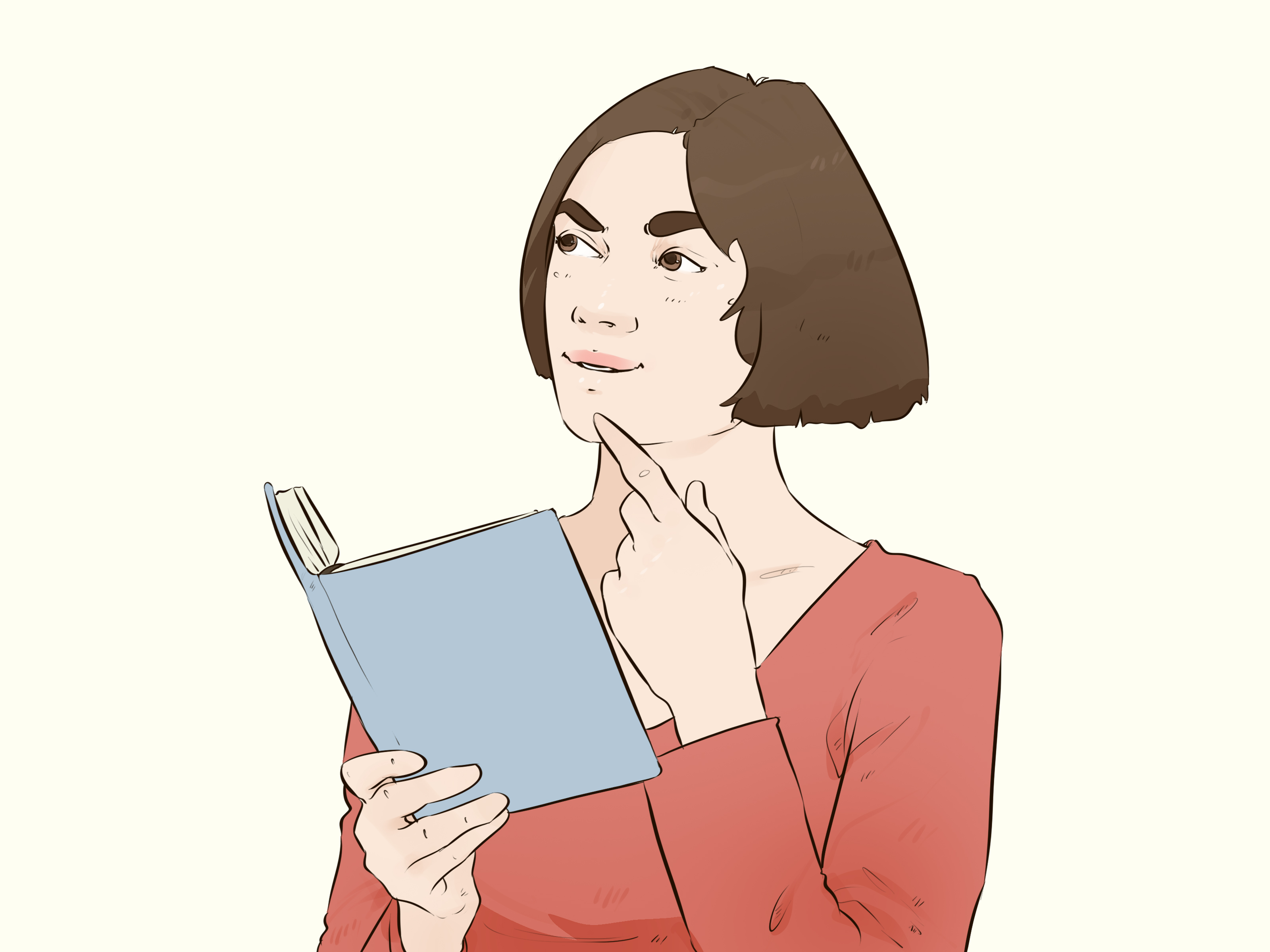
Writing a book summary sounds simple until you sit down with 300 pages of plot twists, big ideas, suspiciously important side characters, and one chapter that feels like it was written during a thunderstorm. Suddenly, “just summarize it” becomes the literary version of packing for a vacation with only a sandwich bag.
The good news? Learning how to write a book summary is not about squeezing every page into a tiny paragraph. It is about identifying the heart of the book, organizing the most important points, and explaining them clearly in your own words. Whether you are writing a summary for school, a book club, a blog post, a review, or your own reading notes, the process becomes much easier when you follow a clear system.
This guide breaks the process into quick and easy steps, with practical examples, helpful templates, and a few friendly warnings about what not to do. By the end, you will know how to summarize fiction, nonfiction, memoirs, self-help books, academic books, and pretty much anything else that has pages and opinions.
What Is a Book Summary?
A book summary is a short, accurate overview of a book’s main ideas, key events, major characters, central themes, and overall message. It gives readers the essential information without forcing them to read the entire book first. Think of it as the book’s “highlight reel,” not a scene-by-scene security camera recording.
A strong summary should answer three basic questions:
- What is the book about?
- What are the most important ideas, events, or arguments?
- Why do those points matter to the whole book?
For fiction, a summary usually focuses on the setting, main characters, central conflict, turning points, and resolution. For nonfiction, it focuses on the author’s main argument, supporting ideas, evidence, conclusions, and practical takeaways.
Why Writing a Book Summary Matters
Book summaries are useful because they prove comprehension. Anyone can say, “I read the book.” A summary gently asks, “Wonderful. What happened in it, and did your brain attend the meeting?”
Summarizing helps you remember what you read, separate main ideas from small details, and explain complex material in a simpler way. It is also an excellent study tool because it forces active reading. Instead of letting your eyes drift across the page while your mind thinks about snacks, you must decide what is important enough to keep.
Book summaries are commonly used in school assignments, literature reviews, reading journals, professional reports, online articles, and book recommendations. They can be short and simple, or longer and more detailed depending on the purpose.
Step 1: Read the Book With a Purpose
Before you start reading, ask yourself why you need the summary. Your purpose will shape what you pay attention to.
If you are writing a school assignment, your teacher may want plot, theme, character development, and evidence that you actually read the book. If you are writing for a blog, your audience may want a clear overview, key lessons, and whether the book is worth their time. If you are summarizing for yourself, you may only need the main ideas and personal takeaways.
Questions to Ask Before Reading
- Who will read this summary?
- How long should it be?
- Should I include spoilers?
- Do I need to summarize the whole book or only certain chapters?
- Is this summary supposed to be objective, analytical, or personal?
Knowing the purpose keeps your notes focused. Otherwise, you may end up highlighting everything, which is basically the same as highlighting nothing, but with more neon yellow.
Step 2: Take Simple Notes While Reading
You do not need to write a second book while reading the first one. Keep your notes short and useful. Record the main idea of each chapter, important character changes, major events, memorable arguments, repeated themes, and questions that come up as you read.
A simple note-taking format works best:
- Chapter or section: Where the idea appears
- Main point: What happens or what the author argues
- Key detail: One or two supporting details
- Why it matters: How it connects to the whole book
For example, if you are summarizing a novel, your notes might say: “Chapter 3: The main character refuses help, showing pride and fear. This sets up the later conflict when they must depend on others.” That is much more useful than copying three paragraphs and hoping Future You knows what to do with them. Future You is busy and slightly annoyed.
Step 3: Identify the Main Idea of the Book
Every good book summary needs a central idea. This is the one-sentence answer to “What is this book really about?”
For fiction, the main idea may involve the protagonist’s journey, the central conflict, and the lesson or theme. For nonfiction, it is usually the author’s main claim or argument.
Fiction Example
Weak main idea: “The book is about a boy and a lot of things happen.”
Stronger main idea: “The novel follows a young boy who learns courage and loyalty while facing a dangerous journey that tests his identity and values.”
Nonfiction Example
Weak main idea: “The book talks about habits.”
Stronger main idea: “The book argues that small daily habits can create major life changes when they are repeated consistently and attached to clear systems.”
A strong main idea gives your summary direction. Without it, the summary may become a wandering list of details wearing a trench coat and pretending to be organized.
Step 4: Separate Major Details From Minor Details
One of the hardest parts of writing a book summary is deciding what to leave out. A summary should be shorter than the original, which means you must remove examples, side stories, minor characters, repeated explanations, and decorative details unless they are essential.
Ask yourself:
- Does this detail affect the main conflict, argument, or message?
- Would the reader be confused if I left it out?
- Does this detail show an important change in a character or idea?
- Is this example interesting but not necessary?
If a detail is interesting but not necessary, cut it. Yes, even if you love it. Summaries are not museums for every shiny sentence you enjoyed.
Step 5: Create a Basic Outline
An outline prevents your summary from becoming a pile of thoughts in sweatpants. It gives the writing a structure before you begin drafting.
Simple Book Summary Outline
- Introduction: Mention the title, author, and main idea.
- Beginning: Explain the setup, topic, or opening problem.
- Middle: Cover the most important developments, arguments, or conflicts.
- End: Explain the conclusion, resolution, or final takeaway.
- Closing sentence: State the book’s overall message or significance.
For nonfiction, your outline may follow the author’s major sections or arguments. For fiction, it may follow the story arc: setup, conflict, rising action, climax, and resolution.
Step 6: Write the First Draft in Your Own Words
Once your outline is ready, write a rough draft without worrying too much about perfection. The goal is to get the main ideas onto the page clearly and honestly.
Use your own words. Do not copy sentences from the book unless you are using a short quotation for a specific reason and giving proper credit. A summary should show your understanding of the book, not your ability to perform literary copy-and-paste gymnastics.
Start with a clear opening sentence:
“In [Book Title], [Author Name] explores [main idea] through [main character, argument, or subject].”
Example:
“In The Hobbit, J.R.R. Tolkien tells the story of Bilbo Baggins, a comfort-loving hobbit who joins a dangerous journey and discovers courage he never knew he had.”
That one sentence gives the reader the title, author, subject, and direction of the story. Clean. Useful. No confetti required.
Step 7: Keep the Summary Objective
A summary is not the same as a review. A review includes your opinion. A summary explains what the book says or what happens in the book.
For example, do not write: “The author gives a boring explanation of productivity that feels like it was assembled in a spreadsheet dungeon.” That may be colorful, but it is review territory.
Instead, write: “The author explains productivity as a system of planning, prioritizing, and reducing distractions.”
You can add analysis later if the assignment asks for it, but keep the summary itself neutral, accurate, and focused.
Step 8: Use the Right Length
The best length for a book summary depends on your goal. A short summary may be 100 to 200 words. A standard school summary may be 300 to 600 words. A detailed chapter-by-chapter summary may be much longer.
Quick Length Guide
- Short summary: 100–200 words for quick reference or recommendation
- Standard summary: 300–600 words for class, book clubs, or blog posts
- Detailed summary: 800–1, for study guides or in-depth analysis
- Chapter summary: One short paragraph per chapter or section
If your teacher, editor, or client gives a word count, follow it. If not, aim for the shortest version that still explains the book clearly.
Step 9: Revise for Clarity and Flow
Revision is where the summary becomes smooth. Read your draft and ask whether each sentence helps the reader understand the book. Remove repeated ideas, vague phrases, and details that do not support the main point.
Check for logical order. In fiction summaries, chronological order usually works best. In nonfiction summaries, organize ideas by argument or theme. Make sure one point leads naturally to the next.
Revision Checklist
- Does the first sentence identify the title, author, and main idea?
- Are the most important points included?
- Are unnecessary details removed?
- Is the summary written in your own words?
- Is the tone objective and clear?
- Does the ending explain the book’s overall meaning or conclusion?
A good summary should feel like a clean map, not a maze built by someone who misplaced the instructions.
Step 10: Proofread Before Submitting or Publishing
Proofreading is the final polish. Look for grammar errors, spelling mistakes, awkward sentences, missing names, incorrect plot details, and confusing wording. If possible, read the summary aloud. Your ears often catch clunky sentences that your eyes politely ignore.
Also double-check names, places, dates, and chapter references. Nothing weakens a book summary faster than calling the main character by the wrong name. That is not a typo; that is a tiny literary crime scene.
How to Write a Fiction Book Summary
When summarizing fiction, focus on the story arc. Include the protagonist, setting, central conflict, major turning points, climax, and resolution. You do not need to include every character, subplot, joke, meal, mysterious glance, or dramatic weather pattern.
Fiction Summary Formula
[Title] by [Author] follows [main character], who [main conflict or goal]. As the story develops, [major events or obstacles]. In the end, [resolution or transformation], revealing [theme or message].
This formula works because it captures character, conflict, development, ending, and meaning in a compact structure.
How to Write a Nonfiction Book Summary
When summarizing nonfiction, focus on the author’s main argument and supporting ideas. Explain what problem the book addresses, what solution or viewpoint the author offers, and how the major chapters support that message.
Nonfiction Summary Formula
[Title] by [Author] argues that [main claim]. The book supports this idea by explaining [key point 1], [key point 2], and [key point 3]. Overall, the author shows that [final takeaway].
This structure keeps the summary focused on ideas instead of drifting into a list of chapter titles.
Common Mistakes to Avoid
1. Retelling Every Chapter
A summary should not sound like, “First this happened, then this happened, then another thing happened, and then everyone needed a nap.” Focus on the major movement of the book, not every small event.
2. Adding Too Much Opinion
Save personal judgment for a review or analysis section. A summary should explain the book fairly before evaluating it.
3. Copying the Author’s Words
Use your own language. Copying too closely can lead to plagiarism, even when you change a few words. Read, understand, close the book, and explain the idea as if you were telling a smart friend.
4. Forgetting the Main Theme
A summary that only lists events may miss the point. Always connect the details back to the book’s central message, argument, or emotional journey.
5. Making It Too Long
If your summary is almost as long as the book, congratulations, you have accidentally written a smaller book. Trim it until only the essential ideas remain.
Quick Example of a Book Summary
Here is a simple example using a familiar fictional structure:
In a fantasy adventure novel, a quiet young hero is pulled from ordinary life into a dangerous quest. At first, the hero doubts their ability and depends on stronger companions. As the journey continues, they face enemies, make difficult choices, and discover hidden courage. The climax forces the hero to act without guidance, proving that bravery is not the absence of fear but the decision to move forward despite it. By the end, the hero returns changed, with a deeper understanding of friendship, responsibility, and self-trust.
Notice that the example does not mention every scene. It focuses on the main character, conflict, growth, and theme.
Quick Template You Can Use
Use this fill-in-the-blank template when you need a fast book summary:
[Book Title] by [Author Name] is about [main topic, character, or argument]. The book begins with [setup or opening idea]. As it develops, [main events, conflicts, or supporting points]. The most important theme or message is [theme]. By the end, [resolution, conclusion, or takeaway]. Overall, the book shows that [final meaning or lesson].
This template is simple, flexible, and far less scary than staring at a blank page while your cursor blinks like it knows your secrets.
Extra Experience: Practical Lessons From Writing Book Summaries
After writing many book summaries, one lesson becomes clear: the hardest part is rarely the writing itself. The hard part is deciding what matters. Most readers want to include too much because everything feels connected. In a well-written book, even small details can seem important. But a good summary requires discipline. You must choose the details that carry the structure of the book and leave behind the details that only decorate it.
A helpful personal strategy is to write a “messy memory draft” immediately after finishing the book. This is not the final summary. It is a quick, unfiltered paragraph about what you remember most. What characters stand out? What argument stayed with you? What conflict shaped the book? What ending changed the meaning of the beginning? This first draft reveals what your mind naturally identifies as important. Later, you can compare it with your notes and build a cleaner summary.
Another useful experience is to summarize the book out loud before writing. Imagine a friend asks, “What is this book about?” Your spoken answer will usually be simpler and more natural than your first written attempt. People often write summaries in stiff language because they think academic or professional writing must sound like a robot wearing a graduation cap. It does not. Clear writing is better than fancy writing. If you can explain the book clearly in conversation, you can turn that explanation into a strong written summary.
For fiction, I have found that character change is often the best organizing tool. Instead of trying to summarize every event, track how the main character changes from the beginning to the end. Are they more confident, more honest, more independent, more forgiving, or more aware of the world? Once you understand that transformation, the plot becomes easier to summarize because you can choose the events that cause or reveal the change.
For nonfiction, the best tool is the author’s argument. Many nonfiction books include stories, research, examples, interviews, personal memories, and case studies. These details are useful, but they are not all equally important. Ask, “What is the author trying to prove, teach, or challenge?” Then group the supporting points around that central argument. This prevents your summary from becoming a grocery list of interesting facts.
One mistake I often see is writing the summary too soon while still reading. Chapter notes are helpful, but the final summary should usually wait until you understand the whole book. Early chapters may seem important in one way, but the ending can change their meaning. A mystery novel, memoir, or persuasive nonfiction book may reveal its real purpose later. Finishing the book first gives you the full picture.
Another experience-based tip is to create two versions: a long version and a short version. Start with a fuller summary that includes all major points. Then cut it in half. This trimming process forces you to notice repetition and remove weak details. The shorter version is often sharper, clearer, and more useful. It is like cleaning a closet, except instead of finding old socks, you find unnecessary sentences.
Finally, remember that a book summary is an act of respect. You are respecting the author by representing the book accurately. You are respecting the reader by saving time and providing clarity. And you are respecting yourself by proving that you truly understood what you read. That is the real value of summary writing: it turns reading from a passive activity into active thinking.
Conclusion
Learning how to write a book summary is easier when you follow a clear process: read with a purpose, take focused notes, identify the main idea, choose only essential details, outline the structure, draft in your own words, revise for clarity, and proofread carefully. Whether you are summarizing fiction or nonfiction, the goal is the same: explain the book accurately, briefly, and clearly.
A great book summary does not try to replace the book. It guides the reader toward understanding it. It captures the most important ideas without drowning them in unnecessary detail. And best of all, it helps you become a stronger reader, thinker, and writer. Not bad for a few paragraphs, right?
Note: This article is written in standard American English and synthesizes widely accepted guidance from reputable writing centers, literacy resources, and professional writing practices.