Note: This article is based on real public information from the SaaStr appearance on My First Million, related SaaS benchmark research, and current SaaS growth discussions. It is written as educational business content, not financial advice.
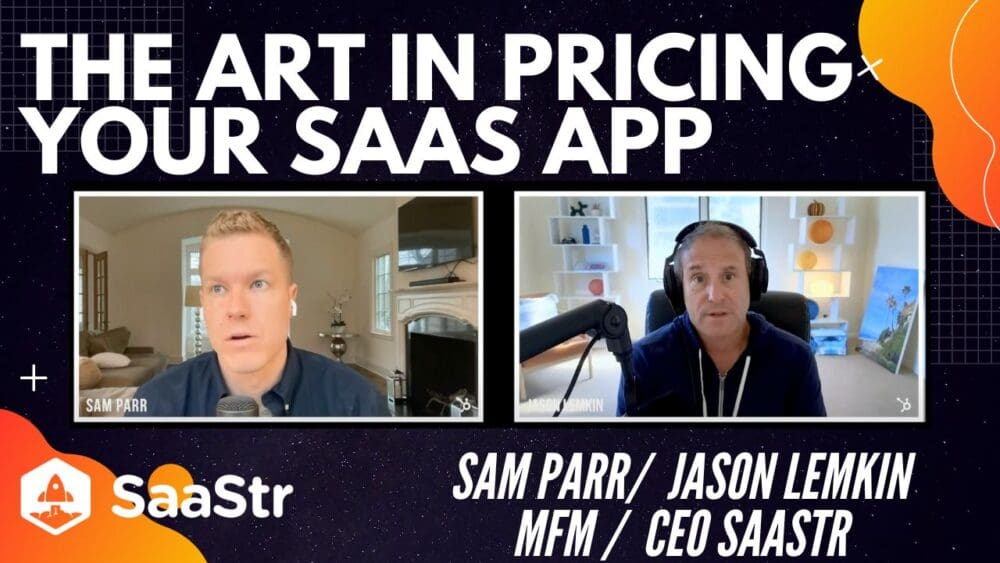
Most founders say they want to build a $100 million company. Then Monday arrives, the onboarding emails are still broken, the CRM has become a digital junk drawer, and the pricing page looks like it was assembled during a mild coffee emergency. That is why the SaaStr appearance on My First Million, featuring Jason Lemkin with Sam Parr, hits differently. Instead of treating a nine-figure outcome like startup astrology, the conversation frames it as a math problem, an operating system, and, occasionally, a warning label.
The episode, titled around reverse engineering a $100 million exit, centers on a simple but uncomfortable idea: big outcomes are rarely accidents. A SaaS company does not stumble into $100,000,000+ because the founder bought a better microphone, added “AI-powered” to the homepage, or posted one spicy LinkedIn thread before breakfast. It gets there because revenue quality, pricing power, product expansion, retention, efficiency, and fundraising choices all compound in the same direction.
In the My First Million show notes, the discussion is organized around practical rules: reach serious revenue per employee, go multi-product, make the second product bigger than the first, double pricing over time, build internationally, localize, remove friction, maintain at least 100% net revenue retention, avoid business models that cap upside, and be careful about raising too much money too early. In classic SaaStr fashion, the advice is not fluffy. It is more like a founder gym session: useful, sweaty, and slightly rude to your current operating plan.
Why Reverse Engineering Matters in SaaS
Reverse engineering sounds fancy, but it simply means starting with the desired outcome and working backward. If a founder wants a $100 million exit, the question is not, “How do I become famous on Tech Twitter?” The question is, “What must be true for a buyer, investor, or public market to believe this business deserves that value?”
For SaaS companies, value usually comes from a mix of recurring revenue, growth rate, retention, gross margin, customer concentration, product depth, market size, and operational efficiency. A company with $10 million in annual recurring revenue, strong growth, high retention, and efficient headcount can be far more attractive than a company with similar revenue but messy churn, bloated payroll, and a product roadmap that looks like a buffet plate at a conference lunch.
The SaaStr framework is powerful because it forces founders to stop worshiping vanity milestones. Getting press is nice. Raising money is exciting. Hiring a giant team feels impressive. But none of those things automatically create a valuable business. The real game is building a machine that customers keep paying for, expand into, recommend, and struggle to replace.
The $400K Revenue per Employee Mindset
One of the sharpest ideas from the episode is the emphasis on revenue per employee. The show notes reference a “new minimum” of $400,000 per employee for companies trying to play at a serious level. That number should not be treated as a magical law carved into a stone tablet by the SaaS gods, but it is a useful pressure test.
Revenue per employee measures whether the business scales with leverage or simply grows by adding people. In older SaaS cycles, companies often hired aggressively during good funding markets. The pitch was basically: burn now, dominate later. That worked for some winners, but for many startups it created fragile organizations where every growth target required another expensive hire, another manager, another tool, another dashboard, and another meeting about why there are too many meetings.
Recent SaaS benchmark research from High Alpha and OpenView shows that efficiency has become a central founder concern, especially as AI changes how teams build, sell, and support products. High Alpha’s 2025 discussion of ARR per employee highlights how companies above $50 million ARR can approach roughly $400,000 per employee in upper-quartile performance. The message is clear: in the modern SaaS market, headcount is not a trophy. It is a cost that must create leverage.
What This Means for Founders
A founder reverse engineering a $100 million outcome should ask: “Can this company double revenue without doubling headcount?” If the answer is no, the company may be more like a services business wearing a SaaS costume. Cute costume, wrong party.
The practical fix is not to freeze hiring forever. It is to hire around systems. Build repeatable sales motions before hiring a large sales team. Automate onboarding before scaling customer success. Use product-led education before adding endless support reps. Document processes before recruiting managers to manage the undocumented chaos. Efficiency is not about being cheap; it is about making every new person more powerful than the spreadsheet expected.
Going Multi-Product Without Creating a Product Junk Drawer
The episode’s second major rule is to go multi-product. That sounds easy until you realize many companies confuse “multi-product” with “we added three tabs and a new invoice line.” A true second product is not a feature with better shoes. It has its own market pull, budget owner, use case, and expansion potential.
SaaStr has written repeatedly about the importance of real multi-product expansion. The logic is straightforward: a single product can hit a ceiling. Maybe the initial market is too small. Maybe the company reaches deep penetration with its ideal customers. Maybe competitors squeeze the category. At that point, growth slows unless the business can sell more value to existing customers or reach adjacent buyers with a meaningful new product.
HubSpot, Salesforce, Atlassian, Datadog, and other major SaaS companies demonstrate the power of expanding from one wedge into a broader platform. But the timing matters. Launch too early and the team loses focus. Launch too late and the first product may already be slowing. The SaaStr-style answer is not “do everything.” It is “earn the right to do the next big thing.”
The Second Product Must Be Bigger
One of the most memorable ideas in the episode is that the second product should be bigger than the first. That is psychologically hard. Founders love their first product. It paid the bills, attracted investors, and gave the team something to put on the homepage besides “coming soon.” Asking that founder to build something larger can feel like telling a parent their second child needs a bigger college fund and better hair.
But from a $100 million perspective, the rule makes sense. If the second product is too small, it becomes a distraction. If it expands the total addressable market, increases average contract value, and improves retention, it becomes a growth engine. A serious second product should make the company more valuable, not merely more complicated.
Pricing: The Quiet Lever Founders Underuse
Another SaaStr-on-MFM “cheat code” is simple: double your pricing over time. Many founders underprice because they fear rejection. They imagine customers fleeing like pigeons when a toddler discovers clapping. But in B2B SaaS, price often communicates confidence, value, and category position.
That does not mean founders should randomly double prices on Tuesday and call it strategy. Pricing power must be earned. The product needs to solve a painful problem, deliver measurable value, support serious customers, and improve over time. But if a product saves a company hundreds of thousands of dollars, charging like a nervous lemonade stand is not generosity. It is poor positioning.
Modern SaaS pricing is also becoming more complex. Paddle’s recent writing on SaaS pricing models notes that companies increasingly combine subscriptions, usage-based pricing, tiering, and AI-related add-ons. The old “three boxes on a pricing page” model still works for some products, but many SaaS businesses now need pricing that reflects usage, outcomes, customer size, and value delivered.
A Practical Pricing Example
Imagine a workflow automation SaaS charging $99 per month to teams that save 40 hours of manual work monthly. If that customer’s blended labor cost is $60 per hour, the product creates roughly $2,400 in monthly value. The company may still choose a low entry price to reduce friction, but the long-term pricing architecture should capture more value through higher tiers, usage limits, premium support, compliance features, or enterprise packaging.
The key is to avoid pricing based only on effort. Customers do not pay because your engineering team suffered. They pay because their pain disappears, their revenue grows, their risk drops, or their work gets faster. Price the outcome, not the founder’s emotional journey through Jira.
International Revenue Is Not a Bonus Level
The episode also points to international revenue, including the idea that a meaningful portion of revenue may need to come from outside the United States for a company to reach serious scale. This is often where founders nod wisely, then leave their website available only in English, price only in U.S. dollars, and wonder why Germany is not converting.
International expansion is not simply “turn on Stripe and hope.” It involves local payment methods, regional compliance, translated product experiences, local search behavior, time zones, support expectations, and sometimes entirely different buying psychology. ICONIQ’s international expansion research found that among SaaS companies going public between 2019 and 2024, median international revenue was about 30%, which lines up neatly with the episode’s emphasis on global revenue as a serious growth lever.
Localization is more than translation. It is trust. A buyer in France, Japan, Brazil, or Vietnam wants to know the product understands their workflow, currency, language, legal requirements, and business norms. A clumsy machine translation can make a polished SaaS product feel like it arrived wearing mismatched socks.
Remove Friction Everywhere
The episode’s “remove friction” lesson belongs right next to international expansion. Every extra step in signup, checkout, onboarding, procurement, approval, integration, and renewal creates drag. At small scale, drag feels annoying. At large scale, it becomes a growth tax.
Removing friction can mean offering self-serve trials, clearer pricing, better documentation, faster sales follow-up, simple security reviews, localized billing, cleaner onboarding, or product templates that help users reach value faster. The best SaaS companies do not just build features. They build ramps.
Net Revenue Retention: The Compounding Engine
The episode calls out 100% net revenue retention as a key rule. NRR measures how much revenue a company keeps and expands from existing customers after churn, downgrades, upgrades, and expansion. If NRR is below 100%, new sales must first refill the bucket before the company grows. If NRR is above 100%, existing customers help the company grow even before new acquisition kicks in.
Recent SaaS benchmark reports continue to emphasize retention as a defining growth driver. ChartMogul’s retention research has highlighted how difficult but important 100%+ NRR has become, while High Alpha/OpenView benchmark data shows public SaaS net dollar retention stabilizing around 110% after earlier declines. Translation: retention is not a customer success department metric. It is the company’s compounding engine.
Strong NRR usually comes from three things: customers stay, customers use more, and customers buy more. That requires a product with durable value, expansion paths, strong onboarding, customer health visibility, and pricing that grows with usage or business impact.
Why Low-NRR Models Struggle
A low-retention business can still grow, but it has to run faster just to stay in place. That can work in consumer apps, seasonal products, or one-time transaction businesses, but it is difficult to turn into a premium SaaS outcome. Buyers and investors prefer recurring revenue that behaves like a loyal golden retriever, not revenue that bolts whenever someone opens the front door.
For founders, the lesson is blunt: do not hide churn under new bookings. Segment retention by cohort, customer size, acquisition channel, product usage, and pricing plan. If one customer segment expands beautifully while another churns like a haunted washing machine, the answer is not “more leads.” The answer is better focus.
Business Models That Will Not Get You There
Not every business can become a $100 million SaaS exit. That is not an insult; it is physics. Some markets are too small. Some products are too service-heavy. Some categories have low willingness to pay. Some businesses depend too much on founder charisma. Some tools are useful but not mission-critical.
Reverse engineering requires honesty about the ceiling. A beautiful $5 million business can be life-changing for a founder, especially if it is profitable and lightly funded. But a business built for a $20 million lifestyle outcome should not raise capital, hire, and burn like it is chasing a billion-dollar IPO. That mismatch creates pain for founders, employees, and investors.
The SaaStr message is not that every founder must chase a giant exit. It is that founders should align the business model, fundraising path, market size, and personal goals. A founder who wants freedom may be better served by a profitable niche SaaS company than by a venture-backed rocket ship with a steering wheel made of stress.
Fundraising: Optionality Is the Real Prize
One of the most founder-friendly ideas from the episode is to avoid raising double-digit millions unless the business truly needs it and can support the exit expectations that come with it. Raising venture capital can be smart, but it is not free money. It changes the outcome required for everyone to win.
If a company raises too much at too high a valuation, a $100 million exit may no longer be a great outcome. Investors may need a much larger exit to generate meaningful returns. Employees may find their options underwater. Founders may discover that the business they built has fewer strategic choices than expected.
SaaStr has often argued that taking too much capital can reduce exit optionality. That does not mean founders should avoid venture capital entirely. It means they should raise money to accelerate what is already working, not to discover what might work through expensive guessing.
How to Apply the SaaStr Framework Today
For a founder reading this and wondering where to start, the answer is not to rewrite the whole company strategy in one dramatic Notion document. Start with a diagnostic.
First, calculate revenue per employee. If the number is low, identify whether the issue is early stage, underpricing, weak sales productivity, too much service work, or unnecessary headcount. Second, review retention by cohort. If NRR is under 100%, find whether churn comes from poor-fit customers, missing features, weak onboarding, or pricing misalignment. Third, inspect pricing. If customers easily say yes, never negotiate, and expand usage without paying more, pricing may be too low. Fourth, map product expansion. Is there a second product that could be larger than the first, or are you merely adding ornaments to the same tree? Fifth, assess fundraising. Does the amount raised match the realistic exit path?
This is where reverse engineering becomes practical. You are not predicting the future. You are designing constraints that make the future more likely.
Founder Experiences and Lessons Inspired by the Topic
One experience that comes up again and again in SaaS is the founder who confuses motion with progress. They launch features, redesign the homepage, change the tagline, hire a growth marketer, join three founder communities, and still avoid the terrifying question: “Are customers expanding?” The SaaStr and My First Million conversation is valuable because it pulls attention back to the numbers that do not care about vibes.
A founder building toward a $100 million outcome might spend the first year obsessing over product-market fit. That is correct. But by year two or three, the questions must mature. Can sales repeat without the founder on every call? Can onboarding succeed without heroic customer support? Can the product create expansion revenue naturally? Can marketing generate demand from a specific ICP instead of attracting every random visitor with Wi-Fi and curiosity?
In practical terms, the biggest lesson is that scale punishes vague strategy. At $20,000 MRR, a founder can personally patch holes. At $2 million ARR, those holes become departments. At $20 million ARR, they become board slides. By the time a company is trying to justify a nine-figure exit, weaknesses in retention, pricing, market size, or team efficiency are not tiny cracks. They are architectural problems.
Another useful experience is pricing discomfort. Many founders remember the first time they raised prices and expected angry emails, public complaints, and perhaps a dramatic violin somewhere in the background. Instead, serious customers often accept the increase when the value is clear. Sometimes conversions even improve because the higher price attracts buyers with stronger intent. The lesson is not “charge more because greed is fun.” The lesson is that underpricing can attract the wrong customers, weaken support economics, and limit the company’s ability to invest in the product.
The multi-product lesson also has a real-world emotional component. Teams often resist the second product because the first product is still demanding attention. Sales wants more features. Customer success wants fixes. Engineering wants platform cleanup. The founder wants growth. The second product therefore feels like building a second airplane while the first one is full of passengers asking for Wi-Fi. The only way it works is with discipline: a clear owner, a real market thesis, separate success metrics, and enough patience to let the second act become meaningful.
International expansion offers another practical lesson: demand may appear before readiness. A company might notice signups from Europe, Asia, or Latin America and assume global growth is already happening. But traffic is not revenue, and revenue is not retention. The serious work begins when the company studies conversion by country, support requests by language, payment failures by region, and churn by market. Sometimes the first international win is not a full local office. It is simply local currency, translated onboarding, region-specific templates, and support coverage that does not make customers wait until tomorrow because the team is asleep in California.
Finally, fundraising discipline may be the most underrated experience of all. Raising a large round feels like success because the market applauds it. But the celebration can hide a new obligation. Once a company takes serious capital, it must pursue serious outcomes. That can be perfect for a massive market with strong pull and fast execution. It can be painful for a niche product with a wonderful but limited ceiling. The best founders are honest about which game they are playing.
Reverse engineering your way to $100,000,000+ is not about manifesting a number. It is about building a company where the number becomes believable. Efficient teams, strong retention, pricing power, global reach, multi-product expansion, and smart capitalization all work together. Miss one, and the journey becomes harder. Miss several, and the business may still be good, but it probably belongs in a different outcome category.
Conclusion
The SaaStr appearance on My First Million is useful because it turns a dream outcome into an operating checklist. A $100 million exit is not just about ambition. It is about building a SaaS business with leverage, durable revenue, real expansion paths, disciplined pricing, international potential, and fundraising choices that preserve optionality.
Founders do not need to copy every rule blindly. Markets differ. Products differ. Some companies should bootstrap. Others should raise aggressively. Some should stay focused on one product longer. Others need a second act earlier. But the core principle is universal: decide what outcome you want, then build the company that outcome requires. That is reverse engineering. It is less glamorous than a launch party, but it has a much better chance of paying for one.