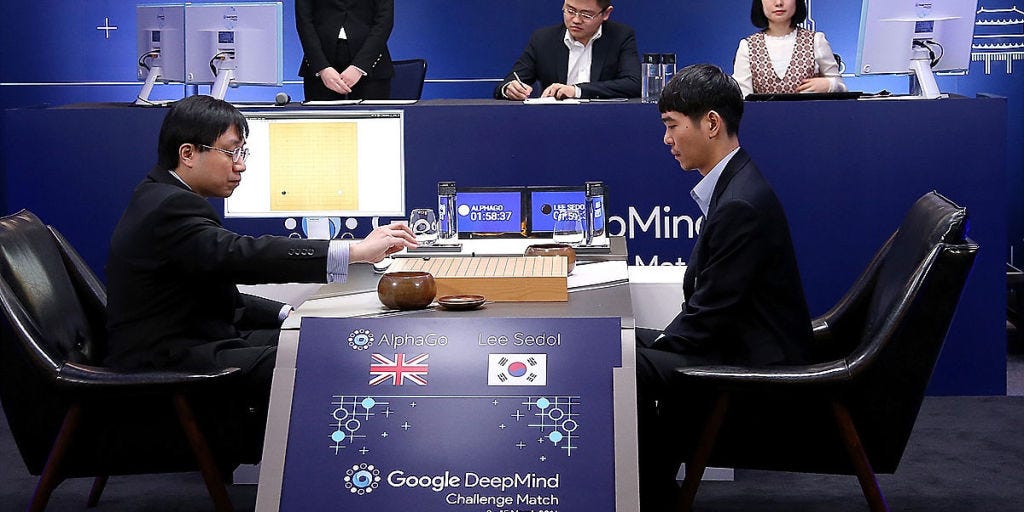
There are sports upsets, there are technology launches, and then there are moments when humanity collectively leans back in its chair and says, “Well, that escalated quickly.” AlphaGo’s final victory over Lee Sedol in March 2016 was one of those moments. When Google DeepMind’s software won the fifth and final game of the historic Go match in Seoul, the final score landed at 4–1, and with it came a thunderclap across technology, gaming, and culture. This was not just a machine winning a board game. It was a machine walking into one of the oldest temples of human intuition and casually rearranging the furniture.
The title may sound dramatic, but the drama was real. For decades, Go had been treated like the board game computers would struggle with the longest. Chess had fallen. Jeopardy had fallen. But Go still stood there, arms crossed, radiating ancient confidence. Then AlphaGo showed up, mixed deep neural networks with tree search, learned from expert games, trained through self-play, and did the digital equivalent of clearing its throat before making history. By the end of the match, the old question of whether a machine could beat elite human Go players had largely been answered. The conversation changed from “Can AI do this?” to “What else can AI do?”
Why Go Was Supposed to Be the Last Great Fortress
To understand why AlphaGo’s win felt so seismic, you have to understand Go itself. Go is not merely old; it is gloriously, stubbornly old. The game traces back thousands of years and is played on a 19-by-19 board with black and white stones. The rules are simple enough to fit on a napkin. The strategy is not. Go explodes with possibilities so quickly that brute-force calculation, the classic computer trick, becomes wildly impractical. If chess is a tactical knife fight, Go is a weather system.
That mattered because older computer successes often relied on grinding through possibilities faster than humans could. Go resisted that approach. Strong Go requires pattern recognition, long-horizon planning, positional judgment, and something that human players often describe as intuition. That word made computer scientists itchy for years, because “intuition” sounds suspiciously like a human monopoly. AlphaGo did not just beat a player; it attacked that assumption directly.
Go looks simple until it melts your brain
The beauty of Go is also what made it such a nightmare for traditional AI. Every move influences the whole board. Local battles can become global consequences. A move that looks silly on turn 40 can become genius on turn 180. Human experts learn to feel the balance of territory, influence, sacrifice, and momentum. Computers, for a long time, mostly learned to feel confused.
That is why AlphaGo mattered so much. It was not solving a neat, narrow puzzle. It was entering a domain that many researchers and players saw as deeply human. When it crossed that line, it did not tiptoe. It kicked the door open.
How AlphaGo Actually Worked Without Pretending to Be Magic
AlphaGo was impressive, but it was not wizardry in a server rack. Its architecture combined several big ideas in machine learning. One neural network, called the policy network, helped choose promising moves. Another, the value network, estimated who was likely to win from a given position. These networks worked alongside Monte Carlo tree search, which let the system explore likely continuations efficiently instead of trying to calculate the entire universe of Go in one sitting.
The training process was just as important as the architecture. AlphaGo first learned from thousands of expert human games, basically studying the classics before trying to write its own symphony. Then it improved through self-play, repeatedly competing against versions of itself and refining what worked. That combination mattered: imitation gave it a foothold, and reinforcement learning helped it grow beyond imitation. It did not stay a student for long.
First it learned from people, then it started surprising them
Before facing Lee Sedol, AlphaGo had already beaten European champion Fan Hui 5–0, which was a huge signal that something serious was happening. Even then, many observers believed the world’s best human players would still be too much. After all, there is a difference between beating an accomplished professional and staring down a legend in full public view.
Lee Sedol was not some convenient warm-up act. He was a 9-dan professional, one of the greatest players of his era, a global star in the Go world, and a player whose style mixed creativity with ferocity. If a human representative was going to defend the species at the Go board, this was a pretty solid choice.
The Match in Seoul Was More Than a Match
When AlphaGo and Lee Sedol sat down in Seoul, the event immediately became bigger than the board. Major South Korean television networks carried it. Huge audiences followed it online. Press rooms filled. Commentators leaned over boards trying to explain the unexplainable. It felt part sporting event, part science fair, part philosophical reckoning.
Game 1 ended with AlphaGo winning. That alone was historic. Game 2 was the one that really snapped heads around the world, thanks to a now-famous unconventional play often referred to as Move 37. Experts thought it looked strange, even wrong, until it slowly revealed itself as brilliant. That was the moment the machine stopped looking merely strong and started looking original.
Games 1 through 3 turned the pressure into an avalanche
After the second win, the atmosphere changed. The machine was no longer the intriguing challenger. It was becoming the favorite, and that is when the emotional temperature shot up. By winning Game 3, AlphaGo clinched the overall match. That meant the symbolic barrier had already fallen before the final two games were even played.
What made that stretch so powerful was not just the score. It was the style. AlphaGo seemed calm, precise, and occasionally bizarre in ways that produced real value. It was not playing like a calculator. It was playing like something that had discovered Go from an angle humans had not fully explored.
Game 4 reminded everyone that humans are still wonderfully weird
Then came Game 4, and humanity got a much-needed morale snack. Lee Sedol won. His victory was not meaningless consolation either. It exposed a weakness in AlphaGo’s responses to surprising play and gave the series its most emotionally satisfying twist. For one day, the narrative stopped sounding like a machine takeover and started sounding like a comeback movie.
That win mattered because it showed the human side of the contest was still alive, creative, and dangerous. Lee did not overpower AlphaGo by thinking more like a machine. He did it by being unmistakably human: inventive, adaptable, and willing to steer the game into uncomfortable terrain.
Game 5 was the closing argument
In the fifth game, AlphaGo made an early move that looked like a mistake, which naturally sent commentators into another round of live intellectual whiplash. But the software recovered and, after a long, difficult endgame, won the final contest. Lee resigned after 280 moves. Final score: 4–1.
That final win gave the story its clean ending. The machine had not merely stolen a game or two. It had taken the series, absorbed a setback, adjusted, and finished the job. DeepMind later announced that the $1 million prize money would be donated to UNICEF, STEM charities, and Go organizations. Even the victory lap tried to look socially respectable.
Move 37: The Tiny Stone That Caused a Global Double Take
No article about AlphaGo is complete without Move 37, because Move 37 became shorthand for something larger than Go. In Game 2, AlphaGo played a move so unconventional that expert commentators initially thought it might be a blunder. Then they realized it was not a blunder at all. It was the kind of play almost no human professional would have considered at that moment.
That single stone became a cultural event because it suggested that AI was not just copying patterns; it was surfacing possibilities that humans had overlooked. People love to say machines are uncreative right up until a machine does something creative and everyone starts nervously adjusting their definitions.
To be clear, AlphaGo was not writing poetry about the moon or opening a jazz club in Brooklyn. But in the narrow, demanding universe of elite Go, it demonstrated a form of strategic originality that human experts recognized as meaningful. That was enough to unsettle a lot of comfortable assumptions.
Did AlphaGo Really Quash Human Competition?
Literally? No. Humans did not stop playing Go, nor did the game lose its beauty, prestige, or competitive life. Go tournaments continued. Players improved. The community adapted. But symbolically and competitively, AlphaGo changed the hierarchy in a way that was hard to reverse. After Seoul, the question of whether top humans would remain the unquestioned peak of Go no longer held up.
In that sense, the title fits. AlphaGo quashed human competition not by destroying human interest, but by ending human exclusivity at the summit. It moved elite machine play from science-fiction rumor to public fact. And when later versions kept improving, including AlphaGo’s later successes and eventual retirement from competitive play, the message became even clearer: the ceiling had moved, and it had moved above us.
The weird twist: humans got stronger too
One of the most interesting consequences is that human players began learning from AlphaGo. Professionals studied its moves, borrowed its ideas, and rethought long-held assumptions. In other words, the machine did not just beat humans; it became a teacher. That twist makes the AlphaGo story far more interesting than a simple “robots win” headline.
Instead of killing Go, AlphaGo expanded it. The machine’s strange moves opened fresh strategic paths. Top players began exploring new openings and fighting patterns inspired by AI analysis. So yes, human competition was quashed at the old peak, but the mountain itself got bigger.
Why AlphaGo’s Final Win Mattered Far Beyond a Board Game
AlphaGo’s victory hit harder than a normal tech breakthrough because it made abstract AI progress visible. Most people cannot intuitively feel the meaning of an improved benchmark or a new training method. But they can understand a world-class human champion losing in a game long believed to require intuition. AlphaGo turned AI progress into a spectator event.
That is why the match echoed far beyond Go clubs. Researchers saw a validation of deep reinforcement learning. Business leaders saw practical potential in systems that learn through experience. Governments saw strategy and urgency. The public saw a glimpse of a future in which machines would not just automate repetitive tasks but would also enter domains once considered deeply, stubbornly human.
Of course, that did not mean AlphaGo could suddenly do your taxes, diagnose every disease, and write a better wedding toast than your uncle Dave. Specialized mastery is not general intelligence. Still, AlphaGo proved something crucial: with the right architecture and training, AI could find solutions in vast, complex spaces that had resisted older methods. That lesson traveled far outside Go.
Experience: What It Felt Like When AlphaGo Changed the Mood of the World
Watching the AlphaGo match unfold was, for many people, an oddly emotional experience. Even if you had never played Go seriously, the tension was easy to feel. On one side sat Lee Sedol, visibly human in every important way: pausing, frowning, leaving the room to think, carrying the pressure of expectation on his face. On the other side sat a software system represented by an engineer placing stones on its behalf. It looked almost theatrical, like someone had staged a philosophy debate and accidentally turned it into appointment viewing.
That atmosphere mattered. You could feel the room treating each move as more than a move. When Lee stared at the board after one of AlphaGo’s strange plays, the moment felt larger than sport. It was the expression people wear when an old mental model breaks in real time. Commentators laughed nervously, then went quiet, then started trying to explain what they had just seen. Viewers around the world were doing the same thing in living rooms, offices, labs, and dorm rooms. Everyone was suddenly a little less certain about where human intuition ended and machine competence began.
There was also something undeniably dramatic about the rhythm of the series. The first wins felt like shock. The third felt like a verdict. The fourth felt like rebellion. Lee Sedol’s win in Game 4 gave people something deeply satisfying: a reminder that human ingenuity does not vanish just because a machine gets stronger. That game injected the match with pathos. It turned the story from a cold technical milestone into a human drama with resistance, pride, and adaptation.
Then Game 5 arrived and settled everything with the kind of quiet finality that only a long board game can deliver. No explosions, no victory music, just stones, concentration, and the eventual recognition that the machine had done it again. For many observers, that final game felt less like an ending than like a border crossing. You could almost sense the world stepping from one AI era into another.
For Go players, the experience was even more intimate. AlphaGo did not simply beat a champion; it challenged a tradition. Yet many professionals later responded not with bitterness, but curiosity. They studied the games. They borrowed ideas. They began treating AI less like a vandal and more like a brutally talented new training partner who never gets tired and occasionally makes everyone in the room question their life choices.
That may be the most lasting emotional truth of the AlphaGo story. The event was unsettling, yes, but it was also oddly generative. It produced fear, admiration, skepticism, wonder, and eventually learning. The experience of watching AlphaGo win was not the experience of watching humanity become obsolete. It was the experience of watching humanity meet a new kind of mirror. The reflection was strange, brilliant, and a little rude, but it taught us something. It showed that intelligence can take forms we did not fully expect, and that once we get over the shock, we often learn fastest from the things that challenge our pride the most.
Conclusion
AlphaGo’s final win over Lee Sedol was not just a landmark in the history of artificial intelligence. It was one of those rare public moments when the future stopped being theoretical and sat down across from us at a table. By winning the fifth game and the series 4–1, AlphaGo shattered the comforting idea that some strategic domains would remain safely, permanently human.
And yet the deeper legacy is not humiliation. It is expansion. AlphaGo pushed Go players to rethink the game. It pushed AI researchers to pursue more ambitious systems. It pushed the broader public to recognize that machine learning was no longer a background curiosity. The final game did not end human meaning in Go. It ended human monopoly over its highest strategic ground. That is a very different thing, and a far more interesting one.