Note: This article is written in standard American English for web publication and is based on real public information about BLK MKT Vintage, its founders, its book, and its cultural mission.
Introduction: When “Old Stuff” Becomes Living History
Some people see an old magazine, a faded campaign button, a cracked vinyl sleeve, or a well-loved yearbook and think, “Cute, but dusty.” BLK MKT Vintage looks at the same object and sees a door. Behind that door might be a Black college campus in the 1920s, a Shirley Chisholm campaign moment in the 1970s, a living room full of Ebony magazines, or a kitchen where a hot comb sat beside family stories, Sunday plans, and a little bit of gossip for seasoning.
BLK MKT Vintage: Reclaiming Objects & Curiosities That Tell Black Stories is more than a book title. It is a philosophy, a collecting practice, and a cultural correction. Created by Brooklyn-born curators Jannah Handy and Kiyanna Stewart, BLK MKT Vintage centers Black material culture: the objects, images, books, records, textiles, furniture, art, and ephemera that carry memory from one generation to the next.
In a vintage world that has often treated Black history as a footnote, BLK MKT Vintage says, politely but firmly, “Actually, this is the main story.” Their work turns cast-offs into cultural evidence, collectibles into conversation starters, and home décor into a form of remembrance. It is history with texture. It is archiving with soul. It is also proof that a $5 magazine bin can sometimes hold more emotional power than a glass case in a museum.
What Is BLK MKT Vintage?
BLK MKT Vintage is a Black-owned vintage and antique concept rooted in collecting, preserving, and sharing objects connected to Black life. Founded in November 2014 by Kiyanna and Jannah Handy, the project grew from years of picking, sourcing, and collecting vintage wares into a recognized platform for Black cultural preservation.
The brand has described itself as a “curated love story,” and that phrase fits beautifully. The love is personal, romantic, historical, communal, and aesthetic all at once. BLK MKT Vintage collects items that reflect the richness of Black cultural expression across the African diaspora, from paper ephemera and vintage literature to vinyl records, apparel, art, furniture, décor, pins, patches, and curiosities.
Their work spans more than retail. BLK MKT Vintage has been involved in e-commerce, interior styling, prop rental, set design, exhibition loans, and curatorial projects. That range matters because it shows the flexibility of Black memory work. A vintage Jet magazine can live on a coffee table. A campaign pin can sit in a private collection. A piece of furniture can help shape a room. A photograph can appear in a book. A single object can move from attic to shop to home to conversation, carrying its story each time.
The Founders: Jannah Handy and Kiyanna Stewart
At the center of BLK MKT Vintage are Jannah Handy and Kiyanna Stewart, Brooklyn natives whose shared love of vintage objects became a business, a marriage of ideas, and a cultural practice. Their combined collecting and picking experience helped them build a collection that feels both intimate and expansive.
What makes their approach special is not simply that they find rare items. Plenty of collectors can sniff out a treasure from three tables away at a flea market. The difference is interpretation. Handy and Stewart understand that objects are not neutral. A book, button, poster, photograph, or record can tell a story about who was celebrated, who was ignored, who made beauty under pressure, and who insisted on being remembered.
Their work also challenges the old idea that antiques must feel formal, distant, or locked behind velvet ropes. BLK MKT Vintage brings history into everyday living. A home can hold archives. A shelf can become a family museum. A gallery wall can talk back. That is one reason the brand resonates with people who want their spaces to reflect identity, memory, joy, and stylenot just whatever a catalog decided was “timeless beige.”
Why Black Material Culture Matters
Black material culture refers to physical objects that reflect Black experiences, creativity, labor, politics, style, spirituality, education, leisure, and everyday life. These objects may be glamorous, ordinary, handmade, mass-produced, expensive, or almost accidentally preserved. Their value is not always obvious at first glance.
Consider an old HBCU yearbook. On paper, it may seem like a school souvenir. In reality, it can preserve names, faces, fashion, clubs, social rituals, academic ambition, and community networks that might not appear in mainstream historical accounts. A funeral program can reveal how a person was loved. A vintage magazine can show how Black beauty, politics, music, and business were represented in a particular decade. A record sleeve can hold the soundscape of a family’s Saturday cleaning routine. Yes, history sometimes smells like dust and cardboard. That does not make it less powerful.
For many Black families, preservation has often happened informally: in shoeboxes, closets, basements, albums, kitchen drawers, church folders, and plastic storage tubs with lids that may or may not match. BLK MKT Vintage honors that tradition while also elevating it. The message is clear: the things Black people saved, used, made, wore, read, and cherished deserve study, care, display, and celebration.
The Book: Reclaiming Objects and Curiosities That Tell Black Stories
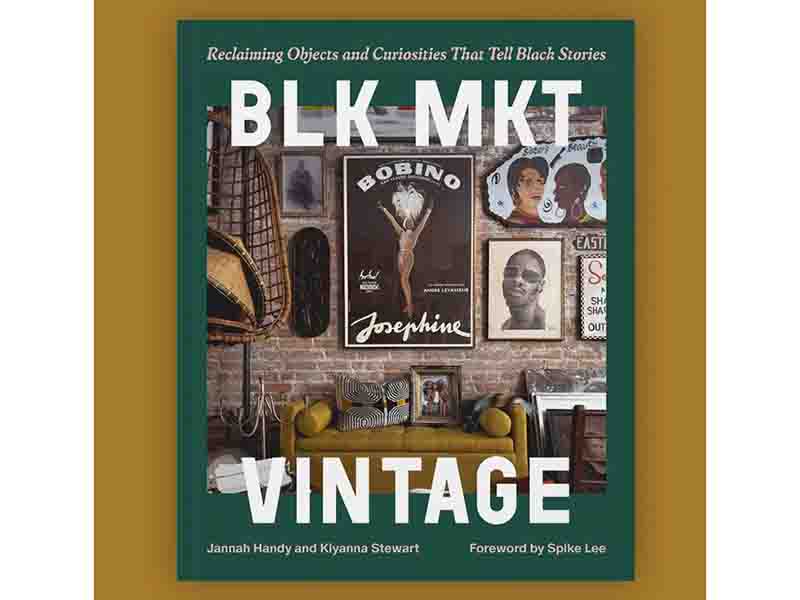
The book BLK MKT Vintage: Reclaiming Objects and Curiosities That Tell Black Stories expands the brand’s mission into a beautifully designed physical archive. Published by Black Dog & Leventhal and featuring a foreword by Spike Lee, the hardcover book contains hundreds of photographs of vintage ephemera and culturally significant objects.
Its pages include treasures such as Shirley Chisholm campaign pins, early maps of Africa, HBCU yearbooks, vintage magazines, Black hair tools, flags, books, photographs, and other pieces that invite readers to slow down and look closely. The book functions like a scrapbook, family album, design object, and cultural study at the same time.
That hybrid quality is part of its appeal. It is not merely a pretty coffee table book, though it would absolutely win the coffee table Olympics. It is also a guide to seeing. Readers are invited to recognize that the objects around them may hold stories worth preserving. A pin is not just a pin. A comb is not just a comb. A yearbook is not just a stack of old portraits. Each item asks: Who used this? Who saved it? What world did it come from? Why does it still speak?
How BLK MKT Vintage Reclaims the Archive
Traditional archives have not always treated Black life with the seriousness, tenderness, or complexity it deserves. Sometimes Black stories were excluded. Sometimes they were collected by institutions without context. Sometimes everyday objects were dismissed as too ordinary to matter. BLK MKT Vintage pushes back by centering Black people as the authors, owners, curators, and interpreters of their own material histories.
This reclamation happens in several ways. First, the brand sources objects connected to Black cultural production and makes them visible. Second, it interprets those objects through a Black-centered lens. Third, it places the items in spaces where people can live with them, not just observe them from a distance. Finally, it encourages others to collect their own histories with intention.
The result is a more democratic idea of archiving. You do not need a marble building to preserve memory. You need attention, care, curiosity, and a willingness to ask questions. Also, maybe acid-free sleeves. The ancestors appreciate good storage habits.
Objects That Carry Stories
Vintage Magazines and Newspapers
Magazines such as Ebony and Jet have long documented Black celebrity, politics, style, tragedy, triumph, and everyday aspiration. Old issues offer snapshots of how Black communities saw themselves and wanted to be seen. They also remind us that representation did not magically appear in the digital age. It was printed, distributed, clipped, saved, stacked, and revisited.
Campaign Pins and Political Ephemera
Political buttons, posters, flyers, and campaign materials tell stories about civic imagination. A Shirley Chisholm campaign pin, for example, is not only a collectible; it is a small, wearable artifact of possibility. It speaks to Black women’s leadership, political courage, and the long fight to be heard in rooms that were never built with inclusion in mind.
HBCU Yearbooks and Educational Objects
Historically Black Colleges and Universities hold a central place in Black intellectual and social history. Their yearbooks preserve student life, campus traditions, fashion, organizations, friendships, and ambitions. In the hands of BLK MKT Vintage, these books become more than nostalgic objects. They become evidence of excellence, community, and self-definition.
Hair Tools and Beauty Culture
Black hair toolshot combs, rollers, picks, salon materials, advertisements, and beauty packagingcarry layered histories of care, creativity, commerce, gender, and self-expression. They belong in the archive because beauty culture is not shallow. It is personal, political, technical, and deeply social. Anyone who has ever sat between someone’s knees getting their hair done knows that the salon and the kitchen chair are both institutions.
Books, Records, and Art
Vintage books, vinyl records, posters, and artworks document Black imagination across generations. They show what people read, listened to, danced to, debated, framed, and passed down. These objects make culture tangible. They also make it harder for anyone to pretend Black creativity was ever a side note.
From Brooklyn Shop to Cultural Landmark
BLK MKT Vintage’s brick-and-mortar shop in Bed-Stuy, Brooklyn became beloved because it offered something many vintage stores did not: a space where Black history was not hidden in a corner or treated as a specialty category. It was the atmosphere, the framework, the heartbeat.
The shop brought together vintage tees, jazz records, archival magazines, postcards, pins, décor, books, and unexpected finds. Visitors could discover objects at different price points, making the experience feel accessible rather than intimidating. That matters. When people can afford to take home a small piece of history, they become participants in preservation.
Although the physical shop has since closed to the public, BLK MKT Vintage continues through its online shop, projects, services, and book. In a way, the closing of a storefront has only emphasized the larger point: BLK MKT Vintage was never just a store. It is a method of remembering, a curatorial voice, and a community-centered way of treating objects as carriers of Black life.
Interior Styling as Memory Work
One of the most interesting parts of BLK MKT Vintage’s practice is its approach to interiors. The brand’s design philosophy blends past, present, and aspirational future. In practical terms, that means a room can be beautiful and historically grounded at the same time.
Instead of decorating with anonymous objects, BLK MKT Vintage encourages people to live with pieces that mean something. A vintage poster can shift the emotional temperature of a room. A stack of old books can tell guests what the household values. A record collection can become both design and soundtrack. A photograph can transform a blank wall into a witness.
This approach is especially powerful in a culture where mass-produced décor often makes homes look like everyone moved into the same beige cloud. BLK MKT Vintage offers another path: layered, narrative-driven design that reflects identity. The goal is not clutter. The goal is conversation. A good room should not just look styled; it should have a memory, a point of view, and maybe one object that makes guests say, “Wait, where did you find that?”
The SEO-Friendly Lesson: Niche Can Be Powerful
From a content and branding perspective, BLK MKT Vintage is a strong example of why niche work can have broad cultural impact. The brand does not try to be every vintage shop for every person. It focuses on Black collectibles, Black ephemera, Black interiors, Black memory, and Black cultural storytelling. That clarity makes the brand memorable.
For readers searching terms such as “Black vintage shop,” “Black material culture,” “African American collectibles,” “Black ephemera,” “vintage Black memorabilia,” and “BLK MKT Vintage book,” the brand offers a direct answer. But beyond keywords, it offers emotional relevance. People are not only searching for objects. They are searching for connection, identity, proof, and beauty.
That is the deeper lesson for creators, collectors, and small businesses: specificity is not a limitation. It is a magnet. BLK MKT Vintage attracts attention because it knows exactly what it is preserving and why it matters.
How to Start Your Own Meaningful Collection
You do not need a warehouse, a giant budget, or a secret handshake from the antique gods to start collecting. Begin with curiosity. Look for objects connected to your family, neighborhood, culture, school, church, city, favorite artists, political heroes, or everyday rituals.
Start small. A postcard, recipe booklet, record, photograph, concert program, church fan, button, magazine, or used book can become the beginning of a meaningful collection. Ask relatives what they have saved. Visit estate sales, flea markets, thrift stores, library sales, independent bookshops, and online marketplaces. Read descriptions carefully. Learn to ask about provenance. If an item has names, dates, locations, inscriptions, or stamps, pay attention. Those details are breadcrumbs.
Most importantly, collect with respect. Objects tied to culture, grief, religion, struggle, or family history should not be treated like trendy props. The goal is not to hoard the past. The goal is to care for it, understand it, and let it keep speaking.
Why BLK MKT Vintage Feels So Timely
In an age of endless scrolling, physical objects offer resistance. They ask us to slow down. You cannot swipe away the texture of an old photograph or the weight of a hardback book. You cannot fully understand a campaign button without thinking about the body that once wore it. BLK MKT Vintage feels timely because it responds to a digital problem with a tactile solution.
The brand also arrives at a moment when more people are questioning who controls history. Which stories are preserved? Which are monetized? Which are erased? Which are considered collectible? BLK MKT Vintage answers by building a Black-centered archive that is stylish, accessible, emotional, and intellectually serious.
That combination is rare. It proves that cultural preservation does not have to be stiff. It can be joyful, cool, funny, tender, and beautifully designed. It can belong in a museum and on your bookshelf. It can sit beside your record player. It can make your home feel less like a showroom and more like a living archive.
Experiences Related to BLK MKT Vintage: Finding Memory in Everyday Objects
To understand the emotional pull of BLK MKT Vintage, imagine walking into a room where every object seems to recognize you first. There is a stack of vintage magazines with covers that look like aunties, icons, neighbors, and legends. There is a record that makes you think of someone cleaning the house on a Saturday morning with the windows open. There is a photograph of people you do not know, yet their posture feels familiar. There is a book with a worn spine, and somehow it looks more alive than a new one.
That experience is not simply shopping. It is recognition. Many people who love BLK MKT Vintage respond to the feeling of being surrounded by objects that affirm Black presence. In many antique spaces, Black shoppers have had the awkward experience of finding racist caricatures displayed without care, or searching through aisles where Black life appears only as novelty, trauma, or absence. BLK MKT Vintage changes the emotional contract. The objects are not there to exoticize Blackness. They are there to honor it.
One of the most meaningful experiences connected to this topic is the act of finding something small that unlocks a personal memory. Maybe it is an old church fan that reminds someone of sitting beside a grandmother during a long service, counting ceiling tiles and waiting for the choir to rescue the room. Maybe it is a vintage cookbook that recalls family recipes never written down because somebody always measured with “just enough” and “you’ll know when it’s right.” Maybe it is a college pennant that makes an HBCU graduate feel the pride of campus life all over again.
These moments prove why objects matter. They are not valuable only because they are rare. They are valuable because they create bridges. A person can hold an item from 1968, 1972, or 1925 and suddenly feel the distance between then and now collapse. The past becomes touchable. History stops behaving like a textbook and starts acting like a relative who has been waiting to tell you something.
Another experience tied to BLK MKT Vintage is learning to look differently. Once you understand the brand’s philosophy, you may never walk through a flea market the same way again. A box of old photos becomes a possible archive. A stack of records becomes a cultural map. A beauty product tin becomes evidence of entrepreneurship, self-presentation, and style. A political flyer becomes proof that someone organized, hoped, argued, and believed change was possible.
This way of seeing can also transform the home. Instead of buying décor only because it matches the couch, people begin asking deeper questions: Does this object reflect my story? Does it honor someone before me? Does it make my space feel rooted? Does it invite conversation? Suddenly, decorating becomes less about filling blank walls and more about building an environment with memory and meaning.
BLK MKT Vintage also inspires a more generous understanding of family archives. Many households already contain treasures: photo albums, obituaries, letters, programs, recipes, ticket stubs, pins, books, and records. The problem is that people often do not recognize them as archives because they are too close to them. They are “just Grandma’s things” or “just old papers.” But those old papers may be the only surviving record of a life, a place, a club, a business, or a community moment.
The experience of reclaiming objects is therefore both personal and collective. When one person preserves a family photograph, they protect a face from disappearance. When a collector saves a Black newspaper, they protect a record of public voice. When a curator places Black ephemera at the center of a book, shop, or exhibition, they challenge the idea that only official institutions decide what history is worth keeping.
That is the lasting gift of BLK MKT Vintage. It teaches us that Black stories are not hidden because they are small. They are often hidden because people were not trained to value the places where those stories live. Look again, and the archive is everywhere: in the drawer, on the shelf, under the bed, at the flea market, inside the record sleeve, behind the photograph, and in the object someone almost threw away.
Conclusion: The Past Is Not Past When It Still Has Work to Do
BLK MKT Vintage proves that objects can be storytellers, witnesses, and teachers. Through collecting, curating, interior styling, publishing, and community-centered memory work, Jannah Handy and Kiyanna Stewart have built a powerful model for honoring Black material culture.
BLK MKT Vintage: Reclaiming Objects & Curiosities That Tell Black Stories reminds readers that history is not only found in official archives. It lives in magazines, buttons, books, records, yearbooks, furniture, photographs, hair tools, and family keepsakes. It lives in the things people saved because something inside them knew those things mattered.
In a world that moves fast and forgets even faster, BLK MKT Vintage asks us to slow down, look closely, and reclaim what has been overlooked. The result is more than nostalgia. It is cultural preservation with style, intention, and heart.