Note: This article is written as original, web-ready content synthesized from reputable U.S. travel safety, fuel economy, roadside assistance, driving, and convenience retail guidance, with no source links inserted for publishing cleanliness.
The Tiny Miracle of a Gas Station Glowing in the Dark
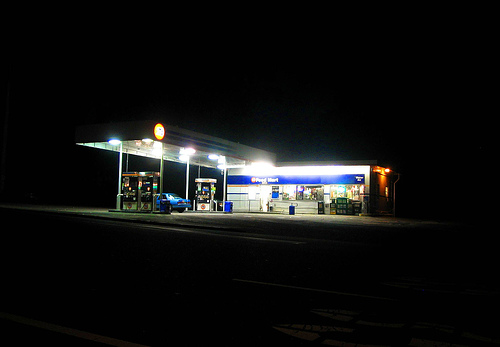
There are few moments in modern life more dramatic than watching your fuel gauge flirt with “E” while you are driving late at night on a road so empty it feels like the background of a suspense movie. The music is off. The snacks are gone. Your phone says the next turn is in 47 miles, which is not information so much as a personal attack. Then, just as your confidence begins packing its bags, you see it: a glowing gas station sign on the horizon.
Not a fancy sign. Not a majestic neon cathedral. Just a regular gas station, maybe with one buzzing light, a tiny convenience store, and a pump that looks like it has seen some things. But in that moment, it might as well be the gates of heaven with unleaded options.
This is the kind of ordinary joy that the “1000 Awesome Things” spirit captures so well: the small, weirdly emotional victories that make daily life feel cinematic. You are not just buying gas. You are surviving the night, defeating your own poor planning, and being rewarded with fluorescent lighting, windshield squeegees, and maybe a suspiciously perfect bag of chips.
Why an Empty Gas Tank Feels Like a Personal Crisis
Running low on fuel does something strange to the human brain. A calm, reasonable adult can instantly become a nervous mathematician, philosopher, and amateur mechanic. You start calculating miles per gallon with the intensity of a NASA engineer. You coast down hills like you are participating in an Olympic event. You turn off the air conditioner, as if that alone will summon an extra gallon from the universe.
Late at night, the feeling gets sharper. During the day, a low fuel light is annoying. At 1:17 a.m., it becomes a plot twist. The road looks longer. Every closed business looks judgmental. Every passing mile seems to ask, “Are you proud of your choices?”
Part of the panic comes from uncertainty. Many drivers know their car has some reserve range after the low fuel warning appears, but that range is not a promise carved into stone. It can change based on speed, hills, traffic, weather, vehicle condition, tire pressure, and how aggressively you drive. The car may say you have 28 miles left, but your anxiety says you have seven feet and a prayer.
The Psychology of the Horizon Gas Station
A gas station appearing in the distance does not simply solve a fuel problem. It changes the entire emotional temperature of the night. One second, you are gripping the steering wheel like it owes you money. The next second, you are already imagining the pump clicking, the tank filling, and your soul returning to your body.
That little glowing sign becomes a symbol of rescue. It means warmth, light, people, snacks, restrooms, and the blessed possibility of not explaining to anyone why you ignored the fuel gauge for the last 80 miles. It is practical relief wrapped in emotional comedy.
There is also something deeply American about the scene. Gas stations and convenience stores have become landmarks of road-trip culture. They are where people stretch their legs, buy terrible coffee that somehow tastes perfect, check directions, clean bug art off the windshield, and make peace with the fact that dinner might be a granola bar and a packet of beef jerky.
Why Late-Night Driving Makes Everything More Intense
Late-night driving has its own atmosphere. The world gets quieter. Traffic thins out. Radio stations get stranger. Your thoughts become louder than the engine. A simple drive can feel peaceful, lonely, adventurous, or mildly haunted, depending on how much sleep you have had and whether your fuel light is glowing like a tiny orange accusation.
Safety matters more at night because visibility is reduced, fatigue can creep in, and services may be limited in rural areas. That is why experienced drivers often treat fuel planning as part of the trip, not an optional side quest. Keeping the tank at least a quarter full is not just a cautious habit; it can help prevent a stressful situation from becoming a roadside problem.
Still, people make mistakes. You leave later than planned. The last station looked overpriced. You thought there would be another exit soon. Your passenger said, “We’re fine,” with the confidence of someone not responsible for the vehicle. Suddenly, the road is empty, the tank is low, and every mile feels sponsored by regret.
The Gas Station as a Beacon of Civilization
When a gas station appears on the horizon, it is more than a place to refuel. It is proof that civilization still exists. There are lights. There is a roof. There is a person behind a counter who has seen every kind of traveler, from tired families to night-shift workers to people who enter the store with the exact expression of someone who almost ran out of gas three minutes ago.
The convenience store becomes part sanctuary, part snack museum. You walk in pretending to be normal, even though your internal monologue is performing a victory parade. You might buy water because you are responsible. You might buy candy because you are alive. You might buy both, because balance is important.
And then there is the sound of the pump. That steady rush of fuel entering the tank is oddly soothing. It is the sound of bad decisions being erased at $3 to $5 per gallon, depending on the day, location, and the mood of the global economy. The numbers spin, the anxiety fades, and your car slowly transforms from “mobile problem” back into “trusted companion.”
What This Moment Teaches About Road Trips
The beauty of this “awesome thing” is that it is funny because it is true. Anyone who has taken a long drive knows the strange optimism that comes with postponing a fuel stop. You tell yourself the next station will be cheaper, cleaner, easier to reach, or somehow morally superior. Sometimes that works. Sometimes you learn humility under a flickering canopy light at midnight.
Road trips reward preparation, but they also produce stories from imperfections. The wrong exit, the closed diner, the mysterious roadside attraction, the gas station burrito that may or may not have been a life choice these are the details people remember. Perfect trips are pleasant. Slightly chaotic trips become legends.
That said, the lesson should not be “always gamble with your fuel tank because the universe loves comedy.” The better lesson is: enjoy the relief, but plan smarter next time. Use navigation apps to check fuel stops. Know your vehicle’s average range. Avoid letting the tank sit near empty, especially at night or in remote areas. Keep a charger, water, and basic emergency items in the car. Future you will appreciate it, and future you is already tired.
The Science of Fuel-Saving Panic
When drivers realize fuel is low, they often enter what could be called “Fuel Preservation Mode.” Suddenly, every movement becomes delicate. Acceleration gets gentle. Braking gets smoother. The driver becomes spiritually connected to the gas pedal. Even the passenger who was previously asleep wakes up and says something unhelpful like, “Are we out of gas?”
Some of those instincts are actually useful. Smooth driving, steady speeds, and avoiding aggressive acceleration can help conserve fuel. Vehicle efficiency is affected by speed, maintenance, tire condition, cargo weight, and driving habits. In other words, your car does not love sudden starts, dramatic stops, or carrying three forgotten bags of sports equipment in the trunk for six months.
But fuel-saving panic has limits. Coasting through stop signs is unsafe. Driving too slowly on a highway can create danger. Turning off lights or ignoring traffic rules is never worth it. The goal is not to become a fuel-saving wizard at the expense of safety. The goal is to get to the next station calmly, legally, and with enough dignity to walk inside and buy a celebratory snack.
What to Do If You Really Are Running Out of Gas
If the tank is nearly empty and the next station is uncertain, the best move is to stay calm and make practical decisions. Check your navigation app for nearby stations, but do not stare at your phone while driving. Ask a passenger to help if one is available. If you are alone, pull over safely before searching.
Drive smoothly, avoid unnecessary speed changes, and stay aware of traffic. If the vehicle begins to sputter or lose power, do not try to “push it” in a risky way. Signal, move to a safe shoulder or well-lit area if possible, turn on hazard lights, and call roadside assistance or local help. Running out of gas is embarrassing, but embarrassment is much cheaper than a dangerous roadside situation.
Also, avoid repeatedly trying to restart a vehicle that has run out of fuel. Depending on the vehicle, that can create unnecessary stress on components. If you do reach a station, refuel properly, do not top off after the pump clicks off, and take a moment to reset. You made it. The road has forgiven you, although your fuel gauge may remain emotionally distant for a while.
Why Gas Stations Feel Different at Night
A gas station in daylight is practical. A gas station at night is a mood. The bright canopy lights turn the pumps into a tiny stage. The store windows glow against the darkness. The air smells like gasoline, coffee, asphalt, and possibility. Somewhere near the entrance, an ice machine hums like it knows secrets.
Late-night gas stations attract a fascinating cast of characters. There is the truck driver moving with calm efficiency. The family in pajamas. The college student buying energy drinks with the seriousness of a medical prescription. The person cleaning their windshield like they are preparing for a space launch. And then there is you, silently thanking every engineer, cashier, fuel supplier, road builder, and convenience store employee who made this glowing little oasis possible.
This is why the moment feels awesome. It brings together relief, comfort, absurdity, and gratitude. One minute you are imagining worst-case scenarios. The next minute you are debating whether sour cream and onion chips count as dinner. That is emotional range.
The Snack Victory Lap
Once the tank is full, the convenience store becomes irresistible. You did not plan to buy anything. You were only going to get gas. But surviving a near-empty-tank episode creates a strange need for ceremony. A snack is not a snack anymore. It is a medal.
The options feel endless and deeply personal. Coffee that tastes like it was brewed during a weather emergency? Perfect. A chocolate bar you have not eaten since middle school? Obviously. A giant bottle of water because you suddenly care about hydration? Admirable. A bag of chips large enough to qualify as luggage? Understandable.
Gas station food has a way of becoming memorable because it is attached to the journey. A sandwich eaten at a picnic table beside a rural station can taste better than it has any right to. A lukewarm coffee can feel heroic if it helps you stay alert for the final stretch. The snack victory lap is part of the ritual: tank filled, bladder emptied, windshield cleaned, morale restored.
How to Avoid Needing This Miracle Too Often
The horizon gas station is awesome, but it should not become your main travel strategy. A little planning keeps the magic fun instead of frightening. Before a late-night drive, check your fuel level, route, and station availability. Rural highways and small towns may have fewer 24-hour options than you expect. A station that appears on the map may be closed, under construction, or operating on hours that seem personally designed to disappoint you.
For longer trips, build fuel stops into the route the same way you plan meal breaks or rest stops. Consider refueling when the tank reaches a quarter full rather than waiting for the warning light. This gives you flexibility if traffic, weather, detours, or closed exits appear. It also keeps you from becoming the person whispering encouragement to a dashboard.
Vehicle care helps too. Proper tire pressure, regular maintenance, clean filters, and sensible driving habits can all support better fuel economy. You do not need to obsess over every drop, but treating your car well makes it more predictable. Predictability is very attractive when you are 40 miles from the next exit.
Why This Ordinary Moment Feels So Human
The real charm of this experience is not the gasoline. It is the emotional whiplash. Fear becomes relief. Regret becomes gratitude. A random roadside business becomes the most beautiful building you have ever seen. You remember that modern life is full of invisible systems quietly helping us: roads, pumps, lights, supply chains, payment networks, maps, signs, and the person who keeps the coffee machine running at 2 a.m.
It also reminds us that people are wonderfully dramatic. The same driver who ignored the gas gauge for an hour will suddenly become deeply spiritual when the station appears. Promises will be made. “I will never do this again.” “I will always fill up early.” “I will respect the quarter-tank rule.” These vows are sincere for at least three weeks.
And maybe that is okay. Life is partly made of tiny rescues. The found parking spot. The extra fry at the bottom of the bag. The email that did not require a meeting. The gas station glowing on the horizon when your tank is nearly empty and your imagination has already written three disaster endings.
Experiences Related to the Empty-Tank Horizon Miracle
Almost everyone who drives long enough collects at least one empty-tank story. It usually starts with confidence. You are heading home after a late dinner, a concert, a weekend trip, or a family visit that lasted three hours longer than expected. The tank is low, but not terrifyingly low. You pass one station because it is on the wrong side of the road. You pass another because the price looks rude. Then the road opens up, the towns disappear, and suddenly that “wrong side of the road” station begins to look like a lost love.
The first experience is the bargaining stage. You start making deals with the car. “Just get me to the next exit.” You drive with the tenderness of someone carrying soup in an open bowl. You avoid hard braking. You celebrate downhill slopes. You become personally offended by uphill climbs. If there is a passenger, they may try to help by reading every sign aloud, including signs for attractions that closed in 1986.
Then comes the silence. Nobody wants to say the obvious. The fuel light is on. The road is dark. The GPS is being vague. You pass a farmhouse, a field, a warehouse, and one mysterious building with a single light in the window. None of these sell gasoline, which feels inconsiderate. Every pair of headlights in the opposite lane seems to belong to someone who planned better than you.
Finally, the sign appears. Maybe it is red, blue, green, yellow, or a combination of colors that only gas station designers understand. It rises over the horizon like a lighthouse for people who underestimated distance. The whole car changes. Shoulders drop. Breathing returns. Someone says, “There!” with the excitement of discovering land after months at sea, even though it has been twelve minutes of mild inconvenience.
Pulling into that station feels like entering a winner’s circle. The tires crunch over the lot. The pump screen asks too many questions. The card reader is slow, because naturally it wants to add suspense. Then the fuel starts flowing, and peace arrives one gallon at a time. You lean against the car, look at the empty road, and feel wiser than you were ten minutes earlier.
Inside the store, the experience continues. Bright lights make everything look both ordinary and magical. You study the drink cooler as if choosing a life path. You buy something unnecessary because survival deserves a receipt. The cashier says, “How’s it going?” and you answer, “Good,” which is technically true but wildly incomplete. You do not explain that this building just saved your evening, your mood, and possibly your reputation.
The best part is what happens afterward. The car feels different with a full tank. Heavier, calmer, more loyal. The road no longer looks threatening. The night becomes peaceful again. You turn the music back on. The same empty highway that felt like a villain now feels cinematic. You are not trapped in the middle of nowhere. You are on an adventure with snacks.
Later, when you tell the story, you will exaggerate slightly. The tank was “basically fumes.” The station appeared “out of nowhere.” The road was “completely deserted.” These details may or may not be courtroom accurate, but they are emotionally accurate. The moment felt huge because relief often does. That is why this tiny everyday victory belongs on any list of awesome things. It is not about gasoline. It is about hope, timing, and the beautiful glow of a place that sells both fuel and peanut butter cups.
Conclusion
When you are driving late at night on an empty gas tank and suddenly a gas station appears on the horizon, the feeling is bigger than convenience. It is relief with a roof over it. It is proof that small comforts can feel enormous at the right moment. It is the comedy of bad planning meeting the mercy of modern infrastructure. Most of all, it is one of those oddly perfect experiences that turns an ordinary drive into a story you will retell with dramatic hand gestures.
The smart move is to keep your tank filled, plan your stops, and avoid turning your fuel gauge into a suspense device. But when that glowing sign appears at exactly the right time, go ahead and appreciate it. Fill the tank. Stretch your legs. Buy the snack. Clean the windshield. Then drive back into the night feeling like you just won a tiny, beautiful battle against uncertainty.