Every home has one: the mysterious drawer where batteries go to retire, pens lose their caps, coupons expire in silence, and one lonely screw waits for a project nobody remembers. The junk drawer is not a failure of character. It is proof that modern life comes with too many tiny objects and not enough tiny object diplomacy.
The good news? You do not need a professional organizing degree, a color-coded label maker, or a spiritual awakening in aisle seven of a storage store. Learning how to organize a junk drawer is really about turning a chaotic catchall into a useful, easy-to-maintain household command center. Think less “random junk cave” and more “small-but-mighty utility drawer.”
In this guide, you will learn how to declutter, sort, clean, divide, label, and maintain your junk drawer so it stops behaving like a miniature landfill with handles. Better yet, you will create a system that actually works in real lifeeven on busy mornings when someone needs tape, scissors, a working pen, and possibly a miracle.
What Is a Junk Drawer, Really?
A junk drawer is usually a small drawer filled with everyday odds and ends that do not have a clear home. It often lives in the kitchen, entryway, office, or laundry room. Typical contents include pens, tape, rubber bands, batteries, keys, takeout menus, stamps, chargers, receipts, coupons, small tools, paper clips, and at least three things nobody can identify but everyone is afraid to throw away.
However, the best organizing experts do not treat the junk drawer as a place for true junk. They treat it as a utility drawer. That small mental shift matters. A “junk” drawer invites clutter. A “utility” drawer has a purpose: it stores useful, frequently needed items in one accessible place.
Why Junk Drawers Get Messy So Fast
Junk drawers become messy because they are convenient. That is their superpower and their villain origin story. When something does not have an obvious home, it gets tossed into the drawer. When mail piles up, it gets shoved in. When a mystery cable appears, into the drawer it goes, because apparently every household must maintain a museum of obsolete chargers.
The problem is not the drawer itself. The problem is the lack of boundaries. Without categories, dividers, and a regular reset, the drawer becomes a black hole. You cannot find what you need, so you buy duplicates. Then the duplicates go into the drawer. Then the drawer jams. Then you start bargaining with it like it is a stubborn vending machine.
Before You Start: Set a Clear Purpose
Before you organize anything, decide what this drawer is supposed to do. Is it for office supplies? Household tools? Kitchen extras? Entryway essentials? A good junk drawer should serve a specific location and routine.
For example, a kitchen utility drawer might hold scissors, tape, pens, labels, a small flashlight, measuring tape, twist ties, and a few rubber bands. An entryway drawer might hold keys, sunglasses, stamps, pet waste bags, and spare change. A home office drawer might store paper clips, sticky notes, chargers, pens, and envelopes.
The rule is simple: if the item is not useful in that area of the home, it probably belongs somewhere else.
How to Organize a Junk Drawer Step by Step
Step 1: Empty the Drawer Completely
Yes, completely. Not “shuffle things around while pretending to organize.” Pull everything out and place it on a table, counter, or towel. This lets you see what you own, what you have too much of, and what has been hiding under the expired pizza coupon from 2021.
Do not skip this step. Organizing around clutter is like putting a bow tie on a raccoon. It may look charming for a second, but the chaos remains.
Step 2: Clean the Empty Drawer
Once the drawer is empty, vacuum out crumbs, dust, pencil shavings, and whatever that glittery substance is. Wipe the inside with a damp cloth or gentle all-purpose cleaner. Let it dry before placing anything back inside.
This step feels small, but it creates a fresh start. A clean drawer also makes you less likely to toss random crumbs, wrappers, and dusty objects back into it. Organization loves a clean launchpad.
Step 3: Sort Everything Into Categories
Now sort the contents into simple piles. You do not need fancy categories. Start with these:
- Keep: Items you use regularly and want in this drawer.
- Relocate: Items that belong in another room or storage area.
- Recycle: Paper, cardboard, old menus, and packaging that can be recycled.
- Trash: Broken, dried-out, expired, or useless items.
- Donate: Extras in good condition that someone else could use.
Be honest. If you have 27 pens and only four work, you do not have a pen collection. You have a tiny disappointment farm. Test pens, check markers, untangle cords, and question duplicates.
Step 4: Toss What Does Not Belong
Some things should not live in a junk drawer. Old receipts, expired coupons, loose batteries, mystery keys, broken chargers, dried glue sticks, stale candy, outdated medication, and sharp loose objects should be removed.
Batteries deserve special attention. Loose batteries rolling around with metal objects can be unsafe. Store them in a battery case or a separated container, ideally with the ends protected and the types sorted. If batteries are dead, recycle or dispose of them according to local guidelines.
Important papers also do not belong in a junk drawer. Birth certificates, medical documents, tax papers, warranties, passports, and financial records should be filed in a secure, labeled location. A junk drawer is for quick-grab items, not life’s paperwork boss battles.
Step 5: Measure the Drawer Before Buying Organizers
Before purchasing drawer dividers or trays, measure the width, depth, and height of your drawer. This prevents the classic organizing mistake: buying cute bins that do not fit, then storing the unused bins in another cluttered area. That is not organizing; that is clutter wearing a tiny plastic hat.
Use a tape measure and write down the drawer dimensions. Also notice whether the drawer has rounded corners, a center rail, or shallow clearance. Your organizers should fit the drawer, not the other way around.
Step 6: Choose the Right Drawer Organizers
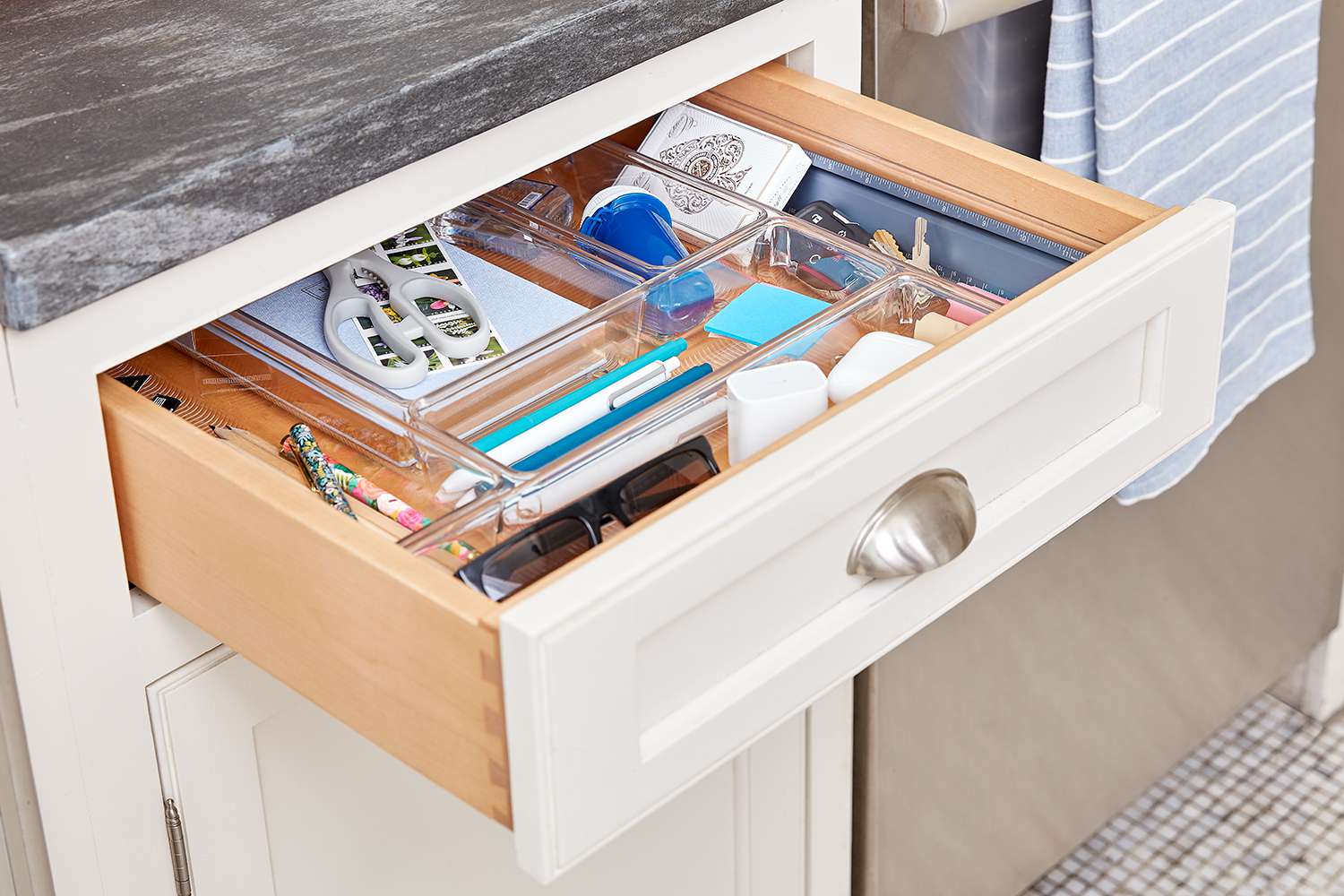
The best junk drawer organizers are simple, adjustable, and easy to clean. Clear trays, bamboo dividers, expandable drawer organizers, small boxes, silicone cups, and modular bins all work well. You can also reuse small gift boxes, checkbook boxes, mint tins, or sturdy packaging.
Do not worry about making it look like a magazine spread. Pretty helps, but practical wins. The goal is to create boundaries so items cannot slide into one big pile every time the drawer opens.
Step 7: Give Every Category a Home
Place items back by category. Pens go with pens. Tape goes with scissors. Batteries go in a battery case. Keys go in one small dish. Chargers go wrapped and contained. Small hardware, such as screws or picture hooks, should go in a tiny labeled box or bag.
Keep the most frequently used items near the front of the drawer. Store occasional-use items toward the back. If something is used daily, it should be easy to grab without digging like an archaeologist looking for office supplies.
Step 8: Label the Sections
Labels are not just for people who own matching pantry containers and alphabetize soup. Labels help everyone in the household understand the system. You can use a label maker, masking tape, sticker labels, or small handwritten tags.
Label categories such as “pens,” “tape,” “keys,” “batteries,” “cords,” “tools,” or “mail supplies.” If labels feel too formal, write directly on removable tape. The point is not perfection. The point is fewer people asking, “Where does this go?” while holding a single paper clip like it is a legal emergency.
What to Keep in a Junk Drawer
A well-organized junk drawer should hold useful items you actually reach for. Here are smart options:
- Two or three working pens
- One permanent marker
- Small scissors
- Tape
- Sticky notes
- Stamps and envelopes
- Rubber bands or twist ties
- A small flashlight
- Measuring tape
- A few paper clips or binder clips
- Spare keys that are clearly labeled
- A compact battery case
- One or two frequently used chargers
The keyword is “few.” A junk drawer is not a warehouse. It should contain enough to be useful, not enough to open a stationery store with questionable management.
What Not to Keep in a Junk Drawer
Some items create clutter, safety issues, or future confusion. Avoid storing these in your junk drawer:
- Loose batteries mixed with metal items
- Expired coupons and old receipts
- Important legal or financial documents
- Medication or vitamins
- Sharp loose blades or tools
- Broken chargers and mystery cords
- Old takeout menus you never use
- Random screws from unknown furniture
- Too many duplicates of the same item
If you are keeping a mystery item “just in case,” ask yourself one question: “Would I know where to find this when I actually need it?” If the answer is no, the drawer is not helping. It is just hosting clutter with confidence.
Smart Junk Drawer Organization Ideas
Use Adjustable Dividers
Adjustable dividers are great because junk drawer items are rarely the same size. One section might need to hold scissors, while another holds stamps or keys. Dividers let you customize the layout as your needs change.
Try Clear Containers
Clear bins make it easy to see what is inside. This helps prevent duplicate buying and reduces drawer digging. They are especially useful for small items like clips, rubber bands, and spare hardware.
Use Grip Liner
A grippy drawer liner helps organizers stay in place. Without it, trays can slide around every time you open the drawer, turning your careful system into a tiny carnival ride.
Wrap Cords Before Storing
Cords should never be tossed in loose. Use hook-and-loop cable ties, rubber bands, labeled bags, or small cord organizers. Label each cord by device if possible. “Mystery black cable” is not a category; it is a household riddle.
Create a Tiny Tool Zone
If your drawer often collects screwdrivers, picture hooks, measuring tape, or Allen wrenches, create a small tool zone. Keep only the basics. Larger tools belong in a toolbox, garage, or utility closet.
How to Maintain an Organized Junk Drawer
The secret to keeping a junk drawer organized is maintenance. Luckily, this does not require a dramatic weekend project. A five-minute reset once a month can keep the drawer under control.
Open the drawer, remove trash, test pens, relocate misplaced items, and straighten each section. If one category is overflowing, reduce it. If the drawer starts jamming, that is your drawer politely screaming for help.
You can also use the “one in, one out” rule. If a new pen goes in, an old pen comes out. If a new charger is added, remove the broken or unused one. This keeps the drawer from slowly expanding its ambitions.
The One-Drawer Rule
Most homes only need one junk drawer. Once you have two or three, the system becomes harder to manage. A single drawer creates a natural boundary. When it fills up, you must make decisions instead of expanding the clutter empire.
If you need more space, consider whether some categories deserve their own storage area. Office supplies can go in a desk drawer. Tools can go in a toolbox. Batteries can go in a battery organizer. Manuals can be stored digitally or in a file folder. The junk drawer should not be responsible for the emotional baggage of the entire house.
Common Junk Drawer Mistakes
Mistake 1: Buying Organizers First
Buying containers before decluttering often leads to frustration. Sort and reduce first. Then choose organizers based on what remains.
Mistake 2: Keeping Too Many Duplicates
You probably do not need twelve rubber bands, nine markers, six tape rolls, and four mini flashlights in one drawer. Keep what you use and store extras elsewhere.
Mistake 3: Making the System Too Complicated
If your system requires everyone to fold twist ties at a 45-degree angle, it will not last. Keep categories broad and easy.
Mistake 4: Ignoring the Drawer After Organizing
No organizing system is self-cleaning. A quick monthly check prevents a small mess from becoming a drawer-shaped avalanche.
Real-Life Experience: What Actually Works
After organizing several junk drawers in different homes, one lesson becomes obvious: the best system is the one people will actually use. A stunning drawer with perfect acrylic trays can fail in a week if the categories are unrealistic. Meanwhile, a drawer organized with old gift boxes and handwritten labels can stay neat for months because everyone understands it.
In one kitchen, the junk drawer problem was not too much stuff. It was the wrong stuff. The drawer held batteries, birthday candles, expired coupons, a screwdriver, restaurant menus, keys, rubber bands, scissors, and several cables that belonged to electronics no one owned anymore. The family kept buying pens because they could never find one. After emptying the drawer, we discovered fourteen pens, but only three worked. That drawer was not cluttered because the family was messy. It was cluttered because the system had retired without telling anyone.
The fix was simple. We threw away broken items, recycled paper, moved tools to the garage, placed batteries in a battery case, and kept only daily-use items in the drawer. A small tray held pens and a marker. Another held tape and scissors. A tiny box held keys. A narrow section held stamps and sticky notes. The whole project took less than an hour, and the drawer immediately became useful.
Another experience involved a narrow entryway drawer. It had become a drop zone for sunglasses, receipts, dog leash bags, coins, lip balm, and keys. The mistake was treating the drawer like a general household drawer when it really needed to serve the front door routine. Once we defined its purpose, the answer became clear. It should hold keys, sunglasses, pet bags, a small notepad, stamps, and outgoing mail. Everything else moved out. The drawer stopped being a junk drawer and became a leaving-the-house drawer. Very glamorous? Not exactly. Very useful? Absolutely.
The biggest surprise is how much emotion people attach to tiny objects. A mystery key feels important. A random screw feels like proof you are responsible. An old charger feels like it might be needed someday by a device hiding in a witness protection program. But organized living requires decisions. If an item has no known purpose, no clear home, and no realistic future use, it is probably clutter.
The experience also proves that maintenance beats perfection. A junk drawer does not need to stay photo-ready. It needs to stay functional. If you can open it, find what you need in ten seconds, and close it without wrestling the drawer like a wild animal, you are winning.
One practical habit that works beautifully is the monthly “drawer reset.” Pick a date, maybe the first Saturday of the month, and spend five minutes removing trash, returning misplaced items, and checking whether each section still makes sense. This tiny routine prevents the drawer from slowly turning back into a storage swamp.
Another useful habit is the “pause before tossing” rule. Before dropping something into the drawer, ask, “Does this belong here?” If the answer is yes, place it in the right section. If the answer is no, take ten extra seconds to put it where it belongs. Those ten seconds save ten minutes of future frustration.
In the end, organizing a junk drawer is not about becoming a different person. It is about making your home easier to live in. You are not trying to eliminate every random object from your life. You are simply giving useful little things a place to land. That is the humble magic of a good utility drawer: it does not shout for attention, but it quietly saves the day when you need tape, a pen, or the one pair of scissors that has not wandered off again.
Conclusion
Learning how to organize a junk drawer is one of the fastest ways to bring order to everyday chaos. Start by emptying the drawer, cleaning it, sorting everything into categories, and removing anything broken, expired, unsafe, or unnecessary. Then use dividers, trays, labels, and simple containers to give every item a clear home.
The goal is not to create a perfect drawer. The goal is to create a useful drawer. When your junk drawer has boundaries, categories, and a simple maintenance routine, it becomes less of a clutter trap and more of a household helper. And honestly, any drawer that can hold scissors, tape, stamps, keys, and your sanity deserves a little respect.