A newborn baby can bring sleepless nights, mountains of laundry, and passionate debates over whose nose the child inherited. What it should not bring is an immediate accusation of infidelity based on a five-minute visual inspection worthy of the world’s least-qualified detective.
Yet that is what one new mother said happened after her daughter arrived with blond hair and pale blue eyes. Both parents had brown hair and brown eyes, so instead of admiring the baby, consulting a pediatrician, or spending two minutes reading about human genetics, the husband reportedly reached a dramatic conclusion: the child could not be his.
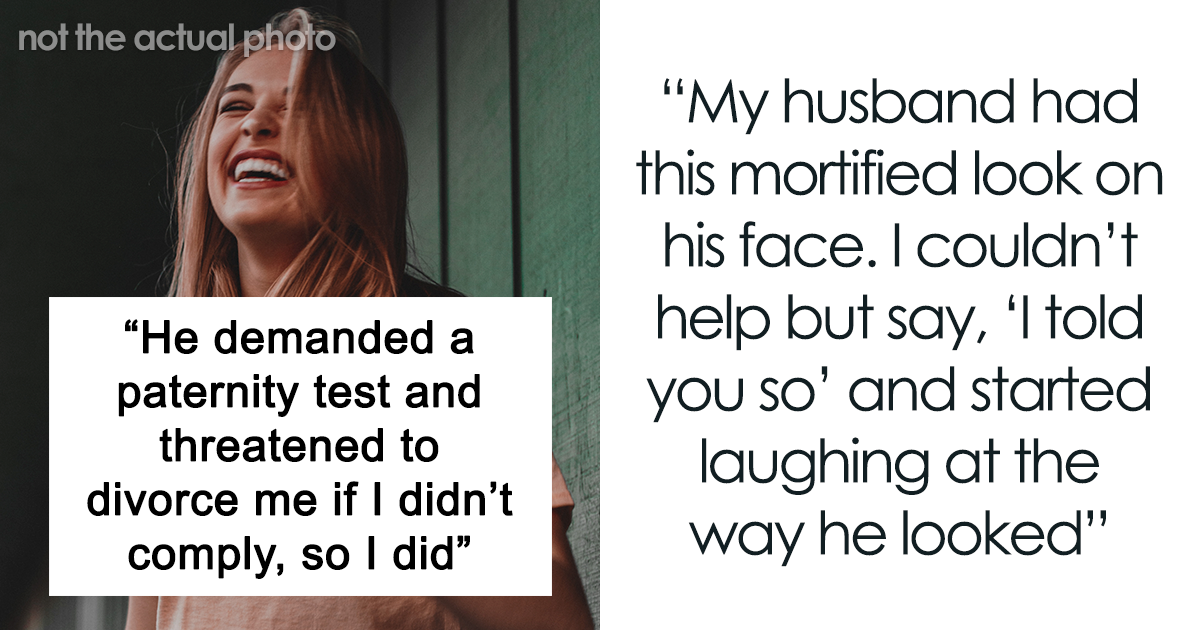
He demanded a paternity test, threatened divorce if his wife refused, and moved into his parents’ home while she recovered from childbirth. Weeks later, the DNA results confirmed exactly what the wife had been saying all along. He was the father.
Her response was simple, understandable, and apparently devastating to his pride: “I told you so.” Then she laughed.
The story became popular online because it combines a scientific misunderstanding, a damaged marriage, an intrusive mother-in-law, and a spectacularly unsuccessful attempt to prove someone wrong. Beneath the comedy, however, is a serious question about trust: can a marriage recover after one partner treats an unexpected physical trait as evidence of betrayal?
The Baby Hair Color Dispute That Exploded Into a Marriage Crisis
According to the mother’s account, she was 27, her husband was 28, and they had been married for two years. Their daughter was only five weeks old when the woman shared the conflict online.
The trouble began immediately after the birth. The baby had light hair and light eyes, while both parents were brunettes with brown eyes. The mother tried to explain that newborn coloring can change and that children do not always look like miniature photocopies of their parents. Her husband refused to accept that explanation.
Instead, he demanded a DNA paternity test. He also allegedly threatened to divorce her if she did not cooperate.
He Left While His Wife Was Recovering
The paternity test request was painful enough, but his next decision made the situation considerably worse. After the mother and baby returned from the hospital, the husband reportedly stayed with his parents for approximately three weeks to “get some space.”
That meant the new mother was left to recover from childbirth and care for a newborn without her spouse’s support. Her sister stepped in to help, proving once again that when one member of the family runs away from responsibility, another often arrives carrying snacks, clean laundry, and common sense.
The husband’s mother did not calm the situation. According to the post, she warned the new mother that if the test showed the baby was not her son’s, she would make sure the woman was “taken to the cleaners” during the divorce.
That threat transformed a private marital fear into a family campaign. Before the test had established anything, the wife was already being treated as guilty.
The Results Delivered an Uncomfortable Surprise
When the results arrived, the husband returned to read them with his wife. The test identified him as the baby’s biological father.
The mother described him as shocked and mortified as he stared at the report. After weeks of accusations, threats, and absence, his elaborate theory collapsed in a few lines of laboratory analysis.
She laughed and said, “I told you so.”
Rather than apologize, the husband reportedly became angry about being laughed at. They argued, and he left for his parents’ home again to clear his head. His mother then criticized the wife for humiliating him while he was “down.”
That reaction raised the obvious question: down about what? Discovering that his wife had been faithful? Learning that the daughter was his? Receiving the good news he supposedly wanted?
Can Two Brown-Haired Parents Have a Blond Baby?
Yes. Two dark-haired parents can have a child with blond hair, just as two brown-eyed parents can have a blue-eyed child. Human pigmentation is much more complicated than the simplified classroom diagrams many people remember.
Hair color depends largely on the type and amount of melanin produced in the hair. Eumelanin contributes to brown and black shades, while pheomelanin contributes to red and related tones. Blond hair generally contains relatively little eumelanin.
However, there is no single “brown-hair gene” that defeats a single “blond-hair gene” in every child. Numerous genes influence pigment production, distribution, and expression. A person can carry genetic variations associated with lighter coloring without displaying those traits personally.
When two parents contribute their individual combinations of DNA, a child may inherit a collection of variants that produces a noticeably lighter appearance. Those variants may have traveled quietly through several generations before becoming visible again.
Why the Simple Dominant-and-Recessive Explanation Falls Short
People often explain surprising hair or eye colors by saying that a “recessive gene” resurfaced. That can be a useful shorthand, but it is not the complete scientific picture.
Many visible human traits are polygenic, meaning that multiple genes contribute to the outcome. Environmental factors, age, hormones, and developmental changes may also affect how a trait appears.
Eye color, for example, is influenced strongly by genes involved in melanin production and storage, including OCA2 and HERC2, but several additional genes play smaller roles. The combined result creates a range of colors rather than three neat boxes marked blue, green, and brown.
In other words, a newborn’s face is not a Punnett square wearing a diaper.
A Newborn’s Appearance Is Not Necessarily Permanent
Babies can also look different several months after birth. Infants born with blue-gray eyes may develop more iris pigmentation as they grow, with permanent eye color often becoming clearer during the first year.
Hair can change as well. A baby may lose much of the hair present at birth and grow new hair with a different shade or texture. Blond hair may darken during childhood, while straight infant hair may later become wavy or curly.
That means judging biological parentage from a newborn’s coloring is unreliable even before considering the complexity of genetic inheritance.
What a DNA Paternity Test Actually Measures
A genuine paternity test does not decide parentage by comparing baby photographs or asking which relative has the same eyebrows. It examines genetic markers shared by the child and the alleged father.
Most post-birth tests collect DNA through cheek swabs. Laboratory specialists compare selected regions in the samples to determine whether the tested man could have contributed the child’s paternal DNA.
Results commonly express either an exclusion or a very high probability of paternity. A properly conducted test may report approximately 99.9% probability when the tested man is the biological father. A result of zero indicates that the tested genetic markers do not support the claimed relationship.
For legal matters, families should use an accredited laboratory with documented identification procedures and chain-of-custody safeguards. A casual home kit may offer personal information, but its results may not satisfy court requirements.
The test in this story settled the biological question. It did not settle the marital one.
The Real Problem Was Not Genetics
The husband’s misunderstanding of hair color could have been corrected with a calm conversation. His behavior after noticing the difference created the deeper wound.
Concern is an emotion. Accusing a spouse of cheating, threatening divorce, leaving a postpartum partner, and involving hostile relatives are actions. Those actions carry consequences even when the original fear turns out to be unfounded.
A Question Is Different From a Conviction
A person experiencing genuine anxiety might say, “The baby looks so different from both of us that I am confused and scared. Can we ask the pediatrician how this happens?”
That approach allows room for information and acknowledges that fear is not proof.
The husband reportedly took the opposite route. He appears to have treated his wife as guilty before gathering evidence. By threatening divorce unless she submitted to testing, he turned a vulnerable conversation into an ultimatum.
A demand may produce compliance, but it rarely produces closeness.
Leaving After Childbirth Added Another Layer of Harm
The first weeks with a newborn are physically and emotionally demanding. The parent who gave birth may be healing, experiencing hormonal changes, coping with interrupted sleep, and learning to care for an entirely dependent human being.
Postpartum emotional difficulties can include anxiety, irritability, sadness, crying, and feeling overwhelmed. Reliable practical support from a partner can be especially important during this period.
By leaving for three weeks, the husband did more than express doubt. He withdrew care during a demanding recovery period. Even after the DNA report confirmed paternity, he reportedly left again rather than focusing on his wife and daughter.
That pattern helps explain why many online readers considered his absence more troubling than the original paternity request.
Was Laughing and Saying “I Told You So” Cruel?
In isolation, laughing at a partner’s embarrassment is not an ideal conflict-resolution strategy. Mockery can make an already defensive person less willing to accept responsibility.
Context matters, though.
The wife was not laughing at an innocent misunderstanding that had been handled respectfully. She was reacting after being accused of cheating, threatened with divorce, abandoned during postpartum recovery, and targeted by her mother-in-law.
Her laugh appears to have been a release of anger, relief, and vindication. After weeks of being forced to defend the truth, she finally held objective proof.
Could she have responded with perfect composure? Possibly. But expecting flawless emotional restraint from the person who was falsely accused while excusing the accuser’s weeks of damaging behavior would be a remarkable piece of moral gymnastics.
The more important issue was what happened next. A healthy response from the husband would have begun with an apology, followed by accountability and immediate support for his family. Becoming angry because the vindicated person laughed shifts attention away from the original harm.
Can Trust Be Rebuilt After a Paternity Accusation?
A marriage can sometimes survive a destructive accusation, but a DNA result does not automatically repair the relationship. The report answers who the biological father is. It does not erase abandonment, intimidation, or humiliation.
Repair Begins With an Unqualified Apology
A meaningful apology should identify the harm clearly. It cannot be “I’m sorry, but the baby looked suspicious,” or “I’m sorry you became upset.” Those phrases preserve the accusation while pretending to express regret.
A more responsible apology would sound like this:
“I accused you without evidence, threatened our marriage, left you when you needed support, and allowed my family to attack you. I was wrong. I understand that my actions damaged your trust.”
That statement does not demand immediate forgiveness. It simply acknowledges reality.
Accountability Must Include the Mother-in-Law
The husband would also need to establish firm boundaries with his mother. She reportedly threatened the wife before the test and then criticized her after the husband was proven wrong.
He cannot repair his marriage while using his parent as a backup combatant. He should tell his mother that the threats and hostile messages were inappropriate, insist that they stop, and protect his spouse from further interference.
A married adult can love a parent without handing that parent a supervisory role in every disagreement.
Actions Matter More Than One Emotional Speech
Trust is rebuilt through consistent behavior. That means sharing newborn care, showing up for medical appointments, responding calmly to difficult discussions, and demonstrating that future fears will be handled through communication rather than accusations.
Couples counseling may help if both partners genuinely want to repair the relationship. Therapy can provide a structured setting for discussing the accusation, postpartum abandonment, family boundaries, and the conditions necessary for emotional safety.
However, counseling should not become a tool for pressuring the injured partner to “move on.” Reconciliation is not owed merely because the accuser eventually discovered the truth.
Real-World Experiences and Lessons From Similar Family Conflicts
Stories about unexpected baby features frequently attract parents who have lived through much calmer versions of the same surprise. Dark-haired couples describe having blond children. Brown-eyed parents report welcoming babies with blue or gray eyes. Some children begin life with light hair that gradually darkens, while others inherit coloring associated with a grandparent or more distant relative.
In healthy families, these differences become affectionate mysteries rather than criminal investigations. Relatives compare old photographs, grandparents remember that an uncle was blond as a toddler, and everyone places friendly bets on whether the baby’s eyes will change. The surprise becomes part of the child’s story.
A common experience is that the newborn resembles one side of the family only after several months. A baby who initially seems unrelated to everyone may eventually develop a parent’s smile, a grandparent’s chin, or a sibling’s expressions. Facial features also change quickly during infancy, making early declarations about resemblance notoriously unreliable.
Another recurring lesson is that the method of raising a concern matters as much as the concern itself. Couples can discuss uncomfortable fears without turning them into verdicts. A worried partner who admits uncertainty, asks questions, and remains supportive creates a problem the couple can solve together. A partner who threatens, withdraws care, or recruits relatives creates an entirely new problem.
Families also learn that outside involvement can magnify conflict. Parents and siblings may believe they are defending someone they love, but hostile messages usually make reconciliation harder. Once an in-law threatens divorce consequences or insults a new parent, the damage may remain long after the original disagreement is resolved.
The postpartum timing makes these disputes particularly painful. New parents often remember who helped during the first exhausting weeks. They also remember who disappeared. Feeding schedules, physical recovery, medical appointments, and fragmented sleep can make even ordinary days difficult. Being falsely accused at the same time may permanently change how a spouse views the relationship.
Finally, similar experiences show that receiving favorable test results does not always create the joyful reunion people imagine. The accused partner may feel vindicated but emotionally detached. The accuser may feel ashamed and become defensive. Unless that shame is converted into accountability, the conflict can continue even though the scientific question has been answered.
The most constructive lesson is simple: uncertainty should invite curiosity, not punishment. Ask a pediatrician. Learn about genetics. Discuss testing respectfully if it remains necessary. Continue caring for the baby and supporting the recovering parent while waiting for answers.
A child’s unexpected hair color may be a harmless surprise from generations of family DNA. Turning that surprise into a crisis is a choice.
Conclusion: The Test Proved Paternity, but Character Remained Under Review
The paternity test confirmed that the husband was the baby’s biological father. It also revealed something a cheek swab could not measure: how quickly fear, pride, and poor communication can damage a family.
The wife’s “I told you so” was not the most diplomatic sentence ever spoken, but diplomacy was not the central failure in this story. The larger failures were the unsupported accusation, the divorce threat, the three-week absence, the mother-in-law’s hostility, and the husband’s refusal to respond to the results with immediate accountability.
Genetics can produce blond babies from brunette parents and blue-eyed children in brown-eyed families. Science explains that easily. Explaining why a grown adult would abandon his recovering wife and newborn before checking the facts is considerably harder.
Perhaps the lasting lesson is not that the wife won an argument. It is that trust should never be treated as disposable merely because a baby arrives with an unexpected color palette.
Note: This article discusses a self-reported online story that has not been independently verified. Scientific explanations are based on established genetics, newborn-development, and DNA-testing guidance. The relationship analysis is general information, not legal, medical, or mental-health advice.