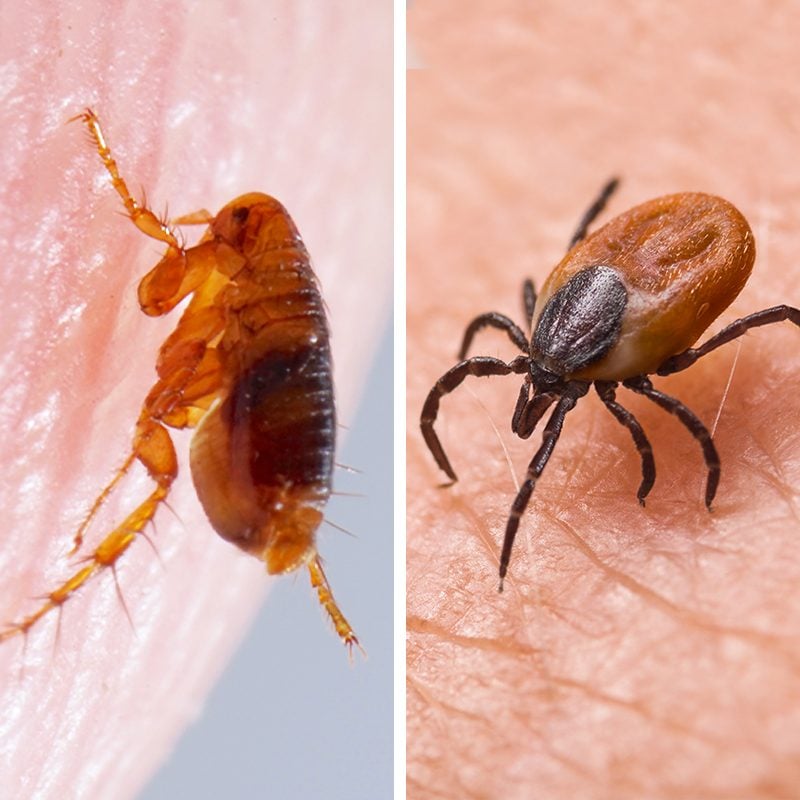
Fleas and ticks are tiny, blood-feeding parasites with an impressive talent for ruining an otherwise peaceful afternoon. Both can bite people and pets, spread disease, and arrive in your home without an invitation. That is roughly where the similarities end.
Fleas are agile insects that jump, reproduce quickly, and can establish a population in carpets, bedding, and furniture. Ticks are arachnids that crawl onto a host, attach to the skin, and may remain there for days while feeding. One creates an itchy household uprising; the other tends to be a quieter hitchhiker with potentially serious health consequences.
Knowing the difference between fleas and ticks helps you identify the problem, choose the right response, and protect every two-legged and four-legged member of your household.
Fleas vs. Ticks at a Glance
| Feature | Fleas | Ticks |
|---|---|---|
| Classification | Insects | Arachnids related to spiders and mites |
| Legs | Six | Eight as nymphs and adults; larvae have six |
| Typical appearance | Tiny, dark, narrow, and flattened from side to side | Rounded or oval, becoming larger when engorged |
| Movement | Jump rapidly | Crawl; they cannot jump or fly |
| Feeding behavior | Bite repeatedly and move around | Attach firmly and feed from hours to days |
| Where most are found | On pets and throughout the indoor environment | In grass, brush, woods, yards, or attached to a host |
| Common warning sign | Intense itching, flea dirt, or multiple small bites | A visible attached tick or illness after outdoor exposure |
| Household infestation risk | High because immature stages develop in the environment | Usually lower, although brown dog ticks can infest buildings |
What Are Fleas?
Fleas are wingless insects that survive by feeding on blood. The cat flea is the species most commonly found on both cats and dogs in the United States, proving that even parasites do not always respect their job titles.
An adult flea is usually about one-eighth of an inch long. Its dark, narrow body is compressed from side to side, allowing it to slip through fur. Large rear legs let it jump surprisingly far compared with its body size. If the speck you are watching suddenly launches itself out of sight, a flea is the likely suspect.
The Flea Life Cycle
Fleas develop through four stages: egg, larva, pupa, and adult. Adult fleas feed and reproduce on an animal, but their eggs fall into carpets, furniture, floor cracks, bedding, and shaded outdoor areas. The larvae and pupae then continue developing away from the pet.
This explains why killing the adult fleas you can see may not end an infestation. Much of the flea population can be hidden in the home at immature stages. Pupae are especially troublesome because their protective cocoons can remain tucked away until heat, movement, vibration, or exhaled carbon dioxide signals that a potential host is nearby.
Effective flea control therefore requires more than treating the itchy dog. Every pet in the household and the surrounding environment may need attention. Otherwise, the next generation will emerge as though it has inherited the lease.
What Are Ticks?
Ticks are arachnids, making them closer relatives of spiders and mites than fleas. Nymphs and adult ticks have eight legs, while newly hatched larvae have six. Depending on the species and life stage, an unfed tick may be as small as a poppy seed or closer to the size of an apple seed.
Ticks do not jump, fly, or perform surprise aerial attacks from tree branches. Many species use a behavior called questing. They wait on grass or vegetation with their front legs extended and climb aboard when a person or animal brushes past.
How Ticks Feed
After reaching a host, a tick may wander until it finds a suitable feeding site. It cuts into the skin, inserts its mouthparts, and anchors itself. Some species produce a cement-like substance that helps hold them in place. Their saliva may contain compounds that make the bite difficult to feel.
A tick can remain attached for hours or days. As it feeds, its abdomen expands and may become grayish, tan, or bluish. An engorged tick can look like a small bean or skin growth, which is why owners sometimes discover one while petting an animal rather than during a formal inspection.
How to Tell Fleas and Ticks Apart on a Pet
Signs of Fleas
A pet with fleas may scratch, chew, lick, or groom excessively. Commonly affected areas include the neck, abdomen, groin, lower back, and base of the tail. Other signs include:
- Fast-moving dark insects in the coat
- Small black particles known as flea dirt
- Red bumps, scabs, or inflamed skin
- Patchy hair loss from scratching or chewing
- Pale gums or weakness in a severely infested young animal
- Rice-like tapeworm segments near the anus or in bedding
Flea dirt is digested blood rather than ordinary soil. Place a few particles on a damp white paper towel. If they dissolve into reddish-brown smears, fleas are probably involved. Ordinary dirt remains disappointingly ordinary.
Signs of Ticks
A tick is usually found as a crawling speck or a firmly attached bump. Check around the ears, eyelids, lips, neck, collar, armpits, groin, toes, and under the tail. Long-coated pets require slow, hands-on inspection because ticks can disappear beneath the fur.
Some animals develop redness, swelling, a small scab, or irritation at the attachment site. Others show no immediate reaction. Signs of a tick-borne illness may not appear for days or weeks, so monitor a pet after a known bite for lethargy, reduced appetite, fever, limping, weakness, pale gums, or unusual behavior.
Do Flea Bites and Tick Bites Look Different on People?
Flea bites commonly appear as multiple small, itchy bumps, often in clusters or short lines. They tend to affect the feet, ankles, calves, and other areas fleas can reach from floors or furniture. A discolored halo may surround each bump.
A tick bite is often painless. The clearest clue is the tick still attached to the skin. After removal, a small bump may remain and disappear within a few days. Bite appearance alone cannot reliably determine whether a tick transmitted an infection.
Seek medical advice if a rash expands, fever develops, or symptoms such as severe headache, unusual fatigue, muscle pain, joint pain, or weakness appear after a tick bite. Not every Lyme disease rash resembles a textbook bull’s-eye, and different tick-borne diseases produce different symptoms.
Which Is More Dangerous: Fleas or Ticks?
Neither parasite deserves a trophy, but their risks differ. Fleas are particularly good at causing persistent infestations, allergic skin disease, and widespread itching. Ticks are often associated with a broader range of serious vector-borne infections.
Health Problems Associated With Fleas
Flea saliva can trigger flea allergy dermatitis in sensitive dogs and cats. A single bite may cause intense itching, inflammation, hair loss, and secondary skin infection. Heavy infestations can remove enough blood to contribute to anemia, especially in puppies, kittens, or medically fragile animals.
Pets may acquire the common tapeworm Dipylidium caninum by swallowing an infected flea while grooming. Fleas can also participate in the transmission of bacteria associated with cat-scratch disease, flea-borne typhus, and plague. These diseases are not equally common across the country, but flea control remains an important part of protecting household health.
Health Problems Associated With Ticks
Different tick species and regions carry different risks. Tick-borne illnesses affecting people or pets in the United States include Lyme disease, ehrlichiosis, anaplasmosis, babesiosis, and Rocky Mountain spotted fever. Some tick bites are also associated with alpha-gal syndrome, an allergy to products derived from mammals.
A tick bite does not automatically cause disease. Risk depends on the tick species, geographic area, infection status, attachment duration, and other factors. Prompt removal is still important because delaying removal can increase the opportunity for certain pathogens to spread.
How to Remove a Tick Safely
- Use clean, fine-tipped tweezers.
- Grasp the tick close to the skin without squeezing its swollen body.
- Pull upward with steady, even pressure.
- Do not twist, jerk, crush, or burn the tick.
- Clean the bite area, tweezers, and your hands with soap and water or rubbing alcohol.
- Dispose of the tick in a sealed container, alcohol, tape, or the toilet.
Do not coat an attached tick with petroleum jelly, nail polish, essential oils, or other substances in an attempt to make it release. These methods can delay removal and may irritate the tick. If mouthparts remain and cannot be lifted easily with clean tweezers, avoid digging aggressively into the skin.
For a tick attached near an eye, deep inside an ear, or in another difficult location, contact a veterinarian or healthcare professional. Also seek help if the site becomes increasingly painful, swollen, warm, or infected.
How to Handle a Flea Infestation
Flea control works best as a coordinated campaign rather than a single heroic bath. Treat all pets with veterinarian-recommended products appropriate for their species, age, weight, and health. Continue the schedule consistently because newly emerging fleas can appear after the visible adults have been killed.
Environmental steps may include:
- Vacuuming carpets, rugs, upholstery, and floor edges frequently
- Washing pet bedding in hot water and drying it thoroughly
- Cleaning beneath furniture and around favorite resting places
- Emptying the vacuum outdoors or sealing and discarding its contents
- Using an appropriately labeled environmental product when recommended
- Consulting a licensed pest-control professional for a severe infestation
Vacuuming does not solve every infestation by itself, but it removes debris and some developing stages while encouraging protected adults to emerge, where treatment can reach them. Flea elimination may take weeks because the life cycle does not stop merely because everyone in the house is tired of discussing it.
Preventing Fleas and Ticks Safely
Veterinary preventives are available as oral medications, topical treatments, collars, sprays, shampoos, and, for certain animals, longer-acting options. Products do not all control the same parasites or last for the same period. A flea-only product may provide no meaningful tick protection.
Never assume that a dog product is safe for a cat. Some dog treatments contain concentrations of permethrin that can cause life-threatening poisoning in cats. Follow the label exactly and keep cats away from recently treated dogs when directed.
Pets with seizure histories or other neurologic conditions require an individualized discussion with a veterinarian. Products in the isoxazoline class are effective for many animals, but regulators have noted possible neurologic reactions such as tremors, loss of coordination, and seizures in some dogs and cats.
Practical prevention also includes checking pets after outdoor activity, keeping grass trimmed, clearing leaf litter, washing bedding, and examining clothing after time in wooded or brushy areas. Indoor pets are not automatically protected; parasites can arrive on people, visiting animals, or objects brought inside.
Common Flea and Tick Myths
“Parasites disappear in winter.”
Cold weather may reduce activity in some regions, but fleas can survive indoors and ticks may become active during mild periods. Local climate, travel, wildlife, and household conditions all affect risk.
“One flea is not an infestation.”
A single observed flea does not reveal how many eggs, larvae, or pupae are developing nearby. Early action is easier than waiting until the carpet appears to have acquired its own pulse.
“Ticks jump from trees.”
Ticks crawl and commonly reach hosts from grass, shrubs, leaf litter, or other low vegetation. They do not need parachutes; passing ankles work perfectly well.
“Natural means harmless.”
Essential oils and homemade remedies can be ineffective, irritating, or toxic, particularly for cats. Use products with demonstrated safety and effectiveness, and obtain veterinary guidance when choosing among them.
Practical Experiences and Lessons From Flea and Tick Encounters
The following composite scenarios reflect common experiences reported by pet owners and veterinary teams. They are not substitutes for an examination, but they show why correctly identifying the parasite matters.
The Dog Who Kept Scratching After His Bath
A family notices their dog scratching after a weekend at a boarding facility. They find two fleas, give him a bath, and assume the case is closed. Several days later, the dog is scratching again, and family members have itchy bumps around their ankles.
The missing piece is the flea life cycle. The bath may remove or kill some adults on the dog, but it does not provide lasting protection or eliminate immature fleas in the environment. Eggs deposited before the bath can continue developing in rugs and bedding.
The more effective response is to contact the veterinarian, treat every pet with an appropriate preventive, wash bedding, and vacuum thoroughly and repeatedly. Improvement may be gradual as protected pupae emerge. The experience teaches a useful rule: with fleas, what is living on the pet is only part of the problem.
The “Skin Tag” After a Hike
Another owner feels a smooth bump behind a dog’s ear after hiking. At first, it looks like a small skin growth. Under bright light, however, tiny legs are visible near the base. The bump is an engorged tick.
Instead of pulling it with bare fingers, the owner uses fine-tipped tweezers, grasps close to the skin, and removes it with steady pressure. The site is cleaned, and the date and hiking location are recorded. The dog is monitored for appetite changes, fatigue, limping, and other signs of illness.
This scenario demonstrates why a slow inspection matters after outdoor activity. Running both hands over the pet can reveal a tick hidden beneath thick fur. Checking promptly also makes removal easier before the tick becomes heavily engorged.
The Indoor Cat With Fleas
An indoor cat begins grooming obsessively near the base of her tail. Her owner is convinced fleas are impossible because she has not stepped outdoors in years. A flea comb uncovers dark debris that turns reddish brown on a damp paper towel.
The likely explanation is that a flea arrived on clothing, another animal, or an item brought indoors. Indoor living reduces certain exposures but does not create a force field around the apartment.
The owner calls the veterinarian rather than applying the family dog’s product to the cat. That decision is crucial because some canine products can be highly toxic to cats. The lesson is simple: confirm the species on the label every time, even when two packages look nearly identical.
The Missed Preventive Dose
A household administers preventive medication regularly until vacations, schedule changes, and ordinary human forgetfulness produce a six-week gap. During that gap, the dog brings home fleas. Treatment resumes, but new adults continue appearing for a while because development has already begun around the dog’s sleeping areas.
This experience highlights the value of reminders, automatic refills, and a prevention plan that fits the owner’s routine. The “best” product is not merely the one with the fanciest package. It must cover the relevant parasites, be safe for the individual animal, and be administered correctly and on time.
Conclusion
The central difference between fleas and ticks is their biology and behavior. Fleas are six-legged insects that jump, bite repeatedly, and readily establish populations in homes. Ticks are eight-legged arachnids at the nymph and adult stages; they crawl onto hosts, attach to the skin, and feed for extended periods.
Both parasites can cause discomfort and transmit disease, but they demand different responses. Flea control usually involves every pet plus the household environment. Tick control emphasizes prevention, post-outdoor inspections, prompt removal, and monitoring for delayed illness. When choosing any flea and tick treatment, involve a veterinarian and follow the product label precisely.