Let’s be honest: few workplace topics make people sweat more than talking about body odor. It feels awkward, deeply personal, and one wrong sentence can turn a small problem into a giant human-resources bonfire. But here’s the good news: it is possible to handle the issue with maturity, kindness, and professionalism. In fact, the best approach is rarely dramatic. It is thoughtful, private, factual, and respectful.
If you work with a person who has body odor, your goal is not to embarrass them, diagnose them, or become the office fragrance sheriff. Your goal is to keep the workplace comfortable while treating the other person like a human being, not a problem with legs. This guide walks through what causes body odor, when to speak up, how managers and coworkers should respond differently, what to say, what not to say, and how to handle possible medical or disability-related issues with care.
Why This Topic Needs Tact
Body odor in the workplace is tricky because it sits at the intersection of health, hygiene, culture, stress, and basic dignity. Sometimes the cause is simple, like heat, sweaty uniforms, long commutes, or synthetic fabrics that trap odor. Sometimes it may be tied to a medical condition, medications, hormones, diet, excessive sweating, or a metabolic disorder. That means assumptions are dangerous.
In other words, the smell you notice may not be laziness, and it may not even be something the person is aware of. Nose-blindness is real. People often stop noticing their own scent after regular exposure. So before anyone turns the office into a whisper festival, remember this: the person may be the last one to know.
First, Understand What Body Odor Really Is
Body odor usually does not come from sweat alone. Sweat becomes smelly when it mixes with bacteria on the skin or lingers in clothing, shoes, or work gear. That is why a person can shower and still have odor if uniforms, jackets, or shoes hold onto bacteria like they are collecting rent.
Common reasons a person may have body odor
- Heavy sweating or hyperhidrosis
- Stress or anxiety, which can increase sweating
- Hormonal shifts
- Certain foods, alcohol, or smoking
- Medications or supplements
- Skin infections or other health conditions
- Laundry issues, repeated outfit use, or odor trapped in fabrics
- Long shifts, physical labor, heat exposure, or commuting conditions
This matters because the right response depends on the likely cause. If the issue comes from a hot warehouse job, the solution might involve better airflow, backup shirts, or easier access to breaks. If it seems medical, the conversation should stay focused on workplace impact and leave diagnosis to a healthcare professional.
Do You Need to Say Something?
Not every unpleasant smell needs a summit meeting. A one-off odor after a rainy commute, a broken air conditioner, or a stressful presentation is not the same as an ongoing issue that affects coworkers, customers, or shared spaces.
You probably should address it if:
- The odor is frequent, strong, and recurring
- It affects team comfort, collaboration, or customer interactions
- People are avoiding the person or complaining behind their back
- The problem is hurting the person’s credibility or work relationships
You probably should not overreact if:
- It happened once after exercise, heat, or travel
- You are the only person who noticed and you are not sure
- The issue can be solved quietly by adjusting seating, airflow, or timing without making it personal
And here is an important rule: if you are a peer, not a manager, think carefully before confronting the person directly. Coworker-to-coworker conversations can go well, but they can also go spectacularly sideways. Managers and HR usually have more training, more context, and more authority to handle the issue appropriately.
If You’re a Coworker, Start Smart
If the person is your colleague rather than your direct report, your first question should be simple: Is it my role to handle this? In many workplaces, the answer is no. Your best move may be to discreetly tell a manager or HR professional, especially if the odor issue is chronic or affecting the team.
That said, there are cases where a close colleague with genuine rapport can say something gently and privately. The golden test is whether you can do it without sounding judgmental, theatrical, or like you recently graduated from the Academy of Social Discomfort.
What coworkers should do
- Address it privately, never in front of others
- Be brief, kind, and practical
- Focus on care, not criticism
- Avoid discussing it with the rest of the team
What coworkers should never do
- Make jokes, even “light” ones
- Drop hints through deodorant gifts or passive-aggressive notes
- Talk about the person’s body, hygiene habits, or culture
- Turn the issue into office gossip
Simple coworker script: “I wanted to mention something awkward privately because I’d want someone to tell me. I’ve noticed a strong odor a few times recently, and I thought you might want to know.”
That is enough. You do not need a ten-minute TED Talk. State the issue kindly, then stop talking before you talk yourself into a crater.
If You’re a Manager, Handle It Like a Professional
Managers should not avoid this topic just because it is uncomfortable. When body odor becomes a repeated workplace issue, silence usually makes things worse. Coworkers complain, morale drops, and the employee may feel blindsided later if the problem has been quietly discussed for weeks. A good manager deals with it early, privately, and respectfully.
Step 1: Check the facts
Before you say anything, make sure the issue is recurring and not just a rough Tuesday. Consider whether environmental factors are involved. Is the office unusually hot? Is the role physically demanding? Are uniforms or protective gear contributing?
Step 2: Meet in private
Do not bring it up in a hallway, open office, or after a meeting when half the team is still within earshot. A closed-door conversation with a calm tone is the right setting.
Step 3: Be direct but respectful
Do not use vague phrases like “presentation issues” or “general concerns.” That only creates confusion and panic. Be clear, but not cruel.
Manager script: “I need to discuss something sensitive. I’ve noticed a strong body odor on several occasions recently, and it is affecting the work environment. I wanted to address it privately and respectfully in case you were not aware.”
Step 4: Focus on workplace impact
Keep the conversation tied to work. This is not a character review, a hygiene investigation, or a speech about adulthood. It is a workplace issue that needs a workplace conversation.
Step 5: Leave room for explanation
The employee may say it is related to a medical condition, medication, pregnancy, stress, or the job environment. Listen. Do not diagnose, interrogate, or ask for more medical detail than is appropriate.
Step 6: Discuss next steps
Depending on the situation, next steps might include improved access to breaks, extra uniforms, a temporary schedule adjustment, remote work days where feasible, or an HR follow-up if accommodation may be needed.
What Not to Say
Sometimes the line between “honest” and “career-limiting behavior” is very thin. Stay on the safe side.
- Do not say: “Everyone is talking about your smell.”
- Do not say: “You need better hygiene.”
- Do not say: “What’s wrong with you?”
- Do not say: “You smell bad every day.”
- Do not say: “Are you even showering?”
These phrases trigger shame, defensiveness, and possibly legal trouble. They also make you sound like you skipped every communication workshop ever invented.
What to Say Instead
Try language that is factual, calm, and short. Good wording focuses on observation, privacy, and support.
- “I wanted to raise something privately because it’s sensitive.”
- “I’ve noticed a recurring odor recently.”
- “I thought you’d want to know in case you weren’t aware.”
- “Let me know if there is anything work-related contributing to it.”
- “If this involves a medical issue, we can connect you with HR to discuss options.”
Notice what these phrases do. They describe the issue without insulting the person. They also make space for problem-solving, which is the whole point.
Medical Conditions, Disability, and Accommodation
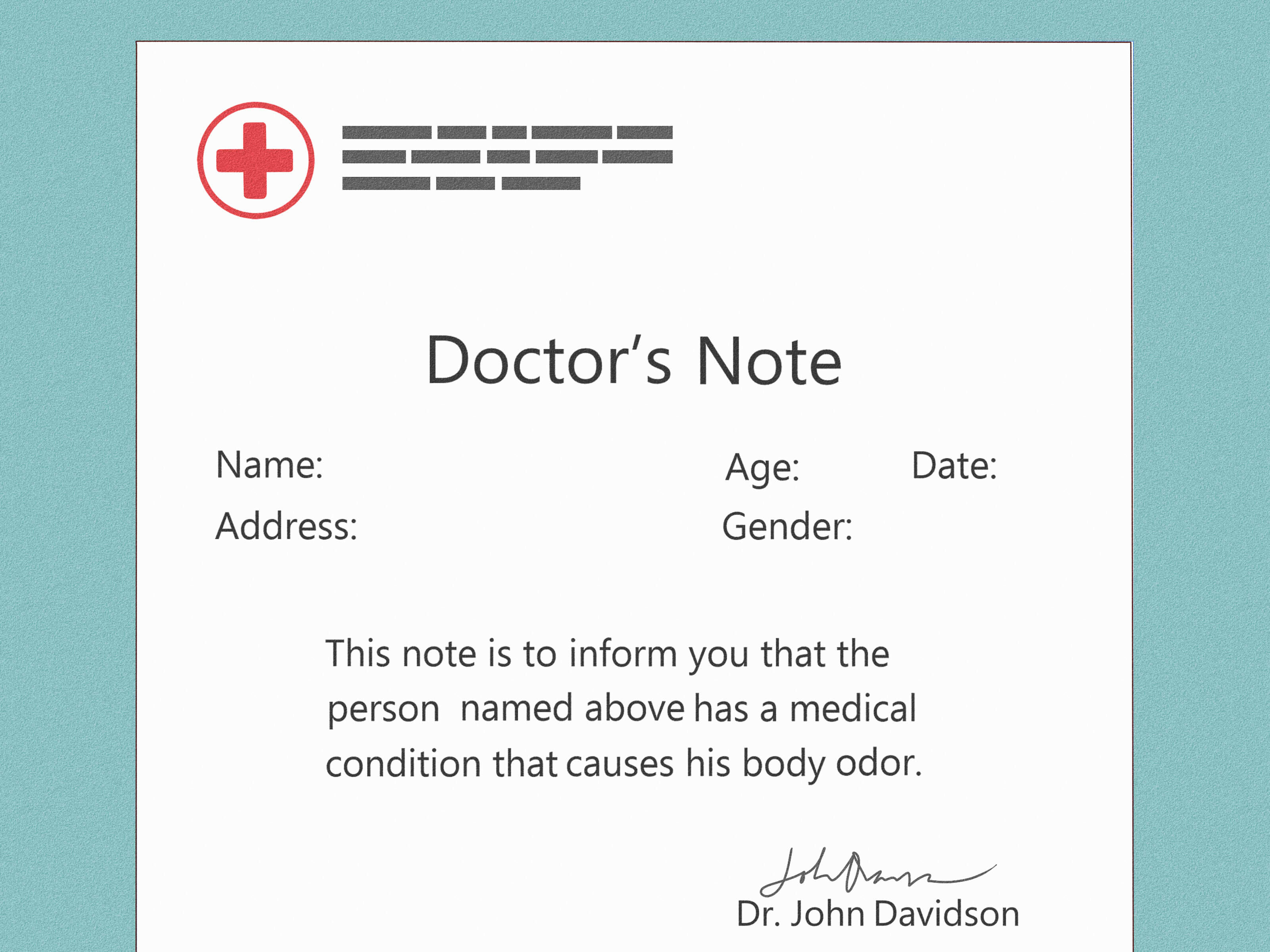
This is where managers need extra care. Sometimes body odor is connected to a medical condition or disability. Excessive sweating, skin disorders, hormonal conditions, side effects from medication, diabetes-related issues, or rare metabolic disorders can affect body odor. If the employee raises a medical explanation, the conversation should shift from “fix this immediately” to “let’s address the workplace issue appropriately.”
That does not mean managers have to ignore the impact on coworkers. It does mean they should involve HR, protect confidentiality, and consider whether a reasonable accommodation is appropriate under workplace policy and applicable law. The key idea is simple: address the effect without humiliating the person or demanding unnecessary personal health details in the moment.
Possible accommodations may include:
- Flexible break access for hygiene needs
- Permission to keep supplies or a change of clothes at work
- Modified uniforms or breathable fabrics
- Adjusted workstation placement or ventilation
- Remote work or hybrid adjustments when the role allows
Confidentiality matters here. A manager should never tell the team, “It’s medical, so be nice.” That may sound well-meaning, but it is still inappropriate. Medical information should stay private.
How to Keep the Team From Turning Mean
One of the worst parts of a body odor issue is often not the odor. It is the gossip. Once a few people start exchanging “Do you smell that?” looks, the problem becomes social and cruel very quickly. Good leaders shut that down.
If complaints come in, thank employees for raising a concern respectfully, then tell them the matter will be handled privately. Do not invite a group discussion. Do not collect jokes like you are hosting a terrible open mic night. Do not let the affected employee become office folklore.
A respectful team culture solves more than a scent problem. It tells everyone that sensitive issues are handled like adults handle them: directly, quietly, and without humiliation.
Practical Tips That Can Actually Help
Whether you are a manager or a coworker, practical solutions are usually better than emotional reactions.
Helpful workplace adjustments
- Improve airflow or temperature control
- Allow access to lockers, wipes, or changing space where appropriate
- Review uniform fabrics and laundering expectations
- Consider role-specific realities like field work, kitchens, warehouses, or outdoor heat
- Address the issue early before the employee becomes isolated
These steps are especially useful in jobs where sweating is part of the deal. In those settings, the solution may be environmental, not moral.
What If the Conversation Goes Badly?
Sometimes even a respectful conversation lands badly. The employee may feel embarrassed, deny the problem, or get upset. Stay calm. Do not argue about smell as if it were a spreadsheet with formulas. Restate the workplace concern, keep the tone steady, and document the conversation according to policy if you are a manager.
If the employee says there is a medical issue, involve HR. If they deny it completely but the problem continues, follow up again with professionalism and consistency. A single awkward conversation does not mean the issue disappears in a magical cloud of lavender and denial.
Experience-Based Scenarios and Real-World Lessons
In real workplaces, body odor issues rarely show up in neat textbook form. They tend to arrive wrapped in stress, heat, long commutes, and a whole lot of social hesitation. One common experience happens in open offices: everyone notices, nobody says anything, and productivity slowly turns into a silent choreography of people leaning away, moving chairs, or inventing reasons to work from the conference room. By the time a manager finally steps in, the employee has unknowingly become the center of a problem they were never given a fair chance to fix.
Another common scenario happens in physically demanding jobs. A warehouse employee, kitchen worker, delivery driver, or maintenance technician may start a shift perfectly fresh and still smell strong by midafternoon. In these cases, coworkers sometimes assume poor hygiene when the real issue is heat, exertion, heavy uniforms, limited break time, or nowhere private to change clothes. The lesson is simple: context matters. What looks personal may actually be operational.
There are also situations where a close colleague handles the conversation well. For example, a trusted teammate might pull someone aside after work and say, “I’m only mentioning this because I’d want to know myself.” That kind of sentence works because it is rooted in respect, not superiority. People are more likely to hear difficult feedback when they feel the speaker is protecting their dignity instead of taking it for sport.
Managers often learn the hard way that vague feedback does not help. Telling someone they need to be “more professional” or “more polished” only creates confusion. The employee may go home wondering whether the problem is their clothes, attitude, tone, or all three. Clear and private communication, while uncomfortable, is usually kinder than blurry criticism.
Then there are the more complicated experiences: an employee reveals a medical condition, a medication side effect, menopause-related sweating, anxiety-related perspiration, or a metabolic disorder they have been struggling to manage. In those moments, the conversation changes. It is no longer just about odor. It becomes about balancing workplace needs with privacy, empathy, and appropriate support. Teams that handle this well tend to come out stronger, because employees remember when dignity was protected under pressure.
The biggest lesson from real-world cases is that most people do not need humiliation to change. They need awareness, a respectful conversation, and a realistic path forward. A body odor issue may be awkward, but it does not have to become cruel. When handled well, it can actually build trust: the person learns they were told the truth kindly, and the team learns that difficult situations can be managed without gossip, mockery, or unnecessary drama.
Final Takeaway
Working with a person who has body odor is uncomfortable, but it does not have to become unkind. The best approach is steady, private, respectful, and practical. If you are a coworker, think carefully about whether you should address it yourself or raise it discreetly with a manager. If you are a manager, be direct, protect the employee’s dignity, focus on workplace impact, and involve HR when medical or accommodation issues may be involved.
Most of all, remember that the person is still a person. Today’s awkward conversation can become tomorrow’s relief if it is handled well. Nobody dreams of being the subject of a workplace odor talk, but almost everyone appreciates honesty delivered with respect. Be the adult in the room. Preferably the one who does not turn the situation into a tragedy, a comedy, or a Slack legend.