Hawaiʻi is often advertised as an effortless paradise: endless beaches, permanent sunshine, welcoming smiles, and perhaps a cold drink wearing a tiny paper umbrella. That picture is attractive, profitable, and dangerously incomplete. Hawaiʻi is not a tropical theme park built for vacationers. It is an ancestral homeland, a living culture, an ecologically fragile island chain, and the everyday home of people who still need to commute, pay rent, protect wildlife, and occasionally reach the grocery store without navigating a parade of rental Jeeps.
Native Hawaiian creator Lily Hiʻilani Okimura drew widespread attention to that gap between the marketed Hawaiʻi and the real one. Her criticism became especially visible after tourists were filmed touching an endangered Hawaiian monk seal. She argued that visitors who refuse to respect the land, wildlife, rules, and people should vacation somewhere else. Her position was not simply “tourists are annoying.” It was a challenge to an industry that can make visitors feel entitled to experiences without teaching them the responsibilities that come with entering someone else’s home.
A Monk Seal Video Exposed a Much Bigger Problem
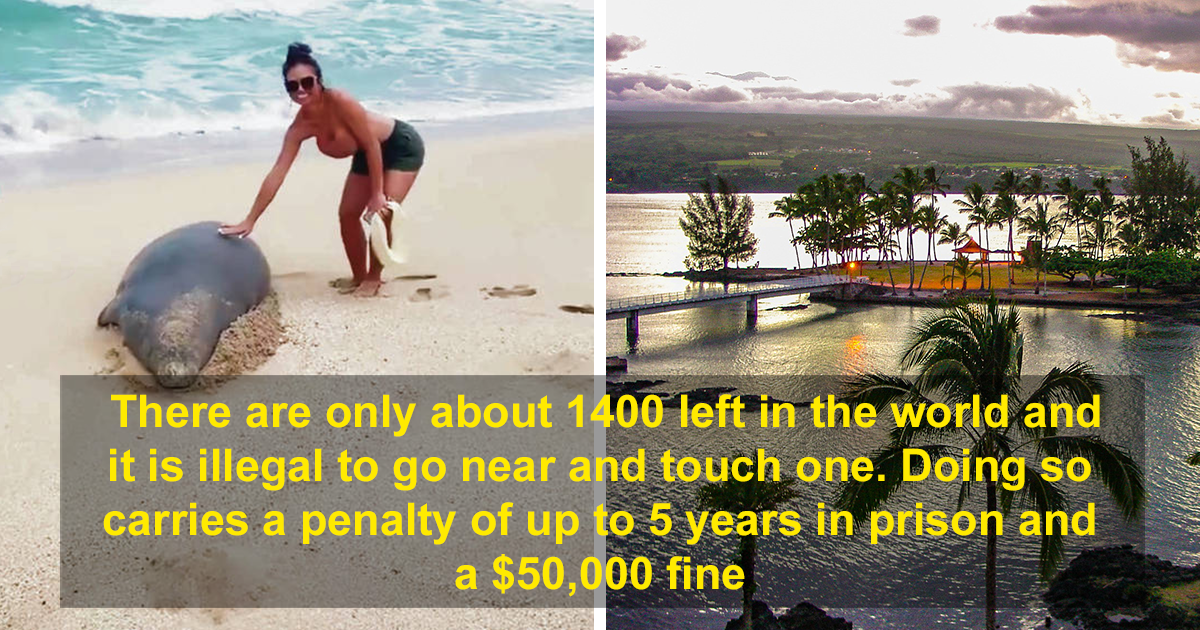
The controversy began with a deceptively simple act: a visitor approached and touched a Hawaiian monk seal resting on a Kauaʻi beach. Video showed the animal reacting while the visitor hurried away. The couple involved later apologized and received a $500 federal fine, but the incident became a symbol of something larger than one poorly considered vacation moment.
Okimura emphasized that beaches commonly display warnings about approaching protected animals. The problem, in her view, was not that visitors had been asked to memorize an obscure paragraph from a wildlife statute before boarding their flight. The problem was the assumption that a wild animal could become an interactive vacation prop simply because someone wanted a memorable video.
A Hawaiian monk seal is not a hotel mascot, a stuffed animal, or a furry employee from the Department of Vacation Photography. It is a protected wild mammal. NOAA advises people to remain at least 50 feet from monk seals and at least 150 feet from mothers with pups. Visitors should stay behind barriers, keep dogs leashed, and never touch, chase, feed, or surround the animals.
The state has documented repeated cases of people touching, slapping, feeding, swimming near, or otherwise disturbing monk seals. Such behavior interrupts rest and feeding while also putting humans in danger. A seal that snaps or charges is not being rude to a paying customer. It is behaving like a stressed wild animal whose personal space has been invaded.
What Is the “False Version” of Hawaiʻi?
Paradise Without People
The false version of Hawaiʻi begins with a convenient illusion: the islands exist primarily for outsiders. Tourism marketing frequently highlights empty beaches, untouched waterfalls, smiling entertainers, and carefree adventure. Missing from the frame are traffic, housing shortages, cultural sites, working neighborhoods, environmental limits, and residents asking visitors not to trespass through their yards in pursuit of a social-media viewpoint.
This fantasy presents Hawaiʻi as scenery rather than homeland. It encourages travelers to believe that access should be unlimited because they purchased airfare. Yet a plane ticket is transportation, not a deed. A resort reservation does not grant permission to enter private land, ignore a closed trail, climb on an archaeological structure, or wander into a sacred place because an influencer described it as a “secret spot.”
Official responsible-travel guidance makes this distinction plainly. Hawaiʻi’s land and ocean are woven into the culture and daily lives of its people. Visitors are asked not to trespass, enter areas marked kapu, remove rocks or sand, leave trails, disturb cultural resources, or geotag sensitive locations.
A Culture Reduced to Vacation Decorations
The marketed version can also flatten Native Hawaiian culture into a collection of commercial symbols: a generic flower lei, a plastic hula skirt, a mispronounced word on a souvenir shirt, or a performance that mixes traditions from several Pacific cultures as though the entire ocean were one convenient entertainment package.
Hula, for example, is far more than a resort diversion. It carries language, genealogy, history, spirituality, and relationships with the land. Lei can embody intention, affection, honor, and cultural memory. Hawaiian words such as aloha, pono, and mālama have meanings deeper than branding slogans printed beside a hotel pool. Native Hawaiian cultural practitioners have repeatedly encouraged visitors to approach these traditions with humility instead of treating them as accessories.
The Complicated Relationship Between Hawaiʻi and Tourism
Tourism brings substantial economic activity to the islands. Hawaiʻi recorded approximately 9.64 million visitors and $21.75 billion in visitor spending during 2025. Hotels, restaurants, transportation companies, guides, shops, farms, performers, and many other businesses depend partly or heavily on travelers. Pretending that tourism can disappear overnight without consequences would be as unrealistic as pretending that unlimited tourism produces no consequences at all.
The real debate is therefore not simply “tourism or no tourism.” It is about who benefits, who pays the hidden costs, who controls the industry, and whether residents have enough influence over decisions affecting their communities.
A state-sponsored Native Hawaiian advisory report described the relationship between Native Hawaiians and tourism as deeply complicated. Its authors acknowledged tourism’s economic importance while questioning whether the dominant corporate model consistently improves conditions for Native Hawaiians. They argued that tourism cannot be separated from Hawaiʻi’s broader history of political, cultural, and economic displacement.
Resident surveys have also revealed frustration with overcrowding and management. In one set of statewide findings, strong majorities favored educating visitors about responsible behavior, eliminating illegal vacation rentals, charging visitor access fees at heavily used parks, and managing tourism in ways that improve natural and cultural resources.
At the same time, visitors frequently report excellent experiences. More than 90% of travelers surveyed from major markets in early 2024 said Hawaiʻi met or exceeded their expectations. That contrast is revealing: tourists may leave delighted while residents feel that their quality of life is being squeezed. A successful vacation and a successful tourism system are not necessarily the same thing.
Housing, Crowding, and the Cost of the Vacation Economy
Respectful tourism is not limited to remembering where to park or how far to stand from a turtle. Visitor demand intersects with housing, infrastructure, water, wages, and public access.
Hawaiʻi continues to face exceptionally high housing costs. According to the 2026 Hawaiʻi Housing Factbook, a household would need to earn slightly more than 180% of the state median income to afford the median-priced single-family home under the report’s assumptions. The factbook also tracks whole-home short-term rentals because their presence can affect how much housing remains available for residents.
Not every expensive home can be blamed on one vacation rental, and tourism is not the sole cause of Hawaiʻi’s housing crisis. Limited land, construction costs, zoning, permitting, outside investment, wages, and historical patterns all matter. Still, residents have understandable reasons to feel angry when workers who clean rooms, cook meals, teach children, or staff hospitals struggle to live near the communities that depend on them.
This is why calls for respectful travel often include requests to stay in legally operated accommodations, support locally owned businesses, tip service workers properly, and avoid treating residential neighborhoods like extensions of a resort district. The issue is not that visitors should feel personally guilty every time they order shave ice. It is that spending choices can either keep more value in the community or send it quickly through a corporate revolving door.
Respect Is More Than Following the Law
Learn Before You Land
Visitors should understand that “Hawaiian” refers specifically to people of Native Hawaiian ancestry. Not every person born or living in Hawaiʻi is Hawaiian, although they may be a Hawaiʻi resident or local. That distinction matters because Indigenous identity is not a souvenir label that can be applied to everyone wearing slippers near a beach.
Learning some history also changes the way a visitor sees the islands. Hawaiʻi had complex political, agricultural, navigational, linguistic, and cultural systems long before the modern visitor industry. Its history includes the overthrow of the Hawaiian Kingdom, annexation, cultural suppression, resistance, and revitalization. A traveler does not need to complete a graduate seminar before checking into a hotel, but understanding that history prevents the islands from becoming an attractive backdrop with the people digitally erased.
Treat Sacred Places as Sacred
At Puʻuhonua o Hōnaunau National Historical Park, the National Park Service asks visitors to remember that they are entering a wahi pana, a storied and sacred place. Guidance includes staying on trails, avoiding rock stacking, respecting ceremonies, and not sitting or standing on historic walls. The suggested thought experiment is simple: consider how you would expect strangers to behave in a place sacred to you.
That principle applies beyond national parks. Not every beautiful location is a swimming hole, picnic ground, drone launchpad, or dance floor for a fifteen-second video. Silence can be respectful. Distance can be respectful. Deciding not to take a photograph can be respectful. Occasionally, the most culturally sensitive content strategy is to put the phone away.
Follow Signs Without Negotiating With Them
A closed trail is closed even when the sunset looks spectacular. A “no parking” sign still applies when every marked space is full. A wildlife barrier is not a suggestion designed for less adventurous people. Visitors who ignore local warnings may damage habitats, trespass on private property, endanger rescuers, or force officials to restrict access for everyone.
The ocean deserves particular humility. Conditions change quickly, and local warnings are based on experience rather than a secret campaign to ruin anyone’s snorkeling plans. The Pacific Ocean has never read your itinerary and feels no obligation to accommodate a prepaid lunch reservation.
Can Tourism Become Part of the Solution?
Some Native Hawaiians and residents call for fewer tourists. Others support tourism that is more locally controlled, culturally accurate, environmentally restorative, and economically fair. These views are not mutually exclusive. Both challenge the idea that success should be measured only by filling more airline seats and hotel rooms.
Programs built around mālama encourage visitors to care for the place they are visiting. Depending on the organization, travelers may help restore fishponds, remove invasive plants, clean coastlines, maintain trails, or support native forests. The best programs are directed by local communities and conservation professionals rather than designed as a quick photo opportunity with gardening gloves.
Hawaiʻi’s tourism agencies have increasingly discussed attracting mindful and respectful travelers instead of merely maximizing volume. The state has also promoted regenerative tourism, which aims to leave natural resources and communities stronger rather than merely “less damaged.”
Regenerative tourism is not magic vocabulary. A hotel cannot add the word mālama to a brochure and instantly balance water use, wages, housing, traffic, and cultural representation. Meaningful change requires measurable community benefits, Native Hawaiian leadership, environmental investment, responsible business practices, and limits where ecosystems or neighborhoods cannot absorb more pressure.
A Practical Guide to Respectful Hawaiʻi Travel
- Research the island, not only the resort. Learn about local history, cultural practices, current conditions, and community concerns.
- Stay in legal accommodations. Confirm that a short-term rental is properly permitted and appropriate for its neighborhood.
- Respect wildlife distances. Use a zoom lens instead of your feet. Never touch, feed, chase, block, or pose beside wild animals.
- Obey closures and boundaries. Do not trespass, climb barriers, enter sacred spaces without permission, or follow unofficial social-media directions onto private land.
- Support local businesses. Choose locally owned restaurants, guides, farms, shops, artists, and cultural experiences whenever practical.
- Use resources carefully. Conserve water and energy, carry reusable items, stay on trails, and pack out trash.
- Drive with patience. Do not stop in traffic for photographs or park across driveways. Pull over safely when local traffic builds behind you.
- Ask before photographing people. Cultural practitioners and residents are human beings, not decorative vacation content.
- Listen without becoming defensive. A resident discussing tourism’s harms is describing lived experience, not launching a personal attack on your suitcase.
- Leave with gratitude rather than ownership. Enjoying a place does not create entitlement to it.
Experiencing the Difference Between Consuming Hawaiʻi and Respecting It
Consider two travelers beginning the same morning on Oʻahu. The first wakes before sunrise because a viral post promised an “untouched local beach.” The directions lead through a residential street. Legal parking is full, so the traveler leaves the rental car partly across a driveway. A sign warns that a nearby path is private, but several people are already climbing around it. Surely, the traveler reasons, all those strangers cannot be wrong at the same time.
At the shoreline, a monk seal is resting. People move closer, forming a loose circle. Someone crouches for a selfie. Another person complains that the seal is ruining the best angle. The traveler steps around a temporary barrier, takes a photograph, geotags the beach, and leaves behind a plastic drink cup. By breakfast, the traveler has collected impressive images and contributed almost nothing good to the place pictured in them.
The second traveler begins differently. Before the trip, they read about wildlife guidelines, Hawaiian history, and legal access. When the first beach is crowded, they use the backup location they planned rather than inventing a parking space in someone’s hibiscus hedge.
At the beach, volunteers have created a wide perimeter around a resting seal. The traveler stays back, uses a camera zoom, and explains the distance rule to a child in the group. The photograph is not a close-up, but it captures something better: a wild animal resting without being forced to perform.
Later, the traveler visits a locally operated cultural program. Instead of expecting a simplified spectacle, they listen to the meaning of the chants, movements, plants, and stories being shared. They learn that cultural education is not merely entertainment delivered between buffet courses. It is knowledge offered by people who decide how their culture should be represented.
Lunch comes from a small local restaurant. The traveler speaks respectfully, tips well, and does not announce that a dish is “more authentic” than the food eaten by the people who actually live there. In the afternoon, the group joins a scheduled conservation activity led by a community organization. The work is not glamorous. There is mud. There are mosquitoes. Nobody receives a ceremonial crown for pulling invasive plants. Yet the experience creates a more honest relationship with Hawaiʻi than racing between famous photo locations ever could.
Near sunset, the traveler reaches a cultural site where signs request quiet. They lower their voice, remain on the path, and resist building a rock stack for Instagram. The stones are already where history placed them; they do not need amateur interior decorating.
Both travelers may return home saying Hawaiʻi was beautiful. Only one behaved as though that beauty belonged to a living place with boundaries, memory, and people. That is the difference Okimura’s message asks visitors to confront. Respectful travel is not about performing guilt or proving that you are one of the “good tourists.” It is about changing behavior when local knowledge conflicts with personal convenience.
The most meaningful Hawaiʻi experience may therefore be less dramatic than the commercial fantasy. It may involve waiting, listening, choosing not to enter somewhere, accepting that a beach is full, or leaving an animal alone. Those choices rarely go viral. They do, however, help ensure that the places travelers admire remain livable, culturally meaningful, and ecologically healthy after the vacation ends.
Conclusion: Hawaiʻi Is a Home Before It Is a Destination
Okimura’s warning is deliberately uncomfortable because polite reminders have often been ignored. Her message does not require readers to believe that every Native Hawaiian or Hawaiʻi resident shares exactly the same opinion about tourism. Communities contain workers, business owners, activists, cultural practitioners, conservationists, and families with different priorities.
What should not be controversial is the basic principle beneath the argument: visitors are guests. Guests do not harass wildlife, damage sacred places, trespass for photographs, treat residents like service props, or demand that local communities absorb every cost of their enjoyment.
Hawaiʻi does not need travelers who expect a false paradise arranged entirely for them. It needs visitors willing to see a real placebeautiful, complicated, culturally alive, environmentally vulnerable, economically dependent on tourism, and increasingly determined to reshape that tourism on local terms.
Come with humility. Spend thoughtfully. Learn before arriving. Follow the rules even when nobody appears to be watching. And remember that the greatest sign of respect may be accepting that not every place, animal, story, or experience exists for your personal access.
Note: The word “Hawaiian” refers specifically to people of Native Hawaiian ancestry, while “local” may describe Hawaiʻi residents from many ethnic and cultural backgrounds. Wildlife regulations, closures, and visitor-access rules can change, so travelers should consult current official guidance before their trip.