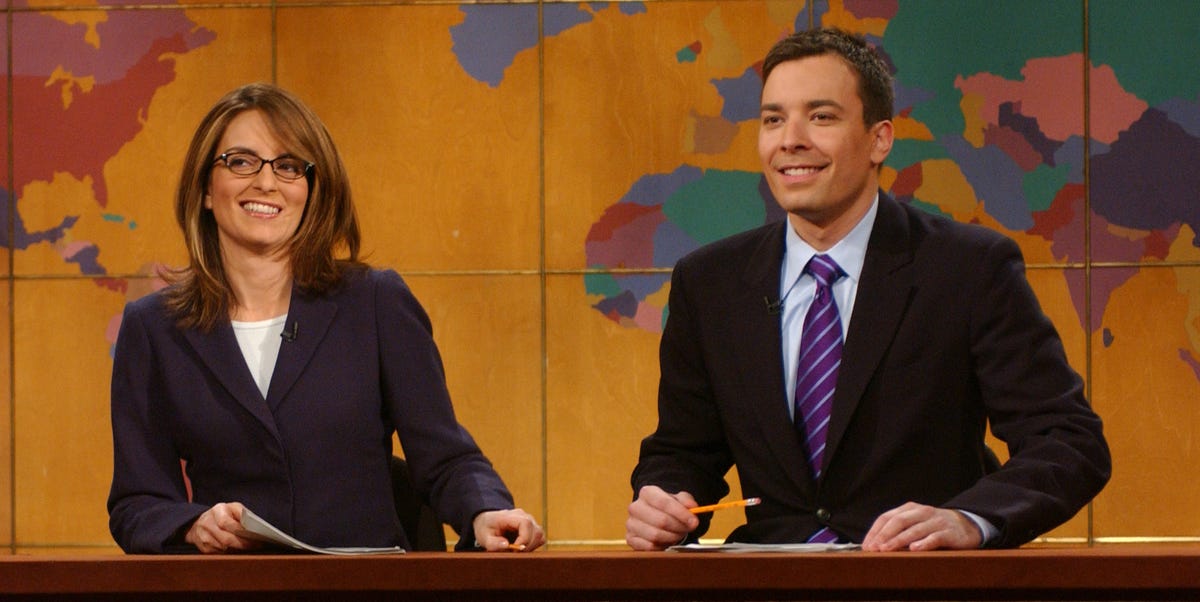
When Saturday Night Live turns 50, you do not celebrate with a cupcake and a polite golf clap. You celebrate with a full-blown comedy history lesson, a pile of legends, and enough backstage nerves to power Manhattan. That is exactly what SNL50: Beyond Saturday Night delivers. Rather than serving up a lazy greatest-hits reel with a few nostalgic hugs, the docuseries opens the doors to the audition room, the writers’ room, one gloriously overqualified cowbell, and the famously messy Season 11.
And because this is SNL, the real fun is in the people. The series features a huge lineup of former cast members, writers, and insiders, but let’s be honest: some names hit the screen like a standing ovation in human form. These are the famous faces who do more than appear. They instantly remind viewers why SNL has spent five decades shaping American comedy, pop culture, and the very specific art of looking stressed in a hallway at 2 a.m. while holding cue cards and a cold slice of pizza.
So, who are the most famous cast members in SNL50: Beyond Saturday Night? There is no official ranking from Peacock, and that is probably wise because comedians do not need another thing to compete about. But based on cultural impact, mainstream recognition, career success, and how strongly they symbolize the SNL machine, a few names tower above the rest.
What Makes a Cast Member “Most Famous” in This Docuseries?
Fame here is not just about being funny in Studio 8H. It is about what happened after that. Some cast members became movie stars. Some became late-night royalty. Some turned political impressions into cultural events. Others became shorthand for entire comedy eras. In SNL50: Beyond Saturday Night, the most famous cast members are the ones who carry their own mythology into every interview clip.
They are also the people who help explain why SNL still matters. The docuseries is not merely interested in who got laughs. It is interested in how careers were made, how sketches survived, how writers battled deadlines, and why the show’s pressure cooker somehow keeps producing stars. In other words, this is not just celebrity spotting. It is celebrity archaeology.
The Biggest Names That Stand Out in SNL50: Beyond Saturday Night
Tina Fey: The Brainy Queen of Modern SNL
If SNL had an unofficial chief operating officer of smart comedy, it would be Tina Fey. Her presence in SNL50: Beyond Saturday Night feels essential because she represents two things at once: the brutal writing culture behind the show and the polished comic brilliance that can come out of it. Fey is not just a beloved former cast member. She is one of the defining architects of modern SNL.
Her legacy reaches far beyond Weekend Update. She became the first female head writer, helped shape the tone of the show in a major era, and then turned her SNL credibility into a larger empire that includes 30 Rock, films, books, producing, and the kind of industry respect that makes other funny people sit up straighter. In the docuseries, Fey helps connect the glamorous legend of SNL with the very unglamorous reality of rewriting jokes until your soul briefly leaves your body.
She is famous because she is funny, yes, but also because she made intelligence commercially irresistible. That is a rare trick in television. That is an even rarer trick in sketch comedy, where chaos is usually doing donuts in the parking lot.
Will Ferrell: The Human Tornado of Sketch Comedy
If Tina Fey represents the brain of SNL, Will Ferrell represents its glorious, committed, slightly unhinged body. Ferrell’s role in the docuseries is impossible to ignore, especially because the “More Cowbell” episode zeroes in on one of the most quoted sketches in SNL history. You do not need to be a die-hard fan to know that sketch. You just need to have existed near a television, internet connection, or overexcited uncle at a barbecue.
Ferrell became one of the show’s most famous alumni by turning total commitment into an art form. He could play absurdity with the confidence of a man delivering a Supreme Court opinion, which is precisely why his performances endured. After SNL, he moved seamlessly into film stardom with comedies that made him one of the biggest comic names of the 2000s.
In this docuseries, Ferrell does not just show up as a famous former cast member. He shows up as a symbol of what happens when SNL catches lightning in a bottle, tapes a fake mustache on it, and sends it on live television.
Amy Poehler: The Cool Older Sister of Comedy
Amy Poehler is one of those performers who somehow manages to seem wildly talented and weirdly approachable at the same time. In SNL50: Beyond Saturday Night, she stands out because she belongs to that elite category of alumni who helped define an era while also becoming much bigger than the show afterward.
Her SNL years gave audiences sharp character work, fearless ensemble energy, and a memorable partnership with Tina Fey on Weekend Update. Then came Parks and Recreation, voice work, producing, directing, and the transformation into a full-on comedy institution. Poehler’s fame is not built on one sketch or one impression. It is built on consistency, likability, and the sense that she understands comedy from every angle.
She also brings something important to the docuseries: perspective. Poehler can laugh at the absurdity of the process while still respecting how hard it is. That combination is pure SNL gold.
Bill Hader: The Performer Who Made Precision Look Effortless
Bill Hader has the kind of résumé that makes comedy fans speak in reverent tones, as if discussing an endangered genius in the wild. His presence in the auditions-focused part of the docuseries matters because he embodies a very specific SNL miracle: a performer who could disappear into characters, impressions, and tiny behavioral details without ever losing the joke.
Hader became one of the most admired cast members of his generation because his range was ridiculous. He could go from game-show chaos to eerie celebrity impression to emotional weirdness in a matter of seconds. Then he left SNL and somehow became even more respected through writing, directing, and starring in Barry, which basically told Hollywood, “Yes, the funny guy can also break your heart and direct the scene beautifully, thanks.”
In a project like SNL50: Beyond Saturday Night, Hader feels important because he represents the technically gifted performer whose brilliance was never loud for attention. He just kept landing every punchline like it owed him money.
Jimmy Fallon: The Guy Who Turned Breaking into a Brand
Jimmy Fallon is one of the most commercially famous SNL alumni alive, and that alone makes him a major figure in the docuseries. He moved from cast member to late-night host with such success that a huge chunk of the public now knows him first as a TV institution and only second as the guy trying not to laugh in sketches.
That is exactly why Fallon matters in SNL50. He is part of the show’s crossover power. He helped translate SNL fame into mainstream household fame. And in the “More Cowbell” conversation, he becomes part of the story of a sketch so contagious that even the visible cracking up made it funnier. Normally, breaking character is a problem. In Fallon’s case, it became a strange form of audience trust. People could see the sketch was killing in real time.
Fallon’s fame is not rooted in being the most dangerous comic or the sharpest satirist. It is rooted in being intensely watchable. In television, that counts for a lot.
Seth Meyers: The Writer-Performer Hybrid Who Knows the Machine
Seth Meyers may not always enter the room with the biggest movie-star aura, but in terms of actual SNL importance, he is right near the top. The docuseries makes space for that truth, especially when it digs into writing culture. Meyers is one of those rare figures who understands the show from the inside out: performer, head writer, Update anchor, and now late-night host.
His fame is built on credibility. He was never just there to grab attention. He became part of the wiring. That makes him perfect for a documentary trying to explain how SNL functions behind the curtain. Meyers is what happens when the person delivering the joke also understands where the panic came from, who cut the sketch at dress, and why nobody has eaten a vegetable in twelve hours.
In other words, he is not just famous. He is authoritative. For a project like this, that is invaluable.
Kenan Thompson: The Living Bridge Between Eras
Kenan Thompson is a different kind of legend because his fame comes with longevity. The docuseries features him not just as another recognizable face, but as a living bridge between old-school SNL lore and the show’s current identity. He is the longest-running cast member in the show’s history, which is the sort of achievement that sounds fake until you remember he basically grew up in sketch comedy in public.
Kenan’s brilliance has often been understated because he makes hard things look natural. He is reliable without being boring, goofy without being sloppy, and versatile without making a speech about it. He can rescue weak material, elevate strong material, and anchor chaos like a veteran air-traffic controller with better timing.
In SNL50: Beyond Saturday Night, Kenan represents continuity. He reminds viewers that the show is not just a museum of old legends. It is also a living organism that still depends on performers who know how to survive the weekly madness.
Tracy Morgan: The Wild Card With Movie-Star Magnetism
Tracy Morgan enters any SNL conversation like a firecracker with a microphone. His appearance in the docuseries matters because he personifies a kind of comic force that the show has always needed: unpredictable, unmistakable, and impossible to confuse with anyone else.
Morgan’s fame grew far beyond his cast years thanks to stand-up, film roles, and especially 30 Rock, where he turned larger-than-life energy into a signature. But even with all that post-SNL success, he still feels rooted in the show’s DNA. He is part of the tradition of cast members whose personalities are so vivid they become their own genre.
In a documentary about a comedy institution, Morgan brings a dose of danger. Not actual danger, to be clear. More like the artistic danger of never quite knowing where the sentence is going to land, which is usually where the fun starts.
Fred Armisen: The Shape-Shifter’s Shape-Shifter
Fred Armisen is one of the most respected performers to come out of SNL because his talents seem to multiply the longer you stare at them. He is a character actor, a musician, a mimic, a deadpan specialist, and a guy who can make the tiniest odd detail feel hilarious. In the docuseries, he shows up as exactly the sort of performer comedy nerds adore and general audiences still recognize instantly.
Armisen matters here because SNL50: Beyond Saturday Night is not only about big stars. It is also about the craft of building a sketch universe. Armisen excels at that craft. He is one of those cast members who never needed traditional leading-man energy to become hugely famous. He built his reputation on specificity, curiosity, and artistic weirdness.
That is a major part of the SNL story too: fame does not always come from being the loudest. Sometimes it comes from being the strangest person in the room in the most disciplined way possible.
Julia Louis-Dreyfus and Billy Crystal: Season 11’s Reminder That Fame Ages Well
One of the smartest moves in the docuseries is its look at Season 11, often remembered as one of the weirdest and most unstable periods in SNL history. That episode brings in famous names like Julia Louis-Dreyfus and Billy Crystal, who prove that even shaky chapters can produce lasting stars.
Julia Louis-Dreyfus is, frankly, television royalty. Her post-SNL career turned her into one of the most decorated comedic performers ever, and her inclusion adds long-view prestige to the series. Billy Crystal, meanwhile, remains one of the biggest comedy names ever associated with the show, even if his cast tenure was brief. Their presence helps the docuseries make an important point: SNL does not always look historic while it is happening. Sometimes it looks like a beautiful mess until hindsight shows you the talent that was standing in the rubble.
Why These Cast Members Matter More Than Simple Nostalgia
The real achievement of SNL50: Beyond Saturday Night is that it does not just remind viewers who was famous. It reminds them why. These cast members matter because they each represent a different route through the SNL machine. Tina Fey shows the power of writing. Will Ferrell shows the power of commitment. Amy Poehler shows the strength of ensemble brilliance. Bill Hader shows technical mastery. Fallon and Meyers show how SNL can launch television institutions. Kenan shows endurance. Tracy Morgan shows comic identity. Armisen shows artistic range. Julia Louis-Dreyfus and Billy Crystal show the long afterlife of even the strangest seasons.
Together, they turn the docuseries into more than a reunion. They turn it into a map of American comedy over the last half-century.
Extended Reflections: What It Feels Like to Watch These Legends Again
Watching SNL50: Beyond Saturday Night can feel weirdly emotional, even if you went in expecting little more than nostalgia and a few behind-the-scenes stories. There is something powerful about seeing cast members from different eras talk about the same institution as if it were part boot camp, part dream factory, part sleep-deprivation experiment designed by very funny gremlins. The series has that effect because SNL has always been larger than a normal TV show. It is a career launcher, a panic generator, a cultural mirror, and occasionally a machine that turns one oddball in a wig into a national obsession by Sunday morning.
For longtime fans, the experience is especially rich. You are not just recognizing people. You are recognizing phases of your own life. Maybe Will Ferrell reminds you of high school and the first time you heard everyone quoting “More Cowbell” for a month straight. Maybe Tina Fey and Amy Poehler remind you of discovering that smart women on TV could be cutting, self-aware, and hilarious without asking anyone’s permission. Maybe Bill Hader and Fred Armisen take you back to the digital era, when clips traveled faster and your favorite sketch was no longer just something you saw live, but something you rewatched until your laptop fan begged for mercy.
The auditions material hits in a different way. It is one thing to admire famous comedians once they are polished and successful. It is another thing to remember they were once nervous performers trying to make a life-changing impression in a matter of minutes. That part of the story gives the show a pulse. Suddenly these giant comedy names are not giant at all. They are hopeful, terrified, weirdly dressed, and trying to squeeze a future into a tiny window of time.
The writers’ room material can be just as revealing. It reminds viewers that the famous faces are only part of the miracle. The pressure, the rewrites, the harsh table reads, the endless tinkering, the quiet dread before dress rehearsal, all of that becomes part of the legend too. You begin to understand that SNL fame is not just earned in front of the camera. It is forged in rooms where very smart people are trying to write something funnier than the last thing they wrote while the clock sprints toward air time.
And then there is the simple joy of hearing these veterans talk to one another. The docuseries captures a truth fans have always sensed: comedy people often remember details the way athletes remember games. They recall rhythm, timing, crowd energy, backstage tension, and the exact second when a sketch either died or suddenly came alive. That shared memory gives the series warmth. It feels like a reunion, yes, but also like a master class in how American comedy has been built, broken, and rebuilt for 50 years.
That is why the most famous cast members in SNL50: Beyond Saturday Night matter. They are not just celebrities making cameos in a prestige anniversary package. They are evidence. Evidence that the show keeps producing people who alter entertainment, shape culture, and leave viewers quoting them decades later. Not bad for a program that starts every week with a countdown, a little panic, and somebody praying the sketch about a weird little guy in a hat actually works.
Conclusion
SNL50: Beyond Saturday Night works because it understands that fame alone is not the point. The point is what these cast members reveal about the show’s endurance. Tina Fey, Will Ferrell, Amy Poehler, Bill Hader, Jimmy Fallon, Seth Meyers, Kenan Thompson, Tracy Morgan, Fred Armisen, Julia Louis-Dreyfus, and Billy Crystal each spotlight a different piece of the SNL myth. Some represent writing power. Some represent performance genius. Some represent longevity, crossover success, or the ability to survive the weirdest years imaginable.
Put them together, and you get more than a list of celebrities. You get the DNA of a comedy institution. That is what makes these cast members the most famous figures in SNL50: Beyond Saturday Night. They are not just part of the story. In many ways, they are the story.