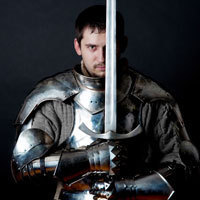
The phrase “Dark Ages” has powerful branding. Say it aloud and the imagination produces a muddy village, a suspicious monk, three plague rats, and a peasant who has never met soap. Hollywood adds torches. Video games add swords the size of canoe paddles.
The problem is that this picture crushes roughly a thousand years of European history into one gloomy costume-drama cliché. Historians usually prefer Middle Ages or, for the centuries after Roman authority collapsed in Western Europe, early medieval period. Medieval life could be brutal, but people also traded widely, studied nature, built institutions, wrote literature, and occasionally took baths without civilization collapsing. Here are five Dark Ages myths ready for a historically informed bonk.
Myth 1: Everyone Thought the Earth Was Flat
This myth refuses to fall off the edge of historypossibly because there is no edge.
Educated medieval Europeans generally understood that the Earth was spherical. They inherited that idea from Greek and Roman scholarship, and astronomical texts treated it as ordinary knowledge. Scholars discussed the globe’s zones, eclipses, and the changing appearance of the stars.
Geocentric Does Not Mean Flat
Most medieval cosmology placed Earth at the center of the universe. That model was wrong, but a sphere can sit at the center of something. Medieval diagrams commonly showed a round Earth surrounded by celestial spheres, following Aristotle and Ptolemy.
Astronomers also used instruments such as astrolabes for timekeeping, calculation, surveying, and celestial observation. Scholars in the medieval Islamic world refined astronomical knowledge drawn from Greek, Persian, and Indian traditions, and much of that work later circulated in Latin Europe.
The flat-Earth story became popular because later writers wanted a simple battle between science and medieval ignorance. Christopher Columbus did not need to prove the planet was round; the serious dispute concerned its size and the distance westward to Asia. Columbus badly underestimated both. Another continent saved his itinerary from becoming a very short biography.
Myth 2: Medieval People Never Bathed
The stereotypical medieval person appears permanently glazed in mud, as though one wash would dissolve the feudal system. Reality was messier but considerably cleaner.
Bathing habits varied by century, region, wealth, climate, and access to fuel and water. Medieval towns lacked modern plumbing and sewage treatment, and streets could be foul. Yet limited sanitation is not the same as a religious commitment to smelling terrible.
Bathhouses and Basins Were Real
Public bathhouses operated in many medieval towns, especially in the High and Late Middle Ages. Some offered heated tubs, food, conversation, medical treatments, and occasionally services that made moral authorities nervous. Wealthy households used portable tubs, while others washed with basins, in rivers, or whenever labor and weather allowed.
Medical texts discussed bathing, households used soap made from fats and alkaline substances, and people washed hands, faces, clothes, and hair. Their methods were inconsistent and often ineffective by modern public-health standards, but they clearly valued cleanliness.
The no-bathing stereotype also mixes centuries together. Epidemics, cost, changing medical theories, and moral concerns reduced communal bathing in certain places and periods. Popular culture took those examples, added one disgusting castle floor, and invented a thousand-year no-shower challenge.
Myth 3: Everyone Died at Age 30
When people hear that medieval life expectancy could be around 30 or 35 years, they often imagine a 29-year-old choosing a retirement monastery. That is not how averages work.
Life expectancy at birth was dragged downward by extremely high infant and childhood mortality. Imagine four people: two die at age one, while two live to 60. Their average age at death is about 30, although nobody dies at 30.
Surviving Childhood Changed the Odds
People who reached adolescence had already survived some of life’s most dangerous years and could live into their fifties, sixties, or beyond. Old age was not rare enough to seem supernatural, and medieval communities included grandparents, elder clergy, experienced artisans, and long-serving rulers.
Life was still hazardous. Infection, injury, malnutrition, violence, famine, and childbirth killed many people. Without antibiotics, sterile surgery, germ theory, or modern emergency care, a minor wound could become fatal. Wealth, occupation, location, gender, and luck all affected survival.
The accurate lesson is not that medieval people routinely expired on their thirtieth birthdays. It is that early deathespecially among babies and childrenwas far more common, giving families an intimate familiarity with grief that a simple average cannot explain.
Myth 4: Science and Learning Disappeared
In the cartoon timeline, Rome fell, somebody switched off the library lights, and Europe waited for the Renaissance to reboot civilization.
Roman political collapse did disrupt cities, administration, infrastructure, and education in Western Europe. Literacy narrowed in some regions, and ancient works were lost. But “knowledge declined in certain places” is very different from “nobody learned anything for a thousand years.”
Knowledge Moved Across Cultures
Monasteries copied religious works alongside texts on grammar, medicine, history, mathematics, and astronomy. Byzantine and Islamic scholars preserved and expanded intellectual traditions. Baghdad and other centers supported major work in astronomy, optics, medicine, geography, and calculation. Thinkers such as al-Biruni and Ibn al-Haytham influenced later scholarship.
Translations from Greek and Arabic into Latin fed European study. Universities developed in Bologna, Paris, Oxford, and elsewhere, establishing degrees, faculties, lectures, examinations, and structured debate. Scholars including Robert Grosseteste, Roger Bacon, and Nicole Oresme explored mathematics, light, motion, and methods of investigating nature.
Medieval natural philosophy was not modern science. It mixed observation with theology, astrology, inherited authority, and ideas later shown to be wrong. Still, the scientific revolution did not emerge from an empty room. It grew from centuries of preservation, argument, translation, craftsmanship, and people doing calculations in extremely impractical hats.
Myth 5: The Era Was One Endless Witch-Burning Festival
Movie medievalism follows a strict calendar: market on Monday, plague on Tuesday, witch burning every Wednesday.
Medieval people did believe in magic, curses, demons, and harmful supernatural power. Accusations could ruin lives, and authorities prosecuted some people for heresy or magic. However, Europe’s largest witch-hunt panics occurred mainly from the late fifteenth through the seventeenth centurieslargely the early modern period.
The Worst Persecutions Came Later
The notorious Malleus Maleficarum appeared in 1486, near the conventional medieval-to-early-modern boundary. Many major European trials occurred in the 1500s and 1600s. The Salem trials took place in 1692 and 1693 in colonial Massachusetts, not in a kingdom of knights and drawbridges.
Execution methods varied. Burning occurred in parts of continental Europe, while England and its American colonies generally hanged convicted witches. Prosecution rates also differed widely: some courts embraced panic, others rejected cases, and not every accusation ended in death.
Correcting the timeline does not minimize the tragedy. It helps explain it. Witch hunts grew from particular laws, religious conflicts, disasters, political pressures, and theories of satanic conspiracy. Fear became rumor; rumor acquired paperwork; paperwork acquired an executioner. That process is more disturbingand more useful to understandthan a generic story about primitive medieval minds.
Why These Dark Ages Myths Survive
The myths make history easy and flatter the present. We get science, hygiene, tolerance, and common sense; medieval people get fleas and ominous chanting. Real history is less comforting. Medieval societies could be inventive and cruel, curious and credulous, connected and provincialsometimes in the same town. The past is not a staircase from stupidity to intelligence. It is a crowded landscape of gains, losses, rediscoveries, and accidents.
The Experience of Unlearning the Dark Ages
Revisiting these myths changes the experience of encountering medieval history. A museum gallery that once looked like a collection of gloomy religious objects begins to resemble a network of workshops, libraries, trade routes, and political ambitions. An astrolabe stops being decorative brass and becomes a calculating device. A manuscript becomes evidence of expensive materials, trained labor, distant pigments, careful correction, marginal jokes, and readers who argued with the page.
The same shift happens when walking through a surviving medieval town. Narrow streets may first look like proof that residents tolerated chaos. Look closer and practical questions appear. Where did people obtain water? Which trades clustered together? Who regulated ovens, markets, waste, bathhouses, and brewing? Why were walls expanded in one century and abandoned in another? The town becomes less like a fantasy backdrop and more like a living system with rules, failures, and constant negotiation.
Trying reconstructed medieval technologies can be even more revealing. Copying a page by hand makes the cost of books immediately understandable. Using a basic astronomical instrument shows that observation demanded skill and mathematics. Cooking from a historical recipe reveals an economy shaped by seasonality, preservation, social rank, and international trade. Even missing conveniences become specific. “No plumbing” sounds abstract; carrying every bucket of water turns it into an exhausting daily calculation.
Testing the life-expectancy myth with numbers produces another useful experience. Build a small imaginary population in which several children die young while survivors reach 50, 60, or 70. The average collapses, and “people lived to 30” instantly looks misleading. The exercise does not soften medieval mortality. It reveals where suffering was concentrated: infancy, childhood, childbirth, epidemic disease, and periods of shortage.
Moving the great witch persecutions toward the early modern period is equally unsettling. It removes the comforting idea that mass panic belongs to a sealed age of primitive minds. Printing, educated judges, bureaucratic courts, and energetic governments did not automatically prevent persecution; in some settings, they helped organize and spread it. The history suddenly feels less distant.
Perhaps the strongest experience is intellectual humility. There was no universal “medieval person.” A ninth-century farmer in Francia, an eleventh-century physician in Cairo, a thirteenth-century student in Paris, and a fifteenth-century merchant in Florence inhabited different worlds. They did not share one diet, hygiene routine, education, or opinion about magic.
Once that variety becomes visible, the Middle Ages grow more interesting than the clichés. The era loses some theatrical darkness but gains real people. They worried about health, complained about prices, pursued status, improved tools, raised children, feared disasters, told jokes, and argued with experts. They become unfamiliar enough to surprise us and familiar enough to make us slightly nervous.