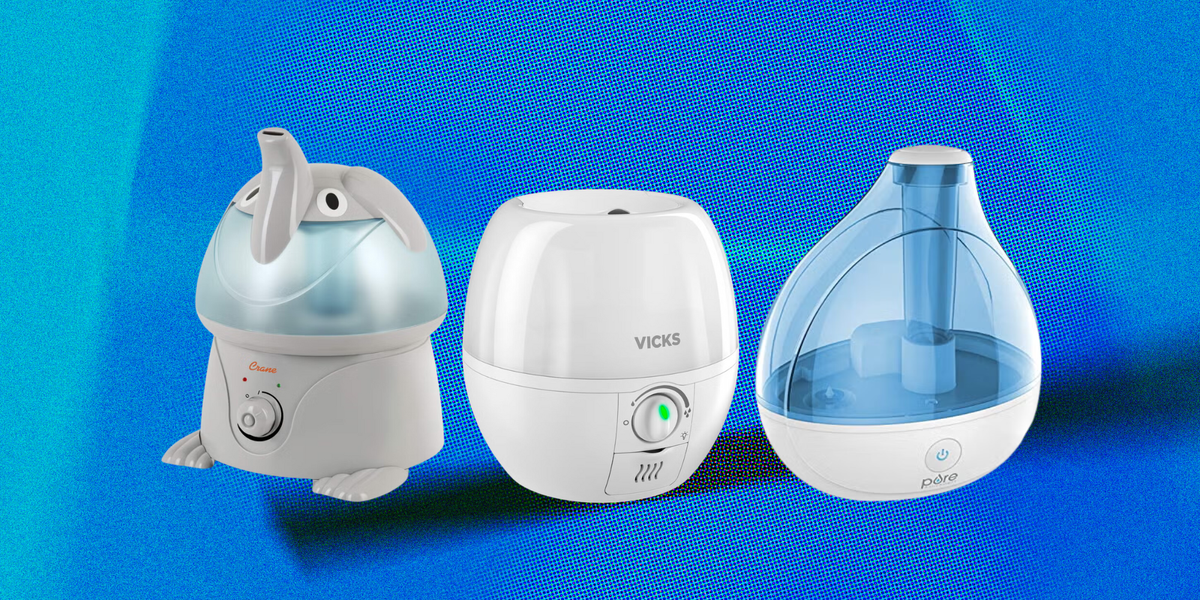
A congested baby has a special talent for turning an ordinary night into a household-wide emergency meeting. While a humidifier cannot cure a cold, the right model can add moisture to dry nursery air, help prevent nasal passages from becoming uncomfortably dry, and make breathing feel easier during cold and flu season.
The challenge is that humidifiers are essentially small appliances filled with standing water. Choose a poorly designed one, skip a few cleanings, and your helpful nursery gadget can become a tiny indoor swamp. That is why the best humidifier for a baby must do more than produce an impressive cloud of mist. It should be quiet, stable, easy to clean, appropriately sized, and safe to operate around curious little hands.
This guide synthesizes independent laboratory testing, long-term home testing, pediatric recommendations, indoor-air guidance, and manufacturer specifications from reputable U.S. sources. The result is a practical list of six baby humidifiers for different budgets, room sizes, water conditions, and parenting styles.
Quick Look at the Best Baby Humidifiers of 2025
| Humidifier | Best For | Type | Tank Capacity | Maximum Runtime |
|---|---|---|---|---|
| Vicks EasyCare+ TopFill | Best overall | Ultrasonic cool mist | 0.6 gallon | Up to 24 hours |
| Levoit Dual 150 | Best budget option | Ultrasonic cool mist | 3 liters | Up to 25 hours |
| Honeywell Cool Moisture HCM-350 | Best for hard water | Evaporative cool mist | About 1.1 gallons | Up to 24 hours |
| Canopy Nursery Humidifier 2.0 | Best premium model | Evaporative | 2.5 liters | Up to 24 hours |
| Crane Adorables | Best child-friendly design | Ultrasonic cool mist | 1 gallon | Up to 24 hours |
| Vicks 3-in-1 SleepyTime | Best with a nightlight | Ultrasonic cool mist | 0.6 gallon | Up to 24 hours |
How These Baby Humidifiers Were Evaluated
We prioritized models that performed well in independent tests conducted by major U.S. parenting and home-product publications. Testers commonly measured how quickly each machine raised relative humidity, how loudly it operated, how long the tank lasted, and how difficult it was to fill, disassemble, and clean.
For nursery use, cleaning received extra weight. A humidifier with 14 mysterious crevices and an opening the width of a drinking straw may look sleek, but it is not particularly charming when a parent is scrubbing it at 1:00 a.m.
Our evaluation focused on five practical factors:
- Cool-mist operation: Cool mist avoids the hot-water burn risk associated with steam vaporizers and warm-mist humidifiers.
- Cleaning access: Wide openings, removable parts, and dishwasher-safe components make proper maintenance more realistic.
- Noise: A nursery humidifier should create moisture, not sound like it is preparing for takeoff.
- Humidity output: The unit should raise moisture levels effectively without soaking nearby furniture or turning the nursery into a tropical greenhouse.
- Everyday usability: Top-fill tanks, carrying handles, automatic shutoff, directional nozzles, and visible water levels all improve the ownership experience.
1. Vicks EasyCare+ TopFill Ultrasonic Cool Mist Humidifier
Best Overall Baby Humidifier
The Vicks EasyCare+ TopFill earns the top position because it combines effective humidification with refreshingly simple controls. Independent testing found that it could make a noticeable difference in a dry room within about 30 minutes. In one controlled test, it raised relative humidity in a 186-square-foot room from the mid-20% range into the upper 30% range after several hours on high.
Its top-fill design is especially useful for exhausted parents. You can lift the lid, pour in water, and move on with your evening instead of flipping a slippery reservoir upside down while whispering words that would disappoint the grandparents. The built-in handles and removable power cord also make carrying and cleaning the unit easier.
The 0.6-gallon tank can run for up to 24 hours under favorable conditions, although high output will empty it sooner. The adjustable nozzle lets you direct mist away from the crib, walls, books, and other surfaces that should not become damp.
Advantages: Strong output, quiet operation, filter-free design, easy top filling, simple dial controls, and automatic shutoff.
Limitations: It does not include a built-in humidistat, so parents should use a separate hygrometer. Its lowest setting may also be too gentle for extremely dry rooms.
Best for: Parents who want a dependable, uncomplicated cool-mist humidifier for a small or medium nursery.
2. Levoit Dual 150 Ultrasonic Cool Mist Humidifier
Best Budget Humidifier for a Baby
The Levoit Dual 150 proves that a nursery humidifier does not need Wi-Fi, artificial intelligence, or a subscription to produce moisture. It is a compact, affordable ultrasonic model with a 3-liter tank, top-fill access, adjustable output, and a 360-degree nozzle.
During home testing in a dry winter bedroom, the Dual 150 reportedly raised humidity from approximately 25% to around 40%, even while the heating system was running. Its operating noise is rated below 28 decibels, making it quieter than an ordinary whisper and suitable for babies who treat every unexpected sound as a personal insult.
The large upper opening makes the tank easier to refill and gives parents enough room to reach inside during cleaning. That matters because ultrasonic models can disperse minerals from tap water, leaving a fine white residue on nearby furniture. Distilled or low-mineral water is therefore the better choice.
Advantages: Affordable price, quiet operation, approximately 25-hour maximum runtime, adjustable mist direction, and easy top filling.
Limitations: It has no automatic humidity control. Depending on the water quality and model configuration, a mineral-reduction filter may require periodic replacement.
Best for: Smaller nurseries, first-time parents, and shoppers seeking strong performance without premium pricing.
3. Honeywell Cool Moisture Humidifier HCM-350
Best Evaporative Humidifier for Hard Water
The Honeywell HCM-350 uses evaporative technology rather than sending a visible ultrasonic cloud into the room. A fan pulls dry air through a saturated wick, and invisible moisture is released into the nursery. This process is naturally less likely to create excessive mist or wet patches around the machine.
The wick also captures some minerals from the water, making this Honeywell humidifier a sensible choice for households with hard tap water. It includes UV treatment in the water pathway and has a break-resistant tank. The water tank and tray are dishwasher-safe, although parents should always check the current manual and use the recommended dishwasher rack.
Independent testers praised its quiet, fan-like sound, which may function as gentle background noise. The tradeoff is that the machine is noticeably larger than compact ultrasonic models. It also requires a replacement wick, which creates an ongoing ownership cost.
Advantages: Good for hard-water areas, dishwasher-safe water-contact parts, naturally regulated evaporative output, large tank, and quiet low-speed operation.
Limitations: Bulkier design, replaceable wick filters, and more audible fan noise at higher settings.
Best for: Parents worried about ultrasonic white dust, families using harder water, and larger nurseries where consistent moisture matters more than visible mist.
4. Canopy Nursery Humidifier 2.0
Best Premium and Easy-to-Clean Nursery Humidifier
The Canopy Nursery Humidifier 2.0 is designed for parents who believe convenience is worth paying for. Its evaporative system produces invisible moisture, while airflow continues after operation to help reduce standing water inside the unit. The parts that regularly touch water, including the tank and tray components, are designed to be cleaned on the top rack of a dishwasher.
Its 2.5-liter capacity provides up to 24 hours of operation, and the machine is intended for rooms up to approximately 500 square feet. Additional nursery features may include a soft nightlight and integrated sound options, depending on the exact package.
The Canopy’s greatest advantage is not raw output. It is the maintenance-friendly design. Parents are far more likely to clean a humidifier properly when doing so does not require a toothbrush, a pipe cleaner, and the flexibility of a professional contortionist.
Advantages: Dishwasher-safe water-contact parts, evaporative operation, attractive nursery-friendly design, reduced standing water, and useful sleep features.
Limitations: High purchase price, recurring filter expenses, and less dramatic visible output than an ultrasonic model.
Best for: Parents who prioritize easier cleaning and are willing to pay more for a polished, nursery-specific design.
5. Crane Adorables Ultrasonic Cool Mist Humidifier
Best Fun Design for Babies and Toddlers
The Crane Adorables line disguises a practical cool-mist humidifier as an elephant, fox, owl, monkey, unicorn, frog, penguin, or another cheerful character. The elephant version even releases mist through its trunk, which is more entertaining than moisture has any right to be.
Behind the playful exterior is a straightforward ultrasonic humidifier with a roughly 1-gallon tank, adjustable output, automatic shutoff, and a potential runtime of about 19 to 24 hours depending on the setting and room conditions. Independent testers found it quiet, efficient, and capable of increasing humidity quickly in a child-sized bedroom.
The main drawback is cleaning. The tank is bottom-fill, and some internal areas can be awkward to reach. Its parts generally are not dishwasher-safe, so the Crane requires more hands-on maintenance than the Honeywell or Canopy.
Advantages: Quiet performance, large tank, strong output, automatic shutoff, simple controls, and kid-friendly designs.
Limitations: No humidistat, bottom-fill tank, bulky shape, and several areas that require careful hand cleaning.
Best for: Families who want an effective humidifier that also looks like part of the nursery rather than a piece of laboratory equipment.
6. Vicks 3-in-1 SleepyTime Humidifier
Best Baby Humidifier With a Nightlight
The Vicks 3-in-1 SleepyTime combines a compact ultrasonic humidifier with a seven-color nightlight. The glow is gentle enough for late-night diaper changes or quick nursery checks without requiring parents to turn on an overhead light bright enough to restart the entire bedtime routine.
Despite its small 0.6-gallon tank, independent testing found that the SleepyTime could raise humidity substantially in a room measuring about 186 square feet. Its nozzle rotates to direct the cool mist, and the overall footprint is small enough for a dresser or sturdy shelf.
Maximum runtime is advertised at up to 24 hours, but real-world testing suggests that high output can empty the tank in approximately eight hours. That makes the unit better for occasional congestion, smaller rooms, or moderate settings than for continuous high-output humidification.
Advantages: Compact size, colorful nightlight, strong mist for its dimensions, directional nozzle, quiet operation, and easy refilling.
Limitations: Small tank, no humidistat, and a high setting that may over-humidify a small nursery.
Best for: Small bedrooms, occasional cold-season use, and parents who want moisture plus a gentle nightlight.
Cool Mist vs. Warm Mist: Which Is Safer for a Baby?
For a nursery, a cool-mist humidifier is generally the safer option. Warm-mist models and steam vaporizers heat water internally. If a machine tips over or a child pulls it down by the cord, the hot water can cause burns.
Cool-mist humidifiers avoid that heating element, but they are not maintenance-free. Ultrasonic and evaporative units can still harbor bacteria or mold when water remains inside for too long. Ultrasonic machines may also release minerals from tap water into the air.
Neither type cures a cold, RSV, influenza, allergies, or another medical condition. Added humidity may make dry nasal passages and irritated skin feel more comfortable, but parents should contact a pediatrician when a baby has breathing difficulty, dehydration, unusual sleepiness, persistent fever, bluish skin, or worsening symptoms.
How to Use a Baby Humidifier Safely
Keep Nursery Humidity Between 30% and 50%
The U.S. Environmental Protection Agency and Mayo Clinic generally recommend maintaining indoor relative humidity between 30% and 50%. Excess humidity can encourage mold, bacteria, condensation, and dust mites. A separate digital hygrometer is inexpensive and usually more useful than guessing based on how dramatic the mist looks.
Use Fresh Water Every Day
Empty leftover water instead of repeatedly topping off the tank. Let the components dry when the humidifier is not operating. Distilled water is especially helpful in ultrasonic humidifiers because it contains fewer minerals than ordinary tap water.
Clean the Machine Regularly
Follow the manufacturer’s directions rather than improvising a cleaning chemistry experiment in the kitchen. Never mix bleach and vinegar. Rinse every component thoroughly after using a cleaning or disinfecting product so residue is not dispersed into the nursery air.
Position It Away From the Crib
Place the humidifier several feet from the crib on a stable, water-resistant surface. Aim mist away from bedding, curtains, books, walls, electrical outlets, and furniture. The cord must remain completely out of the baby’s reach.
Skip Essential Oils Unless a Pediatrician Approves
Some models include aroma trays, but that feature does not automatically make every oil or medicated pad appropriate for an infant. Fragrances can irritate sensitive airways, and oil added directly to an incompatible water tank can damage the machine. Plain water is the safest default.
How to Choose the Best Humidifier for Your Baby
Choose a top-fill model for convenience. Wide openings make refilling and scrubbing significantly easier. Bottom-fill tanks can still work well, but they are more likely to drip during the journey between the nursery and the sink.
Match the output to the room. A powerful large-room humidifier may create excessive moisture in a compact nursery. Bigger is not always better, particularly when condensation begins appearing on windows.
Consider water quality. An evaporative model with a wick may be more practical in hard-water areas. A filter-free ultrasonic model costs less to maintain, but distilled water may be necessary to prevent mineral dust.
Calculate ongoing costs. Replacement wicks and filters can substantially increase the total cost over several winters. Conversely, a filter-free machine may demand more frequent descaling.
Put cleaning ahead of decorative features. A nightlight is useful. An app can be convenient. Neither matters much when the tank develops a mysterious ecosystem because nobody can reach the bottom with a cleaning brush.
Frequently Asked Questions
Should a baby sleep with a humidifier every night?
A humidifier can operate overnight when the nursery air is genuinely dry, the unit is clean, and humidity remains below 50%. It does not need to run automatically throughout the year. In already-humid weather, additional moisture may create more problems than it solves.
Where should a humidifier be placed in a nursery?
Place it on a stable surface several feet from the crib and outside the child’s reach. Do not position it directly above the crib or allow mist to fall on the mattress, walls, curtains, or electrical equipment.
Can tap water be used in a baby humidifier?
Check the product manual. Tap water may be acceptable in some filtered evaporative models, but distilled water is usually preferable in ultrasonic machines because it reduces mineral buildup and airborne white dust.
Can a dirty humidifier make a baby sick?
A poorly maintained humidifier can disperse bacteria, mold, minerals, or cleaning residue. Daily water changes and regular cleaning are essential. Stop using a machine that smells musty or has visible growth until it has been thoroughly cleaned according to the manual.
Does a humidifier help a baby with congestion?
Cool mist may keep nasal passages from becoming excessively dry and can make mucus easier to manage. It provides comfort rather than a cure. Saline drops, gentle nasal suction, adequate feeding, and pediatric guidance may also be appropriate.
Real-World Experience: What Using a Baby Humidifier Is Actually Like
The first surprise many parents encounter is that choosing a humidifier is easier than living with one. On night one, the machine is spotless, the tank sparkles, and a delicate ribbon of mist floats heroically across the nursery. By night five, someone must empty the remaining water, rinse the base, dry the pieces, and refill everything while also preparing bottles, locating a missing pacifier, and negotiating with a baby who has declared sleep unconstitutional.
This is why easy cleaning becomes more important than impressive features. A parent may initially choose a model because it has an app, changing lights, several mist modes, or a display that resembles a miniature weather station. After a week, the favorite feature is usually the opening large enough to fit an adult hand. Dishwasher-safe parts also begin to look less like a luxury and more like an act of compassion.
Tank size creates another practical lesson. A small reservoir is lighter and easier to wash, but high mist output can drain it before morning. A larger tank lasts longer, yet it becomes surprisingly heavy when filled. Carrying a slippery gallon of water across a dark hallway is an excellent way to discover exactly which floorboards squeak and which toys were not placed in the toy box.
Parents also learn that visible mist is not a reliable measure of success. Evaporative humidifiers may appear to be doing almost nothing because their moisture is invisible. A hygrometer often reveals that the room humidity is rising steadily. Conversely, an ultrasonic model can create an impressive cloud while oversaturating the area immediately around the machine. The useful number is the room’s relative humidity, not the size of the fog bank.
Noise preferences vary by family. Some babies sleep well with the soft fan sound of an evaporative humidifier. Others respond better to the near-silent operation of an ultrasonic model. Parents may even find the gentle hum reassuring because it masks hallway footsteps, plumbing noises, and the inexplicably loud sound of setting a phone on a dresser.
Hard water is another reality that rarely appears in glamorous product photographs. In an ultrasonic machine, mineral-rich water can leave white dust on furniture and accelerate scale buildup. Switching to distilled water solves much of the problem but adds the recurring task of buying and storing water. Families with very hard water may eventually prefer an evaporative model with a wick, even though replacement filters cost money.
Placement usually requires experimentation. Too close to the crib, and bedding may feel damp. Too close to a wall, and condensation may develop. Too low, and a crawling baby may eventually reach the cord. The practical solution is typically a sturdy dresser or shelf several feet from the crib, with the mist directed toward open space and a waterproof mat underneath.
The most successful routine is simple: check the hygrometer, add fresh water, use a moderate setting, empty the tank in the morning, and schedule a deeper cleaning several times each week or as directed by the manufacturer. A humidifier should make nursery life more comfortable, not become another high-maintenance dependent. The best model is therefore not necessarily the most powerful or expensive one. It is the machine a tired parent can operate, clean, and refill consistently without developing a personal grudge against it.
Final Verdict
The Vicks EasyCare+ TopFill is the best baby humidifier for most families because it offers effective cool-mist output, quiet operation, simple controls, and convenient top filling at a reasonable price.
The Levoit Dual 150 is the strongest budget choice, while the Honeywell HCM-350 is better suited to hard-water households. Parents focused on dishwasher-friendly maintenance may prefer the premium Canopy Nursery Humidifier 2.0. The Crane Adorables adds personality to a toddler’s room, and the compact Vicks SleepyTime works well when a nightlight is useful.
Whichever model you choose, safe operation matters more than brand name. Use cool mist, monitor the humidity, replace the water daily, clean the humidifier regularly, and keep the machine and cord beyond your child’s reach. A clean humidifier can be a helpful nursery tool. A neglected one is merely a science project with a power cord.