Trying to check parole status in Texas can feel like assembling furniture with three missing screws and a blurry instruction sheet. One page shows custody information, another shows parole review details, a third handles victim notifications, and county jails live in their own little universe. The good news is that the process gets much easier once you know which tool does what.
This guide walks you through how to check parole status in Texas in eight practical steps. You will learn where to look, which phone numbers and identifiers help the most, what the status terms usually mean, and what to do when an offender does not appear where you expected. Whether you are checking on a family member, verifying a Texas parole review status, or trying to understand a possible Texas parole release date, this article gives you a clear path without the legalese headache.
Quick note: this is an information guide based on current public Texas resources. It is not legal advice, and parole decisions can change as records update, release planning moves forward, or additional review becomes necessary.
Why Texas parole status can be confusing
Before jumping into the steps, it helps to know that “parole status” can mean different things. Sometimes people mean, “Has the Board voted yet?” Other times they mean, “Was parole approved?” And sometimes they actually want to know, “Has the person already been released?” Those are related questions, but they are not the same question.
In Texas, you may be looking for one of four different things: the offender’s current incarceration record, the parole review status, the release status after a vote, or the person’s status in county custody rather than TDCJ custody. If you skip that distinction, you can end up staring at the correct website and still get the wrong answer. Very efficient. Very Texas. Very annoying.
Step 1: Figure out which parole status you actually need
Start by deciding which type of information you are trying to confirm. This sounds basic, but it saves a lot of time.
The most common meanings of “parole status”
Parole review status: Is the case under review? What was the last parole decision? When is the next review date?
Release status: If parole was approved, has the release certificate been processed? Has a scheduled release date been posted yet?
Supervision status: Is the person already out and being supervised on parole or mandatory supervision?
County custody status: Is the person still in a county jail, recently booked, or being released from a local facility rather than a TDCJ prison unit?
If your question is, “Did the Board vote?” you want parole review information. If your question is, “When are they coming home?” you may need release status. If your question is, “Why can’t I find them in TDCJ?” the answer may be county custody, recent transfer activity, or the fact that the person is no longer an incarcerated TDCJ inmate.
Step 2: Gather the identifiers before you search
Texas systems work best when you search with solid identifying information. The more precise you are, the less likely you are to click the wrong person and start a family argument for no reason.
Best identifiers to have
Full legal name
TDCJ number
SID number
Exact date of birth
If you do not know the TDCJ number, exact date of birth is especially helpful. When contacting Texas agencies by phone or email, date of birth can make the difference between “Here is the status” and “Sorry, we cannot identify the person from that information.”
If all you have is a name, you can still begin, but be extra careful with people who share common surnames. Texas databases are not mind readers. If you search “John Smith,” you are asking for chaos.
Step 3: Run the TDCJ online inmate search first
Your first stop should usually be the TDCJ inmate search. This is the fastest way to confirm whether the person is currently incarcerated in a TDCJ facility and to review core custody details such as location, offense data, and projected or scheduled release information when available.
Search using the full name, TDCJ number, or SID number. If there is more than one result, compare the date of birth and offense details to make sure you have the right person. Do not assume the first match is correct just because the name looks familiar.
This step matters because it establishes the base record. Once you confirm the correct offender, you can move into the parole-specific information with more confidence. Think of it as checking the map before yelling at the GPS.
What if nothing appears?
If the person does not show up, do not panic. That can mean several things:
They may be in a county jail instead of a TDCJ prison unit.
They may have already been released.
They may be in a status not fully reflected in the public inmate page yet.
You may have the wrong spelling, wrong date of birth, or wrong identifying number.
That is why the next steps matter.
Step 4: Open the Parole Review Information page and read the key fields
Once you find the offender in TDCJ, look for the Parole Review Information section. This is where the real Texas parole status check happens.
The fields that matter most
Parole Review Status: tells you whether the offender is in review or where the case stands in the review pipeline.
Last Parole Decision: shows the latest result from the parole panel.
Next Parole Review Date: shows when the next review is expected if the offender was not released.
This is the section many families care about most, because it answers the question behind the question: not just “Where is the person?” but “What is happening with parole?”
How to read common decision language
Texas parole decisions are not always written in plain English. You may see codes or shorthand instead of a friendly sentence that says, “Yes, no, maybe, or call us again next Tuesday.”
Some common examples include:
FI-1: release when eligible.
FI-2: release on a specified future date.
NR: deny parole for now and set another review date in the future.
SA: serve all, meaning no regular subsequent review before discharge.
RMS: release to mandatory supervision.
DMS: deny release to mandatory supervision and review again later.
If that sounds like alphabet soup, you are not alone. The important thing is to focus on whether the result means approval, denial, program completion first, or a future review date. That gives you the practical answer even if the code itself looks like a robot wrote it.
Step 5: Call the correct Texas phone line when the website is unclear
Sometimes the website is helpful. Sometimes it is less helpful than a shrug. When the public page is vague, call the correct line instead of guessing.
Use the right number for the right stage
Before the Board has voted someone out for release: use the Texas Board of Pardons and Paroles status line for parole review status.
After the person has been voted to be released: use the Parole Division release status line.
For general inmate information after a release vote: use the TDCJ general information line if needed.
When you call, have the full name and either the TDCJ number, SID number, or exact date of birth ready. If you do not have those details, the call can end very quickly and not in the satisfying way.
This step is especially useful when a family member says, “They got approved, but nothing has happened,” because a favorable vote and an actual release are not the same event. Release paperwork, housing approval, program completion, and record processing may still need to happen.
Step 6: Use IVSS and Texas IVSS-Counties for alerts and status changes
If you want updates without checking every five minutes like it is sports playoff season, use the notification systems.
IVSS lets users obtain information about offenders in TDCJ custody or on parole or mandatory supervision and register for notifications. That makes it especially useful if the person is already under community supervision or moving toward release.
Texas IVSS-Counties is the county-level notification system for suspect and offender custody changes and court-event updates. This matters because older guides may still mention VINE, but Texas shifted to IVSS-Counties for county-level notifications. So if a blog from a few years ago says, “Just use VINE,” that advice is now missing an important update.
These systems are helpful for victims, witnesses, family members, and concerned citizens who want automated updates instead of manual detective work. They are also useful after business hours, when you would rather not spend your evening listening to hold music and rethinking every choice that led you there.
Step 7: Check county jail resources if the person is not in TDCJ custody
Here is a common mistake: someone checks TDCJ, sees no result, and assumes the person has vanished into the Texas sky. In reality, the person may still be in a county jail.
Major counties such as Harris County, Dallas County, Bexar County, and Travis County maintain their own jail lookup tools or inmate information lines. These can show booking details, bond information, custody location, or recent arrest status that will never appear the same way in the TDCJ inmate search.
Why this matters for parole checks
Some people are awaiting transfer.
Some have parole-related matters but are physically housed in county custody.
Some parole-in-absentia or county-release situations do not display like a normal TDCJ prison-unit release.
Some people are serving a local sanction or probation-related facility placement rather than a standard TDCJ prison sentence.
In plain English: if TDCJ says “not here,” the county may say, “Actually, yes, over here.”
For example, Dallas County allows searches by prisoner name, booking number, or case number. Bexar County provides an inmate and bond information line. Harris County offers a “Find Someone in Jail” tool. Travis County also provides inmate lookup access. If you are dealing with a recent arrest, a parole hold, or confusion about a transfer, checking the county system can save you a lot of wrong turns.
Step 8: Escalate smartly if the status still does not make sense
If you have checked TDCJ, reviewed the parole page, called the status line, and searched county tools but the information still does not add up, move to direct contact.
Where to direct the question
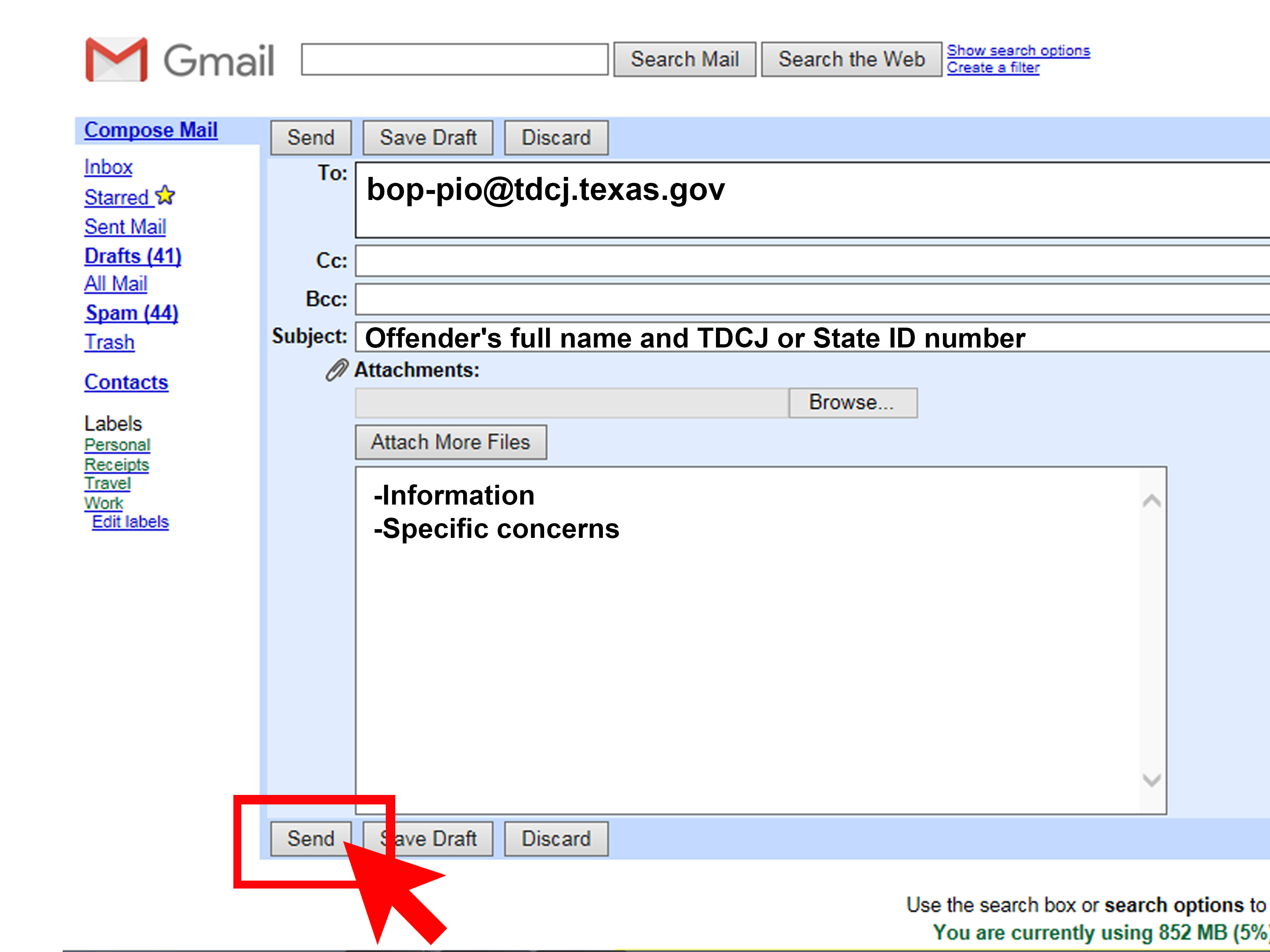
For general inmate information by email: contact the TDCJ public information email and include the inmate’s full name in the subject line.
For parole supervision, parolee location, or parolee conduct questions: contact the parole/ombudsman route identified by TDCJ.
For parole review process or Board issues: contact the Board-related public information channel.
If what you really need is a broader criminal-record confirmation rather than current custody or parole review, the Texas DPS criminal history search may also be relevant. That tool is separate from parole status, but it can help you confirm whether you are tracking the correct person or case.
One more important point: a scheduled release date may appear only after release processing is completed, and even then it can change. So if the website does not show a final date immediately after a favorable decision, that does not automatically mean something went wrong.
Common Texas parole status terms in plain English
Parole: discretionary release to supervision in the community.
Mandatory supervision: a different kind of release that may still involve Board review in some cases.
Next review date: the month and year the case may be reviewed again after a denial.
Serve all: the offender will continue serving the sentence with no regular new review before discharge.
Scheduled release date: the date posted after release processing is completed, not necessarily the same day as the vote.
Knowing these terms makes the search much less stressful. Instead of reacting to every code like it is a secret message from a submarine, you can focus on the practical outcome.
Mistakes people make when checking parole status in Texas
The biggest mistake is using only one source. The second biggest mistake is assuming approval equals immediate release. The third biggest mistake is forgetting that county jail records and TDCJ prison records are not the same thing.
Another frequent problem is searching with partial or wrong information. A missing middle name, a bad birth year, or an outdated TDCJ number can send you toward the wrong record. And finally, many people read old articles that still point them to VINE without realizing Texas changed systems for county notifications.
In other words, this is one of those situations where being “pretty sure” is usually not good enough.
Final thoughts
If you want to check parole status in Texas accurately, the smartest path is simple: confirm the person in TDCJ first, open the parole review details, call the right status line when needed, use IVSS for notifications, and switch to county resources when the person is not in TDCJ custody. Once you understand which system matches which stage, the process becomes much less mysterious.
Texas parole tracking is not exactly effortless, but it is manageable. Follow the eight steps, keep your identifiers handy, and remember that a parole vote, a release certificate, and an actual release date are three very different milestones. That one distinction alone can save you a lot of confusion, a lot of clicking, and possibly a very dramatic group text.
Experiences People Commonly Have When Checking Texas Parole Status
People dealing with Texas parole status often go through the same emotional cycle: hope, confusion, extra confusion, a phone call, then cautious hope again. A sister may hear that her brother “made parole” and assume he will be home next week, only to discover that a favorable vote still has to move through release processing. A parent may search TDCJ every day, see no new date, and worry something terrible happened, when in reality the paperwork is still being finalized. The experience feels personal and urgent, but the system moves in stages, not in one dramatic movie scene.
Another common experience involves the “missing person who is not actually missing” problem. Someone checks the TDCJ site and finds nothing. Panic enters the room. Then, after a county-jail search, the person turns up in local custody because of a transfer, hold, recent booking, or county-based status issue. Families often assume there is one master Texas database that shows everything instantly. There is not. There are multiple systems, and learning that can be frustrating at first, but it also helps people stop blaming themselves for not finding the answer immediately.
Victims and concerned citizens often describe a different experience: they do not necessarily want to spend their day manually searching public records, but they do want timely information about major custody or release changes. That is why notification systems matter so much. Once people learn they can register for alerts instead of refreshing pages like a caffeinated stock trader, the process becomes more manageable and less emotionally draining.
Families also run into code confusion. They see letters like FI, NR, SA, RMS, or DMS and assume they need a law degree, a decoder ring, and maybe a séance. In practice, the most useful question is not “Can I memorize every code?” but “Does this mean approval, denial, more programming, or another review date?” When people shift to that mindset, the status page becomes a lot less intimidating.
Perhaps the most relatable experience is the waiting itself. Even when people do everything right, there can still be a lag between a vote, record updates, and posted release information. That waiting period can make families feel helpless. But usually, the best response is not random guessing. It is calm, methodical follow-up: verify identity, check the correct portal, call the correct line, and document what you learned. That approach may not make the process fast, but it does make it clearer, and clarity is often the thing people need most.