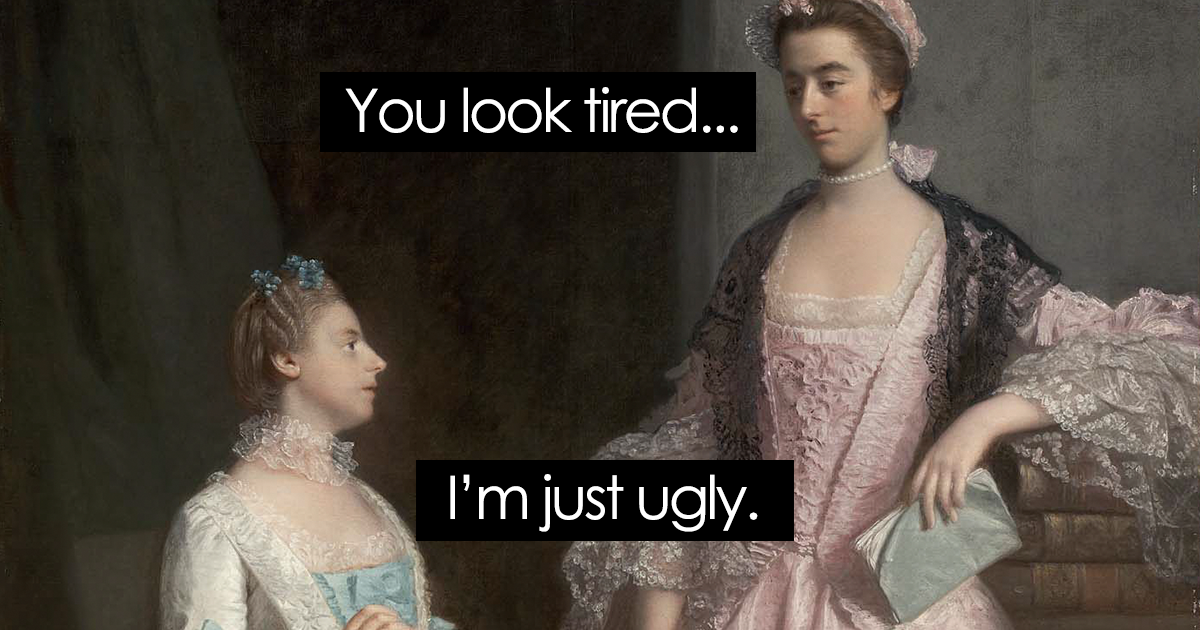
Classical art memes are proof that humanity has always been dramatic. Long before group chats, passive-aggressive emails, and “I’m fine” texts, painters were already capturing people staring into the distance like they had just read one suspiciously short reply. That is why classical art memes work so beautifully: old paintings have the faces, poses, and emotional chaos of modern life, just dressed in velvet, armor, halos, and extremely uncomfortable-looking collars.
At first glance, art history can feel intimidating. Museums are quiet. Labels are tiny. Everyone seems to know what “chiaroscuro” means, and you are standing there wondering whether it is a painting technique or a pasta shape. But classical art memes change the mood. They take Renaissance paintings, Baroque drama, Greek and Roman-inspired figures, medieval manuscripts, and Dutch portraits, then match them with modern captions about dating, school, work, procrastination, anxiety, friendship, and snacks. Suddenly, the gallery becomes less like homework and more like a group chat with better lighting.
The best classical art memes are not just random jokes pasted over old paintings. They work because the art already contains emotional storytelling. Renaissance artists studied the human body, facial expression, perspective, and classical ideals. Baroque painters turned drama up to “soap opera during a thunderstorm.” Medieval manuscript artists filled margins with strange creatures that look like they were invented after three espressos and a nightmare. In other words, art history has always had meme energy. The internet simply added captions.
Why Classical Art Memes Are So Funny
Classical art memes are funny because they create a delicious mismatch. A serious painting from centuries ago might show a noblewoman, a saint, a philosopher, or a mythological hero. Add a caption like “When the waiter says the kitchen just closed,” and suddenly that grand historical image becomes painfully relatable. The humor comes from contrast: high culture meets everyday nonsense.
They also remind us that people have not changed as much as we think. Sure, nobody in a 16th-century portrait was refreshing their delivery app, but the facial expression of disappointment? Identical. A Renaissance angel can look like a tired intern. A Roman-inspired hero can look like someone who opened their camera app by accident. A Dutch still life can feel like a warning about grocery prices. Classical art memes make old images feel alive again because they connect timeless human emotions with modern situations.
43 Classical Art Memes That Make Art History Fun Again
Below are 43 classical art meme ideas inspired by famous styles, periods, and visual themes from art history. Think of them as a guided museum tour, except the guide has had coffee, owns a phone, and is not afraid to say that a cherub looks like it has seen the Wi-Fi password and chosen chaos.
1. The Renaissance Group Chat Meme
A table full of serious figures, each looking in a different direction, is perfect for the caption: “When everyone in the group project says they’re working on it.” Renaissance compositions often gather multiple characters into carefully balanced scenes, which makes them ideal for jokes about meetings, family dinners, and chaotic group chats.
2. The Dramatic Saint Meme
Many religious paintings show figures gazing upward with intense emotion. Add the caption: “Me asking the universe why I sent that text.” The exaggerated sincerity makes the meme land instantly.
3. The Baroque Lighting Meme
Baroque art loves sharp contrast, deep shadows, and spotlight-level drama. Caption idea: “When you open the fridge at 2 a.m. and become the main character.” Suddenly, chiaroscuro becomes snack history.
4. The Judgmental Portrait Meme
Old portraits often feature aristocrats looking like they know your browser history. Caption: “When someone says they don’t season their food.” The stiff posture and icy stare do all the work.
5. The Annoyed Cherub Meme
Cherubs are tiny, winged bundles of attitude. One bored-looking cherub can become: “Me in every meeting that could have been an email.” Art history: now with office realism.
6. The Mythological Overreaction Meme
Greek and Roman myth-inspired paintings are packed with gods, heroes, nymphs, and disasters. Caption: “When someone eats the leftovers you were saving.” Zeus would understand.
7. The Medieval Margin Creature Meme
Medieval manuscripts sometimes include bizarre animals, tiny warriors, and creatures doing deeply questionable things. Caption: “My brain at 3:17 a.m.” No further explanation needed.
8. The “I Have No Idea What’s Happening” Apostle Meme
In many biblical scenes, at least one background figure looks completely lost. Caption: “Me pretending to understand the assignment.” It is academic panic with a halo.
9. The Fancy Outfit, Empty Wallet Meme
Portraits of nobles in luxurious clothing are perfect for: “Me after buying one iced coffee and calling it self-care.” The lace collar says wealth; the bank account says please stop.
10. The Renaissance Baby Adult Face Meme
Some historical baby portraits look surprisingly mature. Caption: “When you’re three months old but already tired of capitalism.” It is strange, funny, and oddly philosophical.
11. The Dramatic Hand Gesture Meme
Classical paintings love expressive hands. Caption: “Me explaining why I need a snack before making any decisions.” The hands give the argument legal authority.
12. The “Don’t Talk to Me Before Coffee” Madonna Meme
A serene but exhausted-looking figure becomes: “When everyone needs you before 9 a.m.” Many devotional images carry quiet emotional weight, making them surprisingly relatable.
13. The Courtroom-Level Side Eye Meme
Find a painted figure glancing sideways and you have instant meme gold. Caption: “When your friend says they’re going back to their ex.” Centuries of oil paint cannot hide that judgment.
14. The Overcrowded Feast Meme
Large banquet scenes work perfectly for social anxiety jokes: “When you said yes to plans three weeks ago and now it’s today.” Suddenly, everyone at the table looks too loud.
15. The Heroic Pose, Minor Problem Meme
A warrior or saint standing triumphantly can be captioned: “Me after folding one load of laundry.” Heroism is relative. Sometimes victory smells like fabric softener.
16. The “I’m Fine” Tragedy Meme
A sorrowful classical figure becomes: “Me saying ‘no worries’ while absolutely worrying.” Art history has never looked more emotionally accurate.
17. The Angel With Gossip Meme
Whispering angels or clustered figures make excellent gossip memes. Caption: “When you hear your name from across the room.” Heavenly beings: apparently also nosy.
18. The Philosopher Overthinking Meme
A bearded thinker staring into space is perfect for: “Me calculating whether I have enough time to nap before leaving.” Philosophy begins with poor time management.
19. The Candlelit Regret Meme
Paintings with dramatic candlelight and solemn faces fit: “Me reading messages I sent in 2014.” The glow adds shame, atmosphere, and historical depth.
20. The “Everyone Saw That” Fall Meme
Classical scenes full of pointing figures become: “When you trip in public and immediately become a community event.” No museum label needed.
21. The Still Life Snack Meme
Dutch still lifes show fruit, bread, wine, flowers, and silverware in stunning detail. Caption: “Me calling this dinner because it’s on a plate.” Elegant? Yes. Balanced meal? Debatable.
22. The Sleepy Cupid Meme
A sleeping Cupid is perfect for: “My motivation after I open one tab.” It is cute, useless, and deeply honest.
23. The “Main Character Entrance” Meme
Grand historical scenes with flowing robes become: “Me entering the kitchen after hearing someone open chips.” The drama is earned.
24. The “I Read One Article” Expert Meme
A scholarly-looking portrait can carry: “Me after learning one fact and making it my personality.” Every friend group has this person. Sometimes it is us.
25. The “Why Is There a Horse Indoors?” Meme
Classical battle and equestrian paintings often have horses appearing in intense places. Caption: “When the meeting agenda takes an unexpected turn.” The horse represents confusion.
26. The Golden Halo Notification Meme
A haloed figure can become: “When your phone lights up and you think it’s the message you wanted.” Divine anticipation, modern disappointment.
27. The “Too Many Tabs Open” Ceiling Fresco Meme
Busy ceiling paintings packed with floating figures are ideal for: “My brain when I try to relax.” Every cloud has a deadline.
28. The “I Brought Receipts” Scroll Meme
A figure holding a scroll or letter becomes: “When someone says ‘prove it’ and you have screenshots.” Ancient parchment, modern evidence.
29. The Awkward Family Portrait Meme
Formal family portraits are already one caption away from comedy. Try: “When everyone is mad but the photo is prepaid.” The tension is archival quality.
30. The “Do Not Perceive Me” Cloak Meme
A hooded or shadowed figure fits: “Me avoiding eye contact with someone I vaguely know.” Old masters understood introversion.
31. The “Accidental Renaissance” Pet Meme
Paintings with dogs, cats, birds, or symbolic animals become funnier when captioned: “My pet judging my life choices.” Animals in art often carry symbolic meaning, but they also look like tiny critics.
32. The “I Said What I Said” Queen Meme
A regal portrait with a calm, immovable expression can read: “When you send the risky text and put your phone face down.” Royal confidence, emotional danger.
33. The “Trying to Be Productive” Monk Meme
A monk at a desk becomes: “Me opening a document, changing the font, and calling it progress.” This meme belongs in every student’s life.
34. The “Unexpected Plot Twist” Battle Meme
A chaotic battle scene can become: “When the recipe says ‘marinate overnight’ and dinner is in 40 minutes.” True conflict.
35. The “Soft Launch” Portrait Meme
A mysterious portrait with one hidden clue can be captioned: “When you post half a shoulder and let people investigate.” Renaissance mystery meets Instagram strategy.
36. The “I Am Listening” Liar Meme
A figure staring politely but blankly becomes: “Me nodding while thinking about what I’m eating later.” Museums are full of this face.
37. The “Group Project Betrayal” Last Supper-Style Meme
Any long-table composition with multiple reactions can become: “When the teacher says everyone gets the same grade.” Suddenly, every hand gesture has a legal meaning.
38. The “Romantic Delusion” Cupid Meme
Cupid scenes are perfect for dating jokes: “Me seeing one green flag and planning the wedding.” Ancient mythology has entered the chat.
39. The “Tiny Violin” Lute Player Meme
A musician in a classical painting can carry: “Me performing sadness after a minor inconvenience.” The soundtrack is dramatic and probably in a minor key.
40. The “Email Tone Anxiety” Messenger Meme
A figure delivering a letter becomes: “When the email starts with ‘per my last message.’” Even in oil paint, the tension is unbearable.
41. The “Museum Date Red Flag” Meme
A stern portrait can be captioned: “When they say all old paintings look the same.” Somewhere, an art historian just dropped their tote bag.
42. The “Deadline Approaches” Doom Meme
Apocalyptic paintings full of clouds, angels, fire, and panic become: “Sunday night after doing nothing all weekend.” This is not just a meme; it is a documentary.
43. The “Art History Is Actually Fun” Meme
A joyful, dramatic, or triumphant classical image can say: “When you realize museums are just ancient meme libraries.” That is the magic. Classical art memes do not ruin art history. They open the door.
How Classical Art Memes Help People Learn Art History
Classical art memes make art history less intimidating because they start with emotion instead of terminology. A beginner may not know the difference between Renaissance balance and Baroque movement, but they can recognize a tired face, a dramatic pose, or a suspicious glance. Once the joke gets their attention, curiosity follows. Who painted this? Why are the figures posed that way? What story is being shown? Why does that baby look like a tiny accountant?
This is where memes become surprisingly useful. They turn passive scrolling into accidental learning. A person who laughs at a meme based on a mythological painting might later search for the original story. Someone who shares a meme from a medieval manuscript might discover how scribes decorated margins. A student who thinks museums are boring might realize that old paintings are full of personality, symbolism, comedy, fear, vanity, beauty, and weird little animals doing suspicious things.
Modern museums and open-access collections have also made classical art easier to explore online. Many major institutions now provide high-quality digital images of public-domain artworks, which allows educators, students, writers, and meme-makers to study and remix historical images responsibly. That accessibility matters. When people can zoom into brushwork, compare paintings, and discover artists from home, art history becomes less locked behind glass and more available to everyone.
What Makes a Great Classical Art Meme?
It Starts With the Right Expression
The best classical art memes usually begin with a face. A raised eyebrow, exhausted stare, open mouth, or dramatic look of betrayal can carry the whole joke. The caption should match the emotion already present in the image rather than fight against it.
It Uses Modern Language Carefully
Part of the fun is putting modern slang or everyday problems into a centuries-old visual setting. However, the funniest captions are clear and natural. A meme does not need ten layers of internet vocabulary to work. Sometimes “Me pretending to be okay” is enough.
It Respects the Art While Playing With It
Good classical art memes do not require mocking the original artwork. In fact, they often prove how strong the artwork is. The painting already has drama, composition, character, and emotion. The meme simply gives modern viewers a friendly doorway into that world.
Why Art History Needed a Sense of Humor
Art history is full of genius, beauty, politics, religion, power, wealth, devotion, rebellion, and experimentation. But it is also full of deeply human moments. People in old paintings look jealous, bored, proud, confused, tired, flirtatious, and completely over it. Humor helps us notice those details.
When classical art is presented only as something “important,” viewers can feel pressured to admire it correctly. Memes remove that pressure. They say: laugh first, learn next. That order works especially well online, where attention is short and competition is brutal. A funny caption can stop someone mid-scroll, and once they stop, the artwork gets a second life.
That does not mean every painting should be reduced to a joke. Context still matters. Sacred art, cultural heritage, and historical trauma deserve thoughtfulness. But humor, when used with care, can be a bridge instead of a bulldozer. It can invite people into art history without demanding that they already speak the language.
Experience: What Classical Art Memes Taught Me About Looking Closely
The first time I really understood classical art memes, I was not standing heroically in a museum with a notebook and a deep understanding of iconography. I was probably hunched over a phone, laughing at a Renaissance painting captioned like a modern workplace disaster. It was not elegant. It was not scholarly. But it worked. I looked at the image longer than I normally would have. Then I noticed the hands, the background, the weird little expression on a side character, and the careful way the painter arranged everyone in the scene.
That is the underrated power of this meme format. It teaches close looking by accident. A meme asks you to compare the caption with the image. Does the face match the joke? Does the gesture make it funnier? Is there someone in the corner who accidentally steals the show? Before you know it, you are doing visual analysis. You are reading body language, composition, lighting, costume, and symbolism. The only difference is that nobody has forced you to use the phrase “formal analysis” out loud, which is a blessing for all involved.
Classical art memes also changed the way I think about museums. Instead of seeing galleries as silent rooms full of untouchable masterpieces, I started seeing them as rooms full of human situations. Here is ambition. Here is grief. Here is vanity wearing pearls. Here is someone dramatically pointing at a problem they may or may not have caused. Here is a dog looking more emotionally stable than every person in the painting. Once you begin noticing those things, art history becomes warmer and funnier.
They also make learning less lonely. Sharing a classical art meme is a small invitation: “Look at this old painting with me, but do not worry, we are allowed to laugh.” That matters for people who felt excluded from art history because it seemed too academic, too expensive, too European, too formal, or too full of words that sound like spells. Memes lower the doorway. They make room for curiosity before expertise.
Of course, there is a balance. Not every artwork needs a punchline, and not every historical image should be flattened into internet content. But when done thoughtfully, classical art memes can create respect rather than remove it. They remind us that paintings were made by people, for people, about people. Even when the subject is divine, mythological, royal, or symbolic, the emotional language is often familiar. We still recognize embarrassment, longing, suspicion, boredom, and the universal pain of realizing you forgot to reply.
In that sense, classical art memes do more than make art history fun again. They make it feel close. They show that a painting from 500 years ago can still understand your Monday morning mood. They prove that museums are not just places for quiet admiration but places for recognition. And sometimes, the fastest path to loving an old masterpiece is laughing because a Baroque saint looks exactly like you when your alarm goes off.
Conclusion
Classical art memes are funny because they connect old masterpieces with modern emotions. They make Renaissance portraits, Baroque drama, medieval weirdness, mythological chaos, and museum-worthy side-eye feel fresh again. More importantly, they help people enjoy art history without feeling intimidated by it. A great meme can turn a serious painting into a relatable joke, but it can also encourage viewers to look more closely, learn the context, and appreciate the skill behind the image.
So the next time someone says art history is boring, show them a classical art meme. Show them the tired cherub, the judgmental noblewoman, the dramatic saint, the philosopher who looks like he forgot his password, or the banquet scene that feels exactly like a chaotic family group chat. Classical art has always been full of emotion. The internet just gave it captions.