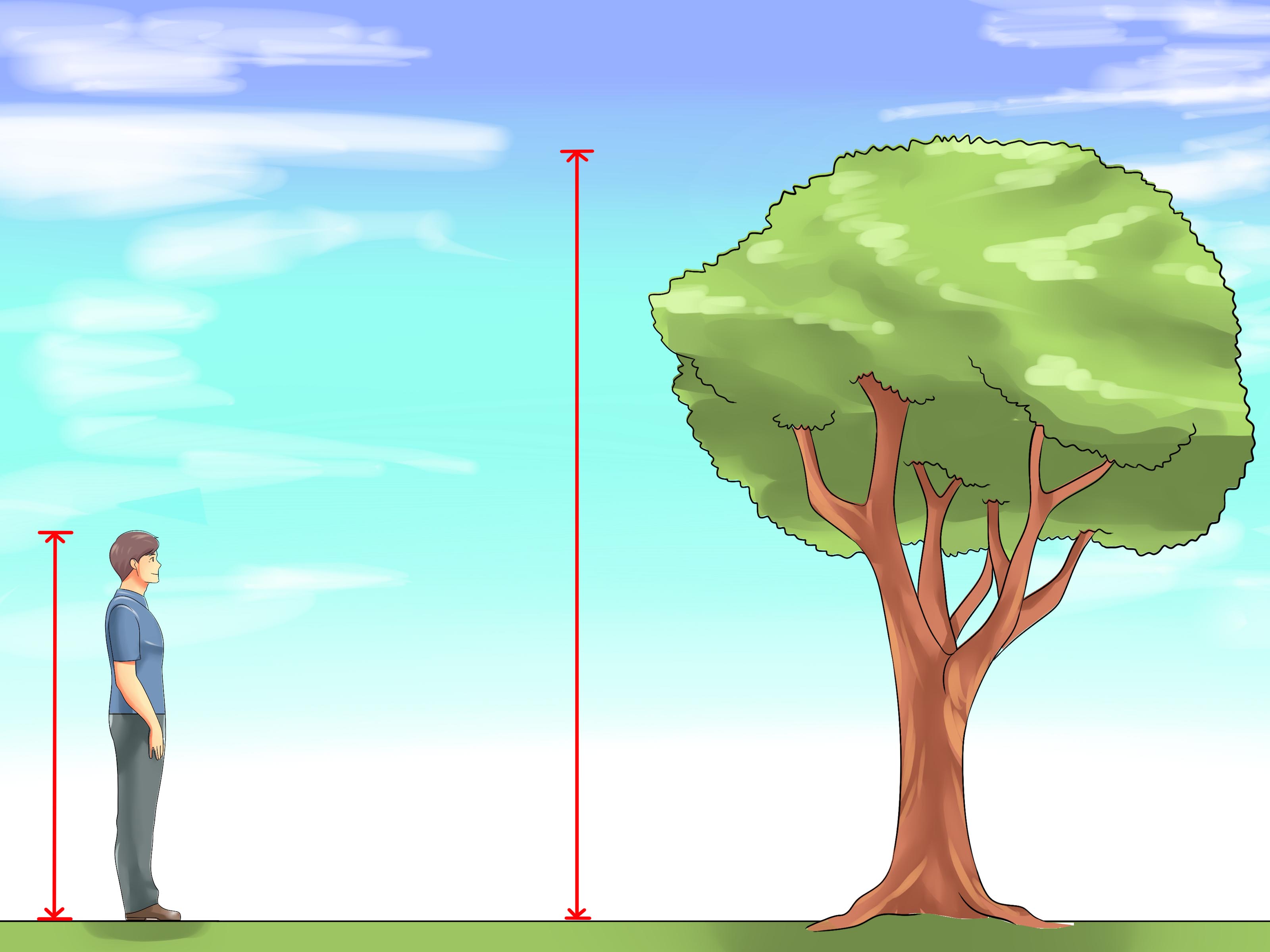
Measuring the height of a tree sounds like the kind of thing only a forester, surveyor, or very determined squirrel would care about. But in real life, knowing how tall a tree is can be surprisingly useful. Homeowners may want to know whether a tree could reach the roof during a storm. Gardeners may be planning shade, pruning, or landscape design. Teachers may need a hands-on outdoor math activity. Nature lovers may simply want to settle the backyard debate over whether that oak is “pretty tall” or “basically a wooden skyscraper.”
The good news is that you do not need to climb the tree, rent a crane, or convince a drone to behave itself. There are several practical ways to estimate tree height from the ground. Some use nothing more than shadows and a measuring tape. Others use basic geometry, a stick, a clinometer, or a laser rangefinder. Each method has strengths, limitations, and a best-use situation.
This guide explains 4 ways to measure the height of a tree, from beginner-friendly backyard tricks to more accurate forestry-style techniques. You will learn how each method works, what tools you need, how to avoid common mistakes, and when it is worth calling a certified arborist or forestry professional instead of guessing from the patio with a cup of coffee.
Why Measure Tree Height?
Tree height is more than a fun number. It helps people understand tree safety, property planning, forest health, wildlife habitat, and growth over time. Foresters use tree height along with trunk diameter to estimate timber volume and stand productivity. Arborists consider tree height when evaluating risk, pruning needs, and clearance from buildings or utility lines. Homeowners use it to decide whether a tree might threaten a house, garage, fence, driveway, or neighborly peace treaty.
Tree height can also reveal how well a tree is growing in its environment. A healthy tree with good soil, light, water, and root space often grows taller and fuller than one struggling with compaction, drought, disease, or competition. Of course, height alone does not tell the full story. A short, sturdy tree can be perfectly healthy, while a tall tree can still have structural problems. Still, height is a useful measurement when combined with trunk diameter, crown spread, species, age, and site conditions.
Before You Start: A Few Tree-Measuring Basics
Before you grab a tape measure and march into the yard like a weekend survey crew, keep these basics in mind.
Choose the Right “Top” of the Tree
The tallest visible branch may not be the true top. Trees with broad crowns, leaning trunks, broken leaders, or multiple stems can fool your eyes. Walk around the tree and look from different angles. The highest point is often not directly above the trunk. This matters because some measuring methods assume the top is vertically above the base, which is not always true.
Measure on Level Ground When Possible
Tree height is easier to estimate when you and the tree base are at the same elevation. Slopes complicate the math because your distance along the ground may not equal the horizontal distance used in formulas. If the ground slopes, use a method that accounts for angles to both the top and base, or take several measurements and average your results.
Stay Safe
Never climb a tree to measure it unless you are trained and properly equipped. Avoid standing under dead limbs, storm-damaged crowns, or trees near power lines. If the tree is close to utility lines, do not use poles, metal tools, ladders, or extended measuring devices near it. For hazardous trees, contact a professional. A tree height estimate is not worth becoming part of a cautionary tale.
Method 1: Measure Tree Height Using the Shadow Method
The shadow method is one of the easiest ways to measure tree height. It uses similar triangles, which sounds fancy but is really just a polite way of saying: if two objects are standing upright in the same sunlight, their heights and shadows have a matching relationship.
What You Need
- A measuring tape
- A straight stick, yardstick, broom handle, or any object with a known height
- Sunny weather
- A visible tree shadow
How to Do It
- Place a straight stick vertically in the ground near the tree.
- Measure the stick’s actual height.
- Measure the length of the stick’s shadow.
- Measure the length of the tree’s shadow from the base of the trunk to the tip of the shadow.
- Use this formula: Tree height = tree shadow length × stick height ÷ stick shadow length.
Example
Suppose your stick is 4 feet tall and casts a 3-foot shadow. The tree casts a 45-foot shadow. The calculation is:
45 × 4 ÷ 3 = 60
That means the tree is approximately 60 feet tall. Congratulations. You just used geometry outdoors, and nobody had to say “hypotenuse” unless they really wanted to.
Best For
The shadow method works best for open areas with clear sunlight and a tree shadow that falls on relatively flat ground. It is great for students, homeowners, gardeners, and anyone who wants a simple estimate without special equipment.
Common Mistakes to Avoid
Do not use this method when shadows are blurry, broken by shrubs, distorted by slopes, or blocked by buildings. Avoid measuring too close to noon if the shadows are very short and hard to read. Also, make sure the stick is perfectly vertical. A leaning stick will throw off the result, and then your math will blame the sun, which is rude but understandable.
Method 2: Measure Tree Height with a Stick and the 45-Degree Trick
The stick method is a classic field technique because it is fast, simple, and wonderfully low-tech. You only need a straight stick and enough room to walk backward from the tree. The basic idea is to create a right triangle using your arm, the stick, your line of sight, and the tree.
What You Need
- A straight stick
- A measuring tape or long measuring wheel
- A clear view of the tree from base to top
- Flat or gently sloping ground
How to Do It
- Hold the stick vertically at arm’s length.
- Adjust your hand so the length of the stick above your hand equals the distance from your eye to your hand. This creates a 45-degree sighting angle.
- Walk backward away from the tree while looking at the tree through the stick.
- Stop when the bottom of the stick visually lines up with the base of the tree and the top of the stick lines up with the top of the tree.
- Measure the distance from where you are standing to the base of the tree.
- That distance is approximately the height of the tree.
Example
If you stand 52 feet from the tree when the stick lines up perfectly with the base and top, the tree is about 52 feet tall. If your eyes are significantly above or below the tree base because of uneven terrain, the estimate may need adjustment.
Best For
This method is excellent for quick estimates. It works well in yards, parks, school projects, and forest walks where precision is not the main goal. It is also useful when you want to compare several trees quickly rather than produce a professional measurement.
Common Mistakes to Avoid
Do not bend your elbow after setting the stick distance. Keep the stick vertical, not tilted toward the tree like it owes you money. Make sure you can see the actual top, not a lower branch in front. If the tree leans or has a wide crown, walk around and repeat the measurement from more than one direction.
Method 3: Measure Tree Height with a Clinometer or Smartphone Angle App
A clinometer measures angles. In forestry, surveying, and outdoor education, it is commonly used to estimate the height of trees, slopes, poles, and other tall objects. If you do not have a professional clinometer, a smartphone angle app can sometimes provide a helpful estimate, though phone accuracy varies depending on the app, calibration, camera use, and how steady your hands are.
What You Need
- A clinometer or reliable smartphone angle-measuring app
- A measuring tape or laser distance measurer
- A calculator
- A clear view of the tree top and base
How to Do It on Level Ground
- Stand a known distance from the tree, such as 50, 75, or 100 feet.
- Measure the horizontal distance from your position to the base of the tree.
- Use the clinometer to measure the angle from your eye to the top of the tree.
- Use this formula: Height above eye level = distance × tangent of the angle.
- Add your eye height to get the total tree height.
Example
You stand 80 feet from a tree. Your clinometer shows a 35-degree angle to the top. Your eye height is 5 feet.
80 × tan(35°) = 80 × 0.700 = 56 feet
Now add your eye height:
56 + 5 = 61 feet
The tree is approximately 61 feet tall.
Using Percent Scale Clinometers
Some forestry clinometers use a percent scale. When you stand 100 feet from a tree on level ground, the percent reading to the top can translate directly into feet above eye level. If the base of the tree is below eye level, the lower reading is added. If the base is above eye level, it may be subtracted. This is why foresters often like a 100-foot baseline: the math behaves itself, which is always appreciated.
Best For
A clinometer is a good choice when you want a more serious estimate than the stick or shadow method can provide. It is helpful for forestry students, landowners, arborists, landscape professionals, and anyone measuring multiple trees.
Common Mistakes to Avoid
The biggest mistake is using slope distance instead of horizontal distance. If you are standing uphill or downhill, the measured ground distance may not be the same as the level distance needed for the calculation. Another common mistake is sighting a branch that appears high from your position but is not the actual top. For broad or leaning trees, take readings from several positions.
Method 4: Measure Tree Height with a Laser Rangefinder or Hypsometer
For better accuracy, especially with tall, leaning, or broad-crowned trees, a laser rangefinder or forestry hypsometer is often the best tool. These instruments can measure distance and angle, then calculate tree height. Some devices use built-in height functions, while others require you to take separate readings and calculate the height yourself.
What You Need
- A laser rangefinder, forestry hypsometer, or laser-and-clinometer combination
- A clear view of the tree’s top and base
- Basic knowledge of the device settings
- Optional notebook or phone for recording readings
How It Works
A laser rangefinder sends a beam to a target and calculates distance. When combined with angle measurements, it can estimate the vertical height between the base and the top of the tree. More advanced methods measure the distance and angle to both the top and the base. This can reduce errors caused by leaning trunks, uneven ground, or crowns that spread far from the trunk.
Best For
Laser tools are best for land managers, arborists, researchers, serious tree enthusiasts, and property owners who need a more reliable number. They are also useful when the tree is too tall, too wide, too close to obstacles, or too oddly shaped for simple methods.
Common Mistakes to Avoid
Do not assume every built-in height mode uses the same calculation. Some devices rely on tangent-based methods, while others use a two-point or sine-based method. Read the manual before measuring. Also, aim carefully. A laser reading from a lower branch, a bird nest, or the neighbor’s inflatable holiday decoration will not give you the tree height you were hoping for.
Which Tree Height Method Is Most Accurate?
The most accurate method depends on the tree, terrain, and tools. For casual backyard use, the shadow method and stick method are usually good enough. They can provide a reasonable estimate when conditions are right. For more accurate measurements, a clinometer with a measured baseline is better. For tall, leaning, or broad-crowned trees, a laser rangefinder or hypsometer can be more reliable, especially when used correctly from multiple viewpoints.
| Method | Tools Needed | Best Use | Accuracy Level |
|---|---|---|---|
| Shadow Method | Stick, tape measure, sunlight | Simple backyard estimates | Fair to good |
| Stick Method | Straight stick, tape measure | Fast field estimates | Fair |
| Clinometer Method | Clinometer, tape, calculator | Forestry-style measurements | Good |
| Laser Rangefinder | Laser rangefinder or hypsometer | Tall, leaning, or complex trees | Good to excellent |
Tips for More Accurate Tree Height Measurements
Measure More Than Once
One measurement can be wrong for all sorts of reasons: shaky hands, bad angle, uneven ground, a sneaky branch pretending to be the top, or simple human “I thought that was 40 feet” optimism. Measure from two or three positions and compare the results. If they are close, you can feel more confident. If they are wildly different, the tree is not the problem; your method needs another look.
Stand Far Enough Back
Standing too close makes it harder to sight the top accurately. A good rule is to stand far enough back so you can comfortably see the whole tree without craning your neck like a confused flamingo. For many methods, your distance from the tree should be roughly equal to or greater than the expected tree height.
Watch Out for Leaning Trees
Leaning trees can cause major errors, especially with basic tangent-style measurements. If the top is not above the base, your line-of-sight angle may overestimate or underestimate the true vertical height. For leaning trees, measure from a position at a right angle to the lean when possible, or use a laser method that measures the top and base separately.
Record Your Results
Write down the date, method, distance, angle, and result. If you measure the same tree every year, you can track growth over time. This is especially useful for young trees, restoration plantings, school projects, orchards, and landscape planning.
When to Call a Professional
If your goal is curiosity, any of the four methods above can work nicely. If your goal involves safety, construction, insurance, property disputes, tree removal, or utility clearance, call a certified arborist, forester, or qualified tree care professional. A casual estimate should not be the only basis for deciding whether a tree can hit a structure, whether it is safe, or whether it should be removed.
Professionals can evaluate more than height. They can inspect trunk structure, root health, canopy balance, decay, cracks, soil conditions, pests, diseases, and storm damage. A tree’s height matters, but its stability matters even more. A 30-foot tree with severe decay can be more dangerous than a 70-foot tree with strong structure and healthy roots.
Real-World Experiences Measuring Tree Height
The first time many people try to measure a tree, they discover something humbling: trees are excellent at making humans look ridiculous. From the ground, a tree may seem “about 25 feet tall.” Then you measure it and realize it is closer to 55 feet. Our eyes are not natural measuring tapes, especially when looking upward through branches, sky, and leaves. Height perception gets even worse when the tree is close to a house, fence, or slope.
One practical experience is measuring a backyard maple before a storm season. Standing near the patio, the tree might look just tall enough to brush the roof if it fell. Using the shadow method on a sunny afternoon, you may find that the tree is actually much taller than expected. But that does not automatically mean disaster. The direction of lean, distance from the house, root health, and branch structure all matter. This is where height measurement becomes a starting point, not a final verdict.
Another common experience comes from using the stick method with children or students. It turns a regular tree into a living math lesson. Kids quickly understand that their position matters, their line of sight matters, and a crooked stick can ruin the result. They also love discovering that math can happen outside, away from worksheets, where the calculator is optional and the squirrels are judging everyone equally.
The clinometer method feels more professional, but it also teaches patience. A small angle error can create a noticeable height difference, especially on tall trees. If you measure from 100 feet away and misread the top by just a few degrees, the final estimate can shift by several feet. That is why taking repeated measurements is not overkill. It is common sense wearing hiking boots.
Laser rangefinders can be satisfying because they feel precise, but they are not magic wands. You still need to aim at the actual top, understand the device mode, and consider whether branches block the base. On dense trees, the laser may hit foliage that is not the highest point. On conifers, it can be easier to identify a central leader. On broad hardwoods, the highest twig may be off to one side, hiding like it has unpaid rent.
Perhaps the best lesson from measuring tree height is that every method has a personality. The shadow method is friendly but needs sunshine. The stick method is fast but approximate. The clinometer method is smarter but asks you to respect the math. The laser method is powerful but still depends on the person using it. The best approach is often to combine methods. If the shadow method says 58 feet, the stick method says 61 feet, and the clinometer says 60 feet, you probably have a solid estimate. If one method says 40 feet and another says 80 feet, something has gone sidewayspossibly your stick.
In the end, measuring tree height is not just about getting a number. It helps you notice the tree more carefully: its lean, crown shape, growth habit, surroundings, and relationship to the landscape. Whether you are planning a garden, teaching geometry, checking storm risk, or simply satisfying curiosity, measuring a tree turns an ordinary outdoor moment into a small act of observation. And unlike climbing the tree with a tape measure, it lets you keep both feet safely on the ground, which is generally where feet prefer to be.
Conclusion
Learning how to measure the height of a tree is easier than it looks. You can use shadows, a simple stick, a clinometer, or a laser rangefinder depending on your tools, accuracy needs, and site conditions. The shadow method and stick method are perfect for quick estimates. The clinometer method adds more precision with basic trigonometry. A laser rangefinder or hypsometer is the strongest option for complex trees, tall trees, slopes, and serious fieldwork.
For best results, measure from more than one position, choose the real top of the tree, account for slopes, and avoid unsafe conditions. And remember: tree height is only one part of understanding a tree. If safety, property damage, or tree health is involved, professional advice is the smart move.
Note: This article is based on widely used forestry, arboriculture, and university extension measurement practices in the United States. Measurements described here are practical estimates for educational and homeowner use, not substitutes for professional tree risk assessment.