Ten years can do a lot to a person. It can turn a college freshman into someone who owns an air fryer, a mortgage, and three opinions about mattress firmness. In the Marvel universe, ten years can turn a billionaire in a cave into the emotional backbone of a cinematic empire, a skinny kid from Brooklyn into America’s most complicated symbol, and a talking tree into a baby, a teenager, and eventually the most lovable wooden bodyguard in space.
That is why the idea behind “34 Hilarious Photos Showing How Much Marvel Superheroes Changed In 10 Years” works so well. It taps into the internet’s beloved 10-year challenge, but instead of posting old Facebook profile pictures and pretending we all did not have questionable bangs, it applies the format to Marvel superheroes, villains, side characters, and pop-culture icons. The result is a funny, nostalgic look at how much the Marvel Cinematic Universe, superhero movies, actor castings, costumes, CGI, and fan culture evolved over a decade.
The original viral concept arrived during the height of Marvel mania, when fans were still emotionally recovering from Avengers: Infinity War and preparing themselves for Avengers: Endgame. In other words, it appeared at the perfect time: everyone was already looking back, crying forward, and making memes because therapy was expensive.
Why Marvel’s 10-Year Transformation Became So Meme-Worthy
The Marvel movie journey began with Iron Man in 2008, a film that introduced Robert Downey Jr. as Tony Stark and launched what became the Marvel Cinematic Universe. By the late 2010s, Marvel had built a sprawling interconnected saga filled with Avengers, Guardians, sorcerers, spies, gods, androids, talking raccoons, and one purple villain with the skincare routine of a raisin and the confidence of a motivational speaker.
That massive evolution made Marvel perfect for the 10-year challenge. The humor comes from contrast. Fans could compare early designs with later ones, young actors with older versions, awkward first appearances with polished modern looks, and forgotten superhero movie choices with the glossy MCU standard that later dominated Hollywood.
Some comparisons are genuinely impressive. Others are unintentionally hilarious. A few feel like the costume department looked at the first attempt and said, “Let’s never speak of this again.” And that, dear reader, is where the fun begins.
The 10-Year Challenge Was Basically Built for Superheroes
The internet’s 10-year challenge was simple: post one older photo and one newer photo to show how much you changed. For ordinary people, that usually meant better lighting, improved eyebrows, and pretending the 2009 fedora phase never happened. For Marvel characters, it meant something much bigger.
Superheroes do not simply age. They get rebooted, recast, redesigned, resurrected, de-aged, multiversed, snapped, unsnapped, and occasionally given a dramatic new beard. A Marvel character’s “then and now” is not only about physical appearance; it is about storytelling, technology, audience expectations, and the strange magic of fan attachment.
That is why these hilarious Marvel transformation photos became so shareable. They reminded fans that the superhero genre did not arrive fully polished. It stumbled, experimented, upgraded, and sometimes wore leather outfits so aggressively early-2000s that you could practically hear a nu-metal guitar riff in the background.
Steve Rogers: From Tiny Brooklyn Fighter to Bearded National Treasure
Steve Rogers is one of the funniest and most dramatic examples of Marvel change. In Captain America: The First Avenger, he begins as a small, sickly young man with a heroic heart and the physical presence of a damp receipt. After the Super Soldier Serum, he becomes Captain America: taller, stronger, and suddenly capable of making a plain white T-shirt look like national infrastructure.
Over the decade, Steve’s image changed from bright, patriotic hero to morally conflicted fugitive to bearded warrior in Infinity War. Fans loved the beard so much that it practically deserved its own shield. The hilarious part of his 10-year challenge is that Steve technically went from “please do not fight that alley bully” to “sir, please stop making everyone else’s jawline feel inadequate.”
Tony Stark: From Cave-Built Armor to Time-Heist Legend
Tony Stark’s transformation is the spine of the MCU. In 2008, he was a reckless weapons manufacturer who built the first Iron Man suit under impossible conditions. A decade later, he had become a mentor, husband, father figure, reluctant team leader, and the man whose choices shaped the fate of the universe.
Visually, Tony also evolved from flashy genius playboy to battle-worn futurist. The suits became sleeker, the technology became nearly magical, and the emotional stakes became heavier. The humor in Tony’s “then and now” is that his first suit looked like a heroic water heater, while later versions moved like liquid metal designer fashion. Same attitude, much better tailoring.
Thor: The God of Glow-Ups, Haircuts, and Emotional Damage
Few Marvel heroes changed as wildly as Thor. Early Thor was regal, dramatic, and very serious about capes. He looked like he had walked out of a shampoo commercial sponsored by thunder. Over time, Marvel allowed him to become funnier, stranger, more vulnerable, and far more human.
Thor: Ragnarok gave him a major reinvention: shorter hair, sharper comedy, brighter visuals, and a storyline that destroyed Asgard while somehow making audiences laugh. Then Infinity War and Endgame pushed him into grief, failure, and recovery. His 10-year challenge is hilarious because Thor went from golden space prince to emotionally exhausted cosmic roommate. Honestly, relatable.
Loki and Thor: A Sibling Evolution Powered by Drama
Thor and Loki’s relationship changed from royal rivalry to tragic brotherhood to one of Marvel’s most beloved emotional roller coasters. Early Loki was a jealous prince with excellent hair and poor decision-making skills. Later Loki became a fan-favorite antihero whose identity, vulnerability, and mischief grew more complex.
The funny photo comparisons often highlight how much these two changed visually and emotionally. Thor lost an eye, lost his hammer, lost his home, and somehow still found time for jokes. Loki lost battles, gained sympathy, died more than once, and still managed to look like he had scheduled a dramatic entrance for every room.
Black Widow: From Mystery Spy to Emotional Anchor
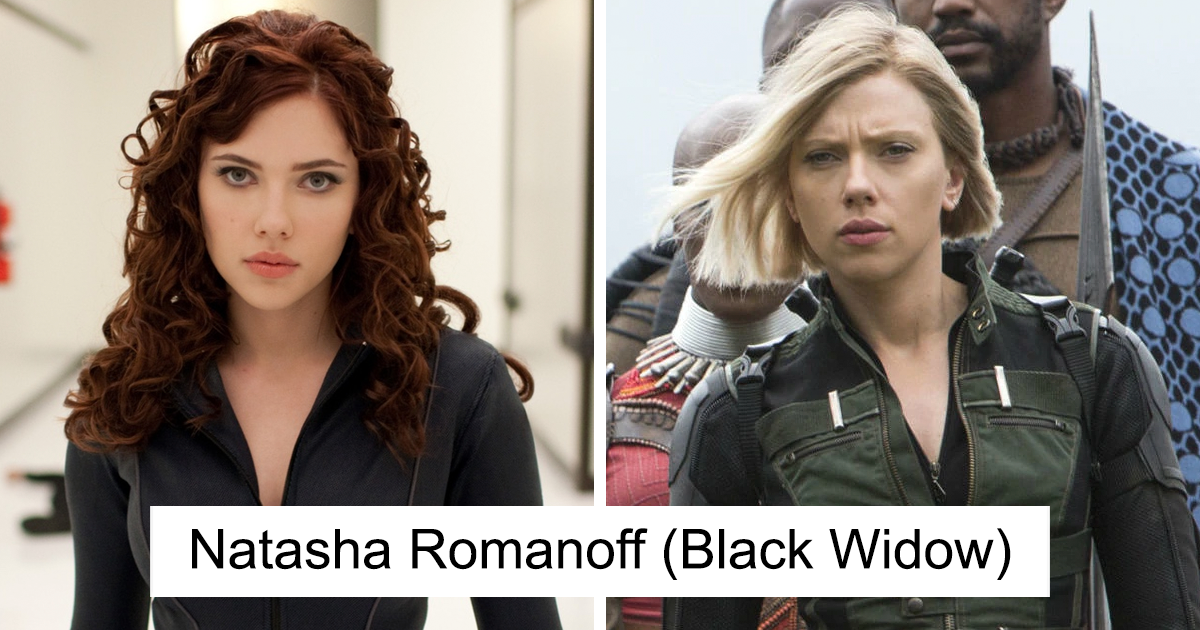
Natasha Romanoff’s transformation was quieter than Thor’s, but just as important. When Black Widow first appeared in the MCU, she was introduced as a mysterious spy with sharp combat skills and even sharper secrets. Over time, she became one of the Avengers’ emotional anchors, a strategist, a survivor, and a character whose sacrifice carried enormous weight.
Her changing hair colors and costumes became easy meme material, but the real transformation was in how the audience understood her. The early version was cool and guarded. The later version was still cool, but layered with regret, loyalty, humor, and fatigue. Her 10-year challenge basically says: “Started as an undercover agent. Ended as the person holding the entire team’s emotional Wi-Fi together.”
Hulk: The Evolution of CGI, Rage, and Cardigans
Hulk’s journey is one of the best examples of how superhero technology changed. Early Hulk appearances leaned heavily on brute force and visual spectacle. Later MCU entries used improved motion capture and Mark Ruffalo’s performance to create a Hulk who could be funny, awkward, wounded, and eventually intelligent.
Smart Hulk in Endgame gave fans one of the strangest and funniest transformations: the rage monster became a celebrity scientist who takes selfies with kids. That is not character development; that is a full software update. Hulk’s 10-year challenge is hilarious because he went from “Hulk smash” to “Hulk brunches.”
Groot: The Internet’s Favorite Tree-Based Glow-Up
Groot is a special case because he does not simply change; he grows, dies, regrows, becomes adorable, becomes moody, and still communicates using one sentence. Adult Groot was noble and protective. Baby Groot was tiny, chaotic, and dangerously cute. Teenage Groot was moody enough to make every parent in the galaxy sigh at once.
The humor in Groot’s transformation is obvious. Most characters get older. Groot became younger, then became a teenager, then kept saving the galaxy while saying only “I am Groot.” He is proof that character branding can be simple, emotional, and extremely marketable. Also, he dances better than most humans at weddings.
Star-Lord: From Space Outlaw to Walking Mixtape Crisis
Peter Quill, also known as Star-Lord, changed Marvel by bringing a looser, weirder, music-driven energy into the MCU. When Guardians of the Galaxy arrived, it turned obscure comic characters into mainstream favorites. Star-Lord’s transformation is funny because he is both a hero and a cautionary tale about letting emotions drive intergalactic decision-making.
Over ten years, he went from charming space rogue to grief-heavy leader who still acts like his emotional operating system runs on cassette tapes. His photo challenge energy is pure “before therapy” and “still before therapy, but with a bigger budget.”
Thanos: From Teased Villain to Purple Pop-Culture Menace
Thanos is one of the clearest examples of Marvel’s long-game storytelling. He was teased for years before becoming the central villain of Infinity War and Endgame. Early glimpses of Thanos invited curiosity. Later appearances turned him into one of the most recognizable movie villains of the decade.
The hilarious part is that his design also became meme fuel. He is terrifying, yes, but he also looks like a cosmic thumb who discovered philosophy podcasts. His 10-year transformation shows how Marvel turned a post-credit mystery into a villain powerful enough to break the Avengers and inspire endless jokes about balance, stones, and poor retirement planning.
Aunt May, Spider-Man, and the Reboot Machine
Spider-Man’s corner of Marvel has seen some of the most visible changes because the character has been rebooted multiple times. Different actors, tones, suits, villains, and supporting characters made Spider-Man a perfect subject for transformation jokes.
Aunt May became especially funny in fan comparisons because the character shifted from a traditional elderly guardian figure to a much younger, modern version in the MCU. That change turned into instant meme material. The internet looked at Aunt May’s transformation and collectively said, “Excuse me, what moisturizer is she using?”
Spider-Man himself evolved from earlier standalone films into a hero connected to the Avengers, Tony Stark, multiverse chaos, and the emotional burden of being everyone’s favorite neighborhood disaster magnet.
Wolverine, Professor X, Magneto, and the Fox-Marvel Era
Not every character in the viral comparisons belonged strictly to the MCU at the time. Some came from Fox’s Marvel films, including Wolverine, Professor X, Magneto, Mystique, Jean Grey, Storm, Rogue, and Deadpool-related characters. Their inclusion made the challenge even funnier because Marvel movie history is not one straight line. It is more like a family tree drawn during a lightning storm.
Wolverine changed across years of X-Men movies, with Hugh Jackman becoming so associated with the role that fans treated his return as a cultural event. Professor X and Magneto had younger and older versions played by different actors, which made their “10-year challenge” feel like time travel with better cheekbones. Mystique, Storm, Jean Grey, and Rogue also reflected shifting styles in superhero casting, costume design, and franchise tone.
Daredevil, Venom, and the Art of Redemption
Daredevil and Venom are perfect examples of characters whose screen reputations changed dramatically. Earlier versions had mixed reactions, while later portrayals found stronger identities with fans. Daredevil moved from a divisive early-2000s film image to a grittier, widely praised television presence. Venom went from awkward cinematic baggage to chaotic antihero spectacle with a strangely lovable buddy-comedy energy.
That is why these transformations are funny but also revealing. A superhero’s first attempt does not have to define them forever. Sometimes all a character needs is a better script, stronger tone, improved effects, and a fan base willing to forgive a few leather-heavy mistakes from the past.
Why These Marvel Photos Still Work Years Later
The best thing about these Marvel transformation photos is that they are not only jokes. They are tiny visual essays about how pop culture changes. They show how superhero movies moved from risky experiments to blockbuster architecture. They show how actors became inseparable from roles. They show how costumes got better, CGI improved, humor became central, and fandom became a global conversation.
They also remind us that nostalgia is funniest when it catches us off guard. Seeing a polished modern superhero next to an awkward early version feels like finding an old school photo. You laugh, then you remember that everyone has a beginning. Even gods, mutants, spies, and billionaires had to survive their “before” picture.
The Bigger Meaning Behind Marvel’s 10-Year Glow-Up
Marvel’s decade-long transformation was not just about visual upgrades. It was about trust. Audiences learned that a post-credit scene could matter years later. A side character could become central. A joke could return as heartbreak. A villain teased in the background could eventually reshape the entire universe.
That trust made the 10-year challenge more powerful. Fans were not only comparing costumes; they were comparing memories. They remembered where they were when the Avengers first assembled, when Groot said goodbye, when Spider-Man disappeared, when Captain America lifted Mjolnir, and when Tony Stark made his final stand.
The humor works because the emotions underneath are real. Marvel fans laugh at the transformations because they lived through them. They bought the tickets, argued online, watched trailers frame by frame, collected theories, cried in theaters, and pretended not to cry again on rewatch. Spoiler alert: everyone noticed.
500-Word Experience Section: What It Feels Like to Revisit Marvel’s Funniest Transformations
Revisiting 34 hilarious photos showing how much Marvel superheroes changed in 10 years feels a little like opening a time capsule that was packed by a comedian, a film historian, and a very emotional fan wearing a Captain America hoodie. At first, you laugh at the obvious things: the costume changes, the actor swaps, the early CGI, the dramatic hair decisions, and the characters who somehow became younger, older, cooler, stranger, or more meme-friendly. But after a few minutes, the experience becomes surprisingly warm.
Part of the fun is realizing how much our own viewing habits changed alongside these characters. Ten years ago, many people watched superhero movies casually. They enjoyed the action, laughed at the jokes, and moved on. Then Marvel trained audiences to become detectives. Suddenly, everyone was analyzing background props, post-credit scenes, fake deaths, real deaths, alternate timelines, and whether a raccoon with a laser gun had unresolved trauma. Watching Marvel became less like watching separate movies and more like attending a very loud, very expensive family reunion.
The photos also bring back the emotional rhythm of being a fan. You remember the excitement of seeing new suits, the shock of big reveals, the sadness of character exits, and the comedy of internet reactions. A simple comparison of Thor from one era to another can remind you of the franchise’s entire tonal journey: Shakespearean space drama, buddy comedy, tragedy, recovery, and enough lightning to power several small cities. A comparison of Steve Rogers can make you laugh at the physical glow-up, then suddenly remember his final dance. Marvel has a sneaky way of turning a joke into a lump in your throat.
There is also a strange comfort in seeing imperfect beginnings. Early superhero movies were not always smooth. Some designs were clunky, some performances were still finding their footing, and some character choices aged like milk left in a hot car. Yet those awkward moments make the later successes more satisfying. They prove that pop culture is allowed to evolve. A character can fail once and return stronger. A franchise can learn. A fan can laugh at the past without hating it.
For writers, bloggers, and entertainment fans, this topic is especially rich because it blends humor with analysis. You can talk about visual effects, casting, fan expectations, nostalgia, storytelling, and meme culture without making the article feel like homework. The title promises laughs, but the deeper appeal is recognition. We are not just looking at superheroes changing; we are looking at a decade of audience memory.
That is why these Marvel 10-year challenge photos remain enjoyable. They are funny because the changes are dramatic. They are memorable because the characters mattered. And they are oddly personal because, while Marvel was changing, so were we. The heroes got new suits, new scars, and new story arcs. We got older, louder, more online, and maybe a little more emotionally attached to fictional people in capes than we originally planned. No regrets. Well, maybe a few about the comment sections.
Conclusion
“34 Hilarious Photos Showing How Much Marvel Superheroes Changed In 10 Years” is more than a funny collection of before-and-after images. It is a celebration of Marvel’s wild evolution, from experimental superhero films to a cultural giant that reshaped modern entertainment. The transformations are hilarious because they are so extreme: Steve Rogers became a legend, Tony Stark became the soul of a saga, Thor became a comedy icon with trauma, Hulk became a cardigan-friendly genius, Groot became everyone’s favorite tree child, and Thanos became the internet’s favorite purple nightmare.
But beneath the jokes is a real story about change. Marvel changed how audiences watch movies. Fans changed how they discuss stories. Superhero cinema changed from niche enthusiasm into a global event. These 10-year challenge comparisons work because they capture all of that in a single laugh. They remind us that even superheroes have awkward phases, and sometimes the best glow-up comes with better CGI, deeper writing, and a fan base ready to turn everything into a meme.