Every student knows the sacred academic ritual: write the paper, stare at it like it personally betrayed you, hit submit, and immediately notice a mistake glowing on the screen like a neon raccoon. That is the exact moment when proofreading stops being “one more boring step” and becomes a survival skill.
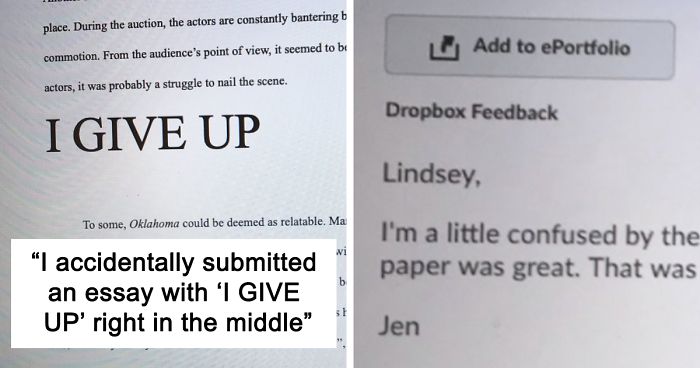
The internet has long adored funny student mistakes, from misspelled words in serious essays to placeholder lines accidentally left in final drafts. These tiny disasters are hilarious because they are painfully familiar. A student meant to sound scholarly and somehow wrote like a tired wizard arguing with autocorrect at 1:47 a.m. We laugh, but we also understand. Deadlines, stress, multitasking, and overconfidence can turn even the best student into a typo machine wearing a backpack.
This article looks at 32 classic types of student proofreading fails, why they happen, and what they teach us about writing better. The examples below are original, family-friendly composites inspired by real student-writing patterns, classroom experiences, and common proofreading advice. No student was harmed in the making of this grammar circus.
Why Student Proofreading Mistakes Are So Funny
Proofreading mistakes are funny because they create a gap between what the writer intended and what the reader actually sees. A student might be trying to explain the importance of public health and accidentally write “pubic health.” Another might confidently submit an essay titled “Final Final Final Use This One Probably.” The mistake is small, but the emotional damage is large enough to require snacks.
In academic writing, proofreading is the final check for grammar, spelling, punctuation, formatting, citations, and accidental weirdness. It is not the same as revising. Revising asks, “Does this argument make sense?” Editing asks, “Can this sentence be stronger?” Proofreading asks, “Did I really just call Abraham Lincoln ‘Abraham Linkin Park’?”
The funniest student mistakes usually happen at the very end of the writing process. That is when the brain is exhausted, the deadline is breathing heavily, and the student is convinced that “one quick glance” is enough. Spoiler alert: one quick glance is how “the Industrial Revolution changed sockiety” makes it into a final paper.
32 Times Students Didn’t Proofread Their Work And Left In The Funniest Mistakes
1. The Placeholder That Became Permanent
A student wrote, “Insert smart sentence here,” intending to come back later. They did not come back later. The sentence marched proudly into the final draft wearing academic shoes.
2. The File Name Betrayal
The essay itself was fine, but the uploaded file was named “history_paper_final_I_hate_this_class.docx.” The content said “thoughtful analysis.” The file name said “please do not make eye contact.”
3. The Autocorrect Ambush
A paragraph about “economic policy” turned into “economic poultry.” Suddenly the essay was less about government spending and more about financially responsible chickens.
4. The Wrong Homophone Hero
The student wrote, “Their are many reasons this matters.” The argument was strong, but “their” walked into the sentence wearing the wrong uniform.
5. The Classic Missing Letter
One missing letter can change everything. “Public speaking” without the “l” is no longer a school skill. It becomes a very awkward parent-teacher conference.
6. The Overconfident Spell-Check Survivor
Spell-check approved “defiantly” when the student meant “definitely.” The sentence read, “This defiantly proves my point,” which made the essay sound ready to fight the textbook in a parking lot.
7. The Citation That Gave Up
Instead of a proper source, the bibliography included “some website I found at midnight.” Honest? Yes. Academic? Not unless the professor grades on emotional transparency.
8. The Copy-Paste Ghost
A student copied notes into a draft and forgot to delete, “This paragraph is weak, fix before submitting.” The teacher probably agreed, but the draft did not need to confess.
9. The Title Page Typo
The essay title was supposed to be “The Causes of World War I.” It became “The Causes of World War Me.” Accidentally dramatic. Historically questionable.
10. The Run-On Sentence Marathon
Some sentences do not end; they simply continue, gather speed, pass several commas, ignore traffic laws, and collapse three pages later.
11. The Accidental Text Message Tone
A student wrote, “The author was mad because, like, society was being super weird.” Not wrong, exactly. Just not quite MLA-ready.
12. The Missing Comma Disaster
“Let’s eat Grandma” remains the undefeated champion of punctuation warnings. Commas save lives, reputations, and family dinners.
13. The Double Word Sneak Attack
“The character was was confused.” Same, sentence. Same.
14. The Font That Escaped
Most of the paper was in Times New Roman. One sentence suddenly appeared in 18-point Comic Sans, as if the essay briefly joined a birthday party.
15. The Unfinished Thought
A paragraph ended with, “This proves that the theme of justice is.” It is what? Important? Complicated? Taking a lunch break?
16. The Wrong Character Name
In a literature paper, Hamlet became “Hamletson,” “Hamster,” and once, mysteriously, “Hamilton.” The essay was one typo away from a Broadway crossover.
17. The Accidental Honesty Note
“I don’t know what this quote means, but it sounds deep.” That note was meant for the student. Instead, it became an unplanned act of academic comedy.
18. The Math Label Mix-Up
A student labeled the x-axis “snacks” instead of “time.” To be fair, many graphs would be improved by snacks.
19. The Science Word Accident
“Photosynthesis allows plants to make their own food” became “Photosynthesis allows plants to make their own mood.” Honestly, if plants can make oxygen, maybe they deserve emotional range.
20. The Essay That Forgot Its Thesis
The introduction promised to prove three points. The body discussed two points, one unrelated movie, and a sentence about pizza. The thesis was last seen wandering near paragraph four.
21. The Capitalization Chaos
“the president met with congress in washington” looked less like a political analysis and more like a sentence that had not had coffee yet.
22. The Wrong Word With Confidence
“The character had a strong moral compass” became “a strong moral campus.” Apparently, ethics now comes with dorms and a meal plan.
23. The Template Left Behind
“Dear Professor [LAST NAME],” is a thrilling way to tell your teacher that the template fought harder than the writer.
24. The Slide Presentation Surprise
A student’s final slide said, “Add conclusion if awake.” The conclusion did not arrive, but the honesty received a standing ovation from every tired student alive.
25. The Wrong Assignment Upload
Instead of an essay, the student uploaded a grocery list. The professor learned about the student’s need for eggs, cereal, and “something for lunch that is not sadness.”
26. The Essay With Track Changes Still On
Comments like “No, this sounds terrible” appeared in the margin. Track Changes is useful, but it is not a diary with page numbers.
27. The Punctuation Traffic Jam
“What happened?!?!?!” may be appropriate when your laptop freezes. In a research paper, it looks like the sentence slipped on a banana peel.
28. The Formal Essay With Casual Abbreviations
“The results were significant, tbh.” Academic writing can be clear and lively, but “tbh” usually needs to stay in the group chat.
29. The Date That Time-Traveled
The paper claimed the Civil War ended in 1965. That would have made history class much more confusing and Abraham Lincoln extremely late to several meetings.
30. The Repeated Conclusion
Sometimes a student pastes the conclusion twice. It is like the essay bows, leaves the stage, then runs back out and bows again.
31. The Word Count Padding Incident
“In conclusion, this is the conclusion of the concluding conclusion.” When students chase word count instead of clarity, the sentence starts doing push-ups in public.
32. The Last-Minute Submit Button Regret
The student clicked submit, reopened the file, and instantly saw three typos on the first page. That sound you hear is every writer whispering, “Why did my eyes start working now?”
What These Funny Student Mistakes Teach Us
Behind every hilarious typo is a useful lesson. Most student proofreading mistakes are not signs of laziness or lack of intelligence. They are signs of a rushed process. The brain often reads what it expects to see, not what is actually on the page. That is why a student can stare at the same paragraph ten times and still miss a missing word. The mind politely fills in the gap, like an overly helpful roommate.
Good proofreading works because it interrupts that autopilot. Reading aloud slows the pace. Printing the paper changes the visual experience. Changing the font or spacing makes the draft feel unfamiliar. Taking a break gives the brain enough distance to notice what it skipped before. These strategies may sound simple, but simple is exactly what a tired brain needs.
Students should also separate revision from proofreading. Trying to fix the argument, improve transitions, check citations, correct punctuation, and rename the file all in one pass is like trying to clean your room during an earthquake. A better method is to check one layer at a time: structure first, sentences second, mechanics last.
A Practical Proofreading Checklist For Students
Check The Big Things First
Before hunting commas, make sure the assignment is complete. Does the paper answer the prompt? Is the thesis clear? Are the paragraphs in a logical order? Are the examples specific? Proofreading a weak draft without revising it is like polishing a sandwich that has no filling.
Read For Sentence-Level Problems
Look for sentence fragments, run-ons, repeated words, missing words, and awkward phrasing. If a sentence sounds like it got lost halfway through, rewrite it. If you have to read it three times to understand it, your teacher probably will too.
Check Names, Titles, And Dates
Proper nouns are magnets for mistakes. Confirm character names, author names, historical dates, book titles, and source titles. A single wrong name can make a serious paragraph look like it was written during a sneeze.
Review Formatting And File Details
Before submitting, check the file name, document title, header, page numbers, font, spacing, and citation style. The paper is not truly finished until the outside looks as organized as the inside.
Do One Final “Embarrassment Scan”
Search for brackets, comments, placeholders, highlighted notes, “fix this later,” and anything you typed while emotionally negotiating with the assignment. This final scan catches the mistakes that make the internet laugh for years.
Why Proofreading Matters Beyond The Grade
Funny student mistakes are entertaining, but proofreading is more than a way to avoid classroom embarrassment. It is a communication skill. Clear writing helps readers trust the writer. A polished essay tells the teacher, “I cared enough to check.” A messy one may hide strong ideas under avoidable distractions.
That matters outside school, too. College applications, scholarship essays, job emails, resumes, lab reports, and presentations all depend on careful writing. Nobody expects perfection, but readers do notice patterns. One typo is human. Fifteen typos and a file called “please_work_version_9” suggest the writer may have been wrestling a raccoon while typing.
The best part is that proofreading improves with practice. Students who track their common mistakes can catch them faster next time. Some students always mix up “its” and “it’s.” Others forget commas after introductory phrases. Some have a personal feud with apostrophes. Once a writer knows the pattern, proofreading becomes less random and more strategic.
Experiences Related To Funny Student Proofreading Mistakes
Anyone who has spent time in classrooms, tutoring centers, study groups, or late-night homework sessions has seen proofreading mistakes become tiny legends. A student submits a biology report and realizes the title says “Cell Division and Other Cell Decisions.” Another sends a formal email that begins “Dear Professor Snape,” because the last essay draft was written while thinking about novels. The teacher may smile, the student may panic, and the lesson sticks harder than any grammar worksheet ever could.
One common experience is the “I saw it right after I submitted it” moment. Students often reread their work only after the file has already left their hands. Suddenly, the typo that was invisible for three hours appears in the first sentence, waving like it paid rent. This happens because the pressure is gone. Once the brain no longer has to produce the paper, it can finally inspect the paper. That is why a short break before proofreading is so powerful. Even five or ten minutes away from the screen can make mistakes easier to spot.
Another familiar scene is the group project typo. Group projects are famous for creating documents with four writing styles, three fonts, two citation formats, and one mysterious sentence nobody admits to writing. In those projects, proofreading is not just about spelling. It is about making the final work sound like one team instead of a debate club trapped in a Google Doc. The smartest groups assign one person to do a consistency pass before submission. That person checks headings, tone, spacing, names, and whether the conclusion accidentally repeats the introduction word for word.
Students also learn that technology helps, but it does not replace attention. Spell-check can catch “recieve,” but it may not question “from” when the student meant “form.” Grammar tools can suggest improvements, but they do not always understand a teacher’s expectations or a student’s argument. The best approach is teamwork: let tools catch the obvious problems, then let human judgment catch meaning, tone, and context.
Teachers often remember funny mistakes not because they want to embarrass students, but because those mistakes reveal the messy, human side of learning. Writing is not magic. It is drafting, revising, deleting, sighing, trying again, and occasionally discovering that you wrote “the author uses soup as a symbol” when you meant “silence.” Humor makes the lesson easier to accept. A student who laughs at a typo is more likely to remember the fix.
The best experience students can take from these mistakes is simple: proofreading is an act of kindness toward your future self. It saves you from awkward emails, confusing sentences, and the cold sweat of realizing your file name was not as private as you thought. More importantly, it helps your ideas arrive clearly. Because somewhere under every typo, there is usually a good thought trying very hard to look professional.
Conclusion
Student proofreading mistakes are hilarious because they are honest little snapshots of academic life. They show what happens when deadlines, distractions, autocorrect, and tired brains collide. But they also remind us that strong writing is not only about brilliant ideas. It is about giving those ideas a clean, readable path to the reader.
The next time you finish an essay, do not trust the submit button too quickly. Read the paper aloud. Check the file name. Delete the comments. Confirm the names. Look for placeholders. Give your future self the gift of not becoming example number 33.