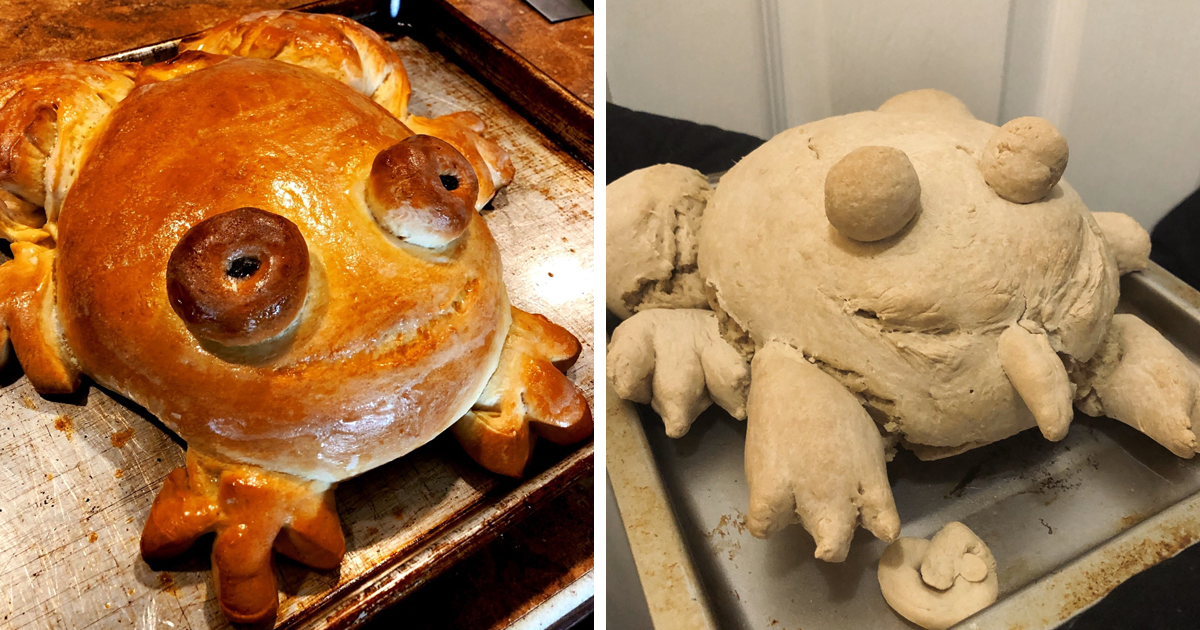
Some food trends arrive with a serious face and a chef’s tweezers. Others arrive looking like a tiny amphibian that just heard the oven timer and regrets every life choice. Frog bread belongs proudly to the second group. The viral baking trend asks one simple question: what if a loaf of bread looked less like dinner and more like a round, sleepy pond creature with adorable dough feet?
The answer, apparently, is joy. Lots of it. Across TikTok, Instagram, baking communities, and internet galleries, home bakers have been turning ordinary yeast dough into frogs with bulging eyes, chubby legs, sleepy smiles, and sometimes expressions that say, “I know what you did to the recipe.” The trend became especially popular during the home-baking boom, when people were already making sourdough, banana bread, focaccia, and anything else that could distract them from staring into the refrigerator for the eighth time before noon.
What makes frog bread so irresistible is not perfection. In fact, perfection may be the least interesting version. The funniest, cutest, and most shareable frog breads are often the ones that puff unevenly, lose an eye, turn into a bread toad, or emerge from the oven looking like a woodland wizard trapped in a dinner roll. That is the magic: frog bread is part recipe, part sculpture, part comedy show, and part emotional support carbohydrate.
What Is Frog Bread?
Frog bread is exactly what it sounds like: bread shaped like a frog. The base can be a simple yeast dough, a milk bread dough, a French bread-style dough, or even sourdough if the baker wants a little extra challenge. The dough is divided into pieces and shaped into a body, legs, feet, and eyes before baking. Once it rises and expands in the oven, the frog becomes puffy, golden, and charmingly unpredictable.
The most common design starts with a large oval or round piece of dough for the body. Smaller dough balls become the eyes. Tubes or flattened pieces form front legs, back legs, and webbed feet. Some bakers score little toes with a knife or kitchen shears. Others add sesame seeds, peppercorns, olives, or bits of dough for pupils. A few artistic souls go further with herbs, food coloring, painted sourdough designs, or tiny dough lily pads. Somewhere out there, a frog bread probably has a hat. The internet always finds a way.
Unlike highly technical bread art, frog bread is beginner-friendly because the frog is supposed to be a little goofy. A perfect baguette demands elegance. A frog loaf demands personality. If the eyes are uneven, congratulations: your frog has seen things. If the legs stretch during baking, now it is leaping. If the body slumps, it is simply relaxing after a long day of being bread.
How the Frog Bread Trend Hopped Across the Internet
The frog bread trend gained attention during the wave of quarantine baking, when people were experimenting with yeast, sourdough starters, and creative comfort food. Social media gave the project its perfect habitat. A frog-shaped loaf is visual, funny, easy to understand, and instantly shareable. You do not need a culinary degree to appreciate a loaf that looks like it might ribbit at you from the cooling rack.
Roundups of frog bread attempts helped the trend spread even further. The appeal was not only in expert bakers showing off flawless edible sculptures. It was also in everyday people sharing their first attempts: frogs with tiny faces, frogs with enormous cheeks, frogs that looked like dumplings, frogs that looked like ancient bread guardians, and frogs that seemed deeply suspicious of the baker. These imperfect results made the trend feel approachable. Everyone could join, and every frog had a story.
That is why the phrase “30 people share their attempts” fits the trend so well. Frog bread is not a single recipe locked behind a polished food magazine photo. It is a community joke, a kitchen experiment, and a reminder that food can be playful. When 30 people bake frog bread, you do not get 30 identical loaves. You get 30 personalities. One frog is cheerful. One is dramatic. One is clearly a retired swamp mayor. One looks like it woke up during the final proof and chose chaos.
Why Frog Bread Works So Well as a Baking Trend
It Is Cute Before It Is Complicated
Many food trends become intimidating because they require special tools, rare ingredients, or the patience of a monk. Frog bread is different. The basic ingredients are familiar: flour, yeast, salt, sugar, milk or water, and sometimes butter or oil depending on the dough. The shaping process is hands-on, but forgiving. A slightly lopsided frog is not a failure; it is character development.
It Turns Baking Into a Low-Stakes Art Project
Frog bread sits at the sweet spot between cooking and crafting. You are not only making something edible; you are building a tiny creature. That makes the process more entertaining than shaping a standard loaf. Kids can help roll the eyes or press toe marks into the dough. Adults can pretend they are above naming the frog, then immediately name it Gerald.
It Rewards Imperfection
Bread is alive in a practical sense because yeast creates gas and changes the dough as it rises. That means your frog will not stay exactly how you shaped it. Eyes expand. Feet puff. Mouths disappear. Legs drift. The oven has opinions. But those surprises are part of the fun. Frog bread is one of the rare baking projects where “not quite right” often becomes “even better.”
What the 30 Frog Bread Attempts Teach Us
Looking at a wide range of frog bread attempts reveals a few useful lessons for anyone planning to join the trend. First, the body should be sturdy. A dough that is too wet or loose may spread instead of holding its frog shape. Soft dough can still work, but it needs gentle handling, enough gluten development, and a good surface tension when shaped.
Second, the small pieces need to be attached firmly. Many bakers discover that frog eyes have a rebellious streak. A little water can help dough pieces stick together, but placement matters too. If the eyes are balanced on top like tiny dough satellites, they may slide during proofing or baking. Press them lightly into the head area so they become part of the loaf rather than passengers.
Third, proofing changes everything. A frog that looks sleek before the final rise may become wonderfully chunky afterward. That is not bad, but it means details should be exaggerated. Make the toes a bit deeper than you think. Make the eyes slightly more pronounced. Give the legs room. Bread expands, and your frog will take up space like it pays rent.
Fourth, facial expressions are optional but powerful. Two small dots for eyes can make the difference between “bread shape” and “tiny frog friend.” Some bakers use seeds, olives, raisins, or dark dough accents. Others rely on scoring and shaping alone. Either way, the face gives the loaf personality, and personality is what makes frog bread worth photographing before someone eats the left foot.
How to Make Frog Bread at Home
You do not need one official frog bread recipe. Any sturdy yeast dough can work, but a simple enriched dough is a good place to start because it is soft, flavorful, and easier to shape than very high-hydration dough. A basic version might include bread flour or all-purpose flour, warm milk or water, yeast, sugar, salt, and a small amount of butter or oil.
Basic Frog Bread Method
- Mix the dough: Combine flour, yeast, sugar, salt, and warm liquid. Add butter or oil if using. Mix until a shaggy dough forms.
- Knead until smooth: Knead by hand or mixer until the dough becomes elastic and slightly tacky but not soupy.
- Let it rise: Place the dough in a covered bowl and let it rise until roughly doubled. A warm, draft-free spot helps.
- Divide the pieces: Use the largest portion for the frog’s body. Save smaller pieces for eyes, front legs, back legs, and feet.
- Shape the frog: Form an oval body, attach legs and feet, then add two dough balls for eyes. Use a tiny bit of water as glue.
- Add details: Cut toe marks, score a smile, or add edible eye details such as seeds.
- Proof again: Cover the shaped frog loosely and let it puff. Do not let it overproof into a pancake with ambitions.
- Bake until golden: Bake according to your dough recipe until the loaf is browned and fully baked inside.
- Cool before slicing: Let the frog rest. This is polite, and it also keeps the crumb from turning gummy.
Common Frog Bread Mistakes and How to Fix Them
The Frog Spread Out Too Much
This usually means the dough was too wet, under-kneaded, overproofed, or not shaped with enough tension. Use a slightly firmer dough next time and avoid letting the final proof go too long. If your kitchen is warm, check the dough sooner than the recipe suggests.
The Eyes Fell Off
Classic frog bread drama. Attach the eyes with a dab of water and press them gently into the main dough. You can also make shallow indentations where the eyes will sit. Think of it as giving your frog proper eye sockets, which sounds creepy until you remember we are discussing bread.
The Feet Lost Their Shape
Cut deeper toe marks before baking, because shallow cuts can disappear as the dough expands. Kitchen shears work well for quick, clean toe details. Do not make the feet too tiny, or they may vanish into the body like edible socks.
The Bread Looks More Like a Blob Than a Frog
Add stronger frog signals: larger eyes, wider back legs, clear front feet, and a visible smile. Even a round loaf can become frog-like if the features are bold enough. When in doubt, exaggerate. Frogs are not known for subtle eye placement.
Flavor Ideas for Frog Bread
A plain golden loaf is already charming, but frog bread can take on many flavors. For a savory version, add garlic butter, rosemary, chives, Parmesan, or everything bagel seasoning. A green herb oil brushed lightly over the top can give the frog a swampy but delicious look. Spinach powder or matcha can tint dough green, though bakers should use a light hand unless they want the loaf to taste like lawn poetry.
For a sweeter frog, use milk bread or brioche-style dough. Add cinnamon sugar inside the body, brush with honey butter after baking, or serve slices with jam. Chocolate chips can become eyes, but place them carefully because melted chocolate may give the frog a haunted expression. Of course, that may be exactly the vibe you want.
Why Frog Bread Feels So Comforting
Food trends often reflect the mood of the moment. Frog bread became popular because it was silly in a time when many people needed silly. It gave bakers a reason to use their hands, laugh at a harmless failure, and share something warm from the oven. That matters. A frog-shaped loaf will not solve life’s biggest problems, but it can make a kitchen feel lighter for an afternoon.
There is also something deeply human about turning bread into a creature. People have shaped dough into animals and festive figures for generations. Frog bread is a modern social-media version of an old instinct: make food, make it meaningful, make it fun, and then gather around it. The only difference is that now the gathering may happen through comments, likes, stitches, and someone writing, “Why does he look like my landlord?”
Tips for Taking Better Frog Bread Photos
Since frog bread is made to be shared, the photo matters almost as much as the bake. Natural light is your friend. Place the frog near a window, use a simple background, and avoid harsh overhead lighting that makes your loaf look like it is being interrogated. A cooling rack, wooden board, linen towel, or green plate can create a cozy scene.
Props can help, but do not overdo it. A butter knife, a small jar of jam, a few herbs, or a cup of coffee is enough. The frog should remain the star. If the bread has a funny expression, photograph it from a low angle so the face is clear. If the feet are the best part, capture them before anyone tears one off and says, “I just wanted to taste it.”
Is Frog Bread Good for Beginners?
Yes, especially if beginners choose a simple dough and treat the first attempt as practice. Frog bread teaches several useful baking skills at once: mixing, kneading, proofing, shaping, scoring, and judging doneness. It also teaches emotional resilience, because at some point your frog may look less like a frog and more like a potato with opinions.
The best approach is to start simple. Do not attempt a museum-quality amphibian on day one. Make a basic frog with a body, two eyes, and four legs. Once that works, experiment with details such as webbed feet, smiles, herbs, colors, or stuffed fillings. The trend is flexible enough to grow with your confidence.
Extra Experience Section: What It Feels Like to Bake Frog Bread
Baking frog bread is one of those projects that begins with confidence and immediately becomes a negotiation. At first, everything seems reasonable. You mix the dough, knead it until smooth, and watch it rise like a responsible little cloud. Then comes shaping, and suddenly you are giving anatomy lessons to flour. How large should a frog’s back legs be? Should the eyes sit on top or slightly forward? Why does one foot look like a mitten? These are the questions that turn an ordinary afternoon into a full amphibian design meeting.
The first emotional stage is optimism. You divide the dough carefully and build a frog that looks adorable on the baking sheet. It has eyes. It has toes. It has the quiet dignity of a pond philosopher. You cover it for the final proof and imagine the compliments. Then you return 30 minutes later and discover that the frog has changed. It is puffier. Wider. Perhaps one eye has migrated. The toes are less “webbed feet” and more “soft dinner-roll fringe.” This is when you learn that yeast is not just an ingredient; it is a collaborator with strong creative differences.
The second stage is oven suspense. Through the glass door, your frog begins to rise and brown. Sometimes the transformation is magical. The body rounds beautifully, the eyes become charming domes, and the legs tuck into place. Other times, your frog slowly becomes a golden creature of myth. One side expands more than the other. The smile disappears. The back legs swell like the frog has been doing squats since breakfast. Still, the smell is incredible, so nobody is truly upset.
The third stage is attachment. This is the strangest part. Once the frog bread cools, you may not want to cut it. You made a loaf, but now it has a face. People gather around it, take pictures, laugh, and assign it a personality. Someone says it looks wise. Someone else says it looks exhausted. A child may ask if it has a name. By then, slicing into it feels dramatic, but butter helps everyone move forward.
The final stage is planning the next one. Maybe you will make the eyes bigger. Maybe you will use sesame seeds for pupils or rosemary for a grassy pond effect. Maybe you will make mini frog rolls instead of one large loaf. That is the addictive charm of the trend: every attempt teaches you something, and every mistake becomes a better story. Frog bread is not just bread shaped like a frog. It is an edible reminder that creativity does not need to be flawless to be delightful. Sometimes it just needs warm dough, a sense of humor, and two eyes that stay attached long enough for the photo.
Conclusion
Frog bread proves that the best internet food trends do not always need luxury ingredients or complicated techniques. Sometimes all they need is flour, yeast, warmth, imagination, and a willingness to laugh when your loaf comes out looking like a surprised swamp potato. The trend works because it is accessible, cute, and wonderfully unpredictable. Whether the final bake is elegant, silly, lopsided, or accidentally heroic, every frog bread attempt has personality.
For home bakers, this trend is more than a viral photo opportunity. It is a fun way to practice bread shaping, learn how dough behaves, and turn a basic recipe into something memorable. For readers scrolling through 30 different attempts, the joy comes from seeing how creative people can be when they stop chasing perfection and start playing with their food in the best possible way.
So, should you try baking frog bread? Absolutely. Worst case, you get fresh homemade bread. Best case, you get a golden frog loaf with tiny feet and enough charm to become the most popular member of dinner. That is a pretty good deal for a little flour and yeast.