Squaring a number sounds like one of those math phrases that should come with a cape and dramatic background music, but it is actually one of the friendliest ideas in arithmetic. To find the square of a number, you multiply the number by itself. That is it. No smoke. No mirrors. Just one number meeting an identical twin and producing a brand-new result.
Still, there is more than one smart way to get there. You can use straightforward multiplication, lean on algebra shortcuts, or spot number patterns that let your brain do the heavy lifting before your pencil even wakes up. Whether you are a student brushing up on exponents, a parent helping with homework, or just someone who wants to beat a calculator to the answer once in a while, learning several methods makes math faster and much less annoying.
In this guide, you will learn three practical ways to find the square of a number, when each method works best, and how to avoid common mistakes. We will also walk through examples, negative numbers, mental math tricks, and real-life experiences that make the topic feel a lot less abstract.
What Does It Mean to Square a Number?
The square of a number is the result of multiplying that number by itself. In math notation, we write it with an exponent of 2. For example:
6² = 6 × 6 = 36
The little 2 is called an exponent. It tells you how many copies of the base number are being multiplied together. So when you see 9², it means 9 multiplied by 9, not 9 multiplied by 2. That misunderstanding has ruined many perfectly innocent homework pages.
The word square also has a visual meaning. If a square has side length 5, its area is 5 × 5, or 25 square units. That connection between multiplication and area is one reason the term stuck. A square number can literally be arranged into a square-shaped array.
Quick Examples of Squared Numbers
- 1² = 1
- 2² = 4
- 3² = 9
- 4² = 16
- 5² = 25
- 10² = 100
These are called perfect squares. They show up everywhere in algebra, geometry, graphs, measurement, and mental math.
Way 1: Multiply the Number by Itself
The most direct way to find the square of a number is also the most reliable: multiply the number by itself. This method works for whole numbers, decimals, fractions, and even negative numbers when written correctly.
How It Works
Use the formula:
a² = a × a
That means if the number is 12, then:
12² = 12 × 12 = 144
If the number is 0.5, then:
0.5² = 0.5 × 0.5 = 0.25
If the number is 3/4, then:
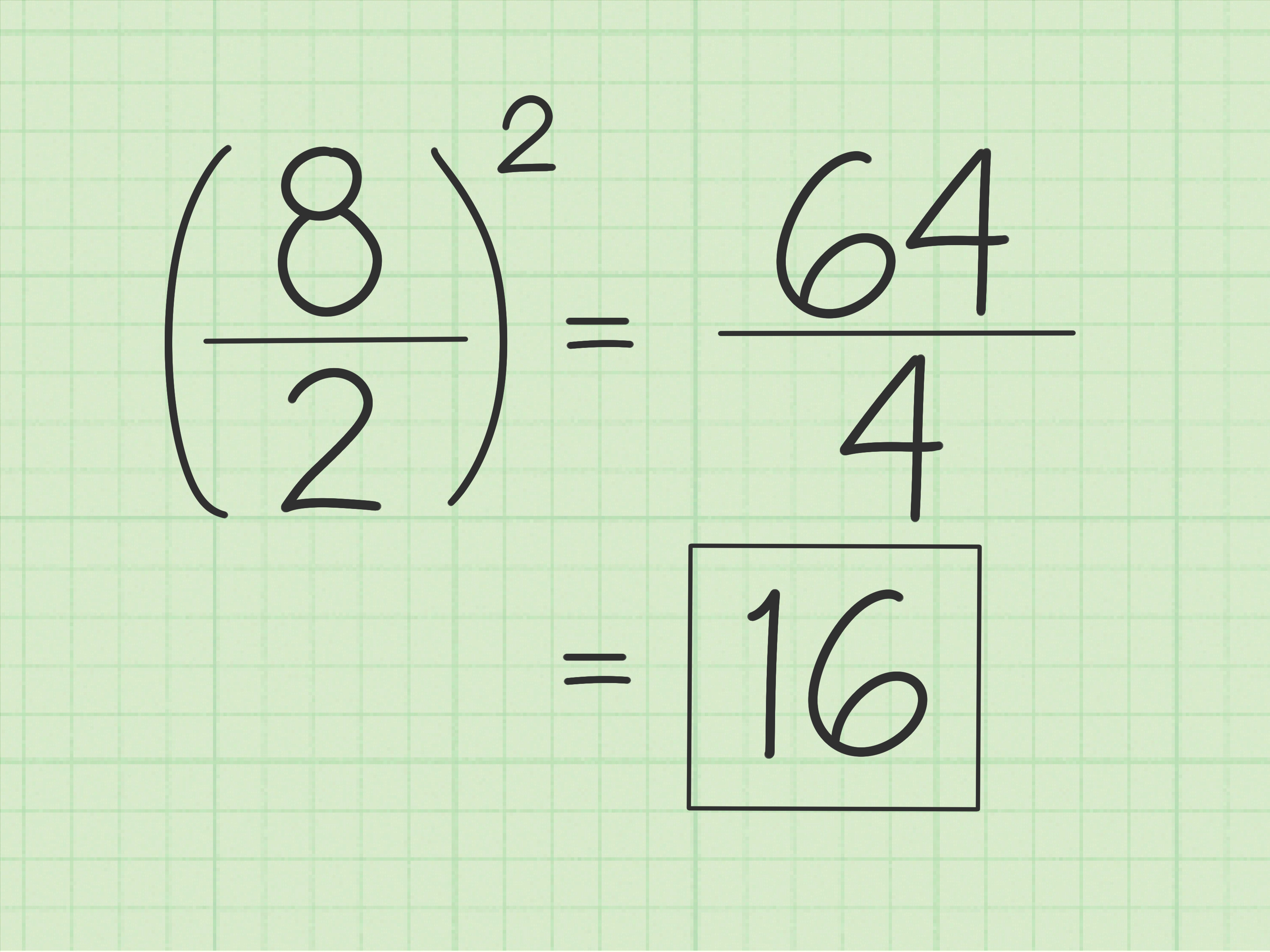
(3/4)² = (3/4) × (3/4) = 9/16
Why This Method Matters
This is the foundation for every other squaring strategy. Even when you use shortcuts, those shortcuts still come from the same basic idea: a number times itself. If you understand this method, the fancier tricks stop feeling like magic and start feeling like math.
Examples
Example 1: 7²
7 × 7 = 49
Example 2: 14²
14 × 14 = 196
Example 3: 25²
25 × 25 = 625
Watch Out for Negative Numbers
This is where many learners step on a mathematical Lego brick. Compare these two expressions:
(-3)² = (-3) × (-3) = 9
-3² = -(3 × 3) = -9
Those answers are different because parentheses matter. When the negative sign is inside the parentheses, the whole number is being squared. When it is outside, the exponent applies only to the 3, and the negative stays in front.
Rule of thumb: if you mean the square of a negative number, use parentheses. Your future self will thank you.
Way 2: Use Algebra Shortcuts
Once numbers get larger, multiplying a number by itself every single time can feel a little clunky. That is where algebra identities save the day. These shortcuts are especially useful when a number is close to 10, 50, 100, or another friendly base number.
The Most Useful Identity
(a + b)² = a² + 2ab + b²
There is also a matching version for subtraction:
(a – b)² = a² – 2ab + b²
These formulas help you break a number into easier parts, square it faster, and often do the math mentally.
Example 1: Find 12²
Think of 12 as 10 + 2.
(10 + 2)² = 10² + 2(10)(2) + 2²
= 100 + 40 + 4 = 144
Example 2: Find 48²
Think of 48 as 50 – 2.
(50 – 2)² = 50² – 2(50)(2) + 2²
= 2500 – 200 + 4 = 2304
Example 3: Find 103²
Think of 103 as 100 + 3.
(100 + 3)² = 10000 + 600 + 9 = 10609
When This Method Is Best
- When the number is close to 10, 50, 100, or 1000
- When you want faster mental math
- When you are practicing algebra and want to connect arithmetic to formulas
A Great Shortcut for Numbers Ending in 5
Numbers that end in 5 have a famous squaring trick. Suppose the number is 35. Take the digit before the 5, which is 3, multiply it by the next whole number, which is 4, and then attach 25.
35² → 3 × 4 = 12 → 1225
Let us try another:
85² → 8 × 9 = 72 → 7225
This works because:
(10n + 5)² = 100n(n + 1) + 25
It looks impressive at first, but after a few tries, it feels less like wizardry and more like a really efficient habit.
Way 3: Use Number Patterns and Square Relationships
If you like spotting patterns, squaring numbers becomes much more interesting. Square numbers follow several predictable relationships, and those patterns can help you find or check an answer quickly.
Pattern 1: Square Numbers Form a Sequence
The sequence of square numbers begins like this:
1, 4, 9, 16, 25, 36, 49, 64, 81, 100, …
If you look at the differences between them, something neat appears:
4 – 1 = 3
9 – 4 = 5
16 – 9 = 7
25 – 16 = 9
The differences are consecutive odd numbers. That means each new square is the previous square plus the next odd number.
Example: Find 9² Using the Previous Square
If you know 8² = 64, then to get 9², add the next odd number after 15, which is 17.
64 + 17 = 81
Why 17? Because the difference between n² and (n + 1)² is 2n + 1. For n = 8, that is 17.
Pattern 2: Sum of Consecutive Odd Numbers
The first square numbers can also be built by adding odd numbers:
1 = 1²
1 + 3 = 4 = 2²
1 + 3 + 5 = 9 = 3²
1 + 3 + 5 + 7 = 16 = 4²
So the sum of the first n odd numbers equals n². This is a beautiful pattern, and it is useful for checking your thinking. It also explains why square numbers can be shown as growing layers around a square shape.
Pattern 3: Use Nearby Squares
If you know one square, you can often find another by moving up or down.
Suppose you want 26² and already know 25² = 625.
The jump from 25² to 26² is:
2(25) + 1 = 51
So:
26² = 625 + 51 = 676
This is especially useful in mental math, because many people memorize a handful of squares without realizing how much mileage they can get from them.
Common Mistakes When Squaring a Number
Mistake 1: Multiplying by 2 Instead of by Itself
For example, thinking 9² means 9 × 2. It does not. It means 9 × 9.
Mistake 2: Forgetting Parentheses with Negative Numbers
(-4)² = 16, but -4² = -16.
Mistake 3: Mixing Up Square and Square Root
Squaring 7 gives 49. The square root of 49 gives 7. Same family, opposite directions.
Mistake 4: Expanding a Binomial Incorrectly
(a + b)² is not a² + b². The correct expansion is a² + 2ab + b². That middle term matters. Ignore it, and the algebra police may not arrest you, but your answer will definitely be wrong.
How to Choose the Best Method
Not every squaring problem needs the same tool. Here is a practical way to choose:
- Use direct multiplication for small numbers, decimals, fractions, or anytime accuracy matters most.
- Use algebra shortcuts for numbers near a friendly base like 10, 50, or 100.
- Use patterns when working mentally, checking answers, or exploring number relationships.
The more methods you know, the more flexible you become. That is the real win. Math gets easier when you stop seeing one road and start seeing a whole map.
Practice Examples
Example 1: 11²
Direct multiplication: 11 × 11 = 121
Example 2: 19²
Shortcut: (20 – 1)² = 400 – 40 + 1 = 361
Example 3: 45²
Ends-in-5 trick: 4 × 5 = 20, then attach 25 → 2025
Example 4: (-8)²
(-8) × (-8) = 64
Example 5: 0.2²
0.2 × 0.2 = 0.04
Why Learning Squares Is Actually Useful
Squaring numbers is not just classroom decor. It shows up in area formulas, graphing parabolas, distance calculations, statistics, physics, spreadsheets, coding, and everyday estimation. If you are figuring out the area of a square patio, comparing image dimensions, or working with formulas that include x², understanding squares saves time and reduces mistakes.
It also builds number sense. Once you know squares well, it becomes easier to estimate square roots, factor expressions, and notice when an answer feels off. That skill is not flashy, but it is powerful. It is the mathematical version of having good instincts.
Experience Section: What People Often Discover When Learning to Square Numbers
One of the most common experiences students have with squaring numbers is that the idea seems easy in theory and weirdly slippery in practice. Many learners hear “square a number” and nod confidently, then write 12² = 24 because their brain quietly swapped “multiply by itself” with “multiply by two.” It is a classic mistake, and honestly, it is almost a rite of passage. The good news is that once students start seeing squares as area or as repeated multiplication, the confusion usually fades fast.
Another common experience happens when people begin memorizing basic squares. At first, it feels like random trivia: 6² = 36, 7² = 49, 8² = 64. But after a while, those values start acting like mental landmarks. A student solving 15² may suddenly think, “Well, I know 10² is 100 and 20² is 400, so the answer has to land somewhere in between.” That kind of intuition is a major turning point. The math stops feeling like separate facts and starts feeling connected.
Teachers and tutors often notice that students become much faster once they learn a shortcut that feels “special.” The numbers-ending-in-5 trick is a perfect example. The first time someone calculates 35² = 1225 in their head, there is usually a small moment of disbelief, followed by a larger moment of delight. That emotional shift matters. It turns squaring from a chore into a puzzle, and puzzles are much easier to stick with than chores.
Parents helping with homework often have a different experience: they remember the answer but not the explanation. They may know that 12² is 144, but when a child asks, “Why does squaring mean that?” things get quiet in the kitchen. Using a square drawing, graph paper, or a quick area model often solves that problem. Once the visual is there, the explanation gets easier for everyone in the room, including the adult who was hoping the worksheet would explain itself.
In real life, people also run into squares more often than they expect. Someone measuring a square garden bed, resizing a photo, estimating tile coverage, or working with spreadsheets may not announce, “Behold, I now compute a perfect square,” but that is exactly what is happening. Students in science classes meet squared values in formulas. Gamers and coders see them in coordinate systems and distance calculations. Even people practicing mental math for fun find that squaring numbers sharpens focus and builds confidence surprisingly fast.
Perhaps the most valuable experience is learning that there is no single “right personality” for math. Some people like the clean certainty of direct multiplication. Others love algebra shortcuts because they feel efficient. Still others remember patterns better than formulas. Squaring numbers is a great topic because it rewards all three styles. If one method feels clumsy, another one may click immediately. And once it clicks, math becomes less about surviving the problem and more about choosing the smartest way to solve it.
Conclusion
If you want to find the square of a number, you have options. You can multiply the number by itself, use algebra identities to break it into friendlier pieces, or rely on number patterns to calculate and check answers more quickly. Each method has its own strengths, and together they build a stronger understanding of exponents, perfect squares, and mental math.
The best part is that squaring numbers is one of those skills that keeps paying you back. It helps in school, supports everyday problem-solving, and makes more advanced math far less intimidating. Learn the basic method, practice the shortcuts, notice the patterns, and soon enough you will be squaring numbers with the calm confidence of someone who knows exactly what that little exponent 2 is up to.