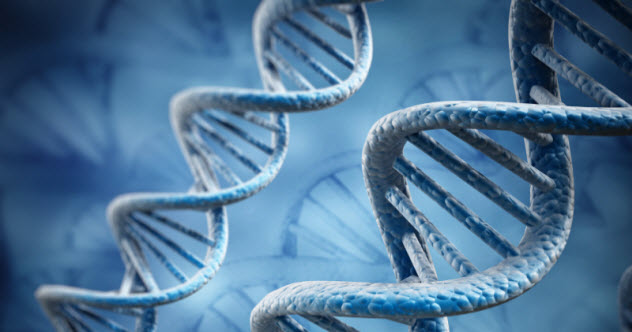
DNA has spent billions of years doing one remarkably important job: storing the instructions for life. Recently, scientists have started giving it side projects.
Beyond determining inherited traits, DNA can now help doctors select treatments, identify species from a bottle of water, verify seafood labels, build microscopic machines, solve crimes, monitor organ transplants, and even preserve digital files. Apparently, the double helix was tired of being known only for eye color and family resemblance.
These innovative uses of DNA are possible because genetic material is programmable, information-rich, self-assembling, and readable with increasingly sophisticated laboratory tools. Some applications are already used in hospitals, conservation programs, forensic laboratories, and supply chains. Others remain experimental but could transform computing, medicine, manufacturing, and environmental monitoring.
1. Storing Digital Data Inside Synthetic DNA
One of the most surprising innovative uses of DNA has nothing to do with biology. Researchers can convert computer files into sequences made from the genetic letters A, C, G, and T. Those sequences are chemically synthesized, stored as DNA molecules, and later read with sequencing equipment.
The basic process resembles translation. Software changes binary data into DNA code, adds identifying information and error-correction instructions, and sends the sequence to a DNA synthesizer. To retrieve the file, scientists sequence the molecules and convert the genetic code back into digital information.
Researchers from Microsoft and the University of Washington have demonstrated automated systems that can write and retrieve data stored in manufactured DNA. DNA is attractive for archival storage because it is extremely compact and does not require continuous electricity while sitting on a shelf.
Why It Matters
Data centers consume space, energy, and hardware. DNA storage could eventually preserve scientific records, cultural archives, government documents, and other rarely accessed information in a physical package smaller than a coffee mug. It is not ready to replace your laptop drivethe writing process remains expensive and comparatively slowbut it may become a powerful answer to long-term data preservation.
2. Editing Genes to Treat Serious Diseases
Genome editing allows scientists to make targeted changes to DNA. Tools such as CRISPR-Cas9 use a guide molecule to locate a selected genetic region and a protein that cuts the DNA. The cell then repairs the cut, allowing researchers to disable, correct, or modify a gene.
This idea once sounded like science fiction served with a generous side of optimism. It is now part of real medicine. In December 2023, the U.S. Food and Drug Administration approved Casgevy, the first FDA-approved treatment using CRISPR-Cas9 technology. The treatment modifies a patient’s blood-forming stem cells to address sickle cell disease. The FDA later expanded the approved patient population in July 2026.
Why It Matters
Traditional medicines often manage symptoms or interrupt disease processes temporarily. Gene editing aims further upstream by changing the biological instructions contributing to a disorder. Researchers are studying genome editing for inherited blood diseases, certain cancers, eye conditions, immune disorders, and other illnesses.
The technology also raises major questions about safety, affordability, access, unintended edits, and the difference between treating disease and altering inheritable human traits. Powerful scissors still require careful hands.
3. Choosing Medicines Through Pharmacogenomics
People can respond very differently to the same medication. One patient improves, another experiences unpleasant side effects, and a third appears to have swallowed an expensive mint.
Pharmacogenomics examines how genetic variants influence a person’s response to drugs. A DNA test may help clinicians determine whether a patient is likely to metabolize a medicine quickly, slowly, or somewhere in between. This information can support decisions about medication selection and dosing.
The National Human Genome Research Institute describes pharmacogenomics as part of genomic and precision medicine. Its goal is to use genomic information to make medication management more individualized rather than relying entirely on a trial-and-error approach.
Where It Is Used
Genetic information may be considered when prescribing selected blood thinners, antidepressants, pain medicines, cancer treatments, and other drugs. A genetic result does not automatically determine the correct prescription because age, organ function, diet, medical history, and drug interactions still matter. However, pharmacogenomics can provide another useful piece of the clinical puzzle.
4. Solving Crimes and Identifying Missing People
Forensic DNA analysis compares genetic markers found in biological evidence with profiles from known individuals or approved databases. Unlike television detectives, real laboratories do not usually solve a case during the commercial break, but DNA can generate important investigative leads.
The FBI’s Combined DNA Index System, commonly called CODIS, allows participating forensic laboratories to compare qualifying DNA profiles electronically. It can link evidence from different crime scenes, associate evidence with a known profile, and support the identification of missing or unidentified people.
Beyond Criminal Investigations
DNA is also valuable after natural disasters, transportation accidents, wars, and other mass-fatality events. Samples from remains can be compared with personal items or biological relatives when visual identification is impossible.
These uses require strict quality controls, legal safeguards, transparent database policies, and respect for genetic privacy. DNA evidence can be highly informative, but collection mistakes, contamination, coincidental matches, and poor interpretation can still create problems. DNA is evidence, not a tiny courtroom judge wearing a powdered wig.
5. Detecting Wildlife Through Environmental DNA
Animals constantly leave genetic material behind through skin cells, scales, mucus, hair, waste, pollen, and other biological traces. Scientists can collect water, soil, sediment, snow, or even air samples and search for this environmental DNA, usually shortened to eDNA.
Instead of trapping a rare fish or waiting beside a pond with binoculars and unreasonable optimism, researchers can test the water for genetic evidence that the species recently occupied the area. The U.S. Geological Survey notes that eDNA can provide a sensitive, rapid, and noninvasive way to detect species and assess biodiversity.
Conservation Applications
Environmental DNA can help scientists locate endangered species, detect invasive organisms early, monitor fish communities, study remote habitats, and measure changes in ecosystem diversity. It is especially useful when an organism is rare, hidden, nocturnal, microscopic, or simply unwilling to participate in a wildlife survey.
Results still require careful interpretation. Flowing water can move DNA away from its original source, genetic material degrades over time, and contamination can produce misleading signals. For that reason, eDNA generally complements rather than completely replaces field observations.
6. Exposing Food Fraud With DNA Barcoding
Once a fish has been cut into a fillet, breaded, cooked, and covered in sauce, visual identification becomes difficult. A premium seafood item may secretly be a cheaper species wearing a convincing menu description.
DNA barcoding identifies an organism using a short, standardized genetic sequence. Scientists extract DNA from an unknown sample, sequence a selected region, and compare it with a reference database. NOAA laboratories use molecular genetics and DNA reference libraries to identify seafood species and investigate mislabeling.
Why Consumers Should Care
Food substitution can cause economic harm, hide illegal fishing, undermine conservation rules, and create health risks. A mislabeled product may expose someone to an allergen or substitute a species associated with different safety concerns.
DNA barcoding is also used to authenticate meat, plants, herbal products, and wildlife-derived materials. Customs officials and conservation investigators can use similar methods to identify illegally traded species even when the original animal has been processed into powder, leather, medicine, or decorative objects.
7. Building Nanoscale Structures With DNA Origami
DNA molecules naturally pair according to predictable rules: A binds with T, while C binds with G. Researchers can exploit those rules to design strands that fold and assemble into specific two-dimensional or three-dimensional shapes.
This technique is called DNA origami. Instead of folding paper into a swan, scientists fold genetic material into boxes, tubes, hinges, sheets, containers, sensors, and other structures measured in billionths of a meter.
Researchers are investigating DNA origami as a platform for molecular imaging, biosensors, cell targeting, and drug delivery. Harvard’s Wyss Institute and Brookhaven National Laboratory have described work involving DNA nanostructures designed to carry therapeutic molecules or interact with selected biological targets.
Possible Medical Benefits
A future DNA nanocarrier might protect a drug while it travels through the body and release it only after encountering a molecular signal associated with diseased cells. That could improve precision and reduce unnecessary exposure of healthy tissue.
Important obstacles remain, including stability in the bloodstream, manufacturing costs, immune reactions, reliable targeting, and large-scale production. Nevertheless, DNA origami demonstrates that genetic material can function as a construction material, not merely an instruction manual.
8. Creating Molecular Computers and Logic Circuits
Computers normally process information with electronic circuits. DNA computing replaces some of those electronic operations with chemical reactions involving carefully designed strands of genetic material.
When complementary DNA strands bind, separate, or displace one another, those reactions can represent logical operations. Researchers can arrange molecular reactions that behave like switches, logic gates, pattern-recognition systems, and programmable circuits.
Caltech scientists have developed reprogrammable molecular computing systems and DNA-based neural-network concepts that perform computation through chemical interactions rather than conventional silicon electronics.
Where Molecular Computing May Excel
A DNA computer is unlikely to replace a gaming PC. Molecular reactions can be slow, difficult to control, and vulnerable to unwanted interactions. Their advantage is that they can potentially operate inside chemical or biological environments where ordinary electronics cannot.
Future molecular circuits could detect a combination of disease markers and release a therapeutic molecule only when the correct pattern is present. In that scenario, sensing, decision-making, and treatment would occur inside the same microscopic system.
9. Engineering Microbes to Manufacture Useful Materials
Synthetic biology treats genes as components that can be studied, rearranged, redesigned, and introduced into cells. By changing microbial DNA, scientists can give bacteria, yeast, or algae new production capabilities.
Engineered organisms may produce enzymes, fuels, industrial chemicals, medicines, food ingredients, biodegradable materials, or compounds that would otherwise require resource-intensive manufacturing. The U.S. Department of Energy supports genome-engineering research involving organisms designed for renewable fuels, carbon-conscious production, and other biotechnology applications.
More Resilient Biological Factories
Scientists have also redesigned bacterial genomes to improve resistance to viral infection and reduce the risk of engineered genetic material spreading to other organisms. Such safeguards are important because an industrial microbe that stops workingor behaves outside its intended environmentcan create costly problems.
Compared with traditional factories, biological manufacturing may operate under milder temperatures and use renewable feedstocks. However, scaling a laboratory organism into a dependable industrial worker is difficult. Microbes are wonderfully productive, but they do not read quarterly performance reviews.
10. Authenticating Products With Invisible DNA Tags
Synthetic DNA sequences can function as microscopic identification labels. Manufacturers can place specially designed DNA markers in ink, coatings, fibers, packaging, adhesives, or other materials. A small sample can later be tested to verify a product’s identity or origin.
DNA-based authentication has been explored for pharmaceuticals, electronics, textiles, currency, official documents, agricultural products, artwork, and high-value goods. Researchers at Michigan State University, for example, have described nanoparticle-and-DNA barcode technology for tracking and authenticating many categories of products.
Why DNA Makes an Effective Security Marker
A synthetic DNA code can be designed with enormous sequence diversity, applied invisibly, and detected using molecular tests. It may therefore provide a forensic layer of verification that is much harder to imitate than an ordinary printed serial number.
The technology is not magic. Authentication systems still need secure reference databases, tamper-resistant sampling procedures, reliable testing laboratories, and controls that prevent genuine tags from being removed and reused. When combined with digital records, secure packaging, and conventional identifiers, DNA tags can strengthen supply-chain traceability.
An Additional Breakthrough: Monitoring Organ Transplants With Cell-Free DNA
Although this article promises ten amazing uses, DNA has inconveniently refused to stop innovating.
Cells release small fragments of DNA into the bloodstream when they are damaged or die. After an organ transplant, some circulating fragments come from the donated organ. Measuring donor-derived cell-free DNA may therefore help clinicians detect signs of graft injury through a blood test.
Studies have investigated this approach as a less invasive addition to conventional monitoring for kidney, heart, lung, and other organ transplants. Elevated donor-derived cell-free DNA is not automatically proof of rejection, but it may provide an early warning that further evaluation is needed.
This is another example of DNA acting as a biological message. Instead of reading inherited instructions, clinicians analyze fragments released by injured cells to understand what is happening inside the body at that moment.
Experiences and Lessons From Exploring Innovative Uses of DNA
Learning about modern DNA technology can feel like walking into a science-fiction convention and gradually realizing that half the exhibits are already real. The most striking lesson is that DNA should not be viewed only as a biological blueprint. It is also a material, a code, a sensor, an identification system, and a programmable chemical platform.
Start With the Problem, Not the Hype
When encountering a headline about DNA computers, gene editing, or microscopic robots, the best first question is not, “How futuristic does this sound?” It is, “What problem does this solve better than existing technology?”
Environmental DNA offers a clear answer. Traditional biodiversity surveys may require boats, traps, cameras, divers, or repeated site visits. Testing water for genetic traces can make early detection faster and less disruptive. DNA barcoding also solves a practical identification problem: a processed fish fillet no longer has the visual features needed for ordinary species recognition.
By contrast, some experimental applications offer impressive demonstrations without yet providing a practical replacement for familiar tools. DNA data storage is extraordinarily compact, but magnetic tape remains cheaper and easier to operate. Molecular computers can process chemical signals, but they will not be editing spreadsheets before lunch. Separating demonstrated capability from everyday usefulness prevents excitement from turning into exaggeration.
Notice the Repeating Pattern
Across nearly every DNA application, the same workflow appears. Scientists collect or design a sequence, amplify or synthesize it, read it, compare it with a reference, and interpret the result. The purpose changes, but the underlying logic remains surprisingly consistent.
In forensic science, the sequence becomes an identity profile. In food testing, it becomes a species barcode. In pharmacogenomics, it becomes evidence about drug response. In DNA storage, it becomes a converted digital file. In anti-counterfeiting systems, it becomes a hidden product identifier.
Recognizing this pattern makes complex biotechnology easier to understand. The laboratory equipment may look intimidating, but the central questions are familiar: What information is present? How accurately was it measured? What does it match? What conclusion is justified?
Accuracy Depends on the Reference System
A DNA result is only as useful as the database, controls, and interpretation supporting it. A seafood sample cannot be identified reliably if the reference library contains missing or incorrectly labeled species. A forensic profile must be handled under strict procedures to prevent contamination. A medical genetic variant may be difficult to interpret if it has not been adequately studied in diverse populations.
This is an important practical experience for anyone evaluating DNA-based claims: the sequencing result is not the entire answer. Sample quality, laboratory validation, database completeness, statistical analysis, and real-world context all matter.
Privacy Is Part of the Technology
DNA contains information not only about one individual but also about biological relatives. That makes genetic privacy different from changing a password or replacing a credit card. A person cannot simply request a fresh genome after a data breach.
Responsible DNA innovation therefore requires clear consent procedures, limited data collection, secure storage, rules for secondary use, and understandable policies about sharing. These concerns are especially important in medicine, law enforcement, ancestry analysis, insurance, employment, and consumer genetic testing.
The Best Innovations Combine Disciplines
Modern DNA applications rarely belong to biology alone. DNA storage combines molecular biology with coding theory and computer engineering. DNA origami combines chemistry, physics, materials science, and medicine. Environmental DNA joins genetics with ecology and statistics. Synthetic biology connects genome engineering with manufacturing and energy research.
That interdisciplinary quality may be the most useful lesson of all. Innovation often happens when a familiar tool moves into an unfamiliar field. DNA spent most of scientific history being studied as the molecule of heredity. Researchers then asked a wonderfully disruptive question: What else can it do?
Conclusion
The most innovative uses of DNA extend far beyond family trees and inherited traits. Genetic material is helping scientists edit disease-related genes, personalize prescriptions, protect wildlife, authenticate products, identify unknown remains, expose food fraud, build nanostructures, monitor transplanted organs, engineer useful microbes, and experiment with entirely new forms of computing and data storage.
Some technologies are established, while others remain early-stage research. Their long-term success will depend on accuracy, affordability, ethical governance, privacy protection, environmental safeguards, and public trust. Even so, one conclusion is already clear: DNA is not merely the code of life. It is becoming one of science’s most versatile toolsand it still appears to have plenty of surprises tucked between A, C, G, and T.
Editorial note: This article synthesizes information from scientific and institutional resources including the National Human Genome Research Institute, FDA, FBI, USGS, NOAA Fisheries, NIH-indexed research, the U.S. Department of Energy, DARPA, Microsoft Research, the University of Washington, Caltech, Brookhaven National Laboratory, and Harvard’s Wyss Institute. Applications described as experimental should not be interpreted as universally available medical or commercial services.