Interior plants can turn a plain room into a polished retreat faster than a designer can say “biophilic.” A glossy leaf softens hard furniture, a trailing vine adds movement to an empty shelf, and one well-placed floor plant can make an apartment look considerably more expensive than it really is.
Unfortunately, not every fashionable houseplant deserves its glamorous reputation. Some demand greenhouse humidity, perfect lighting, distilled water, emotional reassurance, and perhaps a handwritten apology whenever you move them six inches. Others tolerate missed waterings, dim rooms, dry air, and owners who occasionally forget that plants are alive.
This ranking evaluates popular interior plants according to five practical factors: indoor adaptability, care difficulty, pest and mess potential, pet safety, and decorative impact. “Worst” does not mean ugly or worthless. It simply means the plant is less suitable for the average American home, especially one with limited natural light, central heating, curious pets, or a plant owner whose watering schedule is based largely on guilt.
Before shopping, remember the most important rule of indoor gardening: choose the right plant for the actual room, not the imaginary sunroom you hope to own someday. Light is essential for plant growth, and even plants marketed as “low-light” species generally tolerate dim conditions rather than enthusiastically celebrating them.
How the Interior Plants Were Rated
Indoor Adaptability
A high-ranking plant should cope with normal household conditions, including moderate humidity, seasonal temperature changes, and imperfect light. A plant that immediately loses half its leaves because a nearby door opened in January loses points. Dramatically.
Maintenance Requirements
Plants that communicate their needs clearly are easier to manage. A slightly drooping peace lily is obvious. Root rot developing silently beneath permanently wet soil is less considerate. Because improper watering is one of the most common reasons houseplants fail, forgiving species receive a major advantage.
Pet Safety
Several popular houseplants contain compounds that may irritate the mouths or digestive systems of cats and dogs. Pet toxicity does not automatically send a plant to the bottom, but it affects placement and overall practicality. Pet owners should verify both the common and botanical names of a plant before bringing it home.
Decorative Value
An interior plant should contribute something visually meaningful: architectural height, interesting texture, cascading foliage, colorful patterns, or a strong focal point. A plant can be wonderfully durable, but if it looks like three tired leaves attending a meeting, it will not win the design category.
Interior Plants Ranked from Worst to Best
12. Fiddle-Leaf Fig: The Photogenic Drama Department
Overall rating: 5.5/10
The fiddle-leaf fig has enormous, violin-shaped leaves and the confidence of a plant that knows it has appeared in thousands of professionally staged living rooms. When healthy, it is magnificent. It adds height, structure, and instant editorial style to a room.
The problem is keeping it healthy. Fiddle-leaf figs prefer bright indoor light and consistent care. Low light, cold drafts, heat vents, irregular watering, or sudden environmental changes can trigger leaf drop. Place one in the wrong corner and it may respond by throwing leaves onto the floor like a celebrity ending an interview.
Its large foliage also collects visible dust, so regular cleaning is needed to preserve that magazine-ready appearance. The sap can irritate skin, and the plant is not a pet-friendly choice. This species works best for experienced owners with a bright, stable locationnot beginners searching for an indestructible floor plant.
Best for: Bright living rooms and patient plant enthusiasts.
Avoid when: Your home is drafty, dim, or occupied by leaf-chewing pets.
11. Boston Fern: Beautiful, Pet-Safe, and Thirstier Than Expected
Overall rating: 6.1/10
A full Boston fern brings softness and classic elegance to bathrooms, porches, hanging baskets, and traditional interiors. Its arching fronds can transform an empty corner into a miniature conservatory, and it is generally considered non-toxic to cats and dogs.
Yet the Boston fern is not as relaxed as its feathery appearance suggests. It prefers consistently moist soil, indirect light, and higher humidity than many heated or air-conditioned homes naturally provide. When the air becomes dry, the plant often announces the problem by producing brown tips and dropping tiny leaflets everywhere.
A bright bathroom can be ideal. A shelf above a heating vent is a botanical eviction notice. Owners willing to monitor moisture and humidity will be rewarded with lush growth; everyone else may eventually own a crispy green wig in a hanging pot.
Best for: Humid bathrooms and pet-friendly homes.
Avoid when: You dislike frequent watering or cleaning fallen fronds.
10. Calathea and Prayer Plants: Living Artwork with a List of Demands
Overall rating: 6.4/10
Calatheas and prayer plants offer some of the most decorative foliage available indoors. Their leaves may display stripes, spots, purple undersides, red veins, or patterns that look hand-painted. Many varieties also reposition their leaves between day and night, giving the plant a dynamic, almost theatrical presence.
The good news is that prayer plants are considered non-toxic to cats and dogs. The less convenient news is that they often prefer steady moisture, moderate indirect light, warm temperatures, and elevated humidity. Dry air can cause curling leaves and brown edges, while excessive water may lead to root problems.
They are excellent choices for attentive owners who enjoy observing subtle changes. They are poor choices for anyone who waters all plants equally every Sunday because “Sunday is plant day.” Calatheas do not care about your calendar; they care about conditions.
Best for: Detail-oriented owners and colorful pet-safe displays.
Avoid when: Your indoor air is extremely dry or your care routine is inconsistent.
9. Peace Lily: Graceful Blooms with a Pet-Safety Catch
Overall rating: 6.8/10
The peace lily earns style points for glossy foliage and elegant white spathes. It tolerates lower light better than many flowering interior plants and communicates thirst by drooping noticeably. Water it, and it often rises again with the speed of an actor who just heard applause.
For reliable flowering, however, it generally performs better in bright, indirect light. Direct sunlight may scorch the leaves, while chronic overwatering can damage the roots. Brown leaf tips may appear when humidity, water quality, or watering habits are less than ideal.
The major drawback is pet safety. Peace lilies contain insoluble calcium oxalate crystals that may cause oral irritation, drooling, vomiting, and difficulty swallowing when chewed. They should be kept away from pets and small children. In a pet-free home, the peace lily can be a refined and manageable choice. In a home with a cat that considers every leaf a salad bar, choose something safer.
Best for: Offices, bedrooms, and lower-light pet-free interiors.
Avoid when: Pets can reach the foliage.
8. Monstera Deliciosa: A Tropical Statement That Eventually Wants the Whole Room
Overall rating: 7.2/10
Monstera deliciosa is one of the most recognizable interior plants. Its mature split leaves create a bold tropical atmosphere, while younger specimens fit comfortably on tabletops and plant stands. Give it enough time, though, and it may begin negotiating for additional square footage.
Monsteras grow best with bright, indirect light, well-draining soil, and watering after the upper layer of soil begins to dry. Climbing support, such as a sturdy pole or trellis, helps larger plants grow more attractively. Without support, a mature specimen may lean across furniture like it owns the lease.
The plant is reasonably adaptable, but it becomes large, collects dust, and may require pruning or training. It also contains calcium oxalate crystals and should not be treated as pet-safe. Monstera ranks in the middle because it delivers exceptional visual impact but requires more space and planning than simpler foliage plants.
Best for: Spacious rooms needing a dramatic tropical focal point.
Avoid when: Floor space is limited or pets regularly chew plants.
7. Chinese Evergreen: Reliable Color for Dimmer Rooms
Overall rating: 7.5/10
Chinese evergreen combines resilience with decorative foliage. Depending on the variety, its leaves may feature silver, cream, pink, red, or deep green patterns. It tolerates lower light and works particularly well in bedrooms, offices, hallways, and other areas where sun-loving plants slowly lose the will to photosynthesize.
It prefers warmth, moderate watering, and protection from cold drafts. Variegated or brightly colored cultivars usually benefit from more indirect light than dark-green varieties. Its compact, upright form is easy to incorporate into modern and traditional interiors.
The main disadvantage is toxicity. Like several other members of the aroid family, Chinese evergreen contains insoluble calcium oxalates and may irritate pets that chew it. Place it out of reach or select a non-toxic alternative.
Best for: Low-light offices and colorful tabletop displays.
Avoid when: Pets can access the plant.
6. Pothos: Nearly Foolproof, Exceptionally Versatile
Overall rating: 8.1/10
Pothos is the practical overachiever of interior plants. It grows as a trailing vine, climbs supports, tolerates lower light, roots easily from cuttings, and comes in attractive varieties featuring gold, white, cream, or lime-colored foliage.
Bright, indirect light encourages stronger growth and more distinct variegation, but pothos can remain attractive in less favorable locations. Allowing part of the potting mix to dry before watering helps prevent root rot. Long vines can be trimmed whenever they become sparse or begin attempting to enter neighboring rooms.
Pothos loses points because it is toxic to cats and dogs. Chewing the leaves may cause oral irritation, drooling, vomiting, and swallowing difficulty. Hanging baskets and tall shelves can reduce access, although determined cats occasionally interpret high shelves as personal challenges.
For pet-free households, pothos is one of the best combinations of price, beauty, flexibility, and beginner-friendly care.
Best for: Shelves, hanging baskets, bookcases, and beginner collections.
Avoid when: Pets can chew trailing vines.
5. ZZ Plant: The Glossy Survivor
Overall rating: 8.3/10
The ZZ plant looks almost artificial. Its thick, glossy leaflets emerge along upright stems, producing a clean silhouette suited to minimalist interiors, offices, and contemporary entryways. It tolerates low indirect light and fluorescent office lighting better than many houseplants.
Its underground rhizomes store water, allowing the plant to survive extended dry periods. In fact, excessive watering is much more dangerous than temporary neglect. Allow the soil to dry substantially, provide drainage, and resist the urge to water simply because you walked past it holding a watering can.
The ZZ plant grows slowly, so it will not quickly fill a large empty corner. It is also considered toxic when ingested and should be kept away from pets and young children. Still, its durability and polished appearance earn it a strong position in the ranking.
Best for: Offices, low-light apartments, and forgetful owners.
Avoid when: You want rapid growth or a pet-safe floor plant.
4. Snake Plant: Architectural Style with Minimal Supervision
Overall rating: 8.6/10
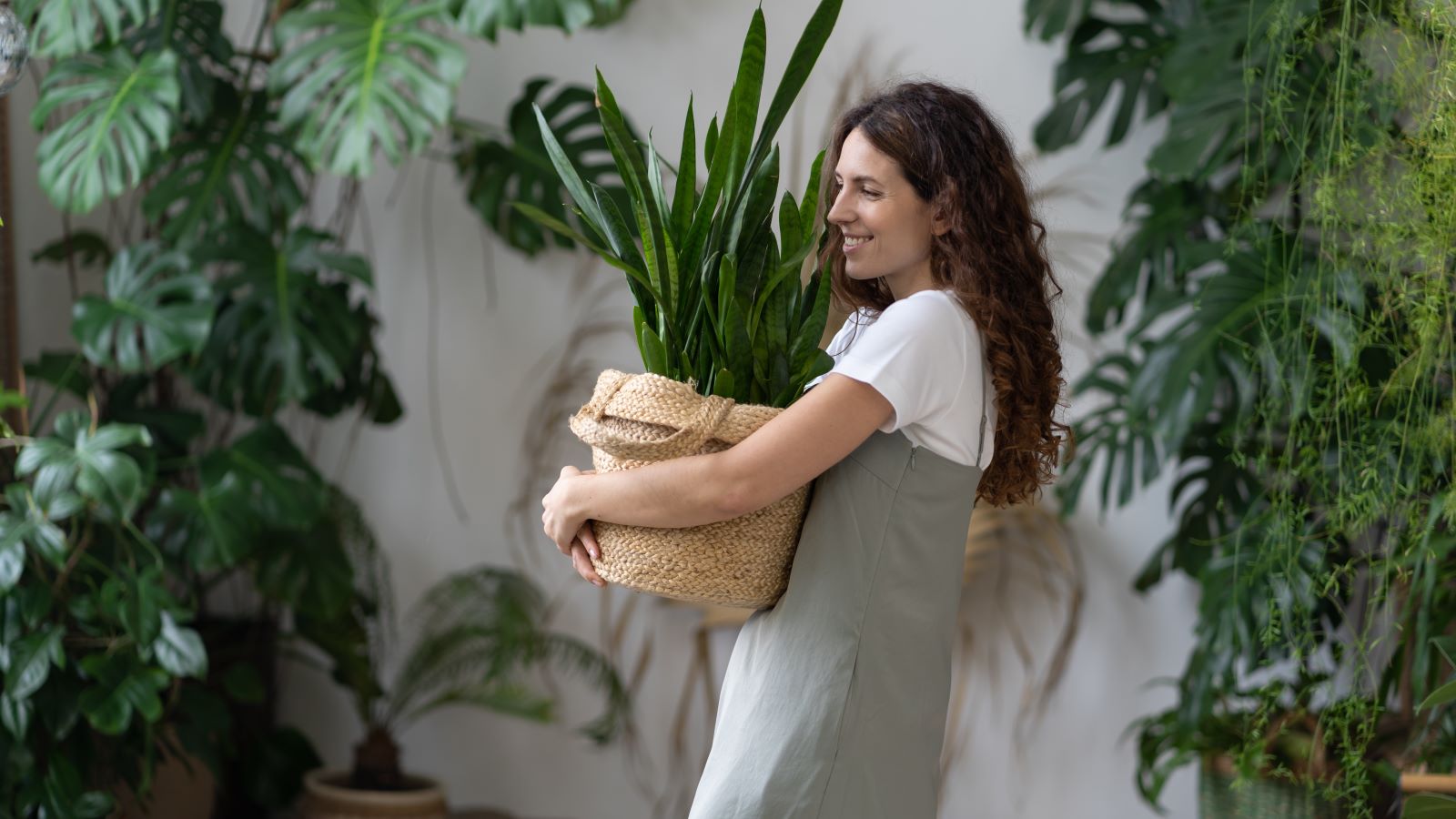
Few interior plants combine sculptural form and durability as effectively as the snake plant. Its upright, sword-shaped leaves introduce strong vertical lines without occupying much floor space. Varieties range from compact rosettes to tall specimens with striped, silver, or yellow-edged foliage.
Snake plants tolerate low light but grow better with brighter indirect light. Their thick leaves and rhizomes store moisture, so the potting mix should dry between waterings. Constantly wet soil is the primary villain in this particular story.
Because it grows vertically, the snake plant fits beside desks, sofas, consoles, and narrow entryways. The main limitation is that it contains saponins and is toxic to cats and dogs, potentially causing nausea, vomiting, or diarrhea. Keep it out of reach in pet-owning households.
For owners who want a plant that looks sophisticated without requesting daily attention, the snake plant is difficult to beat.
Best for: Narrow spaces, modern interiors, and irregular watering schedules.
Avoid when: Pets chew upright leaves.
3. Baby Rubber Plant: Compact, Polished, and Pleasantly Undramatic
Overall rating: 8.8/10
The baby rubber plant, commonly identified as Peperomia obtusifolia, offers thick, rounded leaves in a compact package. Green and variegated cultivars look crisp on desks, nightstands, kitchen counters, and small shelves where larger plants would become inconvenient.
Its fleshy foliage stores some moisture, making it more forgiving of occasional missed waterings than thin-leaved tropical plants. It prefers well-draining soil and indirect light. Overwatering is the most common mistake, so check the soil rather than following a rigid schedule.
Baby rubber plants are included among durable houseplants by university horticultural guidance, and the ASPCA lists the American rubber plant or baby rubber plant as a pet-friendly option. Do not confuse it with rubber trees in the Ficus genus, which are different plants with different safety considerations.
Best for: Small spaces, pet-friendly rooms, and tabletop styling.
Avoid when: You need a tall floor plant or dramatic trailing growth.
2. Spider Plant: Friendly, Forgiving, and Generous
Overall rating: 9.2/10
The spider plant is an excellent all-around interior plant. Its arching striped leaves brighten shelves and hanging baskets, while mature plants produce stems carrying small plantlets. These miniature offspring can be rooted and shared, allowing one purchase to become an expanding family reunion.
Spider plants tolerate average household temperatures and humidity, adapt to several light conditions, and recover reasonably well from minor care mistakes. Bright, indirect light generally produces the fullest growth. Brown leaf tips may develop because of inconsistent watering, mineral accumulation, dry air, or simple botanical stubbornness, but trimming the tips restores a cleaner appearance.
The plant is considered non-toxic to cats and dogs, making it a practical choice for pet-owning households. Cats may still chew the dangling leaves, so hanging placement can protect the plant even when the plant does not need protection from itself.
Its combination of easy propagation, manageable size, pet safety, and relaxed care requirements places it just below the winner.
Best for: Beginners, hanging displays, families, and pet-friendly homes.
Avoid when: You strongly dislike arching or grasslike foliage.
1. Cast Iron Plant: The Best Interior Plant for Real Life
Overall rating: 9.5/10
The cast iron plant earns first place because it succeeds where many decorative plants struggle. Its broad, upright leaves provide rich green texture, while its tolerance for lower light and occasional neglect makes it exceptionally useful in real homes.
Historically called the bar-room plant, Aspidistra elatior became known for surviving dim, less-than-perfect interiors. It grows slowly, which means it will not constantly demand repotting or pruning. That slow pace can test impatient owners, but it also helps the plant maintain a tidy form.
Cast iron plants prefer well-draining soil and should not remain waterlogged. Once established in a suitable location, however, they are among the most durable indoor foliage plants. They are also considered non-toxic to cats and dogs, a major advantage over pothos, snake plants, peace lilies, monsteras, and ZZ plants.
Visually, the cast iron plant offers understated elegance rather than tropical spectacle. It does not produce giant split leaves or vines long enough to tie into decorative bows. Instead, it remains dependable, refined, and quietly attractivethe botanical equivalent of excellent black shoes.
Best for: Low-light homes, pet owners, beginners, and timeless interiors.
Avoid when: You want rapid growth, flowers, or an oversized statement plant.
What About the Houseplant Air-Purifying Claim?
Plants certainly contribute beauty, natural texture, and psychological comfort to indoor spaces. However, they should not be treated as substitutes for ventilation, filtration, or correcting pollution sources. Laboratory studies have shown that plants can interact with certain airborne compounds under controlled conditions, but the U.S. Environmental Protection Agency states that a reasonable number of houseplants has not been shown to remove significant quantities of pollutants in typical homes and offices.
Overwatering can also keep potting soil excessively damp, encouraging microorganisms that may affect sensitive individuals. Buy houseplants because they make a space more enjoyablenot because a social media post promised that one pothos would perform the work of an advanced ventilation system.
How to Select the Best Interior Plant for Your Home
Evaluate the Light Before Visiting the Store
Observe the intended location during the day. A south-facing window usually provides stronger light than a north-facing window, but trees, balconies, neighboring buildings, blinds, and roof overhangs can dramatically reduce actual exposure. Match the plant to the available light rather than buying first and improvising later.
Check Drainage, Not Just the Decorative Pot
A beautiful planter without a drainage strategy can become a stylish container for root rot. Keep the plant in a nursery pot inside the decorative container, or select a planter with a drainage hole and saucer. Empty standing water after irrigation.
Water According to Soil Conditions
Do not assume every plant needs a weekly drink. Test the soil, learn the species’ preferences, and consider seasonal changes. Plants commonly use less water during periods of lower light or slower winter growth.
Quarantine New Plants
Inspect new purchases for scale, mealybugs, spider mites, aphids, whiteflies, and fungus gnats. Keeping newcomers separate for a short observation period can prevent one discounted plant from introducing an entire insect civilization to your collection.
Practical Experience: What Living with Interior Plants Really Teaches You
The first lesson of indoor plant ownership is that attractive styling and successful growing are related but not identical skills. A plant may look perfect beside a dark bookcase in a photograph, yet struggle there because the location receives little usable light. Experienced plant owners gradually stop asking, “Where would this look best?” and start asking, “Where can this live successfully while still looking intentional?” That small change prevents many expensive disappointments.
A common beginner experience involves overwatering. The owner notices one yellow leaf, assumes the plant is thirsty, adds water, and creates three more yellow leaves. More water follows. Soon the roots are sitting in saturated soil while everyone involved becomes increasingly confused. Learning to insert a finger into the potting mix, lift the container to judge its weight, or use a wooden stick to check moisture is far more useful than following a universal calendar.
Another lesson is that plants can be moved too often. A fiddle-leaf fig may begin adjusting to a bright corner, only to be relocated for a dinner party, shifted again during cleaning, and moved a third time because someone saw a better arrangement online. Stable conditions generally produce better results than constant decorative experimentation. When a plant is growing well, resist the urge to improve its life without evidence that improvement is needed.
Dust also matters more than many new owners expect. Broad-leaved plants such as monsteras, ZZ plants, and fiddle-leaf figs gradually collect a visible layer. Wiping the leaves with a damp cloth improves their appearance and makes pest inspections easier. It also creates a mildly humbling moment when the cloth reveals exactly how much dust has been decorating the living room.
Pest management becomes easier when owners inspect plants routinely rather than waiting for obvious damage. Sticky residue can indicate sap-feeding insects, fine webbing may suggest spider mites, and tiny flies hovering over damp soil are often fungus gnats. Early interventionisolating the plant, adjusting watering, rinsing leaves, or using an appropriately labeled treatmentis usually simpler than managing an infestation across twenty pots.
Pet owners quickly learn that “non-toxic” does not mean “immune to destruction.” A spider plant may be safe for a cat, but the cat may not be safe for the spider plant. Hanging baskets, elevated stands, closed rooms, and thoughtful placement protect foliage from chewing, digging, and the mysterious midnight activity that leaves potting mix scattered across the floor.
The most satisfying experience often comes from propagation. A pothos cutting developing roots in water or a spider plant producing its first plantlet makes indoor gardening feel less like decoration and more like participation. Sharing those new plants with friends adds sentimental value that an artificial plant cannot easily imitate.
Finally, successful plant owners accept that occasional failure is normal. A plant may arrive with damaged roots, encounter conditions that cannot be corrected, or simply prove unsuitable for the home. Replacing a struggling high-maintenance species with a cast iron plant, peperomia, or spider plant is not botanical defeat. It is intelligent interior design based on evidence.
Conclusion: The Most Elegant Plant Is the One That Thrives
The best interior plant is not necessarily the rarest, largest, or most photographed. It is the one that suits your room, schedule, household, and experience level. A healthy spider plant in a modest pot will look more elegant than an expensive fiddle-leaf fig slowly dropping leaves behind the sofa.
For maximum durability and pet-friendly practicality, the cast iron plant takes first place. Spider plants and baby rubber plants are excellent alternatives for smaller spaces, while snake plants, ZZ plants, and pothos remain outstanding low-maintenance choices when pet access can be controlled. Boston ferns, calatheas, and fiddle-leaf figs can be spectacular, but they expect more environmental consistency and personal attention.
Start with one plant matched carefully to one location. Learn how quickly its soil dries, observe how it responds to seasonal light, and resist both neglect and excessive affection. Green elegance does not require a jungle. Sometimes it begins with a single plant that is quietly, unmistakably alive.
Note: The ranking reflects suitability for a typical indoor household rather than the inherent value of any species. Plant toxicity and individual pet reactions can vary, so contact a veterinarian or animal poison-control professional whenever ingestion is suspected.