Some summer objects announce themselves with a trumpet. A striped umbrella. A pitcher of sangria. A suspiciously enthusiastic citronella candle. Once Milano’s summery table linens, however, do something quieter and more dangerous: they whisper. They suggest that dinner could be more relaxed, the table could look more collected, and your Tuesday salad could suddenly behave like it has a villa rental in Puglia.
That is the charm of Once Milano table linens. They are not loud luxury. They are the kind of luxury that looks as if it has always belonged there: a linen tablecloth tossed over a wooden table, napkins in sun-faded colors, macramé edging that feels nostalgic without drifting into “grandma’s formal dining room that no one is allowed to enter.” These pieces are soft, tactile, and designed for people who believe a table should be used, not protected behind glass like a museum beetle.
The phrase “Object of Desire” gets tossed around often in design writing, but in this case it fits. Once Milano’s summer linens make a simple promise: with the right cloth, a meal can feel less like eating and more like living well. And no, the pasta does not have to be homemade. The linens are already doing emotional heavy lifting.
Why Once Milano Table Linens Feel So Summery
Once Milano is known for high-quality Italian linen products designed to “dress” the home. The brand works with a sartorial mindset, which means the linens are treated less like disposable table accessories and more like soft furnishings with tailoring, proportion, and personality. Its collections include tablecloths, napkins, runners, placemats, throws, quilts, and home textiles in a wide color palette ranging from understated neutrals to richer seasonal tones.
For summer dining, that matters. Summer tables are rarely perfect. They involve condensation rings, bread crumbs, overexcited guests, and at least one person who believes a tomato salad should be “just a little more dressed.” A good linen tablecloth does not panic under these conditions. It rumples beautifully. It catches the light. It looks better when the table is alive.
Once Milano’s appeal comes from that mix of ease and craft. The pieces often use 100% handmade Italian linen, with details such as fringe, cabana stripes, large borders, gingham checks, scalloped edges, and macramé trims. The result is not a stiff hotel banquet look. It is more like a Mediterranean lunch that wandered into a very tasteful design magazine and decided to stay for dessert.
The Macramé Detail: Granny Style, But Make It Chic
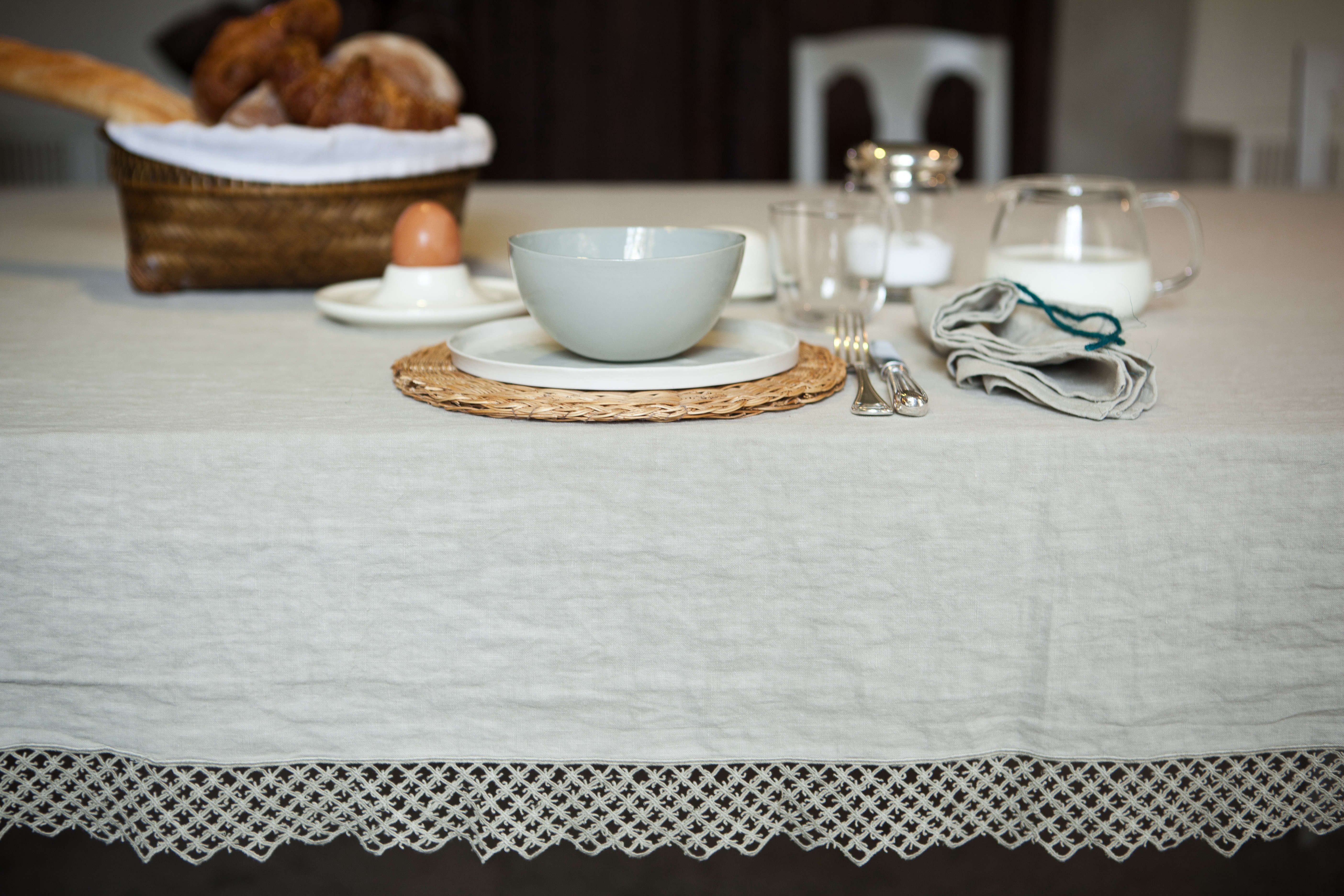
The summery Once Milano pieces that have drawn particular attention are the linen tablecloths and napkins with macramé trim. Macramé can be risky territory. Done poorly, it suggests a plant hanger from 1978 having a midlife crisis. Done well, as Once Milano does it, macramé becomes a border of texture, shadow, and handwork that gives the table a sense of occasion without demanding crystal goblets and perfect posture.
The macramé edging has a lovely contradiction built into it. It feels delicate but not precious, vintage but not dusty, decorative but still practical. On a sunlit table, the openwork trim adds little moments of pattern at the edge of the cloth. It gives the table movement before the food even arrives. A plain linen tablecloth is beautiful; a macramé-trimmed one has a tiny wink.
That wink is what makes these linens so summer-ready. They work for a long lunch outside, a beach-house dinner, a garden brunch, or an indoor meal where the air conditioning is doing its best impression of a sea breeze. They also suit mixed table settings: old plates, modern glassware, mismatched chairs, ceramic pitchers, and flowers that look as if you cut them yourself even if you absolutely bought them at the grocery store.
What Makes Italian Linen Worth Wanting?
Linen has been having a long, well-deserved design moment because it does not try to be flawless. Unlike synthetic fabrics that aim for smoothness at all costs, linen celebrates texture. It has slubs, softness, and a relaxed drape. It wrinkles, yes, but that is not a flaw; it is part of the deal. Linen without wrinkles is like summer without watermelon: technically possible, emotionally suspicious.
High-quality linen is also strong. Flax fibers are known for durability, and linen tablecloths can become softer with washing while keeping their character. This is why linen feels right for pieces you plan to live with for years. A Once Milano tablecloth is not the kind of item you buy because you need “something to cover the table.” It is the kind of item you buy because you want the table to become part of the room’s personality.
Once Milano’s handmade approach adds another layer. Hand-cut, sewn, dyed, and finished textiles often carry slight variations that make them feel human. In a world full of identical home goods, that matters. A handmade linen napkin has a different energy from a paper napkin with a printed lemon on it. One says, “Welcome, stay awhile.” The other says, “Please do not judge me, I bought these in a hurry.”
Color: The Secret Ingredient in a Summer Table
One of the strongest reasons to love Once Milano table linens is the color range. The brand is known for offering both bold and neutral shades, which makes tablescaping feel playful rather than formulaic. You can go tonal with soft ivory, natural linen, taupe, and pale gray. You can lean coastal with light blue, navy, white, and sand. Or you can wake the table up with mustard, red, dark green, or black accents.
For a summery table, color does not need to shout. A pale blue cloth with white plates and clear glassware can feel as refreshing as opening a window. A natural linen tablecloth with dark green napkins looks earthy and grounded. A red-trimmed detail can turn a simple lunch into something charmingly Italian, especially if tomatoes are involved. Tomatoes are basically edible table decor, and we should respect their contribution.
Easy Color Pairings to Try
- Natural linen + white napkins: clean, relaxed, and almost impossible to get wrong.
- Light blue + navy: coastal without becoming nautical-themed theater.
- Ivory + mustard: warm, sunny, and excellent with ceramic dishes.
- Taupe + black: sophisticated, minimal, and perfect for evening meals.
- White + red accents: fresh, cheerful, and ready for pasta night.
How to Style Once Milano Linens Without Overthinking It
The best way to style Once Milano linens is to avoid trying too hard. These pieces already bring texture, softness, and detail, so the rest of the table can stay simple. A linen tablecloth, cloth napkins, a few candles, and a low bowl of fruit can be enough. In fact, too many decorations can fight the quiet elegance of the fabric. Nobody wants the table to look like a craft store sneezed on it.
Start with the tablecloth as the foundation. For summer, let it hang naturally rather than pulling every corner into military alignment. Add napkins in the same shade for a refined look, or choose a related but contrasting color for a more collected feel. If the tablecloth has macramé or fringe, keep the plates simple so the edge detail can be noticed.
Then add layers that feel useful: ceramic plates, glass tumblers, a carafe of water, a bowl of lemons, a bottle of olive oil, or linen placemats if you want more structure. The goal is not perfection. The goal is “effortless,” which, in home design, usually means a little effort arranged to look like none happened. We all agree to maintain the illusion.
Best Uses for Summery Once Milano Table Linens
Outdoor Lunches
A linen tablecloth immediately softens an outdoor table, especially if the furniture is metal, stone, or weathered wood. Once Milano’s lighter linens are ideal for casual lunches because they drape easily and do not feel visually heavy. Add a salad, bread, cold drinks, and a few napkins in a contrasting shade. Suddenly, your backyard has developed opinions about architecture.
Dinner Parties
For a dinner party, a macramé-trimmed or bordered tablecloth gives the table polish without making it stiff. This is especially useful if you want the evening to feel special but not ceremonial. Cloth napkins are the small upgrade that guests notice immediately. They make even takeout look like a choice rather than a scheduling emergency.
Holiday Weekends
Summer holidays are where linen shines. Instead of themed plastic tableware, choose a color story: blue and white for a coastal mood, natural and red for a picnic-inspired table, or ivory and green for a garden dinner. The linens do the seasonal work without relying on tiny flags, novelty plates, or napkins printed with lobsters wearing sunglasses.
Everyday Meals
The most underrated use for beautiful table linens is ordinary dinner. Using linen on a regular weeknight can shift the mood of a meal. It slows things down. It makes the table feel considered. It politely suggests that eating over the sink may not be the life goal we once believed it was.
How to Care for Linen Tablecloths and Napkins
Luxury linens should be beautiful, but they should not make you afraid of marinara sauce. Always follow the care label first, especially with dyed, trimmed, or handmade pieces. In general, linen prefers gentle washing, mild detergent, and lower heat. Cold or lukewarm water is usually safer for preserving color and reducing shrinkage risk. High heat can be tough on linen fibers, so air drying or tumble drying on low is the calmer route.
For stains, act early. Blot instead of rubbing, because rubbing can push the stain deeper and spread it around like gossip at a family reunion. Grease often responds well to a small amount of dish soap before washing. Wine and fruit stains should be treated before the linen goes into the dryer, because heat can set stains. If the piece has macramé, embroidery, fringe, or special trim, treat it gently and avoid aggressive scrubbing.
As for wrinkles, embrace some of them. Linen’s relaxed creases are part of its charm. If you want a crisper table, iron while slightly damp or use a steamer. For storage, make sure the linens are completely dry, then fold them loosely or roll larger tablecloths to reduce hard crease lines. A breathable storage bag is better than trapping fabric in plastic for long periods.
Are Once Milano Table Linens Worth It?
Once Milano is not the budget option, and that is fine. Not every object needs to compete with the sale bin. The value here is in materials, craftsmanship, color, longevity, and the ability to change the feeling of a room with one textile. A tablecloth sounds simple until you see how much it can do. It can soften a space, add color, create intimacy, and turn a meal into an atmosphere.
The best buyer for Once Milano table linens is someone who enjoys hosting, appreciates natural materials, and wants pieces that feel both casual and refined. If you want perfectly wrinkle-free fabric, linen may annoy you. If you want texture, character, and a table that looks better with actual life happening on it, linen is your friend. A charmingly rumpled friend, but a friend.
Design Analysis: Why These Linens Work So Well
The design success of Once Milano’s summery table linens comes from balance. The cloths are decorative, but not fussy. The colors are expressive, but not chaotic. The details feel handmade, but the overall look remains modern. That is a difficult line to walk. Too plain, and the table feels unfinished. Too embellished, and the meal starts to feel like it requires assigned seating and a dress code.
The macramé trim is especially clever because it lives at the edge. It frames the table rather than taking over the center. This means food, flowers, and tableware still get to be the main event. The trim adds a tactile punctuation mark: quiet, pretty, and memorable. It also photographs beautifully, which matters in the age of the “casual dinner” that somehow has eight photos and a caption.
The larger lesson is that table linens are not background items. They are design tools. They affect color, texture, light, and mood. Once Milano understands that a tablecloth is not merely practical; it is architectural in a soft way. It defines the dining area. It changes how objects sit on the table. It can make a rented apartment, a patio, or a small breakfast nook feel intentional.
of Experience: Living With Summer Table Linens
The first thing you learn from using real linen tablecloths in summer is that they make you slightly more civilized without requiring you to become a different person. You can still serve chips from the bag. You can still forget the salad tongs and use two forks. But once a linen cloth is on the table, the whole scene becomes warmer. People sit down a little longer. The meal feels less rushed. Even the water glasses look like they have better posture.
One of the best experiences with summery table linens is the way they handle imperfect settings. A wooden table with scratches looks charming under linen. A folding table becomes respectable. A mismatched set of plates suddenly seems intentional, as if you inherited them from an eccentric aunt with excellent taste. This is where Once Milano’s relaxed elegance makes sense. The linens do not need a perfect room. They help create one.
There is also a sensory pleasure that is hard to explain until you use cloth napkins regularly. Paper napkins are practical, of course, but linen napkins feel personal. They sit better in the lap. They fold naturally beside a plate. They make a simple breakfast of fruit, toast, and coffee feel like a small ritual. In summer, when meals are often lighter and more spontaneous, that ritual matters. It makes the everyday feel cared for without becoming formal.
Outdoor dining is where linen becomes almost magical. A breeze lifts the edges slightly. Sunlight catches the weave. The cloth softens the sound of plates and glasses. If there is a fringe or macramé trim, the detail becomes more visible in natural light. Add a bowl of peaches or tomatoes, and the entire table looks like it is auditioning for a cookbook cover. The best part is that the styling can be incredibly simple. Summer already provides the color; linen just gives it a stage.
Another lesson: do not fear the wrinkle. At first, many people want linen to behave like pressed cotton. This is a losing battle and, frankly, a boring one. Linen’s creases are what make it feel alive. A perfectly ironed linen tablecloth can be beautiful for a formal dinner, but a softly rumpled one is often more inviting. It says, “Come eat,” not “Please admire the table from a safe distance.”
The practical side also improves with habit. You learn to shake the cloth before drying, treat stains quickly, and store napkins where you can actually reach them. You learn which colors you use most. Natural linen may become the weekday favorite. White may come out for guests. Blue may become the official cloth of July. Over time, the linens stop feeling like special-occasion items and become part of how the home works.
That is the real desire behind Once Milano’s summery table linens. It is not only about owning a beautiful object. It is about creating a setting where people want to gather. A tablecloth cannot cook dinner, refill glasses, or stop someone from telling the same vacation story twice. But it can make the table feel generous, relaxed, and ready. In summer, that may be exactly enough.
Conclusion
Once Milano’s summery table linens capture the sweet spot between elegance and ease. The handmade Italian linen, rich color choices, and charming details such as macramé and fringe make each piece feel special without turning the table into a stiff performance. These linens are ideal for warm-weather meals, outdoor gatherings, casual dinner parties, and everyday dining that deserves a little beauty.
If your summer table needs one upgrade, skip the overly themed decorations and start with texture. A linen tablecloth can change the entire mood of a meal. Add cloth napkins, simple plates, a few seasonal ingredients, and maybe a bowl of lemons that looks decorative but is secretly useful. Once Milano proves that the best summer style is not loud. It is soft, sunlit, and just rumpled enough to be interesting.
Editorial note: This article is written for web publication and synthesizes current publicly available product information, design context, and practical linen-care guidance into original editorial content.