Tattoos can be beautiful, hilarious, deeply personal, technically astonishing, or all four at once. A thoughtfully designed sleeve may telle effectively than an entire photo album. Still, not every permanent decision inspires admiration. Some tattoos make observers quietly wonder whether the appointment occurred during a power outage, a breakup, or an unusually aggressive happy hour.
Personal taste remains the main character here. One person’s tattoo turnoff is another person’s masterpiece. Tattoos themselves are now thoroughly mainstream: Pew Research Center found that 32% of American adults have at least one, and most tattooed adults do not regret their ink. Nevertheless, about one-quarter say they have regretted at least one tattoo. /p>
Research also suggests that tattoo regret is more likely when a person was pressured, impaired, tattooed at a young age, experienced complications, or chose highly visible areas such as the face, neck, hands, wrists, or fingers. That does not make visible tattoos inherently unattractive. It simply means permanent art and impulsive decision-making are not always the power couple people imagine. llowing list collects recurring tattoo dealbreakers people mention in conversations about dating, attraction, design quality, cultural respect, and regrettable body art. It judges choices and executionnot anyone’s value as a person.
Why Certain Tattoos Become Instant Turnoffs
People rarely reject a tattoo merely because ink exists on someone’s skin. Their reaction usually comes from what the tattoo communicates. A hateful symbol communicates hostility. A misspelled quote suggests insufficient preparation. A muddy portrait may distract because the viewer cannot decide whether it depicts a beloved grandmother or a tired woodland creature.
Perceptions of attractiveness are also inconsistent. Studies have found that tattoos may increase impressions of confidence, masculinity, power, or dominance while producing mixed ratings for romantic suitability or physical attraction. In other words, a tattoo can make one viewer lean closer and another suddenly remember an imaginary appointment. ment attitudes have also become more accepting. Research involving more than 2,000 Americans found no meaningful overall employment or wage disadvantage for tattooed workers. However, offensive content, extreme visibility, and industry-specific appearance policies may still affect individual situations.
40 Tattoos People Commonly Call Unattractive
-
1. Openly Racist Tattoos
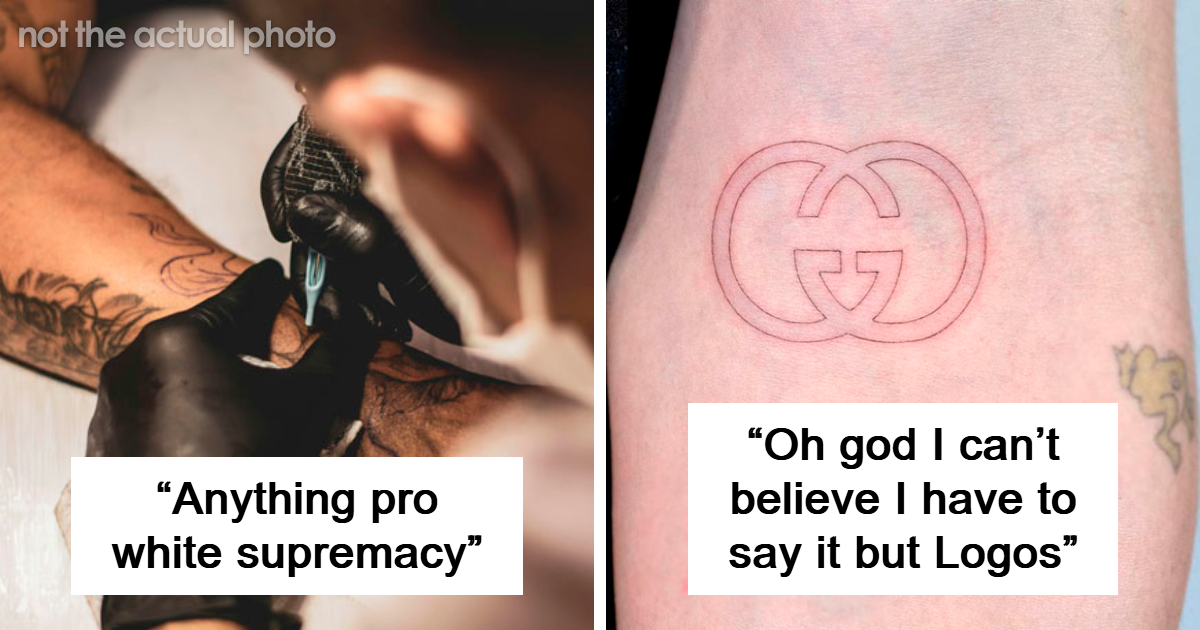
Nothing drains attraction faster than discovering that the mysterious shoulder symbol is not an artistic snowflake but an emblem connected to racial hatred. This is not an aesthetic disagreement. It is a flashing moral evacuation sign.
-
2. Neo-Nazi and White-Supremacist Symbols
Swastikas used in Nazi contexts, “1488,” SS bolts, and related extremist imagery carry serious meanings. Because some ancient or religious symbols have legitimate non-hateful uses, context mattersbut knowingly wearing hate propaganda is an immediate dealbreaker for many people. >
3. Slurs Written in Giant Lettering
A person may describe it as “dark humor,” but permanently displaying a racial, homophobic, or misogynistic slur is less comedy and more public service announcement about whom everyone should avoid.
-
4. Gang Tattoos Worn for Fashion
Copying gang identifiers without understanding them can look reckless, disrespectful, and dangerously uninformed. A design should not require its owner to explain, “Technically, I joined nothing; I just liked the font.”
-
5. A Partner’s Name After Three Dates
Romance is wonderful. Romance with the planning horizon of a microwave timer is less reassuring. Even celebrity tattoo artists commonly advise against tattooing a partner’s name unless the relationship has truly stood the test of time. >
6. An Ex’s Name That Was Never Covered
A visible former partner’s name can make a first date feel unexpectedly crowded. “Ashley” may no longer be in the relationship, but apparently she still has permanent reserved seating.
-
7. A Current Partner’s Name Covering an Ex’s Name
Nothing says emotional stability like “Jessica” stretched over “Amanda,” with three determined roses hiding the archaeological evidence underneath.
-
8. Misspelled Inspirational Quotes
“No ragrets” may have started as a joke, but accidental misspellings remain painful because lettering is supposed to communicate clearly. Spell-check is free. Laser removal is famously not.
-
9. Incorrect Foreign-Language Phrases
A person requests “fearless warrior” and receives “discount chicken lunch.” Even when the translation is less dramatic, choosing a language one cannot read invites errors in grammar, spacing, cultural meaning, and character formation.
-
10. Meaningless “Asian-Inspired” Characters
Combining random Chinese or Japanese characters because they look mysterious often produces nonsense. Languages are communication systems, not a decorative buffet where people can scoop symbols onto an ankle.
-
11. Sacred Symbols Used Without Understanding
Religious and spiritual images may have rules regarding placement, treatment, and meaning. For example, placing certain sacred symbols below the waist can be considered disrespectful. Researching the tradition is more attractive than treating it as exotic clip art. >
12. Indigenous Designs Copied as a Trend
Traditional Native and Polynesian tattoo practices may communicate ancestry, family relationships, status, history, or community identity. Copying culturally specific marks without permission or understanding can turn appreciation into appropriation. >
13. A Design Stolen From Another Artist
Bringing an artist’s custom tattoo to another shop and demanding an exact copy is widely viewed as disrespectful. Inspiration is normal; photocopying someone’s personal artwork onto a new body is not.
-
14. Extremely Graphic Sexual Images
Adults may decorate their bodies however they choose, but explicit imagery displayed in ordinary public settings can make everyone nearby unwilling participants. Consent remains attractive, including visual consent.
-
15. Crude Jokes That Require Constant Explaining
A small visual pun may be charming. A giant anatomical joke that must be demonstrated at every barbecue has the lifespan of a party trick and the permanence of a property deed.
-
16. Threatening Messages Across the Knuckles
Words such as “KILL,” “HATE,” or more elaborate threats may communicate aggression before the person has said hello. First impressions should ideally inspire conversation, not an emergency exit assessment.
-
17. Tattoos Glorifying Serial Killers
A well-executed horror portrait is one thing. Treating a real murderer as a misunderstood celebrity can make others question the wearer’s empathy, judgment, and podcast history.
-
18. Political Slogans Covering the Face
Political beliefs can be deeply important. Still, turning one’s forehead into a campaign billboard guarantees that every coffee order, interview, wedding photo, and dentist appointment becomes a debate stage.
-
19. Impulsive Face Tattoos
Face tattoos can be intentional, culturally meaningful, and beautifully executed. The unattractive version is the sudden 3 a.m. decision made without considering placement, career, healing, or whether the design resembles a startled worm.
-
20. Giant Forehead Lettering
The forehead offers excellent visibility and virtually no escape route. If the chosen word is misspelled, offensive, or associated with a temporary trend, every future introduction begins with an unplanned discussion.
-
21. Crime-Associated Symbols Chosen Casually
Some teardrops, dots, numbers, crowns, and webs have different meanings depending on location and context. Wearing one because it “looked tough” can create misunderstandings far more serious than a bad dating profile photo.
-
22. Neck Tattoos That Ignore Body Shape
A strong neck tattoo should work with the jawline, throat, shoulders, and natural movement. A badly placed design may look like it slid downward while the artist briefly checked a text message.
-
23. Ultra-Detailed Finger Tattoos
Finger tattoos experience frequent washing, friction, sweating, bending, and skin shedding. Intricate designs may fade, blur, or require repeated touch-ups, eventually transforming elegant lettering into an encrypted password. >
24. Wedding-Ring Tattoos From Unstable Relationships
Ring tattoos can be meaningful, but fingers are difficult placements and relationships can change. A rushed ring tattoo may fade faster than the marriage yet remain visible longer than the shared streaming subscription.
-
25. Badly Drawn Human Portraits
Portrait tattoos demand excellent anatomy, proportion, shading, and likeness. When those skills are missing, a tribute to a parent may resemble Nicolas Cage being surprised inside a wind tunnel.
-
26. Unrecognizable Baby Portraits
Babies already have subtle features, which makes them difficult portrait subjects. Poor shading can produce a tiny elderly politician, an angry potato, or a child who appears to know everyone’s tax secrets.
-
27. Pet Portraits With Human Teeth
A beloved dog deserves a great memorial. Unfortunately, inaccurate eyes, crowded whiskers, and strangely realistic teeth can make a golden retriever look prepared to negotiate a mortgage.
-
28. Celebrity Faces Covering Huge Areas
Admiration can change quickly when a celebrity’s behavior, reputation, or cultural relevance changes. A poster can be removed from a wall. A seven-inch celebrity portrait requires more complicated interior renovation.
-
29. Realistic Eyes Placed Everywhere
One carefully rendered eye may be striking. Twelve eyes scattered across the chest can make intimacy feel like a performance review conducted by an ancient council.
-
30. Random Patchwork With No Visual Rhythm
Patchwork tattoos can look fantastic when spacing, scale, and style are considered. Problems begin when unrelated images collide like refrigerator magnets during an earthquake.
-
31. No Negative Space Between Designs
Skin provides breathing room and contrast. Filling every available inch without a larger plan can make separate tattoos blend into one dense visual paragraph written entirely without spaces.
-
32. Giant Corporate Logos
A small nostalgic brand reference may be playful. A massive energy-drink, fast-food, or technology logo can make the person look less like an individual and more like sponsored content awaiting a disclosure label.
-
33. Cryptocurrency and Investment Tattoos
Markets move. Memes disappear. Companies collapse. Tattooing a financial trend at its peak can turn the body into a permanent chart showing exactly when optimism defeated due diligence.
-
34. Internet Memes With a Six-Month Shelf Life
Today’s funniest image may become tomorrow’s forgotten digital fossil. Before tattooing a meme, consider whether it will still make sense after three platform migrations and one generation of slang replacement.
-
35. QR-Code Tattoos That Do Not Scan
Skin curves, stretches, ages, and moves. Ink spreads slightly over time. A QR code that worked on appointment day may eventually direct viewers to nothing except an awkward scanning exercise.
-
36. Incorrect Dates, Coordinates, or Roman Numerals
A memorial date with the wrong year or coordinates pointing to a warehouse parking lot creates a special category of regret. Numbers deserve the same proofreading attention as wordspreferably from multiple sober adults.
-
37. Designs Facing the Wrong Direction
Orientation depends on the design and the wearer’s intention, but figures and animals usually look more balanced when they face into the body rather than appearing desperate to escape through the nearest elbow.
-
38. Tiny Details Packed Into Too Little Space
Fine-line tattoos can be elegant, yet extremely small faces, text, and architectural scenes may lose clarity as ink settles and skin changes. A cathedral should not eventually resemble a barcode with emotional significance.
-
39. Blown-Out Lines and Muddy Color
Ink placed too deeply may spread beneath the skin, creating blurry halos. Uneven saturation, scarred lines, and poorly blended color can make an otherwise good concept look permanently out of focus.
-
40. Neglected, Irritated, or Infected Tattoos
A fresh tattoo is a healing wound. Spreading redness, worsening pain, pus, fever, open sores, or severe rashes require medical attentionnot another layer of scented lotion and positive thinking. The FDA and American Academy of Dermatology warn that contaminated ink, unsterile equipment, infections, and allergic reactions are genuine risks. >
How to Avoid Getting a Tattoo Peopleand YouMay Dislike
Wait Longer Than Your Impulse Wants You To
Keep the proposed design as your phone background for several weeks. Print it. Look at it upside down. Imagine explaining it to a future partner, child, employer, and eighty-year-old version of yourself. A strong idea usually survives this test. An impulsive one begins to feel like a stranger who has overstayed a weekend visit.
Choose the Artist for the Style
A brilliant traditional artist may not be the right person for microrealism, just as an expert lettering artist may not specialize in watercolor. Study healed work, not only fresh photographs. Fresh tattoos are swollen, glossy, and highly saturated; healed tattoos reveal line stability, color retention, and actual craftsmanship.
Ask About Placement and Aging
Hands, fingers, feet, joints, and high-friction areas can fade or blur faster. Fine details require enough space to remain readable. A responsible artist may recommend increasing the size, simplifying the design, or moving it to a more suitable location. That advice is not an attempt to ruin the idea. It is usually an attempt to save it.
Use a Licensed, Hygienic Studio
Confirm that the artist uses sterile single-use needles, fresh barriers, clean work surfaces, appropriate gloves, and reputable inks. Follow the aftercare instructions carefully. Medical organizations emphasize that even sealed tattoo inks have sometimes contained microorganisms, so professional hygiene and prompt attention to unusual symptoms remain important. stand Removal Before Assuming It Is an Eraser
Laser removal may require multiple treatments and can be painful, expensive, and time-consuming. Dermatologists also warn that unproven removal creams may contain harsh acids that cause burns, rashes, or permanent scars without removing the tattoo.
Experiences That Reveal Why Tattoo Attraction Is Complicated
Real-world tattoo experiences rarely fit into the simple categories of “hot” and “unattractive.” More often, the reaction depends on the story, execution, timing, and way the owner treats other people. The following situations reflect common patterns reported by tattooed adults, artists, removal patients, and people navigating relationships.
The Beautiful Tattoo With an Uncomfortable Origin
Consider someone who notices an intricate geometric design on a date’s arm. At first, the craftsmanship is impressive. Then the owner explains that the pattern was copied directly from a ceremonial tattoo belonging to an Indigenous person seen in a documentary. He cannot name the community, describe the symbol, or explain why it mattered. The attraction does not disappear because the lines are ugly; it fades because the story reveals carelessness. A visually beautiful tattoo can become less appealing when it treats another culture’s identity as decoration.
The Amateur Tattoo That Became Surprisingly Lovable
Now imagine the opposite. A woman has a tiny, uneven star on her ankle, tattooed decades ago by a close friend during their art-school years. Technically, the points are inconsistent. One line is slightly thicker. A professional artist could improve it in fifteen minutes. Yet she keeps it because the friend later passed away, and the imperfect star preserves a joyful afternoon they shared. Many observers find the story more attractive than flawless execution. Meaning does not automatically excuse poor quality, but it can completely transform how a design is perceived.
The Relationship Name That Outlived the Relationship
A common regret begins with confidence: “We are different. We will always be together.” The name is tattooed prominently, often during the most intense stage of the relationship. Months or years later, the relationship ends. The owner must choose between explaining the name, covering it with a much larger design, or beginning laser sessions. Artists repeatedly describe names, rushed placement, and hurried design decisions as common sources of tattoo regret. perience can still end positively. A skilled cover-up artist may transform old lettering into a flower, animal, ornamental panel, or abstract design. The new tattoo then represents recovery rather than embarrassment. The lesson is not that every relationship tattoo is doomed. It is that permanent declarations deserve more planning than ordering matching phone cases.
The Visible Tattoo That Did Not Ruin a Career
Another familiar experience involves a young professional anxiously hiding forearm tattoos before an interview. The person expects immediate rejection, but the workplace is unconcerned as long as the designs are non-offensive and the employee performs well. This experience reflects broader labor research indicating that tattoos do not automatically reduce employment or earnings in the modern American workforce.
However, content and context still matter. A floral sleeve and a threatening forehead slogan do not create identical impressions. Customer-facing roles, safety requirements, uniforms, and company policies can also influence what must be covered. The practical lesson is to research an industry’s norms rather than relying on either extreme claim that tattoos always destroy careers or never matter at all.
The Cheap Tattoo That Became Expensive
Many regret stories start with a tempting bargain. Someone chooses an inexperienced artist because the price is low and the appointment is available immediately. The resulting tattoo has crooked lines, uneven depth, and color packed so aggressively that the skin scars. Fixing it later may require consultations, laser fading, and a complex cover-up by a specialist.
The original bargain can therefore become the most expensive possible route. Good tattooing pays for expertise, equipment, sanitation, design time, and the judgment to say, “This idea will not age well.” That final servicethe willingness to refuse or revise a bad conceptmay be the most valuable part of the appointment.
The Tattoo Everyone Hated Until They Understood It
Finally, some tattoos receive instant criticism because they appear strange, severe, or unconventional. After learning that the design covers a surgical scar, marks recovery from addiction, honors a deceased sibling, or helps someone reclaim ownership of their body, observers often reconsider.
That change does not prove every tattoo must be admired. Attraction remains personal. It does demonstrate that a tattoo is only one fragment of a human being. The most appealing quality may not be the ink itself but the thoughtfulness, humor, resilience, or empathy behind it.
Conclusion: Bad Ink Is Usually About the Decision, Not the Person
The tattoos most frequently described as instant turnoffs tend to share predictable problems: hateful meaning, cultural disrespect, reckless timing, copied artwork, poor craftsmanship, unsuitable placement, or inadequate aftercare. Simply being tattooed is not the issue. Millions of people wear thoughtful, well-executed body art without regretting it or suffering meaningful professional consequences.
Before committing, research the imagery, verify every letter and number, choose an artist whose healed portfolio matches the desired style, and allow enough time for the idea to mature. Tattoos can change with skin, fashion, relationships, and personal identity. The best designs leave room for that future instead of forcing future-you to finance an elaborate cover-up featuring an unusually large raven.