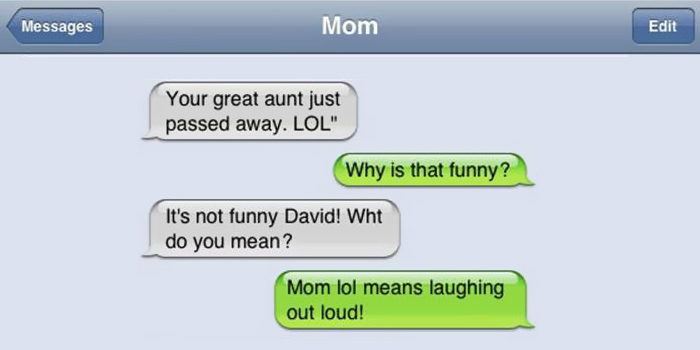
Parents texting is one of modern family life’s greatest sitcoms. It begins innocently enough: Mom wants to ask whether you ate lunch, Dad needs to know how to “open the Wi-Fi,” and suddenly the family group chat looks like a live transcript from mission control, a neighborhood watch meeting, and a confused emoji convention all at once.
Of course, parents can text. Texting is useful, quick, and sometimes safer than calling. A simple “I’m outside,” “call me when you can,” or “love you” can make a day better. But when parents text without context, punctuation, timing, privacy awareness, or emoji literacy, the results can be hilarious, stressful, confusing, and occasionally dangerous. That is why the title is funnybut the topic has a real point.
Research and digital safety guidance from organizations such as the American Academy of Pediatrics, Pew Research Center, the FTC, FCC, NHTSA, Mayo Clinic, Cleveland Clinic, Child Mind Institute, Harvard Medicine, and Common Sense Media all point toward the same bigger truth: technology works best when it supports real communication instead of replacing it. So, with love, laughter, and deep respect for every parent who has accidentally sent “LOL” after hearing bad news, here are 22 reasons why parents shouldn’t textat least not without supervision, spell-check, and maybe a responsible adult child nearby.
Why Parents Texting Became a Family Comedy Genre
Texting has become a default language for families. Teens use it to coordinate plans, adults use it to manage logistics, and grandparents use it to ask why the screen “turned angry.” The problem is that texting removes tone, facial expression, timing, and context. A message that sounds caring in person can look like an FBI investigation on a phone screen: “Where are you.” No question mark. No emoji. Just pure parental surveillance energy.
Parents also came of age in a different communication world. Many grew up with landlines, handwritten notes, answering machines, and the thrilling drama of waiting three days for someone to call back. Today’s instant messaging culture rewards speed, brevity, and meme fluency. That gap creates misunderstandings, but it also creates comedy gold.
22 Reasons Why Parents Shouldn’t Text
1. Autocorrect Becomes a Tiny Chaos Machine
Parents may type one thing, autocorrect may choose another, and the family may spend the next six hours recovering emotionally. “Bring home milk” becomes “Bring home Mike.” “Dinner is ready” becomes “Dinosaur is ready.” Suddenly everyone is confused, and Mike is worried.
2. Emoji Translation Is Not Their Strongest Subject
Parents often use emojis with the confidence of a person defusing a bomb while wearing oven mitts. A skull emoji might mean “I’m laughing” to a teenager, but to a parent it may mean “Why are you sending me death?” Meanwhile, Mom may send the eggplant emoji because she is literally cooking eggplant. No one is safe.
3. “LOL” Does Not Always Mean What They Think It Means
For years, many parents believed “LOL” meant “lots of love.” This has caused some of the most tragicomic messages in texting history. “Grandpa is in the hospital LOL” is not heartlessit is a technology translation disaster wearing reading glasses.
4. They Turn One Simple Question Into a Court Hearing
A teenager texts, “Going to Jake’s.” A parent replies, “Who is Jake? Where does Jake live? Are Jake’s parents home? What is Jake’s last name? Does Jake have a dog? Is the dog vaccinated?” This is not texting anymore. This is a background check with snacks.
5. They Send One Word That Feels Terrifying
Nothing freezes a child’s soul faster than a parent texting, “Call.” Not “Call me when you have a chance.” Not “Everything is fine.” Just “Call.” That single word can make a person mentally review every mistake they have made since kindergarten.
6. They Text During School Hours
Parents often text because they care, but constant messages during class can distract students and make school phone rules harder to follow. If it is urgent, contacting the school office is usually better. If it is not urgent, the message can wait. “Did you remember your water bottle?” does not need to interrupt algebra.
7. They Accidentally Create Family Group Chat Warfare
Family group chats begin with good intentions and end with 47 unread messages, three unrelated prayer hands emojis, one blurry photo of soup, and an uncle asking who “changed the font.” Parents should text carefully in groups because every message becomes a public performance.
8. They Use Punctuation Like Emotional Weapons
“Okay.” from a parent can feel colder than winter in Alaska. “Fine.” feels like the beginning of a documentary about family betrayal. Texting does not carry tone well, so normal punctuation can sound angry, disappointed, or suspicious. Sometimes a period is just a period. Sometimes it feels like judgment in black ink.
9. They Reply to Old Messages Three Days Later
A child texts, “Can you pick me up?” Three days later, Dad replies, “Where?” This is how families accidentally invent time travel. Texting works best when timing matters less, not when someone is standing outside a closed gym holding a backpack and losing faith in civilization.
10. They Forward Everything
Parents love forwarding warnings. Some are useful. Many are digital folklore wearing a fake badge. Scam alerts, miracle cures, fake coupons, fake delivery notices, and “send this to ten people” messages can spread quickly. The FTC and FCC regularly warn consumers about spam texts, robotexts, smishing, and impersonation scams, so forwarding without checking can turn a family chat into a misinformation sprinkler.
11. They Click Suspicious Links
Text scams often pretend to be banks, delivery companies, government offices, or stores. Parents may click because the message looks official or urgent. A safer rule is simple: do not click links from unexpected texts. Go directly to the company’s official app or website instead. If a message says, “Your account will explode in 10 minutes,” that is not customer service. That is a scam wearing a tiny hat.
12. They Text While Driving
This one is not funny. Texting while driving is dangerous for everyone, including parents, teens, passengers, pedestrians, and other drivers. Safety agencies consistently warn that phone use behind the wheel increases crash risk. Parents also model driving behavior for their children, so “Do as I say, not as I text at red lights” is not a strong family policy.
13. They Think Every Message Requires an Immediate Reply
Some parents treat texting like a digital doorbell that must be answered instantly. But constant notifications can raise stress and interrupt school, work, sleep, and family time. Healthy texting etiquette includes patience. A delayed reply is not always disrespect. Sometimes the person is driving, studying, working, showering, or trying to experience one complete thought.
14. They Send Voice-to-Text Messages Without Proofreading
Voice-to-text is helpful until it turns “Please buy chicken” into “Police my chicken.” Parents often trust dictation too much. The phone hears background noise, accents, dogs, blenders, and emotional breathing. The result is a message that reads like a riddle from a confused wizard.
15. They Use Texting for Serious Conversations
Some conversations deserve a voice, a face, or at least a little emotional oxygen. Arguments, discipline, bad news, apologies, and sensitive family issues can become worse through text because tone is easy to misread. A caring message can feel cold, and a brief message can feel dismissive. Parents should save serious talks for a call or in-person conversation whenever possible.
16. They Accidentally Share Private Information
Parents may text addresses, passwords, medical updates, school details, travel plans, or personal family news without thinking about privacy. Phones can be lost, screens can be seen, and screenshots can travel. Good digital habits include limiting sensitive details in text messages and avoiding anything that should not be forwarded, saved, or read by the wrong person.
17. They Mistake Monitoring for Communication
There is a difference between staying connected and running a remote-control childhood. Texting can become constant checking: “Where are you?” “Who are you with?” “Send photo proof.” Parents need safety boundaries, especially with younger teens, but over-texting can weaken trust and independence. Good parenting uses texting as a bridge, not a leash.
18. They Break Their Own Screen-Time Rules
Many parents tell children to put the phone away while holding their own phone like a sacred artifact. Kids notice. Pediatric guidance often encourages screen-free zones such as meals, homework, bedtime, and family time. If parents want children to build healthy digital habits, they must model them. The family rule cannot be “No phones at dinner, except Dad checking fantasy football like national security depends on it.”
19. They Accidentally “Phub” Their Kids
Parental phubbing means snubbing a child by focusing on a phone instead of the child. Research on family technology use has linked this habit with weaker connection and more emotional strain. Kids need eye contact, attention, conversation, and the feeling that they matter more than a notification. The phone can wait. The child telling a seven-minute story about a playground bug probably cannot.
20. They Create Confusing Digital Boundaries
Parents may text late at night, early in the morning, during work, during school, and during social events. Then they wonder why their children struggle to unplug. Clear family texting boundaries help everyone. For example: no non-urgent texts during class, no angry texts after bedtime, no phone use while driving, and no group chat debates before coffee.
21. They Turn Small Problems Into Big Text Storms
A missing jacket becomes 19 messages. A low phone battery becomes a dramatic survival thread. A forgotten permission slip becomes a digital weather emergency. Texting makes it easy to overreact quickly. Sometimes the best parenting move is to pause, breathe, and ask, “Does this need a text, a call, or absolutely nothing?”
22. They Are Too Lovable to Be Trusted With a Keyboard
The final reason is the sweetest one: parents text because they care. They want to protect, remind, encourage, warn, support, and occasionally ask what “rizz” means. Their texting fails are funny because they are human. Behind every weird emoji and accidental all-caps message is usually loveslightly scrambled by autocorrect.
When Parents Actually Should Text
Despite the jokes, parents should not throw their phones into the nearest lake. Texting can be valuable when used well. It is excellent for quick logistics, safety check-ins, pickup times, appointment reminders, grocery requests, and short encouragement. A simple “Good luck today” can mean a lot. A quick “I’m proud of you” can stay in a child’s memory longer than parents realize.
The key is knowing what texting can and cannot do. Texting is efficient, but it is not always emotionally rich. It can coordinate, but it cannot replace presence. It can support a relationship, but it cannot carry the whole relationship on its tiny digital back.
Better Texting Rules for Parents
Keep Messages Clear
Parents should use complete thoughts when possible. “Call” can become “Call me when you’re free. Nothing urgent.” That one extra sentence can save a child from imagining a disaster movie.
Respect Timing
Avoid non-urgent texts during school, work, driving, sleep, and family time. If the message can wait, let it wait. Urgency should be reserved for actual urgent situations, not for asking whether someone wants leftover lasagna.
Use Texts for Logistics, Not Lectures
Texting is not the best place for long emotional speeches. If a message requires six paragraphs and three “another thing” sections, it probably deserves a conversation.
Check Before Forwarding
Before sending a warning, coupon, health claim, or shocking news item, parents should verify it. Scam texts and misleading messages are common. A healthy family chat should not become a museum of panic.
Model the Behavior You Expect
Parents who want kids to avoid texting while driving, sleep without notifications, and enjoy screen-free meals should practice those habits too. Children learn from rules, but they learn even faster from examples.
Experiences Related to “22 Reasons Why Parents Shouldn’t Text”
Almost every family has at least one legendary parent-texting story. These stories get repeated at holidays, usually after someone says, “Remember when Dad tried to text the plumber and sent it to the entire family?” The room laughs because the situation is familiar. Parent texting mistakes are not just random accidents; they reveal how families adapt to new technology together.
One common experience is the “wrong chat” disaster. A parent wants to send a private message to one child but accidentally posts it in the family group. Suddenly, everyone knows who forgot to clean the garage, who is bringing salad, and who is “being difficult today.” The lesson is simple: always check the recipient before sending. The family group chat has witnesses, and witnesses have screenshots.
Another classic experience is the dramatic typo. A parent might text, “I am picking up your brother from soccer,” but autocorrect changes one word and creates a sentence that sounds like a police report. The child replies, “What?” The parent replies, “You know what I mean.” But nobody knows what anyone means anymore. This is why proofreading is not just for school essays. It is also for preserving family peace.
Then there is the emotional over-text. A parent sends one reminder, then another, then a follow-up, then a question mark, then “Hello????” The child finally replies, “I was in class.” This pattern is common because parents often interpret silence as danger, disrespect, or rebellion. In reality, silence may simply mean the child is busy. Families can reduce stress by agreeing on response expectations. For example, “Reply when safe and available” is healthier than “Reply before my anxiety starts writing a screenplay.”
Parents also often experience the “emoji misunderstanding.” A mom sends a crying-laughing emoji to show support, but the situation is not funny. A dad sends a thumbs-up after a heartfelt confession, accidentally sounding like a corporate manager approving a spreadsheet. Emojis can soften messages, but they can also confuse them. When emotions matter, words are better than tiny yellow faces.
Many families also discover that texting can create distance while pretending to create connection. A parent may text a child all day but barely talk at dinner. Or a child may answer every message but still feel unheard. Real connection usually happens in slower moments: cooking together, driving without phones, walking the dog, sitting at the table, or having a conversation that is not interrupted by notifications. Texting can open the door, but family presence is what walks through it.
The best experience, however, is when parents learn to text with warmth and restraint. A short good-morning message, a funny photo of the family dog, a calm check-in, or a simple “I love you” can be wonderful. Parents should not stop texting completely. They should text like people who understand that every message carries tone, timing, privacy, safety, and relationship impact. In other words, text with lovebut maybe ask someone younger before using a mysterious emoji.
Conclusion
Parents should not text recklessly, dramatically, mysteriously, constantly, or while driving. They should not use texting to replace real conversations, monitor every movement, spread unverified warnings, or turn punctuation into emotional suspense. But parents should text thoughtfully. A well-timed message can comfort, guide, remind, and connect.
The real lesson behind “22 Reasons Why Parents Shouldn’t Text” is not that parents are bad at technology. It is that technology is bad at carrying the full weight of family communication. Texting is a tool, not a relationship. Used wisely, it helps families stay close. Used poorly, it creates confusion, comedy, and group chat trauma. So parents, please keep textingbut proofread first, avoid suspicious links, stop texting at red lights, and remember: “LOL” does not mean “lots of love.” The children are begging you.
Note: This article is written in original standard American English and synthesizes real digital safety, family communication, screen-time, scam-prevention, and distracted-driving guidance from reputable U.S. organizations without inserting source links into the publishable HTML.