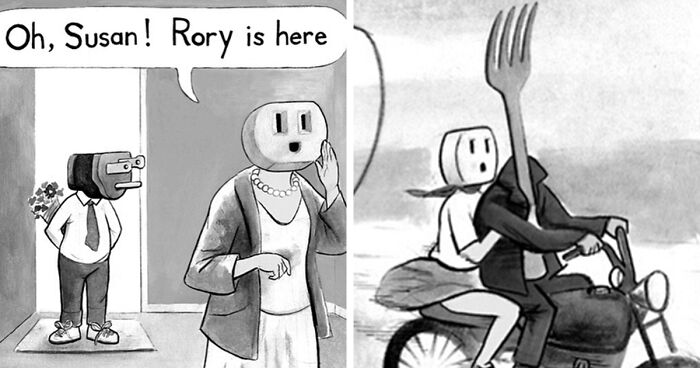
Some comics want to make you smile. Some comics want to make you think. And then there is The Perry Bible Fellowship, the legendary webcomic that politely invites you into a cute little joke, offers you tea, compliments your shoes, and then drops a grand piano of existential dread directly onto your emotional furniture.
Created by Nicholas Gurewitch, The Perry Bible Fellowship, often shortened to PBF, has become one of the most recognizable names in surreal webcomic humor. Its strips are usually short, elegant, and deceptively simple. A few panels introduce a cheerful fantasy, a cozy domestic scene, a heroic quest, or a perfectly harmless misunderstanding. Then the final beat arrives, and suddenly the joke has teeth. Big teeth. Possibly belonging to a monster that was disguised as a birthday cake.
The reason these Perry Bible Fellowship comics still feel fresh is not merely that they are dark. Lots of comics can be dark. PBF is different because it hides its darkness inside sweetness, visual beauty, and ruthless timing. It can look like a children’s book, a vintage newspaper strip, a sci-fi poster, or a delicate storybook illustration, only to end with a punchline that feels like a trapdoor opening under your chair.
So let’s take a deep, slightly nervous dive into why these hilarious comics with unexpectedly dark endings remain internet classics, and why 15 more of them are always welcome for readers who enjoy laughing first and questioning their life choices immediately afterward.
Why Perry Bible Fellowship Comics Hit So Hard
The magic of PBF comes from contrast. Gurewitch often builds a world that seems innocent, whimsical, or familiar. A knight is brave. A child is curious. A monster may be adorable. A scientific invention might look helpful. A fairy-tale moment seems ready to sparkle. Then, in the final panel, the strip quietly reveals that the innocent premise was actually leaning toward disaster the entire time.
This structure makes the reader participate in the joke. We assume the story is moving in one direction because comics, cartoons, and fairy tales have trained us to expect tidy outcomes. PBF uses that training against us. It gives us just enough information to feel safe, then flips the meaning of the whole strip with one expression, one object, one line of dialogue, or one brutal visual reveal.
That is why the endings feel so memorable. They are not random. They are engineered. A good PBF comic does not simply say, “Surprise, something bad happened.” It says, “Surprise, the bad thing was hiding in the premise all along, and you helped carry it into the room.”
15 More Reasons These Dark PBF Comics Are So Addictive
1. The Cute Artwork Makes the Darkness Even Worse
One of PBF’s greatest tricks is using soft, charming visuals to prepare readers for something completely unsoft and uncharming. A strip may begin with round little characters, bright colors, or a friendly fantasy setup. The art says, “Relax, this is safe.” The ending says, “Actually, please file a report with your therapist.”
That contrast is comedy gold. The darker ending works because the setup feels harmless. It is the cartoon equivalent of opening a pastel gift box and finding a tiny, well-dressed skeleton inside.
2. The Punchlines Are Fast, Clean, and Merciless
PBF rarely wastes space. Many strips unfold in three or four panels, and that compression creates serious comic pressure. There is no room for long explanation, no cozy paragraph telling readers what to feel. The joke arrives quickly, usually with the confidence of a magician who knows exactly which pocket contains the dove and which pocket contains the existential crisis.
This is why PBF works so well online. The strips are short enough to read instantly but sharp enough to stay lodged in the brain for years.
3. The Humor Often Turns on Moral Irony
Many PBF comics are funny because someone misunderstands the moral shape of the world. A character thinks they are doing something noble, clever, romantic, or heroic. The ending reveals that the result is horrifying, selfish, tragic, or simply absurd. The joke is not just “bad thing happens.” It is “bad thing happens because someone confidently misread the universe.”
That is a painfully human kind of humor. We have all made plans that looked brilliant in our heads and then collapsed in public while making a noise like wet cardboard.
4. The Strip Loves Fairy Tales, Then Sets Them on Fire
PBF frequently borrows the grammar of fairy tales: wishes, magic creatures, enchanted objects, brave children, strange kingdoms, and impossible bargains. But instead of giving us a comfortable bedtime-story ending, it often reveals the disturbing logic hiding underneath the fantasy.
What happens when magic works too literally? What if the noble quest is pointless? What if the monster is not the scariest thing in the room? PBF takes those questions and turns them into tiny comic grenades.
5. The Science Fiction Jokes Are Sneakily Bleak
PBF’s sci-fi strips are especially effective because science fiction already invites big ideas: space travel, artificial intelligence, evolution, time, alien life, and human ambition. Gurewitch uses those big ideas to reveal small human foolishness. A futuristic invention may solve one problem while creating a much worse one. A cosmic discovery may make humanity look less impressive than we hoped.
The result is a kind of nerdy doom-comedy. It is funny because it feels clever, and it is dark because the cleverness usually arrives one second too late.
6. Characters Often Realize the Truth Too Late
A classic PBF ending is the face of realization. Someone sees what is happening, understands the full horror, and has absolutely no time to fix it. That tiny moment between understanding and consequence is where many of the best dark punchlines live.
It is not only the bad outcome that makes us laugh. It is the character’s final awareness. Their expression says, “Ah. So this is how the joke gets me.” Readers laugh because they arrived at the same conclusion at the exact same time.
7. The Comic Can Be Brutal Without Feeling Lazy
Dark humor can become cheap when it relies only on shock. PBF usually avoids that trap because its darkness is tied to structure, irony, and visual design. The ending is shocking, yes, but it also makes the setup smarter in retrospect.
That is the difference between a comic that merely wants to offend you and a comic that wants to rearrange your expectations. PBF’s best endings do not just slap a dark twist onto a scene. They reveal that the whole strip was built for that twist from the first panel.
8. The Art Style Refuses to Stay Still
One of the joys of reading PBF is never knowing what it will look like next. Some strips are simple and iconic. Others are elaborate, painterly, or strangely elegant. This changing visual language keeps readers alert. You cannot settle into one formula because the comic keeps changing costumes.
That variety also helps the dark endings land. A lush fantasy scene can make a cruel joke feel mythic. A minimal sketch can make a punchline feel cold and surgical. PBF chooses the visual style that best sharpens the blade.
9. The Humor Rewards a Second Read
Many Perry Bible Fellowship comics become funnier the second time because the reader can see the trap being assembled. A small detail that seemed decorative suddenly becomes important. A line that sounded innocent becomes suspicious. A character’s expression becomes a warning sign waving frantically in the background.
This re-readability is one reason PBF has maintained such a strong cult following. The comics are quick snacks, but they are layered like lasagna made by a very talented pessimist.
10. The Endings Are Dark, But Not Always Hopeless
It is easy to describe PBF as simply twisted, but that misses the tenderness hiding inside some of the work. Certain strips are dark because they recognize grief, loneliness, fear, or human weakness. The joke may be sharp, but the observation underneath can be strangely compassionate.
That emotional complexity keeps the comic from becoming one-note. Sometimes the ending makes you laugh. Sometimes it makes you wince. Sometimes it does both, which is the official emotional posture of reading PBF in public.
11. PBF Understands the Comedy of Bad Systems
Some of the funniest PBF comics are not about one foolish person but about a world that runs on terrible logic. A society accepts something absurd. A rule produces monstrous consequences. A tradition seems normal until the ending exposes how strange it really is.
This kind of humor ages well because readers can apply it to many parts of real life. Bureaucracy, technology, war, romance, advertising, and family expectations can all look perfectly reasonable until someone draws the final panel.
12. The Strip Knows When Silence Is Funnier Than Dialogue
PBF often lets images carry the final blow. A silent reveal can be more devastating than a clever line because it forces the reader to complete the joke internally. That moment of recognition creates a private little explosion in the brain.
This is especially important for dark comedy. Explaining the ending too much would soften it. PBF often trusts the reader to notice the terrible implication and then sit there with it, like someone who has just discovered an unpaid bill from the universe.
13. The Comic Treats Absurdity Like Common Sense
PBF worlds often operate by bizarre rules, but the characters accept those rules with perfect seriousness. That deadpan approach makes the absurdity stronger. Nobody stops to say, “Wait, this is ridiculous.” They simply continue living inside the ridiculous system until the ending proves how dangerous that can be.
The calmness is part of the joke. When everyone behaves normally in an abnormal world, the reader becomes the only sane person in the room, which is not a comfortable promotion.
14. The Best Strips Feel Like Tiny Twilight Zone Episodes
A memorable PBF comic can feel like a complete speculative story compressed into a few images. There is a premise, a world, a rule, a reversal, and a consequence. That is why fans often remember individual strips by their concepts rather than only by titles. Each one feels like a miniature fable from a universe where the moral is, “Be careful what you assume, because assumptions are where the monsters keep their snacks.”
15. The Darkness Makes the Laughter Feel Earned
The most addictive thing about PBF is that the laughter feels slightly dangerous. You are not laughing because everything is fine. You are laughing because the comic has revealed something terrible with such elegance that your brain has no choice but to applaud before panicking.
That is the sweet spot of dark humor comics: the place where cleverness, discomfort, and surprise collide. PBF lives there, waters the plants, and occasionally trains the plants to bite.
Why Readers Keep Coming Back to Unexpectedly Dark Endings
Unexpectedly dark endings work because they give readers two pleasures at once. First, there is the pleasure of surprise. We enjoy being fooled when the trick is fair. Second, there is the pleasure of recognition. The ending may be absurd, but it often reflects something real: selfishness, fear, vanity, bad luck, social cruelty, or the universe’s deeply questionable customer service department.
PBF understands that comedy is not always about comfort. Sometimes it is about pressure release. A dark joke lets readers stare at something unpleasant from a safe distance. Nobody is actually harmed by the comic, but the feeling of danger gives the punchline electricity.
That is also why the strip appeals to readers who enjoy smart humor. PBF does not usually spoon-feed the joke. It expects you to connect the dots, notice the visual clue, and appreciate the misdirection. Reading it feels like solving a tiny puzzle, except the prize is often a grim little laugh and the suspicion that the artist is much too good at noticing humanity’s weak spots.
The Legacy of Perry Bible Fellowship in Webcomic Culture
PBF arrived during a golden era of internet comics, when creators could build loyal audiences without waiting for traditional newspaper syndication. Its influence is visible in the way many later webcomics embrace short-form storytelling, visual experimentation, and punchlines that veer from cute to catastrophic.
Yet PBF remains difficult to imitate. The surface formula sounds simple: set up a charming scene, end with darkness. But the actual craft is much harder. The timing must be exact. The art must support the misdirection. The final reveal must feel surprising but inevitable. Without that precision, dark humor can feel random. With it, the comic feels like a magic trick performed by a raccoon wearing a judge’s wig.
Nicholas Gurewitch’s work also stands out because it respects the reader’s intelligence. It leaves room for interpretation. Some strips are instantly clear; others ask you to pause, squint, and experience the noble human tradition of whispering, “Oh no,” at your screen.
Personal Reading Experience: Laughing, Wincing, and Going Back for More
Reading The Perry Bible Fellowship is a little like walking through a beautiful antique shop where every object may be haunted. At first, everything looks charming. There are delicate illustrations, silly characters, cheerful colors, and premises that feel almost nostalgic. Then you pick up a porcelain rabbit, turn it over, and discover a tiny inscription that changes the entire meaning of the room.
That is the experience that makes PBF so memorable. You do not merely consume the joke and move on. You feel the snap of the twist. Sometimes you laugh immediately. Sometimes you stare for half a second while your brain assembles the implication. Then the laugh arrives late, wearing a black coat and carrying a clipboard.
The best way to enjoy these comics is slowly, even though they are short. A reader can burn through a dozen strips in minutes, but the real fun is noticing how each one is built. Look at where the characters stand. Look at what the first panel teaches you to expect. Look at the background details. In PBF, small things are rarely just small things. A harmless prop may become the punchline. A sweet expression may become tragic. A cute creature may be cute in the same way a bear trap is technically a piece of outdoor equipment.
Another part of the experience is sharing the comics with friends. PBF is perfect for the ritual of sending someone a strip and waiting for their response. First comes silence. Then comes “wait.” Then comes “NO.” Then, if the friendship is strong, comes laughter. The comics create that social pleasure because the twist is compact and powerful. It gives people a complete emotional journey in a few panels, which is more than some full-length movies manage after two hours and a marketing budget the size of a small moon.
PBF also rewards readers who enjoy tonal whiplash. One moment, you may be reading something that feels like an innocent fantasy. The next, you are facing a joke about mortality, violence, social absurdity, or the terrible consequences of a character’s tiny decision. That sudden shift keeps the reading experience alive. You cannot relax too much. The comic has trained you to suspect everything, including rainbows, sandwiches, and children with unusually confident facial expressions.
What makes the experience especially satisfying is that the darkness usually feels earned. The strip does not simply throw cruelty at the reader. It constructs a setup where the final dark turn reveals a hidden logic. That gives the laugh a clean shape. You are not laughing at chaos; you are laughing at a perfectly arranged disaster.
For writers, artists, and humor fans, PBF is also a masterclass in economy. It shows how much story can fit inside a tiny space. A few panels can suggest an entire world, a character’s desire, a conflict, and a devastating reversal. That efficiency is inspiring. It reminds creators that a joke does not need to be loud to be powerful. Sometimes the quietest final panel is the one that kicks the door off your imagination.
Ultimately, the experience of reading Perry Bible Fellowship is the experience of trusting a comic that should absolutely not be trusted. You know the ending may hurt. You know the sweetness may be bait. You know the innocent-looking setup is probably standing next to a narrative cliff. And still, you keep reading because the fall is so beautifully timed.
Conclusion
15 more hilarious comics with unexpectedly dark endings by Perry Bible Fellowship is not just a list idea; it is a reminder of why Nicholas Gurewitch’s work has lasted. PBF combines short-form precision, visual variety, surreal imagination, and punchlines sharp enough to cut through ordinary internet noise. Its darkness works because it is clever, not careless. Its humor works because it respects timing, contrast, and the reader’s ability to notice the trap a split second before it closes.
Whether you are a longtime fan or a new reader cautiously approaching the archive with protective gloves, PBF offers a rare comic experience: funny, strange, beautifully drawn, and just unsettling enough to make the laughter echo. It is comedy with a shadow, and the shadow is part of the charm.
Note: This article is original commentary and analysis based on publicly available information about The Perry Bible Fellowship, Nicholas Gurewitch, and the comic’s established style, publication history, and reception.