When most people hear the word “communism,” they picture red flags, Soviet factories, stern portraits, and perhaps a tractor working overtime in a propaganda poster. But the Soviet Union did not invent the dream of shared property, collective labor, or a society less obsessed with who owns the biggest goat.
Long before the USSR was founded in 1922, communities around the world experimented with communal ownership, shared work, mutual aid, and radical equality. Some were religious. Some were philosophical. Some were briefly revolutionary. A few lasted for centuries. Most discovered that sharing everything is much easier in theory than when somebody forgets to wash the community soup pot.
What Counts as a Pre-USSR Communist Society?
Modern communism emerged from the industrial age, especially through the work of Karl Marx and Friedrich Engels in the nineteenth century. Earlier communal societies did not have Marx’s theories of class struggle, surplus value, or revolutionary proletarians. They did, however, often challenge private property, economic inequality, inherited privilege, and the idea that every household should operate like a tiny kingdom with its own fence.
Some communities pooled money. Others shared land, housing, food, tools, and labor. A few required members to surrender private property entirely. Others simply believed that wealth should serve the community rather than collect dust in a nobleman’s locked chest.
Here are 10 communist or proto-communist societies that existed before the Soviet Unionand what their successes and failures still reveal about communal living.
10 Communist Societies That Came Before the USSR
-
1. The Pythagorean Brotherhood in Ancient Greece
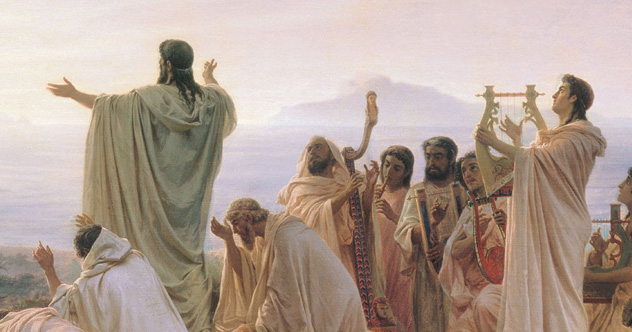
Long before algebra became the villain of high school math, Pythagoras and his followers formed a disciplined philosophical community in southern Italy around the sixth century BCE. The Pythagoreans believed that numbers, harmony, self-control, and moral discipline could bring order to both the soul and society.
Ancient writers described some Pythagorean groups as sharing property and living by the idea that friends should hold things in common. Their lifestyle included strict rules about food, conduct, education, and loyalty. In other words, it was part math club, part spiritual retreat, and part very serious homeowners association.
The evidence is incomplete, and later writers may have polished the legend. Still, the Pythagorean tradition helped spread the idea that private wealth could divide people while shared resources could create unity.
-
2. The Essene Communities of Ancient Judea
The Essenes were a Jewish religious movement active from roughly the second century BCE into the first century CE. Ancient accounts describe them as living highly disciplined lives, practicing ritual purity, and often placing wealth into a common treasury.
Members who joined certain Essene groups reportedly surrendered personal possessions to the community. Wealth was distributed according to need, and no member was supposed to become dramatically richer than another. That principle alone would make the Essenes wildly unpopular at many modern networking events.
Scholars debate how closely the Essenes were connected to the people who lived at Qumran near the Dead Sea Scrolls. However, the broader pattern is clear: some Jewish sectarian communities practiced extensive sharing of goods long before modern socialist theory existed.
-
3. The Early Jerusalem Christian Community
The earliest Christian community in Jerusalem is one of the most famous examples of shared property in ancient history. The Book of Acts describes believers selling possessions, contributing funds, sharing meals, and distributing resources to people in need.
The ideal was not merely charity. The community was portrayed as being “of one heart and soul,” with material goods treated as something that should serve the group rather than individual status. Widows, poor members, and vulnerable people were supposed to receive practical support.
Historians debate how universal and permanent this arrangement was. It was likely not a giant ancient version of a national economic plan. Still, the Jerusalem church became a powerful model for later monastic communities, reformers, communal religious groups, and social radicals who saw common ownership as a moral response to inequality.
-
4. Pachomian Monastic Communities in Egypt
In the fourth century CE, Pachomius helped organize some of the earliest large-scale Christian monastic communities in Egypt. Unlike solitary hermits who lived alone in the desert, Pachomian monks lived together under shared rules, shared labor, and shared economic systems.
Members generally gave up personal property when entering the community. Food, clothing, shelter, tools, and work were organized collectively. Monks might farm, weave, copy texts, cook, or build, but the results belonged to the monastery rather than the individual worker.
This was not a democracy with weekly committee meetings about sandal budgets. Pachomian communities had strict leadership and rules of obedience. Yet their economic structure showed that a large, durable society could function with collective production and communal distribution.
-
5. The Mazdakite Movement in Sasanian Persia
In late fifth- and early sixth-century Persia, the religious reformer Mazdak became associated with a movement that challenged social inequality and concentrated wealth. The Mazdakites emerged during a period of severe tension between elites, landholders, religious authorities, and poorer people.
Later sources often claimed that Mazdak promoted the sharing or redistribution of wealth and property. Some accounts also accuse the movement of much more extreme social policies, but these descriptions were written by hostile opponents and should be treated with caution.
What matters historically is that Mazdak became linked with a radical challenge to elite privilege. His movement was not a documented communist commune in the modern sense, but it represented an early argument that wealth should not remain trapped in the hands of powerful families while ordinary people struggled.
-
6. The Taborites of Bohemia
During the Hussite Wars of the fifteenth century, radical religious reformers in Bohemia created communities around the town of Tábor. These groups became known as the Taborites, and they mixed religious reform with fierce opposition to feudal privilege and church wealth.
Early Taborite factions promoted equality among believers and, in some cases, experimented with pooling resources. They rejected many established social hierarchies and believed that a new Christian order could replace corrupt political and religious institutions.
The Taborites were also militant, apocalyptic, and divided internally. Their story is a reminder that communal ideals can emerge alongside intense conflict. Shared property did not automatically produce peace, especially when neighboring armies were trying to turn your settlement into a historical footnote.
-
7. The Hutterite Bruderhofs
The Hutterites emerged from the Radical Reformation in the sixteenth century. Beginning in Central Europe, they built communal settlements called Bruderhofs, or “places of brothers,” where members practiced common ownership of property.
In Hutterite communities, wealth was pooled, labor was organized collectively, and members received what they needed from the group. Farms, workshops, kitchens, homes, and income belonged to the community rather than individual households.
Unlike many short-lived utopian experiments, Hutterite communal life survived persecution, migration, war, and repeated displacement. Hutterite colonies still exist today in North America, making them one of the longest-running examples of religious communal ownership in history.
-
8. The Diggers of England
In 1649, during the political chaos following the English Civil War, a small radical group called the Diggers began cultivating common land at St. George’s Hill in Surrey. Led by Gerrard Winstanley, they argued that the Earth should be treated as a common treasury for all people.
The Diggers opposed land monopolies and believed that poor people should be able to farm unused land rather than depend on wealthy landowners. Their project was both economic and moral: work the land together, share its produce, and reduce dependence on landlords.
The experiment did not last long. Landowners and local authorities harassed the settlers, destroyed crops, and forced the group away. Still, the Diggers became a lasting symbol of land reform, communal labor, and the stubborn belief that a field should feed people before it feeds somebody’s property portfolio.
-
9. The Shaker Villages of Britain and America
The Shakers began in England in the eighteenth century and later established communities in the United States. They became known for ecstatic worship, celibacy, craftsmanship, communal living, and furniture so elegant that people still spend alarming amounts of money on it.
By the late eighteenth century, Shaker communities developed systems of common ownership. Members did not hold private property, and villages jointly controlled homes, farms, workshops, and profits. Men and women could hold leadership roles, though the communities still maintained structured divisions of labor.
The Shakers were not revolutionary Marxists. Their communal system was rooted in religious discipline and spiritual purity. Yet their economic life clearly rejected ordinary private ownership and proved that cooperative communities could build productive farms, businesses, and durable institutions.
-
10. The Oneida Community in New York
Founded in 1848 by John Humphrey Noyes, the Oneida Community was one of America’s most famous nineteenth-century communal experiments. Located in upstate New York, Oneida practiced common ownership, communal child-rearing, shared labor, and a controversial social system known as “complex marriage.”
Oneida members operated successful businesses, including animal traps, silk production, and silverware. Their collective economy was not just theoretical; it generated real income and supported a large shared household.
The community ultimately dissolved in 1880 after internal tensions and outside criticism intensified. However, its manufacturing legacy survived through Oneida Limited, a company that became known for silverware. It is one of history’s strangest examples of a communal society leaving behind both a social experiment and a polished fork.
What the Experience of Pre-USSR Communal Societies Teaches Us
The most important lesson from these early communist societies is that communal living is not one single idea. The Pythagoreans, Essenes, Hutterites, Shakers, Diggers, and Oneida residents all shared something important: they believed private ownership could create division, inequality, or spiritual corruption. But they disagreed dramatically about religion, family, government, gender, work, violence, and personal freedom.
Some communities treated shared property as a path to moral discipline. The Essenes and Pachomian monks believed communal wealth could reduce greed and support religious devotion. Hutterites and Shakers saw common ownership as part of a sacred life built around cooperation and obedience. Their goal was not necessarily political revolution. They wanted to create a more righteous community within an imperfect world.
Other groups used communal ownership as a direct challenge to social power. The Diggers opposed land concentration. The Taborites attacked feudal privilege and church wealth. Mazdak became associated with a challenge to elite control of resources. These movements show that economic inequality has been politically explosive for a very long time. Billionaires did not invent public frustration with wealth concentration; they merely gave it better branding and faster Wi-Fi.
Another lesson is that shared property does not eliminate hierarchy. Many communal societies had strict leaders, religious authorities, rules about marriage, rules about work, and systems of discipline. A community can abolish private ownership while still creating powerful institutions that tell people what to wear, where to sleep, and when to stop talking during dinner.
Durability also depended on practical economics. The communities that lasted often had productive farms, skilled labor, strong internal organization, and a way to survive outside pressure. Hutterites built durable agricultural systems. Shakers developed respected crafts and successful businesses. Oneida generated manufacturing income. Idealism helped people join, but bread, tools, shelter, and accounting helped communities stay alive.
Finally, these societies show that communal experiments are often born from dissatisfaction. People turn toward shared ownership when existing systems feel unfair, unstable, spiritually empty, or brutally unequal. The details change across centuries, but the question remains familiar: should wealth exist mainly to enrich individuals, or should it be organized to protect the wider community?
That question existed before the Soviet Union, before Marx, before factories, and before anyone had the unpleasant task of explaining a five-year plan at a dinner party.
Conclusion: The Long History of Shared Property
The Soviet Union was one of the most influential communist states in modern history, but it was not the first human attempt to organize life around collective ownership. From ancient philosophical brotherhoods to religious communes and land reform movements, people repeatedly tried to build societies where wealth served the group rather than individual accumulation.
These pre-USSR communist societies were rarely perfect. Some were deeply hierarchical. Some were brief. Some were crushed by outside forces. Some collapsed under internal tension. Yet each experiment proved that people have been imagining alternatives to private property and economic inequality for thousands of years.
The history of communal living is not a simple march toward the USSR. It is a much stranger, more human storyone involving monks, farmers, radicals, reformers, carpenters, philosophers, silverware makers, and a surprisingly large number of people trying to share dinner without starting an argument.