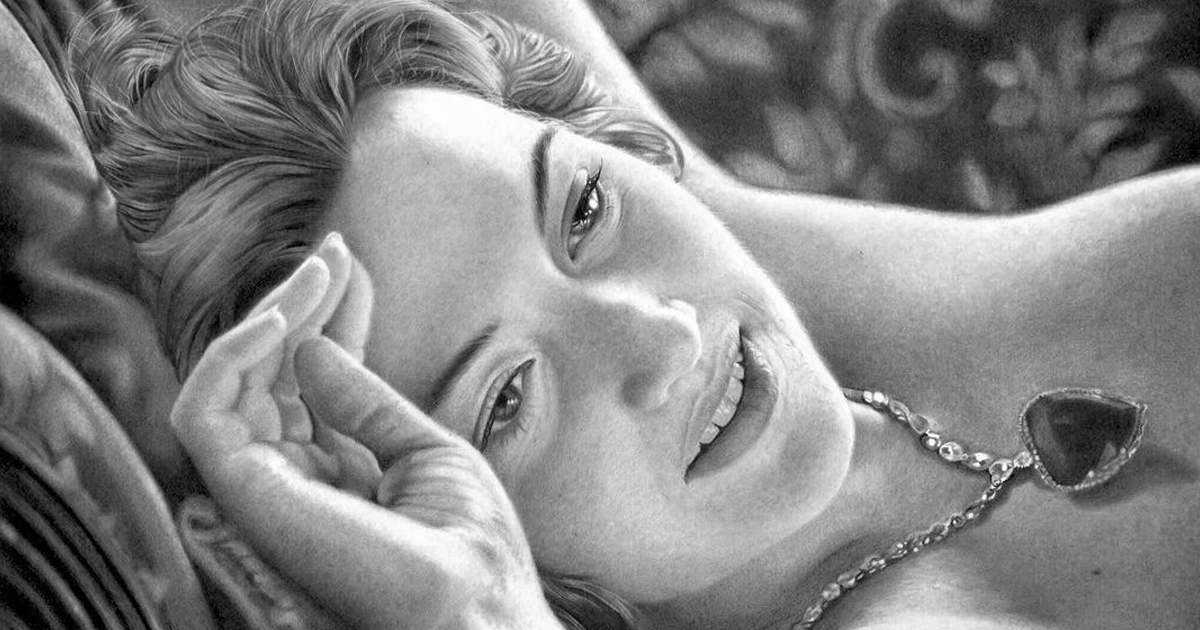
Some drawings make you pause. Others make you squint, lean closer to the screen, and whisper, “Nice photo.” Then your brain catches up and realizes the “photo” is actually pencil on paper. That is the delightful little plot twist behind the realistic drawings of Brazilian artist Rafael Konishi, whose hyper-detailed pencil work has earned admiration from art lovers, casual scrollers, and anyone who has ever accidentally turned a stick figure into a potato.
Rafael Konishi, an artist from São Paulo, Brazil, is known for realistic pencil drawings that explore faces, textures, reflections, dramatic shadows, and those tiny visual details most of us only notice when our phone camera starts judging us in high definition. His work is often described as hyperrealistic because it pushes drawing beyond “that looks good” and into “wait, are you absolutely sure this is not a photograph?” territory.
This article looks at what makes Konishi’s 42 mind-blowing realistic drawings so compelling, how his style fits into the broader world of photorealism and hyperrealism, and why pencil art still feels so human in an age when digital images appear faster than a coffee order.
The Realistic Drawings of Rafael Konishi
Rafael Konishi’s art is built on patience, observation, and a remarkable command of graphite. Public features about his work describe him as a São Paulo-based artist who creates realistic pencil drawings, often focusing on people and expressive subjects. His journey into art began early, with manga drawing playing a major role in his childhood practice. Later, he discovered realistic drawing and began sharpening his technique with more serious focus.
That progression matters. Hyperrealistic drawing is rarely a lightning-bolt talent that appears overnight. It is closer to a slow-cooked meal: a long process, occasionally frustrating, but delicious when done right. Konishi’s work reflects years of practice, trial, correction, and a willingness to stare at small details until they finally surrender.
Across the collection of 42 drawings, viewers can see portraits, emotional facial expressions, reflective surfaces, water effects, detailed eyes, hair, clothing, and cinematic compositions. The appeal is not only that the drawings look realistic. It is that they feel intentional. Every shadow has a job. Every highlight knows where it is going. Even the smallest wrinkle or droplet seems to have been invited to the party with a handwritten note.
What Makes These 42 Drawings So Mind-Blowing?
The phrase “mind-blowing realistic drawings” gets tossed around the internet a lot, sometimes for artwork that is impressive and sometimes for artwork that is mostly just wearing dramatic lighting like a fancy hat. Konishi’s drawings earn the phrase because they combine technical accuracy with emotional pull. The realism is not cold or mechanical. It has atmosphere.
1. The Eyes Do More Than Look Real
In realistic portrait drawing, eyes are the tiny windows where the whole illusion either moves in or packs its bags. Konishi’s eyes often contain layered reflections, wet highlights, soft transitions, and deep contrast. A convincing eye is not just a circle with a shiny dot. It is a careful map of moisture, shadow, curvature, and focus.
When an eye in a drawing seems to reflect light naturally, the viewer begins to trust the whole image. That is one reason hyperrealistic portraits can feel so alive. The brain recognizes the cues of real vision: glistening surfaces, uneven edges, tiny shadows under eyelids, and the subtle darkness where forms curve away from light.
2. Skin Texture Is Handled With Control
Skin is one of the hardest subjects in realistic pencil drawing because it is not actually smooth. It only looks smooth from a polite distance. Up close, skin contains pores, fine lines, soft value changes, freckles, wrinkles, and tiny shifts in tone. Draw too little and the portrait looks plastic. Draw too much and the subject looks like a weathered map of an ancient kingdom.
Konishi’s strongest portrait work balances texture with softness. The result is lifelike without becoming harsh. That balance is the difference between “realistic” and “accidentally carved from a potato.” His drawings show that realism is not about copying every single mark equally. It is about deciding which details deserve attention and which should stay quiet.
3. Water, Hair, and Fabric Become Technical Showpieces
Water effects are a favorite challenge in realistic drawing because water is basically a tiny mirror with attitude. It bends light, creates sharp highlights, and changes the appearance of whatever sits beneath it. In Konishi’s work, water droplets and wet surfaces often create a dramatic sense of depth.
Hair is another technical obstacle. Beginners often draw hair as spaghetti. Advanced artists understand that hair must be treated as masses, shadows, strands, shine, and movement. Konishi’s pencil handling gives hair volume and direction, making it feel soft rather than scribbled. Fabric and clothing receive similar attention, with folds and textures helping place the figures in believable space.
4. Reflections and Metallic Surfaces Add the “How?” Factor
One of the most impressive areas in realistic pencil art is reflective material: chrome, glass, polished metal, wet eyes, glossy lips, or bright jewelry. These surfaces work because of sharp contrast. A metallic object may jump from deep black to bright white in a very small area. The artist has to control edges precisely, or the illusion collapses like a folding chair at a barbecue.
Some of Konishi’s pieces include reflective or high-contrast details that make viewers do a double take. The technical trick is not just drawing the object. It is drawing what the object reflects, distorts, and hides. That is why reflective realism feels so magical: the artist is drawing reality’s echo.
Realism, Photorealism, and Hyperrealism: What Is the Difference?
To appreciate Konishi’s drawings, it helps to place them in the larger art conversation. Realism generally refers to art that depicts subjects accurately and directly, without heavy idealization. In simple terms, realism says, “Let us look closely at what is actually there.”
Photorealism developed as a movement in the late 1960s and 1970s, especially in the United States and Europe. Artists working in this style often used photographs as references and aimed to recreate photographic detail with high precision. Hyperrealism is closely related, but it often pushes beyond strict reproduction. It can heighten emotion, drama, texture, and visual intensity until the image feels even more vivid than ordinary reality.
Konishi’s pencil drawings sit comfortably in this hyperrealistic zone. They may begin with photographic references, as many realistic artists do, but the final result is not just a copy. A strong drawing carries the pressure of the hand, the decisions of the eye, and the time spent building an illusion one value at a time.
Why Pencil Still Feels Powerful
Graphite is a humble material. It is carbon, it is shiny under certain light, and it has been helping people write grocery lists, solve math problems, and doodle suspiciously square cats for generations. Yet in the right hands, graphite becomes cinematic.
The power of pencil drawing comes from limitation. A pencil does not offer instant color, glossy filters, or one-click drama. It gives the artist pressure, line, tone, texture, and patience. That limitation forces decisions. How dark should the shadow be? Where should the highlight remain untouched? Should the edge be sharp, soft, lost, or barely suggested?
Konishi’s realistic drawings show the expressive potential of this simple tool. With graphite, he can suggest skin, hair, water, metal, emotion, and light. The viewer sees the finished illusion, but beneath it is a quiet mountain of choices. That is part of why pencil realism remains impressive even in the digital age. The audience understands, almost instinctively, that this took time.
How Rafael Konishi Builds Realism
While every artist develops a personal workflow, realistic pencil drawing usually depends on a few core principles: accurate proportions, careful value structure, clean edges, layered shading, and deep observation. Konishi’s work demonstrates all of these.
Accurate Proportions Come First
Before shading can impress anyone, the structure has to be right. A portrait with beautifully shaded skin but misaligned features will still look strange. Realistic artists often spend significant time mapping the subject before adding darker tones. The eyes, nose, mouth, jaw, and head shape need to relate correctly, or the final drawing will feel “almost right” in a way the viewer cannot unsee.
Values Create the Illusion of Light
Value is the range from light to dark. In graphite art, value does nearly everything: it describes form, distance, depth, texture, and mood. A smooth cheek, a wet eyelid, and a leather jacket all require different value handling. Konishi’s drawings are striking because he understands contrast. Deep shadows give the highlights more power, while soft midtones keep the image from looking flat.
Edges Tell the Viewer Where to Look
Not all edges are equal. A sharp edge can pull the eye quickly. A soft edge can suggest roundness or atmosphere. A lost edge can make a form disappear into shadow. In Konishi’s realistic drawings, edges help direct attention. The most important features often receive crisp detail, while less important areas remain softer, allowing the composition to breathe.
Texture Is Built, Not Sprinkled On
Texture in realistic drawing is not a decoration added at the end like parsley on soup. It must be built into the value structure. Hair, skin, fabric, metal, and water each need different marks and different levels of contrast. Konishi’s drawings show how texture becomes convincing when it follows the logic of light.
Why These Drawings Connect With Viewers
Technical skill gets attention, but emotion keeps people looking. That is why the best realistic drawings do more than prove the artist can control a pencil. They create a moment. A face with a thoughtful expression, a child smiling, a dramatic stare, or a close-up eye can invite viewers into a story without explaining everything.
Konishi has said in interviews that he is drawn to images that challenge him. That attitude shows. Rather than sticking to one narrow subject, he seems interested in visual problems: How do you draw wet skin? How do you make a reflection feel bright? How do you capture intensity in a gaze? How do you make pencil look like light?
That challenge-seeking mindset is essential for realistic artists. The medium rewards patience, but it also rewards courage. A difficult subject may take longer, but it teaches more. In that sense, the 42 drawings are not only finished artworks. They are evidence of artistic problem-solving.
Lessons Aspiring Artists Can Learn From Rafael Konishi
For anyone who wants to create realistic pencil drawings, Konishi’s work offers several practical lessons. The first is simple and slightly annoying: be patient. Realism is not a style that responds well to rushing. If you hurry a drawing, the paper knows. It tells everyone.
Start With Observation, Not Details
Beginners often jump straight into eyelashes, wrinkles, and strands of hair. The better approach is to start with large shapes and values. Squint at the reference. Notice where the biggest shadows are. Find the light source. Build the drawing from general to specific.
Use a Full Range of Pencils
Realistic shading often benefits from multiple pencil grades. Harder pencils can create lighter marks and subtle transitions, while softer pencils help achieve rich darks. The key is control. A dark pencil used too early can trap the drawing in harsh contrast before the structure is ready.
Protect Your Highlights
In graphite drawing, white is usually the paper itself. That means highlights must be preserved carefully. Once an area gets too dark, lifting it back to clean white can be difficult. Realistic artists often plan highlights early, especially in eyes, water, glass, and shiny surfaces.
Practice Texture Separately
Want to draw better hair? Practice hair. Want better skin? Practice small patches of skin texture. Want shiny metal? Draw spoons, cans, motorcycles, and anything else that looks like it belongs in a lighting challenge. Is it glamorous? Not always. Is it effective? Absolutely.
The Human Value of Hyperrealistic Drawing in the AI Era
Today, images can be generated, edited, filtered, and shared faster than most people can sharpen a pencil. That raises an obvious question: why does handmade realism still matter? The answer is process. When viewers see a hyperrealistic pencil drawing, they are not only reacting to the image. They are reacting to the labor inside it.
There is something deeply satisfying about knowing that a person sat with a blank sheet of paper and slowly built a world from graphite. Every realistic portrait contains visible and invisible work: the planning, the mistakes, the corrections, the layering, the restraint, the final tiny highlights that make the whole face wake up.
Konishi’s drawings remind us that art is not only about the finished image. It is also about discipline, attention, and care. In a culture addicted to speed, slow art feels almost rebellious. It says, “Yes, this took time. That is the point.”
500-Word Experience Section: What It Feels Like to Study Rafael Konishi’s Drawings
Looking through Rafael Konishi’s realistic drawings feels a bit like walking through a quiet gallery where every artwork is waiting to trick you politely. At first glance, many pieces seem photographic. Then the eye begins to search for evidence of the hand: a faint pencil transition, a controlled edge, a shadow built from layers instead of pixels. That search becomes part of the experience. You are not just looking at an image; you are investigating it.
One of the most enjoyable things about Konishi’s work is the way it rewards slow viewing. Online art is often consumed at the speed of a thumb flick. We scroll, like, move on, and forget. But realistic pencil drawings resist that habit. They ask for time. A viewer may notice the expression first, then the texture of skin, then the catchlight in an eye, then the subtle way a background fades so the face becomes stronger. The longer you look, the more the drawing seems to open.
For artists, the experience can be both inspiring and mildly intimidating. There is the initial “Wow, I want to draw like that,” followed immediately by “I should probably learn how to shade a sphere without making it look like a bruised egg.” That is not a bad thing. Great artwork often makes the viewer aware of the distance between interest and mastery. Konishi’s drawings show what consistent practice can produce, but they also make the path visible: patience, discipline, observation, and repeated attempts.
For non-artists, the appeal is more immediate. The drawings are impressive because they transform a familiar tool into something extraordinary. Most people have used a pencil. Most people understand, at least roughly, how unforgiving paper can be. That everyday familiarity makes the achievement feel even larger. It is like watching someone build a cathedral out of toothpicks, except the toothpicks somehow have perfect lighting.
There is also an emotional side to the viewing experience. Realistic portraits tend to create a human connection because faces are one of the things we read most naturally. A slight narrowing of the eyes, a soft smile, a tense mouth, or a reflective gaze can suggest a whole story. Konishi’s drawings often use that power well. Even when the viewer does not know the subject, the image can feel personal.
Studying these 42 drawings can also change how you see ordinary things. Suddenly, water droplets are not just water droplets; they are tiny lessons in reflection. Hair is not a single shape; it is a collection of shadows and highlights. A face is not simply a face; it is planes, values, textures, and emotions working together. That is one of the gifts of realistic art. It trains the viewer to notice more.
In the end, the experience of Konishi’s work is a blend of admiration and curiosity. You admire the finished drawings, but you also wonder about the hours behind them. How many layers created that shadow? How carefully was that highlight protected? How many times did the artist step back, adjust, and continue? Those invisible moments make the final artwork feel alive. The drawings are mind-blowing not only because they look real, but because they reveal how much devotion it takes to make pencil and paper feel that way.
Conclusion
Rafael Konishi’s 42 mind-blowing realistic drawings prove that pencil art is far from simple. In his hands, graphite becomes skin, glass, water, hair, metal, light, and emotion. His work belongs to the rich tradition of realism, photorealism, and hyperrealism, but it also feels personal because it carries the unmistakable mark of human patience.
What makes these drawings memorable is not only their technical polish. It is the sense of challenge behind them. Konishi chooses subjects that demand careful observation, then builds them through value, texture, contrast, and control. The result is artwork that invites double takes, close inspection, and maybe a tiny existential crisis for anyone still struggling with symmetrical eyes.
For aspiring artists, his work offers a clear lesson: realistic drawing is not magic, even when it looks magical. It is practice, patience, and the courage to keep improving. For viewers, it is a reminder that simple tools can still create astonishing experiences. A pencil may be ordinary, but in the right hand, it can make reality blink first.