Fungus gnats are the tiny, mosquito-ish freeloaders of the houseplant world: they show up uninvited, throw a party in your potting soil, and somehow convince you that you are the problem (spoiler: you might be… but we’ll fix it together). The good news? Getting rid of fungus gnats in houseplants is absolutely doablewithout turning your living room into a chemical testing facility.
This guide breaks down what fungus gnats are, how to confirm you’ve got them (and not their equally annoying cousins), and the most reliable, science-backed ways to eliminate fungus gnat larvae and adults. We’ll use an integrated pest management approach (fancy phrase, simple idea: hit them from multiple angles so they can’t respawn like a video game boss).
Meet the Enemy: What Fungus Gnats Are (and Why They Love Your Plants)
Fungus gnats are small, dark flies most often associated with moist potting soil and decaying organic matter. Adults are mainly a nuisance they don’t bitebut their larvae live in the growing medium where they feed on fungi, algae, decaying plant material, and sometimes tender roots. Heavy infestations can stress plants, especially seedlings, cuttings, or anything with a weak root system.
Why they move in
- Consistently damp soil (overwatering is the #1 VIP pass).
- Organic-rich potting mixes that stay wet and “mushy” over time.
- Decaying plant matter (dead leaves on the soil surface = gnat snack bar).
- Warm indoor conditions that let generations overlap year-round.
Here’s the frustrating part: fungus gnats develop quickly. Depending on conditions, a full life cycle can complete in roughly 3–4 weeks, and warmer temperatures speed things up. Translation: if you only smack a few adults and call it a day, the larvae in the soil will politely continue the family business.
How to Tell It’s Fungus Gnats (Not Fruit Flies, Drain Flies, or “Just One Random Bug”)
Correct identification matters because the best fungus gnat treatment focuses on the soil, not just the airspace around your plants. Use this quick checklist:
Fungus gnat signs
- Small black flies hovering near pots, especially after watering.
- Gnats running on the soil surface or along the inside rim of the pot.
- Larvae in the soil (tiny, translucent “worms” with a dark head).
- Most activity around damp plantsyour driest pots usually have fewer gnats.
The potato slice test (yes, seriously)
To confirm fungus gnat larvae, place a raw potato slice on the soil surface. Check it in 3–4 days. Larvae often move up to feed and can be seen against the potato tissue. It’s low-tech, oddly satisfying, and doesn’t require a microscope or a dramatic monologue.
Why Fungus Gnats Keep Coming Back
If fungus gnats feel “never-ending,” it’s usually because their favorite conditions keep happening. These are the most common repeat offenders:
- Watering too often or watering on a schedule instead of by plant need.
- Pots sitting in runoff water (hello, soggy saucer swamp).
- Dense, broken-down soil that holds moisture like a sponge.
- Top-dressing with compost indoors (nutritious for plants… and for gnats).
- Bringing infested plants indoors after summer outside without a quarantine period.
The fastest way to get rid of fungus gnats is to break the life cycle: reduce egg-laying sites, trap adults, and kill larvae in the potting soil. Below is a step-by-step plan that works because it targets multiple stages at once.
The Step-by-Step Plan to Get Rid of Fungus Gnats in Houseplants
Step 1: Isolate the “Culprit Pots”
If you have multiple plants, separate the worst offenders. Fungus gnats aren’t Olympic flyers, but they do move from pot to pot when given the chance. Grouping infested plants together makes treatment easier and helps protect your healthy plants.
Step 2: Fix the Moisture Problem (The Unsexy Step That Actually Works)
Moisture management is the foundation of fungus gnat control. Let the top 1–2 inches of potting soil dry out between waterings when the plant can tolerate it. This makes the surface less attractive for egg-laying and reduces survival of eggs and larvae.
Practical watering upgrades:
- Water by weight: lift the pot. If it feels light, water. If it feels like a tiny boulder, wait.
- Empty saucers: don’t let pots sit in standing water longer than needed.
- Bottom watering (selectively): if your plant tolerates it, water from the bottom to keep the soil surface drier. Don’t leave the pot soaking forever20–30 minutes is plenty for many setups.
- Increase airflow: a small fan (not a hurricane) helps the soil surface dry faster.
Note: If you’re growing moisture-loving plants (like some ferns), you can still manage fungus gnatsyou’ll just lean harder on larval controls (next steps) and choose a better-draining mix rather than trying to “desert-dry” a rainforest plant.
Step 3: Deploy Yellow Sticky Traps (Adult Control + Infestation Meter)
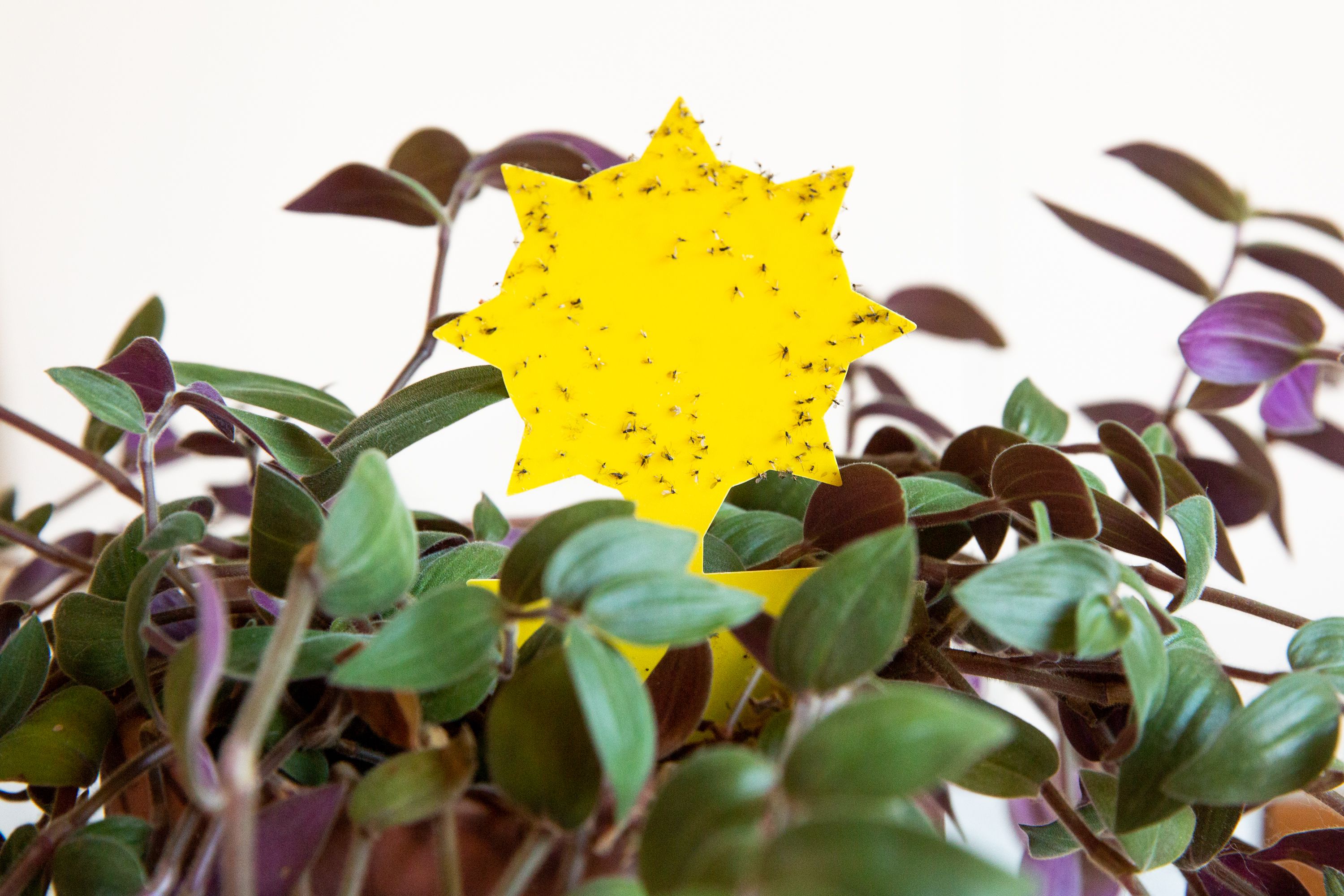
Yellow sticky traps are a simple, non-toxic way to catch adult fungus gnats and monitor whether your population is shrinking. Place traps near the plant canopy or just above the soil line. Replace when covered, dusty, or no longer sticky.
Sticky traps alone won’t solve the problem (larvae are still partying underground), but they reduce egg-laying and give you fast feedback. If traps are still packed after you’ve adjusted watering, it’s a sign you need stronger larval treatment.
Step 4: Treat the Soil with Bti (Mosquito Bits/Dunks) to Kill Larvae
One of the most effective, widely recommended biological tools for fungus gnat larvae is Bacillus thuringiensis subsp. israelensis (Bti). Think of Bti as a targeted larvicide: it’s toxic to certain fly larvae (including fungus gnats) when applied correctly as a soil drench.
How to use Bti effectively:
- Use it as a drench: Bti must move through the top layer of soil where larvae feed.
- Repeat applications: Bti doesn’t kill adults and won’t solve everything in one watering. Apply multiple times to catch newly hatched larvae.
- Be consistent for 3–4 weeks: this covers overlapping generations and helps break the cycle.
Important detail people miss: not all “Bt” is the same. Bt products for caterpillars are not effective for fungus gnat larvae. Look specifically for Bti (often marketed for mosquito larvae, but also used for fungus gnats).
Step 5: Add Beneficial Nematodes (Steinernema feltiae) for Stubborn Infestations
If you want an extra-heavy punch for fungus gnat larvaeespecially if you have many plants or persistently damp conditionsconsider beneficial nematodes (commonly Steinernema feltiae). These microscopic organisms move through moist soil, enter larvae, and kill them from the inside. It’s nature, but with a plot twist.
Nematode success tips:
- Moist soil is required for nematodes to moveapply when the medium is damp (not waterlogged).
- Follow storage and mixing directions carefully; they are living organisms, not glitter.
- Avoid harsh treatments that could reduce nematode survival around application time.
You don’t always need nematodes for a small household outbreak, but they’re excellent for “I have 37 plants and the gnats have formed a union” situations.
Step 6: Improve the Soil Surface (Make It Unfriendly for Egg-Laying)
Fungus gnat females prefer to lay eggs in moist organic material near the soil surface. You can make that surface less appealing:
- Remove decaying debris from the pot surface (dead leaves, dropped petals, soggy moss).
- Try a coarse top-dress like sand or fine gravel (about 1/2 to 1 inch) to keep the surface drier and discourage egg-laying.
A quick myth check: diatomaceous earth is often suggested online, but research-based extension guidance notes it does not reliably control fungus gnats in potting media. If you love it for other pests, finebut don’t bet your gnat-free future on it.
Step 7: Repot (When the Soil Is the Real Problem)
Sometimes fungus gnats aren’t just a pest problemthey’re a soil problem. If your potting mix has broken down, drains slowly, or stays wet forever, repotting can be the turning point.
When repotting makes sense:
- The soil stays soggy more than a few days after watering (and your plant isn’t a bog plant).
- The plant is in old, compacted mix that looks like it has “melted” into muck.
- You’re treating repeatedly but gnats rebound fast.
Repotting best practices:
- Use a fresh, high-quality potting mix that drains well.
- Clean the pot (and saucer) before reusing.
- Trim obviously dead roots and remove rotting plant material.
- After repotting, begin your new watering routine immediatelyfresh soil plus old habits equals new gnats.
How Long Does It Take to Get Rid of Fungus Gnats?
Expect a real timeline, not a miracle. Because eggs, larvae, pupae, and adults overlap, successful fungus gnat control usually takes at least 3–4 weeks of consistent effort. You’ll often see fewer adults on sticky traps within the first week, but lasting results come from continued larval treatment and improved watering practices.
Fungus Gnats FAQ
Do fungus gnats hurt plants?
Adults are mostly annoying. Larvae can feed on organic matter and sometimes roots; damage is more likely in seedlings, cuttings, and stressed plants. In healthy, established houseplants, fungus gnats are often more of a nuisance than a plant-killerbut they can contribute to stress and root problems when populations are high and soil stays too wet.
Will spraying the leaves fix it?
Leaf sprays may knock down some adults, but fungus gnats breed in the soil. If you don’t treat the potting mix and fix moisture issues, adults will return on schedule like they’re clocking in for a shift.
Are “homemade traps” enough?
Traps can reduce adults, but they don’t address larvae. Consider traps as a helpful sidekick, not the superhero. The real win comes from drying the surface and using larval controls like Bti (and nematodes if needed).
What’s the single most important prevention tip?
Don’t overwater. Fungus gnats thrive in consistently damp potting media. Water based on plant needs, pot size, and seasonespecially in winter when indoor plants often use water more slowly.
Prevention: Keep Fungus Gnats From Coming Back
- Quarantine new plants for 1–2 weeks and monitor with a sticky trap before placing them near your collection.
- Store potting soil properly (closed container, dry area) so it doesn’t become a gnat nursery.
- Use well-draining mixes and repot when media breaks down and retains too much moisture.
- Clean saucers and cachepots regularlyno standing water, no sludge layer.
- Remove decaying plant matter from soil surfaces quickly.
Conclusion: Your Fungus Gnat Exit Strategy
Getting rid of fungus gnats in plants isn’t about one “magic” trickit’s about breaking the life cycle. Start with moisture management, add yellow sticky traps to reduce adults, and treat the soil to eliminate fungus gnat larvae (Bti is the all-star here, with beneficial nematodes as the power-up for stubborn cases). Stick with it for a few weeks, and the swarm should shrink from “cloud of regret” to “where did they go?”
Most importantly: don’t beat yourself up. Fungus gnats are common, especially in modern organic-rich potting mixes and cozy indoor conditions. The goal isn’t perfectionit’s a plant routine that keeps your soil healthy and your home free of tiny airborne hecklers.
Real-World Experiences: What People Learn the Hard Way (So You Don’t Have To)
If you’ve ever searched “how to get rid of fungus gnats” at 1:00 a.m. while waving your hand like you’re conducting an orchestra of doom, you’re in good company. In real homes, fungus gnat infestations rarely start with dramatic plant collapse. They usually begin with something subtle: a couple of tiny flies near a pothos, a suspicious little hover near the sink, or that moment you realize the “dust speck” moving across the soil is, in fact, alive and disrespectful.
One of the most common patterns is the “one soggy pot” situation. Someone waters their whole collection the same waybecause it’s efficient, and because plants are supposed to like water, right? But one plant is in a slightly bigger pot, with slightly denser soil, in slightly lower light. That pot stays damp longer, and fungus gnats treat it like beachfront property. The fix is almost always targeted: identify the wettest pots, adjust watering just for those, and suddenly the gnat problem becomes manageable instead of mysterious.
Another frequent experience is discovering that decorative cachepots can be gnat hotels. The plant sits inside a pretty outer pot with no drainage hole, and extra water collects at the bottom. The top of the soil may look fine, but below the surface it’s basically a spa day for larvae. People often see a big improvement simply by removing the inner pot, dumping excess water, and letting the plant drain properly. Pair that with sticky traps and you’ll usually see adult numbers drop fast.
Many plant owners report that the “adult-only” approach is the most frustrating detour. You can catch dozens of adults on yellow sticky traps and still feel like nothing changesbecause eggs hatch, larvae feed, pupae mature, and new adults emerge. The turning point tends to come when people commit to a larvae-first routine: consistent Bti drenches (according to label directions), repeated on a schedule that matches the insect’s life cycle, while keeping the soil surface drier. Once larvae are controlled, the adults stop replenishing, and the traps finally start looking boring (which is the goal).
Repotting is another “experience lesson,” especially with old soil. People often hesitate because repotting feels disruptive, but if the mix is broken down and stays wet, you’re essentially hosting the infestation. When plant parents switch to a better-draining mix, clean the pot, and remove decaying material, it’s common to see a dramatic improvementsometimes even without aggressive treatments. Repotting isn’t always necessary, but when the soil is chronically soggy, it’s often the cleanest reset.
Finally, there’s the prevention lesson almost everyone learns after one gnat war: quarantine new plants. A single infested plant brought home from a store can seed an entire collection. Many experienced growers keep new arrivals separate for a week or two, add a sticky trap as an early warning system, and watch watering closely until they’re confident the plant isn’t bringing unwanted guests. It’s not paranoiait’s plant parent wisdom.
Put all those real-world takeaways together and you get a simple truth: fungus gnat control works best when you stop trying to “kill bugs” and start improving the mini-ecosystem inside the pot. Healthier watering habits, cleaner soil surfaces, and targeted larval control turn the problem from a repeating nightmare into a one-time inconvenience. And yesafter you win, you’re allowed to brag to your plants. They won’t say thank you, but they’ll look great while ignoring you.