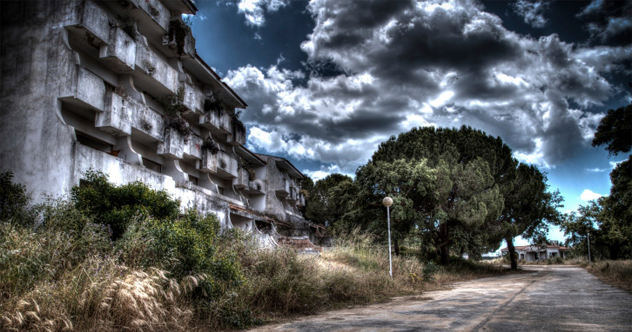
Ancient ruins get all the romance: marble columns, mysterious temples, heroic sandals, and enough dramatic sunsets to make a travel brochure blush. But the 20th century produced its own ruinsand many of them are stranger because they feel familiar. These places once had electricity, cinemas, hospitals, supermarkets, schools, and very modern ideas about progress. Then history, industry, war, disaster, or plain old bad planning pulled the plug.
From a nuclear city frozen in 1986 to a diamond town being swallowed by desert sand, these strange 20th century ruins show how quickly a booming place can become a ghostly landscape. Some are protected memorials. Some are restricted because they are unsafe. A few still have residents nearby. All of them tell stories that are much bigger than their cracked walls.
What Makes 20th Century Ruins So Unsettling?
Modern ruins are eerie because they feel like interrupted ordinary life. A medieval castle may seem distant enough to belong to a fantasy novel. An abandoned school with a chalkboard, however, makes you imagine the bell ringing one last time. These sites preserve the architecture of industry, tourism, ideology, medicine, mining, and mass housing. They are reminders that “new” does not always mean permanent.
The best way to understand abandoned places is not as spooky photo backdrops, but as historical records. Behind every rusting Ferris wheel or crumbling apartment block are workers, families, political decisions, economic booms, environmental failures, and sometimes terrible human loss.
1. Pripyat, Ukraine: The City That Stopped in a Single Weekend
Pripyat was built in 1970 to house workers and families connected to the nearby Chernobyl Nuclear Power Plant. It was meant to be a model Soviet city: modern apartment buildings, schools, sports facilities, shops, and parks for a young population. By April 1986, nearly 50,000 people lived there.
Then came the Chernobyl nuclear disaster. Residents were evacuated on April 27, 1986, with many believing they would return after a few days. They did not. Pripyat became one of the world’s most recognizable modern ruins, with empty apartment towers, a sports complex, classrooms, and the famous amusement park slowly being overtaken by vegetation.
Its strangeness comes from the contrast. This was not a remote village that slowly faded away. It was a functioning city with television sets, playgrounds, kitchens, and bus stops. Nature has reclaimed much of the landscape, but the site remains tied to radiation risks, war-related disruption, and strict access rules. Pripyat is not a playground for urban explorers. It is a living lesson in technological power, human error, and the long shadow of catastrophe.
2. Hashima Island, Japan: A Concrete Battleship Without a Crew
Hashima Island sits off the coast of Nagasaki and looks less like an island than a giant abandoned warship that ran aground and decided never to leave. Its nickname, Gunkanjima, literally means “Battleship Island.” The comparison is not subtle, but the island does make a very convincing argument for it.
Hashima became a major undersea coal-mining site in the late 19th century and expanded rapidly during Japan’s industrial growth. Dense rows of concrete apartment buildings, schools, a hospital, shops, and recreational spaces were packed onto a tiny, sea-battered island. At its peak, it was one of the most densely populated places on Earth.
When coal demand declined and the mine closed in 1974, residents left. The island’s buildings were exposed to typhoons, salt air, wind, and decades of neglect. Today, the decaying concrete blocks look almost futuristic in the wrong way, like a set designer’s idea of a city after civilization misplaced the instruction manual.
Hashima also carries a difficult history, including wartime forced labor. That reality matters. The island is fascinating not because it is “haunted,” but because it captures the human cost of industrial ambition, rapid modernization, and resource extraction.
3. Kolmanskop, Namibia: The Diamond Town the Desert Ate for Lunch
Kolmanskop began as a German diamond-mining settlement in the Namib Desert in the early 1900s. Once diamonds were discovered, money rushed in with the enthusiasm of a person who has just found a winning lottery ticket in an old coat pocket. The town soon had elegant homes, a ballroom, a hospital, a school, a theater, and even an ice factory.
The prosperity did not last. Diamond deposits declined, richer fields were found elsewhere, and residents gradually left. By the mid-1950s, Kolmanskop was abandoned. The desert, never known for respecting property lines, began sending sand through doorways, hallways, bedrooms, and staircases.
Today, rooms are half-filled with dunes. Wallpaper peels from walls while sunlight spills through broken windows onto smooth waves of sand. Kolmanskop is one of the most visually bizarre ghost towns in the world because the ruins are not merely decaying; they are being physically absorbed by the landscape.
The town also reveals the imbalance of extractive economies. It was built quickly because diamonds were profitable, then left behind once the resource no longer delivered enough wealth. The desert did not destroy Kolmanskop overnight. It simply waited for people to leave.
4. Buzludzha Monument, Bulgaria: The Flying Saucer of Political Memory
High in Bulgaria’s Balkan Mountains stands the Buzludzha Monument, a huge concrete structure that resembles a flying saucer, a brutalist spaceship, or the headquarters of a very serious intergalactic labor union. Opened in 1981, it commemorated the Bulgarian communist movement and was designed as a monument to political triumph.
Inside, vast mosaics celebrated workers, revolutionary history, Communist Party leaders, and socialist ideals. Outside, a tall tower once displayed giant red stars visible from far away. The entire building was designed to impress visitors with scale, symbolism, and enough concrete to make a cement mixer feel emotionally understood.
After Bulgaria’s political changes in 1989, the monument was abandoned. Its roof and windows deteriorated, leaving the interior vulnerable to weather, theft, and vandalism. Yet the site remains architecturally remarkable. It is a ruin of ideology as much as a ruin of concrete.
Buzludzha shows how monuments can outlive the political systems that created them. The building remains visually powerful, but its meaning has changed. What was once a symbol of certainty now raises questions about memory, propaganda, preservation, and how nations handle uncomfortable chapters of their past.
5. Centralia, Pennsylvania: The Town With Fire Beneath Its Feet
Centralia is one of the strangest ruins in the United States because the disaster is mostly invisible. In 1962, a fire ignited in or spread through underground coal mines beneath the Pennsylvania town. The exact origin has been debated, but the consequences became painfully clear: toxic gases, unstable ground, sinkholes, and a fire that continued burning beneath the community for decades.
Most residents were relocated over time, especially after the dangers became impossible to ignore. Homes were demolished, roads changed, and Centralia became a nearly empty landscape of overgrown streets, scattered cemeteries, utility poles, and warning signs. It is less a typical ghost town than a geography lesson whose floor is trying to cook itself.
Centralia became famous as inspiration for fictional horror settings, but the real story is more sobering than any movie. It is about coal, neglected infrastructure, public safety, displacement, and the limits of expensive rescue efforts. Visitors should remember that the area includes hazards, private property, and places where respect matters more than dramatic selfies.
6. Rhyolite, Nevada: A Boomtown That Burned Through Its Future
Rhyolite rose quickly after gold was discovered in the Bullfrog Hills near Death Valley in the early 1900s. At its peak, the town had banks, hotels, stores, saloons, churches, doctors, an opera house, and a population estimated in the thousands. It was built with the confidence of a boomtown that expected the gold to keep flowing forever.
That confidence aged badly. When mining profits fell and investment dried up, Rhyolite declined almost as quickly as it had grown. By the early 1910s, the town was largely abandoned. Today, visitors can see the remains of substantial buildings, including the famous Bottle House, a train depot, bank ruins, and pieces of a town that briefly tried to become the next great western city.
Rhyolite is strange because it reveals how fast optimism can become rubble. Its builders invested in stone and concrete rather than temporary tents, which makes the remaining ruins feel unusually grand. It is the ghost-town equivalent of buying a tuxedo for a party that ends before dinner.
7. Fordlândia, Brazil: Henry Ford’s Jungle Utopia That Refused to Behave
In the late 1920s, Henry Ford wanted a dependable supply of rubber for his automobile empire. His solution was Fordlândia, a planned company town in the Brazilian Amazon. The project aimed to grow rubber trees while creating a version of small-town America deep in the rainforest.
The experiment included American-style homes, a hospital, a school, recreational facilities, and strict rules about work and lifestyle. The problem was that the Amazon had its own opinions. Rubber trees did not thrive under Ford’s plantation model, workers resisted imported social rules, disease damaged crops, and the project struggled against environmental conditions that could not be solved with more efficiency charts.
Ford abandoned the effort in the 1940s, and portions of the site became decayed remnants of industrial ambition. Fordlândia is not a completely empty city today; people still live in the broader area. But its old structures and fading American-style town plan remain a strange reminder of corporate overconfidence.
Its lesson is simple: a company can build houses, factories, and sidewalks, but it cannot order a rainforest to become Michigan.
8. Oradour-sur-Glane, France: A Ruin Preserved as Evidence
Oradour-sur-Glane is unlike the other places on this list because it is not a ruin created by economic decline or environmental failure. It is a preserved site of mass murder. On June 10, 1944, German Waffen-SS troops massacred 642 men, women, and children in the French village before burning it.
After World War II, the ruins were preserved as a memorial. Visitors can see damaged buildings, burned vehicles, empty streets, and household remains. The site is quiet in a way that makes ordinary ghost towns feel almost noisy by comparison.
There is no clever joke to attach to Oradour-sur-Glane, and there should not be. Its importance lies in remembrance. The ruins document civilian suffering and the brutality of war. They remind visitors that preservation is not always about architecture. Sometimes it is about refusing to let a crime be softened, forgotten, or turned into a vague paragraph in a textbook.
9. Pyramiden, Svalbard: A Soviet Town Frozen Near the Arctic
Pyramiden is an abandoned coal-mining settlement in Norway’s Svalbard archipelago, far inside the Arctic Circle. Founded in the early 20th century and later operated by the Soviet Union, the town once had apartments, a cultural center, a swimming pool, a school, a cafeteria, and a large statue of Lenin staring toward the mountains with the confidence of a man who has never misplaced his gloves.
Mining ended in 1998, and the settlement was largely abandoned. The Arctic climate slowed decay, preserving interiors, furniture, signs, and buildings in an unusually intact state. It feels less like a ruin that collapsed and more like a town that paused mid-sentence.
Pyramiden is strange because it combines Soviet urban planning, Arctic isolation, mining history, and near-permanent cold. It offers a glimpse into a planned community that was designed to prove endurance but ultimately could not overcome economic realities. Some parts have been adapted for limited tourism, but the site remains remote and should be visited only through authorized, properly equipped arrangements.
10. Ellis Island Hospital, New York: The Forgotten Side of an American Symbol
Ellis Island is often remembered as the gateway through which millions of immigrants entered the United States. But the island also included a large hospital complex where sick or quarantined immigrants were treated, observed, and sometimes detained. The medical buildings became one of the most emotionally powerful abandoned places in New York Harbor after the hospital closed in the mid-20th century.
Unlike a ruined mining town, Ellis Island Hospital is surrounded by one of the busiest cities in the world. That makes it even stranger. Across the water are skyscrapers, ferries, tourists, and the Statue of Liberty. Inside the unrestored buildings are peeling walls, empty wards, old corridors, and traces of a system that decided who might enter the country and who had to wait.
The hospital complex is not simply “creepy.” It represents public health, immigration policy, fear of disease, hope for a new life, and the deeply human uncertainty of crossing an ocean only to face another inspection. Guided access and preservation work have helped protect the site, but its atmosphere remains unforgettable.
Why These Strange Ruins Matter
These 20th century ruins are not random leftovers. They are physical evidence of how societies build, expand, exploit resources, fight wars, make political promises, and respond to disaster. Some were abandoned because wealth disappeared. Some were emptied because the land became dangerous. Some remain because destroying them would erase vital memory.
The ruins also challenge the idea that modern life is permanent. We tend to assume that apartment towers, power plants, hospitals, mines, and resorts will always be there because they look solid. But a city can be evacuated in a day. A mining town can collapse in a few years. A giant monument can become a leaking shell before its paint is fully dry.
Experiences: What It Feels Like to Encounter 20th Century Ruins
Experiencing strange 20th century ruins can feel very different from visiting an ancient archaeological site. Ancient ruins often invite imagination because so much has vanished. Modern ruins do the opposite. They give you too much to imagine. You may recognize the shape of a classroom, the layout of a kitchen, the faded colors of a nursery, or the curve of a hotel staircase. The past is not distant enough to become comfortable.
At a place like Rhyolite, the experience can feel almost cinematic. Desert wind moves through stone walls, and the remains of a bank or train station suggest a western movie set that somehow forgot to wrap production. But the mood changes when you remember that people invested savings, hopes, and entire careers in the town’s future. Ghost towns are often funny from a distance because their names and stories sound dramatic. Up close, they reveal the financial risk behind every boom.
In Kolmanskop, the experience is visually surreal. Sand fills rooms that were once carefully decorated homes. A doorway may lead to a dune instead of another room. It is beautiful, but the beauty comes from abandonment. The desert is not decorating the town for visitors. It is reclaiming a place built around diamond wealth and colonial extraction. That knowledge gives the photographs more weight.
Pripyat and Centralia create a more uneasy feeling. Their ruins are tied to dangers that cannot always be seen. In Pripyat, radiation transformed a lively city into a restricted zone. In Centralia, fire continued beneath the ground long after the town lost most of its residents. These places teach an uncomfortable lesson: modern disasters are not always loud. Sometimes the danger is invisible, buried, delayed, or measured by instruments rather than the human eye.
Memorial ruins such as Oradour-sur-Glane demand a different kind of attention. Visitors should slow down, read the historical context, and avoid treating tragedy as a dramatic backdrop. A respectful visit is not about collecting an exciting story. It is about recognizing that the place exists because people suffered there. Silence, patience, and empathy are more appropriate than performance.
For travelers, historians, photographers, and curious readers, the best experience is often not entering the most forbidden building. It is learning why it was abandoned, who lived there, and what happened afterward. Legal tours, museum exhibits, public viewing areas, local archives, and official guides usually reveal far more than a reckless climb through a broken window ever could.
There is also something strangely hopeful about many of these ruins. Preservation groups work to stabilize buildings. Communities tell the stories of former residents. Artists document fading places before they disappear. Nature returns to areas that humans once dominated. A ruin may mark failure, but it can also become a place of memory, research, education, and reflection.
The strongest experience is leaving with more than photographs. A visitor should come away understanding that a ruined place is not empty. It is full of decisions, labor, grief, ambition, and time. The walls may be cracked, the windows gone, and the sidewalks swallowed by weeds, but the stories remain very much alive.
Conclusion
The strangest 20th century ruins are strange because they are familiar. They look like places we still use every day: apartment blocks, hospitals, factories, theaters, playgrounds, and hotels. Yet each one was interrupted by forces larger than the people who lived there. Whether shaped by war, industry, disaster, political change, or environmental reality, these ruins remind us that progress is never as permanent as it looks from the ribbon-cutting ceremony.
Note: Many abandoned sites are unsafe, privately owned, protected, politically sensitive, or accessible only through official tours. Respect local laws, memorial rules, environmental restrictions, and the people whose histories are connected to these places.