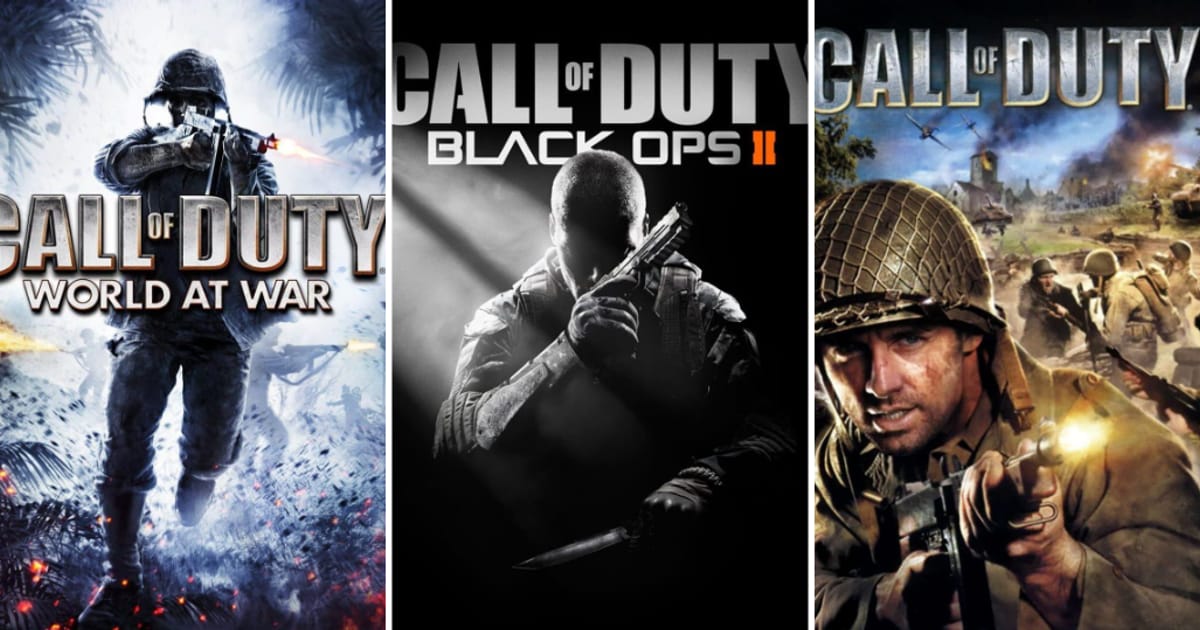
Ask Call of Duty fans which studio has the wildest personality, and Treyarch usually enters the chat wearing a Zombies perk bottle on one hip and a Black Ops conspiracy board under one arm. While Infinity Ward built the original Call of Duty foundation and Modern Warfare swagger, Treyarch became the franchise’s mad scientist: World War II brutality, mind-bending Cold War stories, round-based Zombies, Pick 10 loadouts, Specialists, Blackout, omnimovement, and enough Easter eggs to make a rabbit file for overtime.
This guide looks at every major Treyarch Call of Duty game, ranked and discussed through the lens of COD fans: what players loved, what aged well, what caused lobby arguments, and which entries still inspire the classic “one more match” lie at 2:37 a.m. We are focusing on Treyarch-led or Treyarch co-led Call of Duty releases, from Call of Duty 2: Big Red One to the modern Black Ops era.
Why Treyarch Matters So Much to Call of Duty Fans
Treyarch’s identity is easy to spot. Its best Call of Duty games often feel fast, colorful, experimental, and slightly unhinged in the best possible way. The studio helped turn Zombies from a bonus mode into a franchise pillar. It made Black Ops a spy-thriller sub-series full of betrayals, numbers, brainwashing, future warfare, and characters fans still quote years later. It also pushed multiplayer systems that became fan favorites, including League Play, Pick 10, weapon prestige, scorestreak rhythm, and map designs that reward aggressive movement.
Not every Treyarch COD game is universally loved. COD fans are not exactly shy; they can detect a bad spawn faster than most people smell burnt toast. But even the controversial Treyarch titles usually tried something memorable. That is why ranking Treyarch Call of Duty games is less like reading a boring report card and more like sorting old war stories from a very loud group chat.
Every Major Treyarch Call of Duty Game, Explained
1. Call of Duty 2: Big Red One (2005)
Call of Duty 2: Big Red One was Treyarch’s first major COD step, developed for GameCube, PlayStation 2, and Xbox. Instead of trying to simply shrink the PC and Xbox 360 version of Call of Duty 2, Treyarch built a console-focused World War II experience centered on the U.S. Army’s 1st Infantry Division, famously known as the “Big Red One.”
Fans remember it for its squad-based campaign feel, gritty battlefields, and old-school presentation. It was not the flashiest COD ever made, but it had something many players still respect: a clear identity. Missions moved through North Africa, Sicily, and Europe, giving the campaign a strong sense of military travelogue. The gunplay was slower and less polished than modern Call of Duty, but for console players in 2005, it delivered a satisfying war shooter with personality.
Fan verdict: Underrated. Not the king of Treyarch COD games, but a meaningful starting point that showed the studio could handle cinematic warfare.
2. Call of Duty 3 (2006)
Call of Duty 3 was Treyarch’s first mainline COD entry. Released during the early Xbox 360 and PlayStation 3 period, it stayed in World War II and focused heavily on the Normandy breakout. It also arrived fast, which is probably why some fans view it as a sturdy but slightly rushed chapter.
The campaign featured American, British, Canadian, and Polish forces, which gave the story a wider Allied perspective. It also leaned into chaotic battlefield moments, vehicle sequences, and close-quarters combat. The multiplayer was ambitious for its time, especially on consoles, with classes, vehicles, and larger battlefields than many fans expected.
Today, Call of Duty 3 sits in a strange place. It is respected by longtime players but rarely treated as essential. It lacks the legendary status of World at War or Black Ops II, yet it helped Treyarch earn the trust needed to become one of Call of Duty’s main development pillars.
Fan verdict: Solid but overshadowed. A historical COD that built Treyarch’s foundation, even if it does not dominate nostalgia lists.
3. Call of Duty: World at War (2008)
If Treyarch’s early COD games were warm-ups, Call of Duty: World at War was the studio kicking the door open and yelling, “Yes, we brought flamethrowers.” Released after Call of Duty 4: Modern Warfare, World at War returned to World War II but made it darker, harsher, and more brutal than earlier entries.
The campaign split between the Pacific theater and the Eastern Front, giving players unforgettable missions with U.S. Marines and Soviet soldiers. The tone was grim, violent, and intense. It showed war as mud, fire, fear, and desperate survivalnot just heroic music and clean uniforms.
But the true fan-history moment came after the credits: Nazi Zombies. What began as a bonus survival mode became one of the most important innovations in Call of Duty history. Nacht der Untoten was simple: board up windows, buy weapons, survive waves, scream when your friend opens the wrong door. Beautiful chaos.
Fan verdict: Legendary. A brutal campaign, strong multiplayer, and the birth of Zombies make it one of Treyarch’s most important games.
4. Call of Duty: Black Ops (2010)
Call of Duty: Black Ops is where Treyarch became Treyarch in the eyes of millions. The Cold War setting, secret operations, psychological twists, and unforgettable “numbers” storyline gave the series a new flavor. This was not just soldiers moving from objective A to objective B; this was conspiracy, memory, manipulation, and one of COD’s most famous campaign reveals.
Fans still talk about Alex Mason, Frank Woods, Jason Hudson, Viktor Reznov, and Raul Menendez’s early narrative setup. The campaign mixed Vietnam, Cuba, the Soviet Union, and covert operations into a spy-thriller roller coaster. Multiplayer also became a fan favorite thanks to memorable maps like Nuketown, Firing Range, Summit, and Jungle. The COD Points wager match system gave players party-style competition, and Zombies expanded with maps such as Kino der Toten and Five.
Black Ops has aged well because it balanced all three pillars: campaign, multiplayer, and Zombies. It did not feel like one mode was carrying the others on its back while asking for hazard pay.
Fan verdict: Iconic. One of the most complete Treyarch COD games and a top-tier fan favorite.
5. Call of Duty: Black Ops II (2012)
For many COD fans, Black Ops II is Treyarch’s masterpiece. It had the confidence to jump between Cold War flashbacks and a near-future 2025 storyline, while keeping the emotional core tied to Mason, Woods, and Menendez. Raul Menendez became one of Call of Duty’s strongest villains because the game gave him motivation, tragedy, and menace. He was not just “angry man with a plan.” He was personal.
The campaign introduced branching choices and multiple endings, giving players a reason to replay the story. Multiplayer delivered one of the most beloved systems in COD history: Pick 10. Instead of forcing rigid class slots, Pick 10 let players build loadouts around their style. Want more perks? Sacrifice attachments. Want a stacked weapon? Drop equipment. It was simple, flexible, and brilliant.
The map pool also became fan gold: Raid, Standoff, Hijacked, Slums, Yemen, and Express still trigger instant nostalgia. Zombies became larger and more ambitious with TranZit, Mob of the Dead, Origins, and more experimental modes.
Fan verdict: Elite. Often considered the best Treyarch Call of Duty game and one of the best COD games ever.
6. Call of Duty: Black Ops III (2015)
Black Ops III is one of Treyarch’s most interesting games because fans often separate its modes into different report cards. Campaign? Confusing. Multiplayer? Addictive if you liked advanced movement. Zombies? Absolutely massive.
The campaign jumped into a dark future of cybernetic soldiers, artificial intelligence, and reality-bending storytelling. Some players enjoyed the ambition, but others felt the plot needed a corkboard, red string, three coffees, and possibly a philosophy degree. Multiplayer, however, found a strong audience with wall-running, thrust jumps, Specialists, and a slick flow that rewarded movement mastery.
Zombies is where Black Ops III became immortal. Shadows of Evil, Der Eisendrache, Gorod Krovi, Revelations, and especially Zombies Chronicles made it one of the richest Zombies packages in COD history. For many Zombies fans, Black Ops III is still the gold standard.
Fan verdict: Divisive but beloved. Campaign debates continue, but Zombies fans treat it like sacred scripture with GobbleGum.
7. Call of Duty: Black Ops 4 (2018)
Black Ops 4 may be Treyarch’s most controversial main entry. It launched without a traditional single-player campaign, which immediately made some fans clutch their physical copies of Black Ops like family heirlooms. Instead, Treyarch focused on Multiplayer, Zombies, and Blackout, Call of Duty’s first major battle royale mode.
Multiplayer leaned into Specialists, manual healing, longer time-to-kill, and more tactical team fights. Some fans loved the skill gap. Others missed classic COD simplicity. Zombies launched with a large offering, including IX, Voyage of Despair, Blood of the Dead, and Classified, but the mode’s complexity divided players.
Blackout deserves credit. Before Warzone became the monster hiding under everyone’s hard drive, Blackout proved Call of Duty could work as a battle royale. It had classic map locations, vehicles, perks, and a faster arcade feel than many competitors.
Fan verdict: Bold but divisive. No campaign hurt its reputation, but Blackout and competitive multiplayer still have loyal defenders.
8. Call of Duty: Black Ops Cold War (2020)
Black Ops Cold War, co-developed by Treyarch and Raven Software, acted as a direct sequel to the original Black Ops. Raven led the campaign, while Treyarch brought its signature touch to Multiplayer and Zombies. The result was a game that felt like a bridge between classic Black Ops flavor and the modern Warzone era.
The campaign brought back familiar faces like Woods, Mason, and Hudson, while introducing Bell, Adler, and a paranoia-heavy Cold War mystery. It offered player choice, side missions, and multiple endings, making it one of the stronger modern COD campaigns.
Multiplayer launched with mixed reactions, partly because expectations were sky-high and the game followed Modern Warfare 2019’s heavier feel. But over time, many fans warmed up to its arcade pace, traditional map structure, and competitive rhythm. Zombies also returned to a more accessible style with Die Maschine, Outbreak, and a progression system that welcomed new players without completely abandoning veterans.
Fan verdict: A grower. Not perfect at launch, but many fans now respect its campaign, Zombies, and classic arcade pacing.
9. Call of Duty: Black Ops 6 (2024)
Black Ops 6 arrived with major expectations because Treyarch and Raven had more development time than usual for a modern COD release. Raven led the campaign, while Treyarch focused strongly on Multiplayer and Zombies. The early 1990s setting placed the game during a period of political uncertainty, covert operations, and spy-thriller energy.
The big gameplay headline was omnimovement, a movement system that allowed players to sprint, slide, and dive in all directions. For aggressive players, it made gunfights feel more fluid and stylish. For slower players, it created moments where enemies seemed to enter rooms like action-movie stunt doubles who forgot gravity had rules.
Fans praised the return of round-based Zombies, traditional Prestige, and the overall feeling that Treyarch was trying to reconnect with classic Black Ops DNA. The campaign received attention for its variety and psychological twists, while multiplayer became a major discussion point because movement skill mattered more than ever.
Fan verdict: Strong modern entry. Its movement system and return-to-roots features made it one of the more important recent Treyarch COD games.
10. Call of Duty: Black Ops 7 (2025)
Black Ops 7, co-developed by Treyarch and Raven Software, pushed the series into 2035 and followed up on threads from Black Ops II and Black Ops 6. It brought David Mason back into focus and leaned into psychological warfare, near-future conflict, and a larger co-op-friendly structure.
The game’s biggest promise was scale. Campaign could be played solo or cooperatively, Multiplayer continued the Black Ops style with futuristic tools, and Zombies carried forward the Dark Aether storyline. Fans responded strongly to some parts of the package, especially Zombies and Multiplayer content, while the campaign received more mixed reactions from players who wanted a tighter traditional story.
That split is very Treyarch, honestly. The studio often aims big, and big swings sometimes create home runs, foul balls, and one guy in the stands yelling about spawns. Black Ops 7 represents the modern challenge for Treyarch: satisfy nostalgia-heavy fans while building new systems for a live-service COD world.
Fan verdict: Ambitious and debated. Strong mode variety, but fan opinion depends heavily on whether players value experimentation or classic structure.
Best Treyarch Call of Duty Games Ranked by Fan Reputation
- Call of Duty: Black Ops II The fan-favorite king thanks to Pick 10, iconic maps, strong campaign choices, and excellent replay value.
- Call of Duty: Black Ops A complete package with a legendary campaign, classic multiplayer maps, and beloved Zombies.
- Call of Duty: World at War Brutal, atmospheric, and historically important because it introduced Zombies.
- Call of Duty: Black Ops III A Zombies masterpiece with divisive but memorable futuristic multiplayer.
- Call of Duty: Black Ops 6 A strong modern revival with omnimovement, round-based Zombies, and classic Prestige energy.
- Call of Duty: Black Ops Cold War A respected modern Black Ops entry that improved with time and content updates.
- Call of Duty: Black Ops 4 Bold, multiplayer-focused, and historically important for Blackout, but hurt by no campaign.
- Call of Duty: Black Ops 7 Big and ambitious, with strong mode variety but divided campaign reactions.
- Call of Duty 3 A solid World War II entry remembered more by longtime fans than the wider community.
- Call of Duty 2: Big Red One A charming console-era foundation piece and an underrated Treyarch beginning.
What COD Fans Usually Love About Treyarch Games
Memorable Maps
Treyarch has an excellent record with maps that become part of Call of Duty culture. Nuketown alone has probably caused more friendly arguments than Thanksgiving politics. Raid, Standoff, Firing Range, Summit, Hijacked, Jungle, and Slums remain fan favorites because they are readable, replayable, and built for action.
Zombies With Personality
No discussion of Treyarch Call of Duty games is complete without Zombies. The mode grew from a creepy bonus room into a massive universe with characters, wonder weapons, Easter eggs, perk machines, Pack-a-Punch, GobbleGum, Dark Aether lore, and enough hidden steps to make casual players ask, “Wait, we need to shoot what with which upgraded bow during which moon phase?”
Arcade-Speed Multiplayer
Treyarch multiplayer often feels more colorful, readable, and scorestreak-driven than some other COD styles. Fans who prefer faster engagements, cleaner lanes, and aggressive movement often gravitate toward Treyarch’s design philosophy.
Risk-Taking
Branching campaigns, Pick 10, Specialists, Blackout, Zombies Chronicles, Outbreak, omnimovement, co-op campaign systemsTreyarch rarely sits still. Even when a feature divides the audience, it usually gives fans something to discuss, test, meme, and argue about for years.
of Fan-Style Experience: Playing Treyarch COD Games Over the Years
Playing Treyarch Call of Duty games feels like growing up through different eras of online gaming culture. The early World War II titles had that classic couch-and-console feeling, where campaigns were the main event and multiplayer was still finding its long-term identity. You played Big Red One or Call of Duty 3 for the battlefield atmosphere, the squad chatter, and the simple thrill of surviving another mission. There was no battle pass to chase, no operator bundle doing a dance in the menu, and no friend saying, “Bro, check the meta build.” It was just you, a rifle, and a lot of dramatic smoke.
Then World at War changed the mood completely. The campaign felt meaner, heavier, and more frightening. The first time many players unlocked Zombies, it felt like finding a secret game hidden inside the game. Nobody knew exactly what it would become. Friends would gather around, repair windows, panic-buy wall weapons, and blame each other when the undead broke through. That mode created a different kind of COD memory: less about kill-death ratio, more about survival, teamwork, and hilarious failure.
With Black Ops and Black Ops II, Treyarch hit the sweet spot for a huge part of the fanbase. These were the games where school, work, and sleep schedules were frequently disrespected. Multiplayer lobbies had personality. Nuketown was chaos in a shoebox. Raid felt like competitive perfection. Standoff turned every match into a western duel with assault rifles. And Zombies became a ritual: learn the map, find the power, unlock Pack-a-Punch, argue about who gets the Ray Gun, repeat forever.
Black Ops III was the era where movement skill became a personality test. Some players loved wall-running and boost jumps because they made matches faster and more expressive. Others wanted everyone to put their feet back on the ground immediately. But Zombies fans were eating extremely well. The maps were layered, cinematic, and packed with secrets. Completing Easter eggs started feeling like organizing a small community theater production where everyone had a weapon and nobody remembered step seven.
Black Ops 4 felt like Treyarch asking, “What if we remove the campaign and see who yells first?” Many yelled. But Blackout was genuinely exciting, especially before Warzone took over the battle royale conversation. It felt like a COD museum turned into a last-player-standing playground. Dropping into familiar locations with friends had a special charm.
The newer Treyarch/Raven era, from Cold War through Black Ops 6 and Black Ops 7, reflects modern COD’s challenge: players want nostalgia, innovation, fair matchmaking, smooth movement, strong Zombies, great maps, constant updates, and somehow a file size that does not eat the entire console. That is a lot to ask. Still, Treyarch’s best quality remains its willingness to build Call of Duty games that fans remember. Love them or argue about them, Treyarch COD games rarely feel invisible.
Conclusion: Which Treyarch COD Game Is the Best?
If we judge by broad fan reputation, Call of Duty: Black Ops II is the strongest candidate for the best Treyarch Call of Duty game. It combined a smart campaign, beloved multiplayer, excellent maps, competitive systems, and ambitious Zombies. However, Black Ops is the emotional favorite for many fans, World at War is the historical turning point, and Black Ops III may be the ultimate Zombies package.
The beauty of Treyarch’s COD history is that each game represents a different kind of fan. Campaign fans talk about Mason, Woods, Reznov, and Menendez. Multiplayer fans debate Pick 10, Specialists, and map design. Zombies players are still solving puzzles, chasing high rounds, and explaining lore with the intensity of a college professor who replaced the syllabus with a Pack-a-Punch machine.
Every Treyarch Call of Duty game has left a mark. Some marks are gold medals. Some are scorch marks from a flamethrower. Either way, COD fans are still talking, ranking, replaying, and arguingand that might be the clearest proof of Treyarch’s impact.
Note: This article synthesizes real franchise information from official Call of Duty and Treyarch materials, platform listings, review aggregators, and major U.S. gaming publications, rewritten in original SEO-friendly language for web publishing.