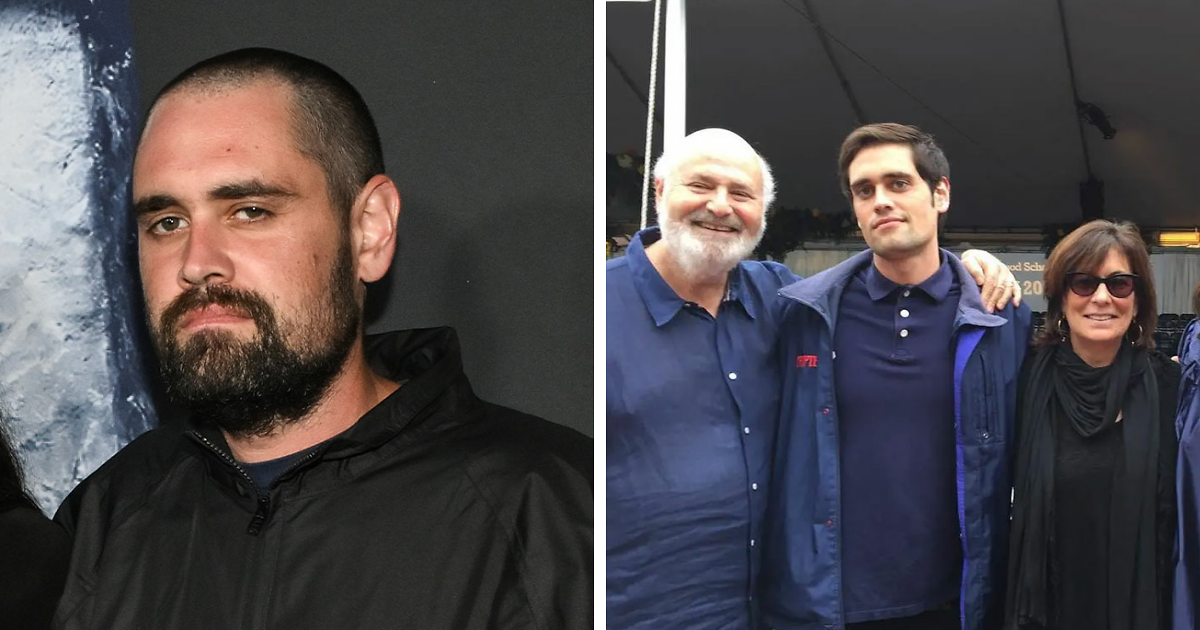
Editor’s note: Nick Reiner has pleaded not guilty and is presumed innocent unless proven guilty. Reports about his diagnosis, medication and behavior rely partly on unnamed sources and have not all been tested in court. Because this story involves two deaths and a serious mental health condition, the discussion below uses a measured tone rather than treating tragedy as entertainment.
A disturbing celebrity homicide case, an alarming mental health report and a headline built for instant clicks: the Nick Reiner story contains nearly every ingredient that can turn a complicated criminal proceeding into an internet certainty machine.
Yet one important detail is frequently blurred. Reputable reporting did not establish that Reiner suddenly received a schizophrenia diagnosis only weeks before his parents’ deaths. NBC Los Angeles reported that sources with direct knowledge said he had been diagnosed years earlier. What reportedly changed shortly before the killings was his medication or dosage.
That distinction matters. A diagnosis does not automatically make someone violent, “erratic” or legally incapable of understanding his actions. Medication adjustments can coincide with changes in symptoms, but coincidence does not prove causation. Substance use, treatment adherence, individual medical history, environmental stress and numerous other factors may also be relevant.
Here is what has been publicly confirmed, what remains an allegation and why responsible coverage must avoid turning schizophrenia into a convenient explanation for violence.
What Authorities Have Confirmed About the Reiner Homicide Case
Rob Reiner and Michele Singer Reiner were found dead in their Brentwood, Los Angeles, home on December 14, 2025. The Los Angeles County medical examiner classified the deaths as homicides caused by multiple sharp-force injuries.
Prosecutors charged their son, Nick Reiner, with two counts of first-degree murder. The criminal complaint included a special-circumstance allegation involving multiple murders and an allegation that a knife was used. The charges are accusations, not findings of guilt.
Reiner pleaded not guilty on February 23, 2026. He remains jailed without bail. At an April court appearance, the parties agreed to return on September 15, 2026, to discuss scheduling a preliminary hearing, at which a judge would determine whether sufficient evidence exists for the case to proceed toward trial.
Publicly available information about the prosecution remains limited. Authorities have not announced a definitive motive, and a court order has restricted the release of significant autopsy material. In June 2026, the Associated Press reported that Reiner was seeking access to money from a trust established by his parents, arguing that the funds were needed for his legal defense and basic expenses. That civil trust dispute does not determine whether he committed the charged crimes.
What Was Reported About Nick Reiner’s Diagnosis?
NBC4 Investigates reported in December 2025 that three sources with direct knowledge of the case said Reiner was receiving treatment for schizophrenia at the time of his parents’ deaths. According to those sources, the diagnosis had been made years earlier and he had been prescribed medication.
The same report said his medication had been changed or adjusted before the killings, although the sources did not provide NBC with a precise timeline. A sealed medical order had also been filed in the criminal case, but its contents were not publicly disclosed.
People subsequently summarized reporting from NBC Los Angeles and the Los Angeles Times while interviewing an independent psychiatrist who had no connection to Reiner or his treatment. That expert explained that medication changes can sometimes be associated with the return or worsening of symptoms, but she did not assess Reiner and could not determine what happened in his case.
The Crucial Correction to the Viral Headline
The simplified online version often sounds like this: Reiner received a shocking diagnosis, the diagnosis made him erratic and the resulting condition led directly to homicide.
The public record does not establish that sequence.
A more accurate description is that sources reported a longstanding schizophrenia diagnosis and a more recent medication adjustment. Some anonymously sourced accounts characterized his behavior during that period as alarming, disruptive or erratic. Those descriptions have not been presented as sworn medical testimony, and no public evidence currently proves that a particular prescription caused any specific act.
The internet loves a tidy one-sentence explanation. Medical and criminal realities rarely cooperate.
Reports of Unusual Behavior Before the Deaths
Several outlets reported that Reiner behaved unusually at a holiday gathering shortly before his parents were found dead. Sources told NBC News that he had been disruptive at the event, while other reports described an argument involving Nick and his father.
Such accounts may eventually become part of witness testimony. For now, however, they should be described as reports attributed to sourcesnot as established proof of motive, psychosis or criminal responsibility.
Behavior that appears strange to an observer can have many possible explanations. A person might be intoxicated, sleep-deprived, frightened, experiencing medication side effects, suffering symptoms of an illness or simply behaving rudely. A journalist, party guest or social-media commentator cannot responsibly diagnose the cause from a brief encounter.
Understanding Schizophrenia Without Reinforcing Stigma
Schizophrenia is a serious, treatable mental disorder that can affect thoughts, perceptions, emotions, communication and daily functioning. Symptoms may include hallucinations, delusions, disorganized thinking, cognitive difficulties, reduced motivation and social withdrawal. Symptoms vary greatly among individuals and may change over time.
Treatment commonly includes antipsychotic medication, psychotherapy, coordinated specialty care, rehabilitation services and family support. Finding an effective medication may involve careful adjustments because medications differ in benefits, dosage requirements and potential side effects.
A Diagnosis Is Not a Prediction of Violence
The American Psychiatric Association emphasizes that most people with schizophrenia are not more violent than members of the general population. People living with serious mental illness may be more vulnerable to victimization, homelessness, self-harm and discrimination than they are likely to harm someone else.
That does not mean violence can never occur when severe psychiatric symptoms are present. It means diagnosis alone is a poor explanation. Risk assessment must consider an individual’s symptoms, history, access to treatment, substance use, previous conduct, current stressors and other evidence.
Framing schizophrenia as a synonym for danger can discourage people from seeking care and make families less willing to discuss warning signs. The CDC notes that stigma can delay treatment, interrupt care and deepen social isolation.
Why Medication Changes Require Careful Interpretation
Psychiatric medications may be changed for many reasons. A drug may not be controlling symptoms effectively. Side effects may become intolerable. A patient may stop taking it, take it inconsistently or combine it with alcohol or other substances. A clinician may adjust the dosage or transition to another medication while monitoring the response.
During a transition, symptoms can sometimes return or intensify. New side effects can also appear. That is why medication changes are normally supervised and why patients and families are encouraged to report sudden changes in sleep, thinking, agitation, paranoia, mood or ability to function.
Still, saying that symptoms worsened after a medication adjustment is different from proving that the medication caused a homicide. Establishing causation would require medical records, toxicology evidence, prescribing information, expert analysis and a detailed timeline. None of that can be replaced by an anonymous quote or a dramatic headline.
Substance Use Can Complicate the Picture
Reiner had previously spoken publicly about addiction, treatment programs, relapse and periods of homelessness. Those experiences helped inspire Being Charlie, a semiautobiographical film he co-wrote and his father directed.
Co-occurring mental illness and substance use can complicate diagnosis and treatment. Certain substances can produce or intensify symptoms resembling psychosis, while psychiatric symptoms may also increase a person’s vulnerability to substance misuse. Effective care therefore often addresses both conditions together instead of treating them as unrelated problems.
Reporting on past addiction, however, does not establish that Reiner was using drugs at the time of the deaths. Unless toxicology results or verified records become public, claims about intoxication should not be presented as fact.
Could Mental Health Evidence Affect the Criminal Case?
Mental health evidence may become relevant in several legally distinct ways. It could relate to Reiner’s present ability to understand the proceedings and assist his attorneys. It might also be offered later to address his mental state at the time of the alleged offenses.
Those are not interchangeable questions. A person can have schizophrenia and still be competent to stand trial. A person can also experience symptoms without meeting the demanding legal requirements for an insanity defense.
California competency evaluations examine whether a mental health disorder prevents a defendant from understanding the nature of the criminal proceedings or rationally assisting counsel. If formal competency proceedings begin, the underlying criminal case may be suspended until the issue is resolved.
As of July 2026, Reiner had entered a not-guilty plea, and no publicly announced court ruling had declared him legally insane or incompetent. Speculation about his ultimate defense strategy therefore remains speculation.
What Remains Unknown
Despite months of attention, many central questions remain unanswered publicly:
- What evidence led detectives to identify Nick Reiner as the suspect?
- What do the complete autopsy and forensic reports show?
- What was the exact nature and timing of any medication adjustment?
- What did treating clinicians observe before the deaths?
- Was substance use involved, and what would verified toxicology evidence establish?
- Will defense attorneys introduce psychiatric evidence?
- What testimony will witnesses provide under oath?
Until those questions are addressed through reliable records or courtroom evidence, certainty is premature. Responsible reporting should distinguish verified facts from allegations, medical information from speculation and a criminal charge from a conviction.
A 500-Word Perspective: Experiences and Lessons for Families, Newsrooms and Readers
Cases involving severe mental illness often feel painfully familiar to families who have spent years navigating treatment systems. Their experience is rarely a straight line from diagnosis to recovery. It may involve promising periods, sudden relapses, medication changes, insurance disputes, emergency-room visits and exhausting arguments over whether a loved one needs more intensive help.
One lesson from those experiences is that a sudden behavioral change deserves attention, but not instant amateur diagnosis. Families may notice that someone has stopped sleeping, become unusually suspicious, withdrawn from friends, abandoned basic routines or started speaking in ways that are difficult to follow. Those observations should be documented and communicated to qualified clinicians. When there is an immediate threat of violence, self-harm or medical danger, emergency services may be necessary.
Another lesson is that medication management requires communication. Patients may be reluctant to report side effects because they fear hospitalization, judgment or losing control over treatment decisions. Relatives may see changes without knowing what medication was prescribed. Clinicians may be limited in what they can disclose because of privacy rules, but family members can usually provide information even when the clinician cannot discuss the patient’s care in return. A dated record of sleep changes, missed doses, substance use, threats or unusual conduct can be more useful than a vague statement that someone “seems off.”
Newsrooms face a parallel responsibility. Describing a person as “schizophrenic,” “crazy” or “dangerous” turns a diagnosis into an identity and implies a causal conclusion that may not exist. Better reporting attributes medical claims, identifies their limitations and reminds readers that most people with schizophrenia are not violent. It also avoids publishing graphic details merely because they increase clicks.
Readers have a role, too. Before sharing a headline, check whether the diagnosis was confirmed by records, attributed to anonymous sources or merely repeated from another publication. Notice whether the article separates a medication adjustment from the underlying condition. Look for language acknowledging the presumption of innocence. If those safeguards are missing, the story may be selling certainty it has not earned.
Perhaps the most difficult experience for families is accepting that love, money and access to treatment do not guarantee control over another adult’s decisions or symptoms. Relatives can support appointments, pay for programs, offer housing and establish boundaries, yet still face outcomes they cannot prevent. That reality should inspire better crisis care and greater compassionnot simplistic blame.
The Reiner case will ultimately be decided by evidence, legal standards and the court process. The broader public-health lesson is already visible: mental illness must be taken seriously without being turned into a shortcut explanation for every violent act. Compassion for people with psychiatric conditions and accountability for criminal conduct are not opposing ideas. A responsible society must be capable of holding both at once.
Conclusion
The most sensational version of this story claims that Nick Reiner received a startling diagnosis shortly before the homicides and became erratic because of it. Available reporting presents a more complicated picture. Sources said the schizophrenia diagnosis was made years earlier, while a medication adjustment occurred closer to the deaths. Reports of unusual behavior may be relevant, but they do not establish medical causation, motive or guilt.
Reiner has pleaded not guilty. The prosecution must prove its allegations beyond a reasonable doubt, and the defense will have an opportunity to challenge the evidence. Until the court record develops, readers should resist treating leaked medical information as a verdict.
Research note: This article synthesizes reporting and guidance from the Associated Press, Reuters, the Los Angeles County District Attorney’s Office, NBC Los Angeles, ABC7 Los Angeles, the Los Angeles Times, People, PBS NewsHour, Northeastern University, the National Institute of Mental Health, the American Psychiatric Association, the CDC and the California Courts. No private medical records were available for independent review.
Crisis note: In the United States, anyone experiencing an immediate mental health crisis can call or text 988. Call 911 when there is an imminent threat of violence or a medical emergency.