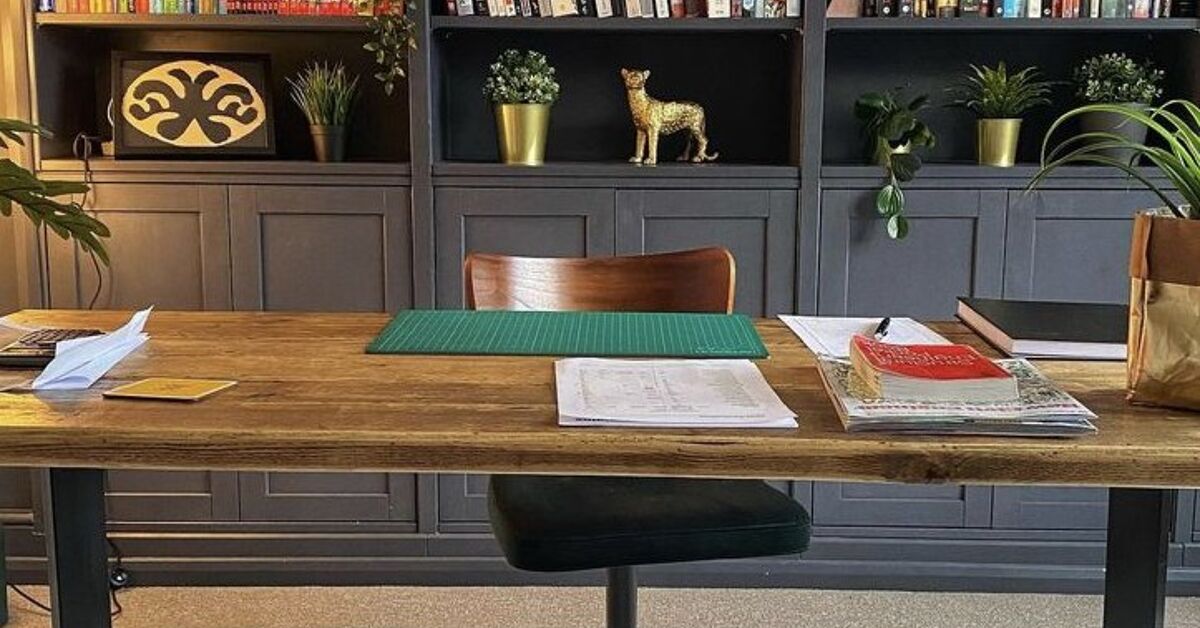
Cabinet hardware may be small, but it has an impressive talent for changing the mood of an entire room. At Alabaster Studio in Oslo, familiar form are reworked in solid brass with the poise of miniature sculpture. The result feels distinctly Scandinavian without becoming icy or anonymous: practical, tactile, quietly decorative, and designed to improve as time leaves its mark.
Small Hardware, Serious Design Impact
A cabinet pull occupies only a few inches of visual space, yet it is one of the parts of a room that people touch most often. It opens the drawer holding the coffee filters, the cupboard hiding the cereal, and the vanity drawer where everyone insists they did not leave the toothpaste cap. That daily contact makes hardware both a functional tool and a piece of domestic jewelry.
Alabaster Studio’s collection approaches that overlooked detail with unusual care. The Oslo shop offers elegant cabinet pieces in solid brass, including round knobs, ring pulls, and a curved Swan’s Neck pull. The hardware is available in solid brass or brass with a zinc finish, and the uncoated brass is meant to develop patina rather than remain frozen in factory-new perfection. The studio was founded by British designer Amy Thelwall, whose broader collection mixes original designs, vintage objects, custom lampshades, and antique tiled stoves.
What Makes Alabaster Studio’s Cabinet Hardware Distinctive?
Classic Forms Without Costume-Drama Excess
The collection begins with recognizable hardware archetypes. A round knob is still a round knob. A ring pull still swings from its mount. The Swan’s Neck pull retains the graceful, downward-curving profile associated with traditional cabinetry. Alabaster Studio does not disguise function beneath ornament; instead, it refines proportion, grip, and silhouette.
Brass That Is Allowed to Age
Solid brass brings weight, warmth, and a subtle glow that plated lightweight hardware often struggles to imitate. Brass is primarily an alloy of copper and zinc, valued for useful strength, formability, corrosion resistance, and its ability to accept polished, toned, or plated finishes. Unlacquered brass naturally changes as it reacts with air, moisture, skin oils, and cleaning habits, gradually becoming deeper, softer, and less uniform. ndinavian-British Design Conversation
The studio’s identity is especially interesting because Thelwall’s British background meets an Oslo setting known for a quieter, material-focused design culture. Alabaster Studio describes its related Shaker-kitchen approach as a Scandinavian interpretation: cleaner and more adaptable than the rustic country version, with natural materials, straightforward construction, and lasting function at the center.
The Main Hardware Forms and Where They Work Best
Round Brass Knobs
Round knobs are the collection’s most versatile option. Their compact shape suits upper cabinet doors, narrow doors, small drawers, bedside tables, and furniture pieces where a long pull would feel oversized. They are especially effective on Shaker fronts because the circular shape introduces a soft counterpoint to the rectangular rails and stiles.
Use one knob on a modest door or drawer. On a wide drawer, two knobs can create rhythm and make the load easier to control. For accessibility or for heavy drawers, however, a pull may offer a more forgiving grip than a small knob. Universal-design guidance often favors D-shaped pulls because users can grasp them with the whole hand rather than relying on fingertip strength. Pulls
A ring pull adds movement and historical character. When not in use, the ring rests against its backplate; when lifted, it becomes a handle. That tiny bit of motion makes a cabinet feel more furniture-like and handcrafted. Ring pulls are particularly handsome on freestanding cupboards, campaign-inspired chests, linen cabinets, and the center drawers of a traditional vanity.
Because the ring hangs down, placement deserves a test run. On a frequently used kitchen drawer, make sure fingers can lift and grasp it without scraping the cabinet face. On a decorative sideboard opened only occasionally, the visual effect may matter more than speed. Beautiful hardware should still behave itself.
Swan’s Neck Pulls
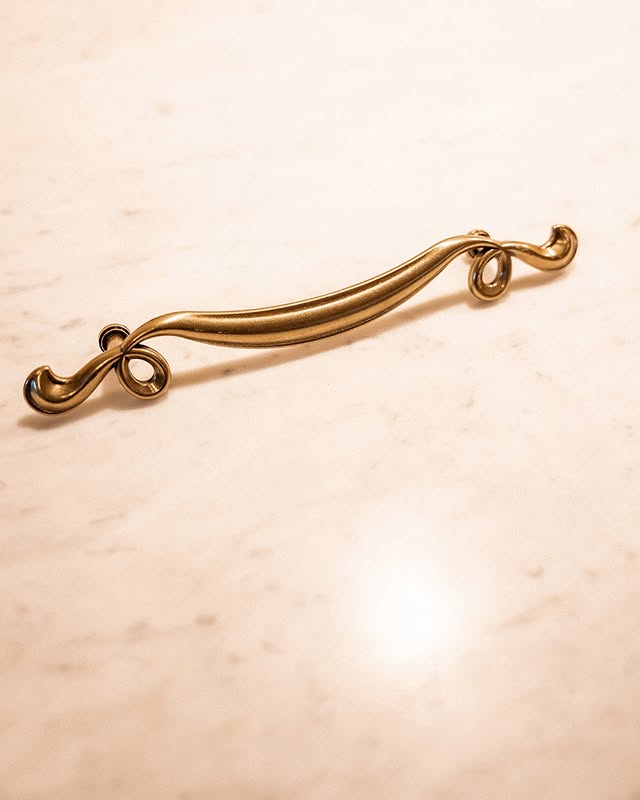
The Swan’s Neck pull is the collection’s most sculptural form. Its curved handle projects from two mounts, offering a full-hand grip and a graceful shadow line. Thelwall describes the design as timeless, with a curved grip that gives cabinets, drawers, and smaller furniture a discreet but distinct lift. ull works especially well on medium and large drawers, where its length feels proportional and its grip is practical. Try it on a kitchen island, a pantry drawer stack, a painted dresser, or a built-in library cabinet. Against deep green, oxblood, navy, charcoal, or warm off-white paint, brass creates a sophisticated contrast. Against oak, walnut, or knot-free pine, it reinforces the warmth already present in the wood.
How to Style Artful Brass Hardware
Pair It with Restrained Cabinetry
Sculptural hardware needs a calm background. Flat-panel and Shaker-style doors give the metal enough breathing room to register without creating visual traffic. Current kitchen guidance from major American design publications increasingly treats hardware as a defining design layer, with warm metals, organic shapes, hand-finished texture, and pieces that feel collected rather than perfectly matched. hapes, but Establish a Rule
A practical combination is knobs on doors and pulls on drawers. Another is small knobs on upper cabinets, Swan’s Neck pulls on lower drawers, and a ring pull on one special freestanding piece. Mixing shapes adds detail, but repetition keeps the room coherent. Better Homes & Gardens and HGTV both note that combining knobs and pulls can create dimension while a consistent finish or repeated form prevents the scheme from feeling random. ne Detail Be the Star
In a busy kitchen with dramatic stone, patterned tile, and colorful cabinetry, select the simplest hardware shape. In a restrained room, the ring pull or Swan’s Neck form can take a larger role. Architectural Digest has long treated distinctive cabinet hardware as capable of transforming cabinetry from background storage into a conversation piece, while HGTV recommends experimenting with scale for a more designed, less off-the-shelf result.
Choosing Size, Placement, and Quantity
For replacement hardware, measure the center-to-center distance between existing mounting holes. Matching that measurement can avoid patching old holes, which may remain visible even after careful filling and painting. For new installations, make a template or jig and test the location with removable putty before drilling. This Old House recommends transferring consistent measurements with a combination square or jig, while Emtek defines pull sizing by the distance between the centers of its two mounting holes. drawers may need a longer pull or two smaller pieces. Heavy trash pullouts and deep pot drawers benefit from hardware that allows a secure grip. Tiny knobs may look charming in a photograph and slightly less charming when someone with wet hands is trying to open a twenty-pound drawer full of cast iron.
Installation: Measure Calmly, Drill Once
Hardware installation is a manageable DIY project, but the risk-to-tool ratio is unusual: a cordless drill can create one tiny hole or one extremely memorable mistake. Protect the cabinet surface with painter’s tape, mark the exact center, use a sharp bit sized for the screw, and support the back of the panel with scrap wood to reduce tear-out.
On existing cabinets, use the old holes whenever the new hardware allows. On new doors, create a reusable drilling jig so each piece lands in the same position. Tighten screws firmly but not aggressively; over-tightening can crush soft wood, damage paint, or make a metal backplate bite into the surface. This Old House specifically recommends a plywood jig for repeatable placement, and Bob Vila identifies swapping cabinet hardware as one of the simplest ways to refresh existing cabinetry without a full renovation. screw length before installation. Door and drawer-front thicknesses vary, especially when a decorative front is attached to a separate drawer box. A screw that is too short will not engage securely; one that is too long may bottom out inside the knob or remain loose. Keep small washers available for fine adjustment.
Caring for Brass and Preserving the Patina
Decide early whether you want the brass to age naturally or remain bright. For natural patina, use a dry soft cloth for routine care and mild soap only when needed. Avoid abrasive pads and harsh chemicals. Rejuvenation’s care guidance for unlacquered brass recommends gentle wiping and notes that heavy tarnish can be polished away when a brighter appearance is preferred. ing resets much of the aged look, so do not polish automatically just because the surface is no longer mirror-bright. Patina is part of the material’s appeal. The Copper Development Association notes that uncoated brass can develop protective brown surface tones over time, while lacquered brass preserves a more consistent original color. chens and bathrooms, wipe away acidic splashes, strong cleaners, and standing moisture promptly. Clean every piece with the same method so the finish ages consistently. Or embrace variation. A pantry knob touched fifty times a day is allowed to look more seasoned than the knob on the cabinet holding the holiday platters. It has earned the distinction.
Why This Hardware Feels Timely Without Feeling Trendy
Design trends currently favor warm metals, handcrafted texture, rounded forms, and finishes that develop character. Alabaster Studio’s pieces align with that direction, but their appeal does not depend on it. Round knobs, ring pulls, and curved handles have existed for generations because they work. Their staying power comes from legible function, comfortable touch, and forms that can move between traditional and modern settings.
The studio’s wider philosophy also resists the disposable decorating cycle. Thelwall has advised choosing pieces one genuinely loves, investing in a few timeless items, and mixing old and new so a home reflects the people living there rather than a passing social-media formula. hilosophy is especially persuasive for hardware. Unlike a dramatic countertop or an entire bank of cabinetry, a knob is a modest commitment. Yet choosing a tactile, durable, artful version can change the way a room feels every day. It is a small design decision with unusually frequent returns.
Experience Notes: Living with Artful Cabinet Hardware
Imagine entering a kitchen early in the morning, before the room has fully decided whether it is elegant or merely in desperate need of coffee. The cabinet fronts are quiet: perhaps pale gray, warm white, or deep bottle green. Your hand reaches for a curved brass pull, and the first impression is weight. Not heaviness for its own sake, but the reassuring density of a real material. The handle does not feel hollow or temporary. It feels anchored.
That tactile moment is where artful hardware proves its value. Photographs can show shape and finish, but they cannot fully communicate the way a rounded edge sits against the fingers or how a ring pull makes a soft sound as it falls back against its plate. These details create a subtle ritual around ordinary actions. Opening a drawer becomes slightly more satisfying. Closing a cupboard feels more deliberate. No one writes poetry about retrieving a colander, but good hardware gives the colander’s entrance a little dignity.
Over the first weeks, bright brass catches the light and repeats warm tones from wood floors, cutting boards, or a linen shade. After several months, frequently touched areas begin to mellow. The knob beside the sink changes faster than the one above the refrigerator. The pull on the silverware drawer becomes smoother and brighter at its center. Instead of making the room look worn out, those differences make it feel specific to the household.
The experience is equally compelling on furniture. Replacing anonymous hardware on an old dresser can reveal proportions that were already there but visually asleep. Small round knobs keep the piece restrained; ring pulls give it a more historical personality; Swan’s Neck pulls make wide drawers easier to use and introduce a graceful horizontal line. The transformation is immediate, but not loud. The furniture simply looks as though someone finally listened to it.
There are practical lessons, too. Samples matter. A knob that looks delicate online may feel too small for a heavy pantry door. A pull that appears modest in isolation may dominate a narrow drawer. Holding a sample against the actual cabinet, in the room’s real daylight and evening light, prevents expensive guesswork. So does testing the grip with wet hands, stiff fingers, and the casual reach used during a busy day.
Most important, artful hardware changes the relationship between perfection and use. A flawless polished surface can make every fingerprint feel like an emergency. A living brass finish invites contact. It expects to be touched, darkened, brightened, and gradually personalized. That quality suits Alabaster Studio’s blend of Scandinavian restraint, British references, vintage appreciation, and human-scale warmth. The hardware is beautiful on installation day, but its more interesting achievement is becoming better acquainted with the room over time.
Conclusion
Artful cabinet hardware from Alabaster Studio demonstrates how a small functional object can carry material richness, historical reference, and modern restraint at once. The collection’s brass knobs, ring pulls, and Swan’s Neck handles suit kitchens, bathrooms, built-ins, and furniture because their shapes are recognizable, their proportions are graceful, and their finishes are permitted to evolve.
Choose the form according to grip and scale, establish a consistent placement rule, test samples before drilling, and decide whether the brass should patina or be polished. Done well, the hardware will not merely decorate cabinetry. It will make the room more pleasurable to usewhich is considerably more valuable than looking photogenic for twelve seconds on social media.