Note: Content synthesized from reputable U.S. sources; source links intentionally omitted.
A ladder is one of those household heroes that spends a lot of time being spectacularly inconvenient. It helps you clean gutters, paint trim, swap lightbulbs, and retrieve holiday decorations from the top shelf like a suburban action star. Then the job is done, and suddenly that same ladder becomes a long, awkward metal giraffe blocking your garage, leaning in a corner, or waiting to stub a toe.
The good news is that wall storage is usually the simplest fix. Hanging a ladder on a wall clears floor space, makes the ladder easier to grab, and helps protect it from getting banged around. The trick is doing it in a way that is secure, sensible, and not one bad screw away from turning your garage into a slapstick comedy scene.
In this guide, we’ll walk through simple ways to hang a ladder on a wall, how to choose the right method for your ladder type, what hardware works best, and which mistakes are better left to the DIY blooper reel. Whether you have a lightweight step ladder, a folding ladder, or a longer extension ladder, there’s a smart storage setup that can get it off the floor and out of your way.
Why Hanging a Ladder on a Wall Is Worth It
Wall storage is not just about making the garage look less chaotic, though that is a lovely side effect. A ladder stored on the wall is less likely to slide, tip over, or get damaged by other tools and equipment. It also frees up valuable floor space for things that actually belong on the floor, like your car, your mower, or that half-finished project that has been “almost done” since spring.
Another benefit is access. When a ladder has a dedicated storage spot, you do not have to wrestle it out from behind bikes, bins, and mystery boxes labeled “misc.” A good wall-hanging setup keeps the ladder visible, stable, and easy to remove without dragging three unrelated items down with it.
Before You Hang Anything, Think About Three Things
1. Your ladder type
A compact step ladder is much easier to hang than a long extension ladder. Step ladders usually fold flat and can be stored either vertically or horizontally. Extension ladders are longer, heavier, and more awkward, so they often need wider support spacing and sturdier mounting points.
2. Your wall structure
The best place to hang a ladder is usually a wall with solid framing behind it. In most garages, that means wood studs. Drywall alone is not the hero of this story. If you are storing a heavier ladder, fastening into studs or into a properly installed rail or track system is the safer move.
3. Your ladder’s condition
Before storing a ladder, give it a quick inspection. If it has bent rails, loose rungs, damaged feet, cracked fiberglass, or sticky locks, fix the issue or retire the ladder. A damaged ladder does not become safer just because it has a nice parking spot.
Where to Hang a Ladder on a Wall
The ideal location is dry, out of the main walking path, and easy to reach without acrobatics. A side garage wall is often perfect. If you can, keep the ladder away from a busy workbench area where it might get bumped or blocked. Many homeowners place ladders high enough to free floor space but low enough that taking them down does not feel like a trust exercise.
Also think about clearance. If you hang the ladder horizontally, make sure it will not interfere with doors, shelves, vehicles, or cabinets. If you hang it vertically, make sure the bottom does not jut out into the space like a shin-seeking missile.
Simple Ways to Hang a Ladder on a Wall
Method 1: Use Two Heavy-Duty Ladder Hooks
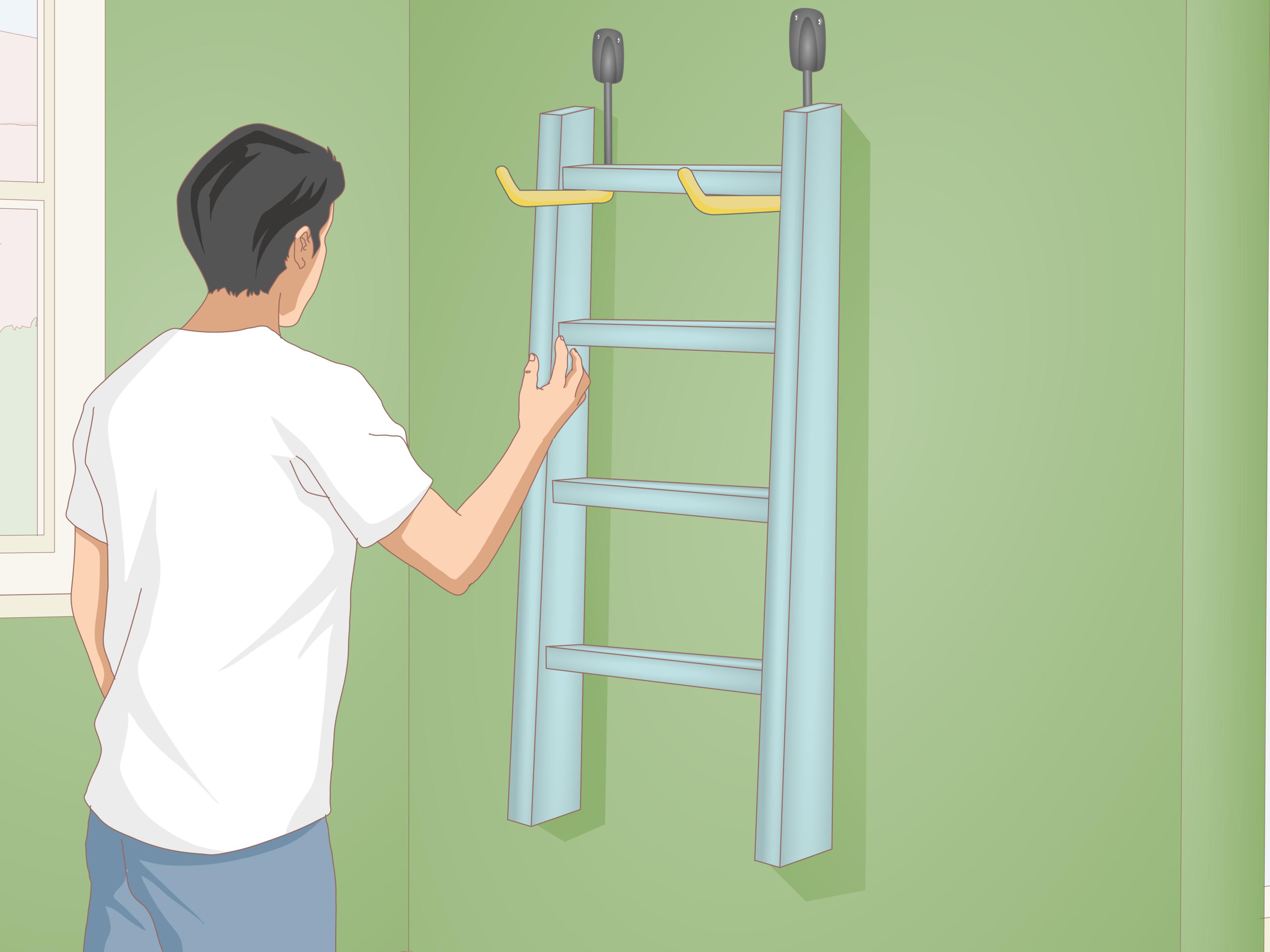
This is the most straightforward option, and for many homeowners, it is the best one. Install two heavy-duty wall hooks into studs, space them wide enough to support the ladder evenly, and rest the folded ladder across them horizontally.
This method works especially well for step ladders and many folding ladders. Look for hooks with a protective coating so the ladder does not get scratched. The hooks should be deep enough to cradle the ladder securely and strong enough for the ladder’s weight. As a rule, wider support is better than hanging the entire ladder from one tiny point and hoping for the best.
Best for: Step ladders, folding ladders, light to medium-weight ladders
Why it works: Easy to install, affordable, and keeps the ladder flat against the wall
Method 2: Install a Wall-Mounted Rail or Track System
If your garage already has a storage rail, slatwall, or track system, you may be able to hang the ladder from adjustable ladder hooks that lock into the system. This is a great option if you want flexibility. You can shift hooks around later, add storage for other tools, and keep the whole wall organized instead of turning it into a random hook museum.
This method is especially handy in busy garages where ladders share wall space with yard tools, hoses, folding chairs, or sports gear. Just make sure the rail system itself is correctly mounted to studs and rated for the weight you plan to store.
Best for: Organized garages, multi-use storage walls, homeowners who want adjustable storage
Why it works: Flexible, clean-looking, and easy to reconfigure
Method 3: Use Padded Arm Hangers or Double-Arm Brackets
Padded arm hangers are a nice upgrade if you want extra support and less pressure on a single narrow point. Instead of a simple hook, these brackets have wider arms that hold the ladder more gently and more evenly. That can be useful for heavier ladders or for anyone who wants a sturdier, more polished setup.
Double-arm brackets are also a smart choice if your ladder tends to twist or shift on narrower hooks. The extra surface area helps stabilize it and can make it easier to put away after use. If you have ever tried to balance a ladder on undersized hooks while pretending everything is fine, this method will feel wonderfully civilized.
Best for: Heavier step ladders, multiposition ladders, medium extension ladders
Why it works: More support, better stability, and less wobble during storage
Method 4: Hang the Ladder Vertically on a Single Heavy-Duty Hanger
If wall width is limited, vertical storage can be a space-saving alternative. A heavy-duty ladder hanger or a specialized bracket can support the ladder near its top, allowing it to hang downward against the wall. This setup works best for lighter ladders and tight storage zones such as utility rooms, sheds, or narrow garage corners.
The key here is balance. The hanger must be appropriate for the ladder’s shape and weight, and the ladder should rest flat and stable against the wall. Vertical storage is great when horizontal space is scarce, but it is not always the easiest option for long or especially heavy ladders.
Best for: Small step ladders, compact folding ladders, tight spaces
Why it works: Uses very little wall width and keeps the floor clear
Method 5: Build a Simple DIY Wood Cleat-and-Hook Setup
If you like a custom solution, a DIY wood mounting strip can work beautifully. Fasten a sturdy wood cleat or backing board across two or more studs, then attach heavy-duty hooks or brackets to the board. This gives you a solid anchor base and lets you place the hooks exactly where you need them.
This method is useful when stud spacing does not line up perfectly with your preferred hook placement. It also works well if you are creating a storage wall for several oversized items and want everything mounted on a uniform strip. Think of it as giving your hooks a proper stage instead of asking them to perform solo.
Best for: Custom layouts, odd stud placement, multi-item storage walls
Why it works: Strong, adaptable, and excellent for tailored storage
How to Hang a Ladder Safely
Whatever method you choose, the basic rules stay the same. Start by choosing hardware rated for the ladder’s weight. Then mount into studs whenever possible. Use a level so the hooks line up properly, and follow the manufacturer’s instructions for screw size, spacing, and load limits.
When the ladder is on the wall, it should sit securely without rolling, shifting, or teetering. If it feels unstable while you are putting it away, it will not magically become stable later. Adjust the hook spacing, switch to a wider bracket, or move to a sturdier system.
For extension ladders, support matters even more. These ladders are longer and heavier, so they need enough contact points to avoid sagging or slipping. If the ladder is stored horizontally, support it far enough apart to keep it balanced. If it is especially long, a rail system or multiple support points may be smarter than two basic hooks.
Mistakes to Avoid
Using adhesive hooks
This is not the moment for peel-and-stick optimism. Ladders are bulky, often heavy, and usually stored in garages or sheds where temperatures and humidity swing all over the place. Mechanical fasteners are the safer choice.
Ignoring weight ratings
Not all hooks are created equal. A hook that works for a garden hose may not be thrilled about supporting a ladder. Check the rating for the hardware and remember that real-life storage is not the place for guesswork.
Mounting too high
If you need a ladder to reach the ladder, your system may need a rethink. Store it high enough to save space, but low enough that you can take it down safely without straining or losing control.
Blocking access
A ladder should be easy to remove in one smooth motion. If it is trapped behind bikes, wedged over a freezer, or squeezed next to a shelf full of paint cans, the setup is not helping much.
Storing a dirty or wet ladder
Before hanging it up, wipe off mud, moisture, or debris. A clean, dry ladder is easier on the hardware and better for the ladder itself, especially if it has moving parts or locks.
Which Method Is Best for Your Space?
If you want the simplest answer, go with two heavy-duty ladder hooks mounted into studs. That setup solves the problem for a large number of homeowners, especially for standard step ladders.
If your garage is a shared zone full of tools, sports gear, and seasonal chaos, a rail or track system may be the smarter long-term investment. If your ladder is heavier or slightly awkward, padded arm hangers or wider double-arm brackets can offer more stability. And if your wall layout is weird because homes enjoy being unique in the least helpful ways, a DIY cleat system can save the day.
The best ladder storage solution is the one you will actually use. Fancy storage is pointless if the ladder still ends up leaning against the wall “just for now” every single weekend.
Real-World Example
Imagine a homeowner with a 6-foot aluminum step ladder in a one-car garage. The garage already has shelves on one side, so there is not much room left. A vertical hanger near the corner could work, but the ladder would stick out into the walking path. In that case, two horizontal padded hooks on the back wall, mounted into studs just above waist height, would likely be the sweet spot. The ladder stays out of the way, remains easy to grab, and does not compete with the shelves.
Now picture a heavier extension ladder in a family garage where every inch matters. A stud-mounted rail with movable heavy-duty hooks would make more sense. It keeps the ladder supported, creates flexibility, and lets the family shift other tools around as storage needs change.
Final Thoughts
Hanging a ladder on a wall is one of those small home upgrades that pays off immediately. It makes the space safer, neater, and easier to use. More importantly, it turns your ladder from a floor-hogging nuisance into a piece of equipment with an actual home.
You do not need an elaborate setup to make it work. In many cases, all it takes is the right pair of hooks, solid mounting points, and a little planning. Choose a location with good clearance, use hardware that matches the ladder’s size and weight, and avoid shortcuts that look clever right up until they fail.
Because let’s be honest: the only thing worse than tripping over a ladder is getting bonked by one that was “probably fine” on the wall.
Experiences Related to Hanging a Ladder on a Wall
People usually do not think much about ladder storage until the ladder starts living like an uninvited roommate. It leans in the corner for a while. Then it slides down one day with a dramatic metallic clatter that sounds like the garage itself is filing a complaint. That is often the moment when homeowners realize storing a ladder on the wall is not just about neatness. It is about sanity.
One common experience is discovering that the “temporary” storage spot becomes permanent almost overnight. A ladder gets parked beside the freezer, behind the trash bins, or next to the workbench. At first, it feels harmless. Then every time someone tries to pull out the mower, grab a rake, or carry in groceries, the ladder becomes part obstacle course, part jump scare. Once it is finally mounted on the wall, the whole garage feels bigger, even though nothing magical happened except moving one awkward object to a smarter location.
Another familiar experience is underestimating how much easier it is to use a ladder when it has a proper place. Homeowners often expect wall storage to be annoying, as if putting the ladder away will become one more chore. But the opposite is usually true. A well-placed wall hanger makes the ladder easier to spot, easier to grab, and easier to return after a project. It removes that little moment of resistance that causes people to leave it out “just until tomorrow,” which is how tomorrow becomes next month.
There is also the lesson many people learn about height. At first, hanging the ladder as high as possible seems smart because it saves floor and wall space. Then reality shows up. Reaching awkwardly overhead while trying to lift a folded ladder onto two hooks is not elegant. It is a shoulder workout mixed with a trust fall. After a few tries, most people adjust the storage height to something more practical and realize accessibility matters just as much as space-saving.
Families often notice a second benefit too: once the ladder is on the wall, other storage starts improving almost by accident. The same thinking that gets the ladder off the floor often leads to better spots for shovels, folding chairs, hoses, and yard tools. The ladder becomes the gateway project. It is the first domino in the great garage cleanup, which is a very productive way to spend a Saturday, even if it begins with the sentence, “I’m just going to move one thing.”
And perhaps the most relatable experience is simple relief. Relief that the ladder no longer crashes down when brushed by a bicycle handle. Relief that the floor looks less cluttered. Relief that reaching for holiday lights no longer requires excavating half the garage first. A wall-mounted ladder may not sound glamorous, but in everyday life it is the kind of small victory that makes a home function better. It is practical, satisfying, and surprisingly dramatic in all the right ways.