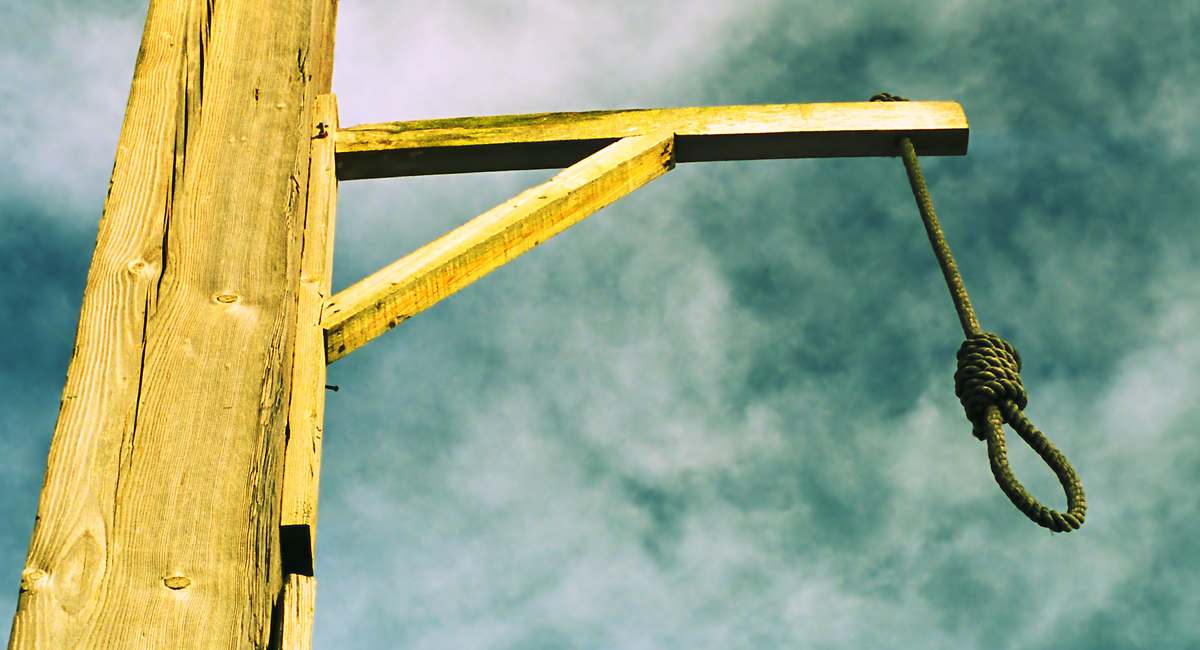
America has a remarkable talent for taking something grim, tragic, and historically embarrassing and turning it into a vibe. A brand, even. Sometimes a seasonal one. Few examples make that clearer than the Salem witch trials. What began in 1692 as a lethal eruption of fear, bad theology, social tension, legal nonsense, and community revenge has, over the centuries, been repackaged into a haunted attraction, a classroom allegory, a feminist symbol, a Halloween economy, and a national shorthand for “people are losing it again.”
And yes, all of that is fascinating. But it is also, frankly, a little weird.
The American cultural memory of Salem tends to wobble between two extremes. On one side, there is the serious, sobering version: a story about mass accusation, weak evidence, misogyny, panic, and the dangers of courts that abandon reason. On the other side, there is the sparkly broomstick version: witch hats, ghost tours, “Witch City” merch, pop culture reinventions, and an entire autumn aesthetic built around a place where innocent people were jailed, condemned, and killed.
That tension is what makes Salem so compelling. It is not just a colonial tragedy. It is a mirror showing how Americans process guilt, entertainment, history, and identity all at once. And the reflection is a bit crooked.
The Real Salem Story Was Not Campy. It Was Brutal, Bureaucratic, and Absurd
Before getting into why America’s modern take is so strange, it helps to remember what actually happened. The Salem witch trials were not a campfire tale or a fog-machine event with a gift shop at the end. They were a legal and moral catastrophe.
In 1692 and 1693, more than 200 people were accused of witchcraft in colonial Massachusetts. Nineteen were hanged. Giles Corey was pressed to death after refusing to enter a plea. Several more people died in jail. The accused were not all women, though women were heavily targeted. The crisis spread beyond Salem itself, touching nearby communities and turning suspicion into a kind of social wildfire.
One reason the trials remain so horrifying is that the process was outrageously flimsy. Authorities accepted “spectral evidence,” meaning testimony that an accused person’s spirit or apparition had harmed someone in a dream or vision. Read that sentence again and enjoy the sensation of your legal standards curling up into a ball. In modern terms, that is like convicting someone because a nightmare had a convincing guest star.
The deeper context mattered too. Colonial New England was full of religious rigidity, political instability, local rivalries, disease fears, property disputes, and anxieties about war on the frontier. Salem Village and Salem Town had their own tensions, and accusations did not emerge from a vacuum. This was a place primed for fear, and fear rarely needs much help once it gets a microphone.
Even the Popular Version Gets Basic Facts Wrong
The weirdness starts early because the national myth of Salem is often built on fuzzy details. Many people think the accused were burned at the stake. They were not. That happened in parts of Europe, but not in Salem. Many people imagine all the events happened in one tidy little tourist square. They did not. Some also assume Salem was one simple community, when the crisis involved the relationship between Salem Village and Salem Town, plus neighboring areas.
Another irony is that the one building in Salem actually associated with the 1692 trials is the Witch House, the home of judge Jonathan Corwin. That is a much more historically awkward landmark than the average souvenir stand suggests. The real story is not all pointed hats and potion bottles. It is judges, testimony, confinement, reputation, coercion, and death.
America Turned Salem Into a National Metaphor
Part of what makes America’s relationship with Salem so odd is that the trials never stayed in the seventeenth century. Salem became one of the country’s favorite metaphors. Whenever Americans want to describe a panic, a purge, a smear campaign, or a moral frenzy, Salem comes marching in like an overworked historical intern.
That did not happen by accident. The trials are uniquely portable as a symbol. They involve fear of hidden enemies, righteous certainty, public accusation, unreliable witnesses, and institutions failing under pressure. In other words, Salem is endlessly reusable. If a society wants to say, “We are doing paranoia again,” Salem is sitting right there, already dressed for the part.
Then Came The Crucible, and Salem Became America’s Favorite Warning Label
Arthur Miller’s The Crucible helped lock Salem into modern political language. By using the witch trials as an allegory for McCarthyism and the Red Scare, Miller made Salem feel permanently current. Since then, the trials have been treated not only as history, but as a recurring civic diagnosis. Whenever public life turns hysterical, people do not just reference Salem; they practically rent it by the hour.
That literary afterlife matters because it shifted Salem from a local tragedy into a national cautionary tale. It entered classrooms, theaters, documentaries, editorials, and public arguments. It became less about specific victims and more about the broader American fear of accusation culture. Useful? Absolutely. But also a little distorting. Once a real tragedy becomes a metaphor, it starts doing double duty. It has to remain historical enough to feel serious, but abstract enough to be endlessly applied.
And that is how a disaster becomes intellectual office equipment.
Then America Turned Salem Into a Destination
If metaphor was one branch of Salem’s afterlife, tourism was the other. Salem’s reputation as “Witch City” did not appear overnight. By the late nineteenth century, the bicentennial of the trials helped expand the city’s identity through postcards, tourist guides, and souvenirs. In other words, Americans began commercializing the trials long before social media, novelty mugs, and branded candle drops made such things feel inevitable.
That reinvention accelerated in the twentieth century and exploded later. The Salem Witch Museum opened in 1972 and became a major landmark in the city’s cultural landscape. In 1982, Salem launched the first Haunted Happenings festival during Halloween weekend. What started as a family-friendly event attracted about 50,000 visitors in its first year and kept growing. Today, Salem’s October identity is so powerful that the city’s historical trauma and seasonal tourism are basically roommates.
The Result Is a Very American Mash-Up
This is where the national take gets truly strange. Salem is simultaneously a site of mourning, a lesson in injustice, a pop-culture magnet, and a spooky-fun travel brand. Visitors can encounter memorials to executed victims, historically grounded tours, and serious museum interpretation, then walk five minutes and buy a black-cat tote bag, witchy fudge, and a T-shirt that treats catastrophe like a charming regional mascot.
To be fair, Salem itself is not unaware of the tension. The city contains institutions and spaces that work hard to restore human dignity to the victims. The Salem Witch Trials Memorial, for example, was designed to foreground the voices and names of those killed. Later, Proctor’s Ledge was formally commemorated as the site of the hangings, helping correct years of confusion and mythmaking. Those efforts matter. They push back against the flattening effect of tourist fantasy.
Still, the tension remains. America seems to love saying, “Never forget,” and then immediately opening a themed retail section.
Why the Salem Obsession Keeps Working
So why does Salem keep getting recycled, rebranded, and reinterpreted? Because it lets Americans tell multiple stories about themselves at once.
First, Salem offers moral clarity. We like stories where the injustice now seems obvious. Salem allows modern Americans to feel wiser than the past, which is emotionally satisfying. It lets us look back and say, “Well, that was irrational,” without always asking whether we still reward panic, rumor, and scapegoating in new outfits.
Second, Salem has powerful visual branding. Puritan New England, candlelight, courtrooms, graveyards, black clothing, whispered accusations, old houses, autumn weather, and the word “witch” itself all carry aesthetic force. Salem is tragic history with excellent set design. That makes it unusually easy to package.
Third, the meaning of “witch” has changed. In 1692, the accusation was deadly. In modern America, “witch” can signal persecution, rebellion, outsider identity, feminist symbolism, spiritual practice, fashion, satire, or seasonal fun. The word no longer stays obediently inside its colonial box. That shift creates a complicated cultural overlap: the victims of Salem were not modern self-identified witches, but modern witch imagery often gets layered over their story anyway.
That overlap can be meaningful, but it can also get muddy fast. Once the symbol becomes larger than the history, the actual people of 1692 start fading into background scenery.
The Weirdest Part May Be How Normalized It All Feels
Maybe the oddest thing of all is how completely normalized Salem’s reinvention has become. The city is officially known as “Witch City.” Salem High School is home of the Witches. There is even a Witchcraft Heights Elementary School. If you step back for one second, that is astonishing. Imagine a community so fully intertwined with a historical injustice that it folds the imagery into civic identity, school branding, and annual celebration.
Now, that does not mean the city is celebrating the 1692 executions. Far from it. Salem today is a complex place with residents, historians, cultural institutions, businesses, and communities that understand the difference between commemoration and caricature. But the larger American gaze often blurs that difference. From the outside, Salem can become a shorthand for “spooky New England fun” before it registers as a story about state violence, failed evidence, and social cruelty.
That is where the national take becomes revealing. Americans are very good at turning painful history into something legible, marketable, and emotionally manageable. We make it teachable. Then theatrical. Then purchasable. Then somehow heartwarming. Salem fits that pattern almost too perfectly.
What Salem Should Really Make Us Ask
The best way to remember Salem is not to strip away every modern reinterpretation. History lives because people keep revisiting it. Metaphors, plays, museums, memorials, and even tourism can all play a role in keeping a past event visible. The problem starts when visibility replaces accuracy, or when aesthetics overpower empathy.
Salem should not just make Americans ask how people in 1692 believed absurd things. It should make us ask why communities under pressure become hungry for certainty, why accusation can feel thrilling, why institutions sometimes prefer confidence over proof, and why innocence is often least protected when fear becomes public entertainment.
In that sense, America’s weird take on Salem is not just weird. It is revealing. We do not merely remember the witch trials. We remake them to suit whatever cultural mood we are in: moral lesson, political warning, feminist iconography, ghost-tour backdrop, October personality trait, or all of the above before lunch.
And maybe that is the final twist. Salem is not only a story about what happened in 1692. It is also a story about what Americans keep doing with 1692. That second story is messy, contradictory, profitable, occasionally thoughtful, occasionally tacky, and unmistakably American.
Which is to say: the witch trials were tragic. The afterlife of the witch trials is a national personality test. We are still taking it.
The Experience of Salem Today: Why the Place Feels So Strange in Real Life
To understand why America’s take on the Salem witch trials feels so weird, it helps to imagine what the modern experience of Salem can be like for a visitor. You arrive expecting one thing and quickly realize you are standing in several Americas at once.
There is the historical America, the one that wants records, names, dates, context, and accountability. That version sends you toward the memorials, the old sites, the court-record archives, the museums, and the quieter corners where the victims stop being abstract and become painfully human again. You read the names. You notice how many accusations spread through ordinary communities. You remember that this was not fantasy. It was procedure. That somehow makes it worse.
Then there is the performative America, which arrives in October wearing velvet, carrying a cider, and cheerfully hunting for the perfect “witchy” photo backdrop. This America is not always mocking the past. Often it is simply consuming it through the logic of tourism. The problem is that tourism has a way of smoothing rough edges. Tragedy becomes atmosphere. The dead become branding. History becomes something you can queue for between lunch and a candle shop.
And yet Salem is not reducible to that, either. The city’s modern identity includes people who actively work to preserve the complexity of the story. You can feel that tension in the way serious interpretation exists alongside seasonal fun, sometimes uncomfortably, sometimes surprisingly well. One moment you are confronted with the human cost of panic; the next, you are watching a city function under the enormous weight of its own myth.
That experience can be emotionally disorienting. You may find yourself thinking, “This place is sincerely trying to remember injustice,” while also thinking, “This magnet shaped like a broom is doing a lot right now.” Both reactions can be true at once. That is exactly why Salem lingers in the mind. It is not a neat heritage site with one agreed-upon message. It is a living argument about memory.
Even the names around Salem can create a kind of historical whiplash. “Witch City” sounds catchy until you remember the origin story. “Home of the Witches” is playful until you think about the accused. The language of civic pride and the language of historical violence occupy the same public space, and that overlap is strange in a way that never completely stops being strange.
Maybe that is why Salem feels less like a finished story and more like an active negotiation. America wants to honor the victims, learn the lesson, enjoy the aesthetic, keep the metaphor, support the local economy, and have a memorable weekend. Those goals do not always fit neatly together. In Salem, they bump into one another on the same streets.
That is the real experience of the topic: not just reading about the witch trials, but recognizing how a nation continues to package, soften, dramatize, and revisit them. Salem today feels like history, warning, commerce, and performance layered on top of each other. It can be moving. It can be thoughtful. It can be a little surreal. Often, it is all three at once.
Conclusion
The Salem witch trials remain one of the clearest examples of how fear can overwhelm evidence and how institutions can fail when panic becomes socially rewarding. But the modern American response to Salem tells its own story. We have turned the trials into a metaphor, a market, a seasonal identity, and a national cautionary tale that still evolves. That is what makes America’s take so weird: we treat Salem as both sacred warning and spooky entertainment, often in the same breath. The challenge is not to stop revisiting Salem. It is to revisit it honestly, with enough historical clarity to remember that behind the symbolism were real people caught in a lethal machinery of suspicion.