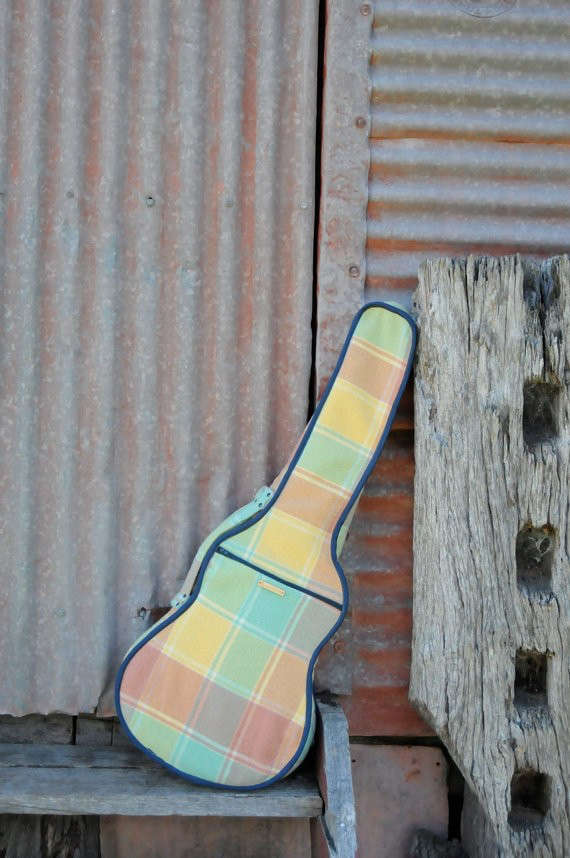
A repurposed blanket guitar case sounds like something invented by a musician who spent all their money on pedals and had exactly twelve dollars left for “gear protection.” But do not laugh too quickly. A sturdy old quilt, wool blanket, moving blanket, or thick fleece throw can become a surprisingly useful soft guitar case when it is planned properly, sewn securely, and used for the right kind of travel.
This is not a replacement for a molded hardshell case when your guitar is going under an airplane, into a tour van, or anywhere near a drummer loading equipment in a hurry. A blanket guitar case is best thought of as a custom padded gig bag: lightweight, personal, affordable, and perfect for local lessons, studio sessions, coffeehouse gigs, or home storage. It gives an old textile a second life and gives your guitar a cozy little sleeping bag with handles. That is upcycling with rhythm.
What Is a Repurposed Blanket Guitar Case?
A repurposed blanket guitar case is a handmade soft case made from an existing blanket, quilt, comforter, moving pad, or thick textile. Instead of buying new fabric, the maker reuses material that already has warmth, padding, character, and often sentimental value. The blanket becomes the outer shell, lining, or padded middle layer of the case.
The best version combines three ideas: the shape of a guitar gig bag, the cushioning of a quilted textile, and the practicality of a zippered or flap-style carry case. It usually includes a body compartment, reinforced neck area, handle, shoulder strap, accessory pocket, and secure closure. A vintage camp blanket can make it look rustic. A denim-backed quilt can make it look road-worn. A bright patchwork quilt can make it look like your guitar joined a folk festival and came back with stories.
Why Repurpose a Blanket Instead of Buying a Guitar Case?
There are plenty of good commercial guitar cases on the market. Hard cases offer serious protection, while modern gig bags use foam, reinforced panels, plush interiors, backpack straps, and weather-resistant materials. So why bother making one?
Because a repurposed blanket guitar case offers something store-bought gear often lacks: personality. It can match your instrument, your style, your budget, and your storage needs. It is also a smart way to reuse textiles. Old blankets, quilts, and comforters often end up forgotten in closets because they are too worn for the bed but too good to throw away. Turning one into a guitar case extends its life and reduces waste.
There is also the custom-fit advantage. Many guitars do not fit perfectly into generic bags. Parlor guitars, travel guitars, ukuleles, odd-shaped electrics, baritone instruments, and vintage acoustics may rattle around in standard cases. A DIY blanket case can be shaped around the exact instrument, giving it a snug fit without squeezing the bridge, headstock, or tuning machines.
Choosing the Right Blanket
Best Blanket Materials
Not every blanket deserves to become a guitar case. Some are too stretchy, too thin, too fuzzy, or too determined to shed lint like a golden retriever in July. The best choices include wool blankets, quilted cotton blankets, moving blankets, old comforters, denim-backed quilts, canvas-lined throws, and thick fleece layered with a stronger outer fabric.
Wool is durable, naturally cushioned, and classic-looking. Quilts are excellent because they already contain stitched layers. Moving blankets are tough and padded, making them a practical choice for a rugged DIY case. Comforters can work, but they may need extra structure because some are puffy without being impact-resistant. Fleece feels soft, but it should usually be paired with canvas, denim, duck cloth, or another stable fabric to prevent stretching.
Materials to Avoid
Avoid loose-knit blankets, thin acrylic throws, heavily frayed textiles, damp-smelling fabric, or anything with unstable dye. If a blanket leaves fuzz on your black shirt, it will probably leave fuzz inside your soundhole. If it smells like basement mystery, your guitar will not thank you. Wash and dry the blanket before cutting, and test for color bleeding with a damp white cloth.
How Much Protection Can a Blanket Guitar Case Provide?
A repurposed blanket guitar case can protect against scratches, dust, light bumps, and everyday handling. With enough padding and reinforcement, it can be very useful for local transport. However, it should not be oversold. A soft case made from a blanket does not provide the crush resistance of a hardshell case. It will not save a guitar from being sat on, dropped from a luggage cart, or wedged under an amplifier by someone who says, “Don’t worry, I do this all the time.”
The goal is practical protection for controlled situations. Think car-to-class, home-to-studio, apartment-to-rehearsal, or closet-to-living-room. For air travel, touring, shipping, or expensive vintage instruments, use a proper hard case. The blanket case can still be useful as a dust cover or secondary sleeve inside a larger case.
Planning the Pattern
Measure the Guitar First
Before cutting anything, measure the guitar carefully. You need the total length, body length, upper bout width, waist width, lower bout width, body depth, neck length, and headstock width. Add seam allowance and ease. For most soft cases, add about 1 to 2 inches around the outline, depending on the thickness of the padding and how snug you want the fit.
Lay the guitar on kraft paper, newspaper, wrapping paper, or taped-together grocery bags. Trace around it lightly, keeping the pencil vertical. Then draw a second outline around the first one for padding and seams. A teardrop shape is easier to sew than a perfect guitar silhouette, especially for acoustic guitars. If your sewing machine starts making judgmental noises, it is usually because the curves are too tight or the layers are too thick.
Design the Opening
The opening is one of the most important choices. A long zipper around the side gives the case a professional feel, but it requires careful sewing. A flap closure with hook-and-loop tape, snaps, buckles, or ties is easier for beginners. A roll-top design can work for small instruments but may be awkward for full-size guitars.
For an acoustic guitar, a side zipper or long front flap is usually best. For an electric guitar, a straight side opening may be enough because the body is thinner. Always make sure the guitar can slide in and out without scraping the bridge, tuners, strap button, or pickup controls.
Essential Supplies
To make a repurposed blanket guitar case, gather the blanket, lining fabric, heavy-duty thread, a denim or heavy-fabric needle, zipper or closure hardware, webbing for straps, D-rings or metal loops, binding tape, scissors, clips, measuring tape, tailor’s chalk, and a sewing machine capable of handling thick layers.
Clips are better than pins for thick blankets because pins can bend, distort layers, or disappear into fluff like tiny metal submarines. Heavy-duty polyester thread is a smart choice because guitar cases deal with stress at handles, seams, and strap points. Reinforcement patches made from denim, canvas, leather, or vinyl can strengthen high-wear areas.
Step-by-Step Construction
1. Wash, Inspect, and Press the Blanket
Clean the blanket before starting. Remove weak edges, holes, pills, and loose threads. If the blanket is sentimental, cut slowly and breathe deeply. Once scissors enter heirloom territory, there is no undo button.
2. Create the Pattern
Trace the guitar and add allowance. Create separate pattern pieces for the front, back, side gusset, neck support, pocket, handle tabs, and strap anchors. Label everything. Future you will be grateful, especially when surrounded by fabric pieces that all look suspiciously similar.
3. Cut Outer Fabric and Lining
Cut the blanket for the outer body. If the blanket is very soft, add a lining of cotton, flannel, canvas, or microfiber. For extra protection, add foam, batting, felt, or another layer from the blanket itself. The ideal case has a stable outside, cushioned middle, and smooth inside.
4. Add Padding Where It Matters
The most important areas are the lower bout, bridge area, headstock, endpin, and neck joint. Add extra padding at the bottom where the guitar rests when standing upright. Add a padded neck cradle or support so the headstock does not bounce. This small detail can make a homemade case feel much more professional.
5. Sew the Pocket
Add a front pocket for picks, tuner, capo, strings, notebook, cable, or the mysterious Allen wrench that came with the guitar and must never be lost. Keep the pocket slim. A bulky pocket filled with pedals can press into the guitar top, which is not ideal unless your dream tone is “dented spruce.”
6. Attach Handles and Strap Anchors
Handles carry real weight, so reinforce them heavily. Sew webbing into the seam whenever possible, and add box stitches or X-box stitching for strength. Shoulder straps should connect to reinforced patches, not just the blanket layer. A guitar may not weigh much compared with furniture, but gravity is patient and enjoys bad stitching.
7. Install the Closure
If using a zipper, choose a heavy-duty zipper long enough to open the case comfortably. If using a flap, bind the raw edge and add secure closures. Hook-and-loop tape is easy, but it can catch on fuzzy blankets. Buckles, snaps, and ties look better on rustic designs.
8. Sew the Main Body
Assemble the front, back, and side gusset with the right sides together. Sew slowly over thick sections. Use a longer stitch length for heavy fabric. Trim bulky seams where needed, then bind or cover raw edges to prevent fraying. Turn the case right side out and test the fit before celebrating too loudly.
Design Ideas for Style and Function
The Vintage Camp Blanket Case
A striped wool camp blanket makes a gorgeous folk-style guitar case. Add leather handle patches, brass hardware, and a simple flap closure for a rugged look. This design pairs beautifully with acoustic guitars, resonators, mandolins, and anything that sounds good near a campfire.
The Patchwork Quilt Guitar Case
A patchwork quilt gives the case instant personality. Use the strongest sections for the body and save smaller scraps for pockets or appliqué. Add solid-color binding to frame the design. This is the case that says, “Yes, I play guitar, and yes, my case has more charisma than your living room.”
The Moving Blanket Studio Sleeve
A moving blanket is not glamorous, but it is practical. It works well for a no-nonsense studio sleeve or dust cover. Add a canvas lining, webbing handles, and a large label panel. This version is great for musicians who move instruments around the house, studio, or rehearsal room.
The Denim-and-Blanket Hybrid
Use the blanket as padding and denim as the outer shell. Old jeans can become reinforcement panels, pockets, strap tabs, and edge binding. The result is durable, casual, and wonderfully hard to stain. It is also a fine way to honor jeans that no longer fit but still deserve a career.
Care Tips for a Blanket Guitar Case
Keep the case dry, clean, and away from extreme heat. Guitars are sensitive to temperature and humidity changes, especially acoustic instruments made of solid wood. A blanket case can help with dust and mild bumps, but it is not a climate-control system. Store the guitar in a stable indoor environment and consider a hygrometer or humidity pack if your climate swings dry or damp.
Vacuum or lint-roll the interior occasionally. Check seams, handles, and strap anchors before each trip. If the case gets wet, remove the guitar immediately and dry the case completely before using it again. A wet blanket case is not a case; it is a spa treatment your guitar did not book.
Common Mistakes to Avoid
The first mistake is making the case too tight. Padding takes up space, and guitars need room around delicate parts. The second mistake is using weak thread or ordinary purse handles without reinforcement. The third is ignoring the headstock. Many guitars are vulnerable at the neck and headstock area, so add support there.
Another common problem is choosing beauty over structure. A delicate heirloom quilt may look amazing, but if it tears under stress, it should be used as an appliqué layer rather than the main support fabric. When in doubt, pair fragile decorative fabric with a strong backing.
Who Should Make a Repurposed Blanket Guitar Case?
This project is ideal for DIY musicians, sewists, upcyclers, parents making a case for a student guitar, vintage lovers, and anyone who wants a soft case with character. It is especially good for inexpensive guitars, travel instruments, ukuleles, parlor guitars, and instruments that stay close to home.
It is not ideal for a rare vintage Martin, a custom shop electric, or the guitar you would rescue first in a fire. For high-value instruments, use a professional hardshell case and treat the blanket case as a decorative cover or short-distance sleeve.
Experience Notes: What Making and Using One Teaches You
The first experience most people have with a repurposed blanket guitar case is surprise. The project looks simple from far away: trace guitar, cut blanket, sew, become heroic craft wizard. Then the blanket shifts, the curves get weird, the zipper develops opinions, and the sewing machine begins speaking in clicks. That is normal. Thick textiles require patience.
The best lesson is that structure matters more than thickness. A puffy comforter may look protective, but without a stable lining or reinforced seams, it can feel floppy. A thinner wool blanket backed with canvas may protect better because it holds shape. The case should hug the instrument gently, not collapse around it like a tired burrito.
Another experience is learning where guitars actually need protection. Beginners often pad the front and back evenly, then forget the endpin and headstock. After carrying the case a few times, you notice where the weight lands. The bottom edge takes abuse. The handle area pulls. The neck needs a cradle. The pocket should not bulge into the soundboard. These details separate a cute craft project from a useful guitar accessory.
Using the case also changes how you treat the instrument. A handmade case makes you more aware of every doorway, chair leg, and careless corner. You carry the guitar like something you built a home for. There is pride in that. Store-bought gear can be excellent, but handmade gear has a way of turning ordinary trips into tiny parades.
The most satisfying part is the story. Maybe the blanket came from a grandparent’s closet, a college dorm, a camping trip, or a thrift-store shelf. Once it becomes a guitar case, it carries both the instrument and the memory. Every scuff becomes part of the design. Every patch feels earned. A repurposed blanket guitar case is not just about saving money; it is about giving material history a new job.
There is also a practical joy in customizing the details. You can add a pick pocket exactly where your hand expects it. You can make the strap length right for your shoulder. You can sew in a hidden tag with your name. You can choose colors that do not look like every black nylon gig bag in the room. At open mic night, when five people have identical cases leaning against the wall, yours will be the one that looks like it has already written three songs.
After a few weeks of use, the final lesson becomes clear: a repurposed blanket guitar case is best when you respect its limits. Use it proudly for local travel, home storage, and gentle daily protection. Do not ask it to survive airline baggage handling or a rainstorm. It is handmade, charming, and useful, not magical. Though, to be fair, turning an old blanket into a guitar case already feels a little like magic.
Conclusion
A repurposed blanket guitar case is a creative, sustainable, and personal way to protect an instrument during everyday use. It blends upcycling, sewing, music, and design into one practical project. With the right blanket, smart padding, reinforced handles, and a realistic understanding of protection, you can create a soft guitar case that is both useful and full of character.
The secret is balance. Make it sturdy, but not bulky. Make it beautiful, but not fragile. Make it snug, but not tight. Above all, make it for the way you actually use your guitar. For local lessons, studio sessions, home storage, and casual gigs, a blanket guitar case can be a delightful alternative to generic gear. It is proof that sometimes the best accessory is already in your closet, waiting for a second verse.