Note: This article is written for clean web publishing and synthesizes real public information about Boondock Echo, two-way radio communication, amateur radio practices, emergency communication needs, and connected audio-recording technology. Source links are intentionally not inserted inside the article body.
The Little Radio Gadget That Answers When You Miss the Call
Two-way radios are wonderfully direct. Push the button, talk, release the button, listen. It is old-school, rugged, and refreshingly free of app-store drama. But radio has one ancient flaw that has survived every shiny antenna, rubber duck, repeater, and belt clip ever made: if you are not listening at the exact moment a message comes through, congratulations, you have missed it. The message does not wait politely in an inbox. It does not send a “circling back on this” email. It simply floats into the ether and vanishes like a sock in a campground washing machine.
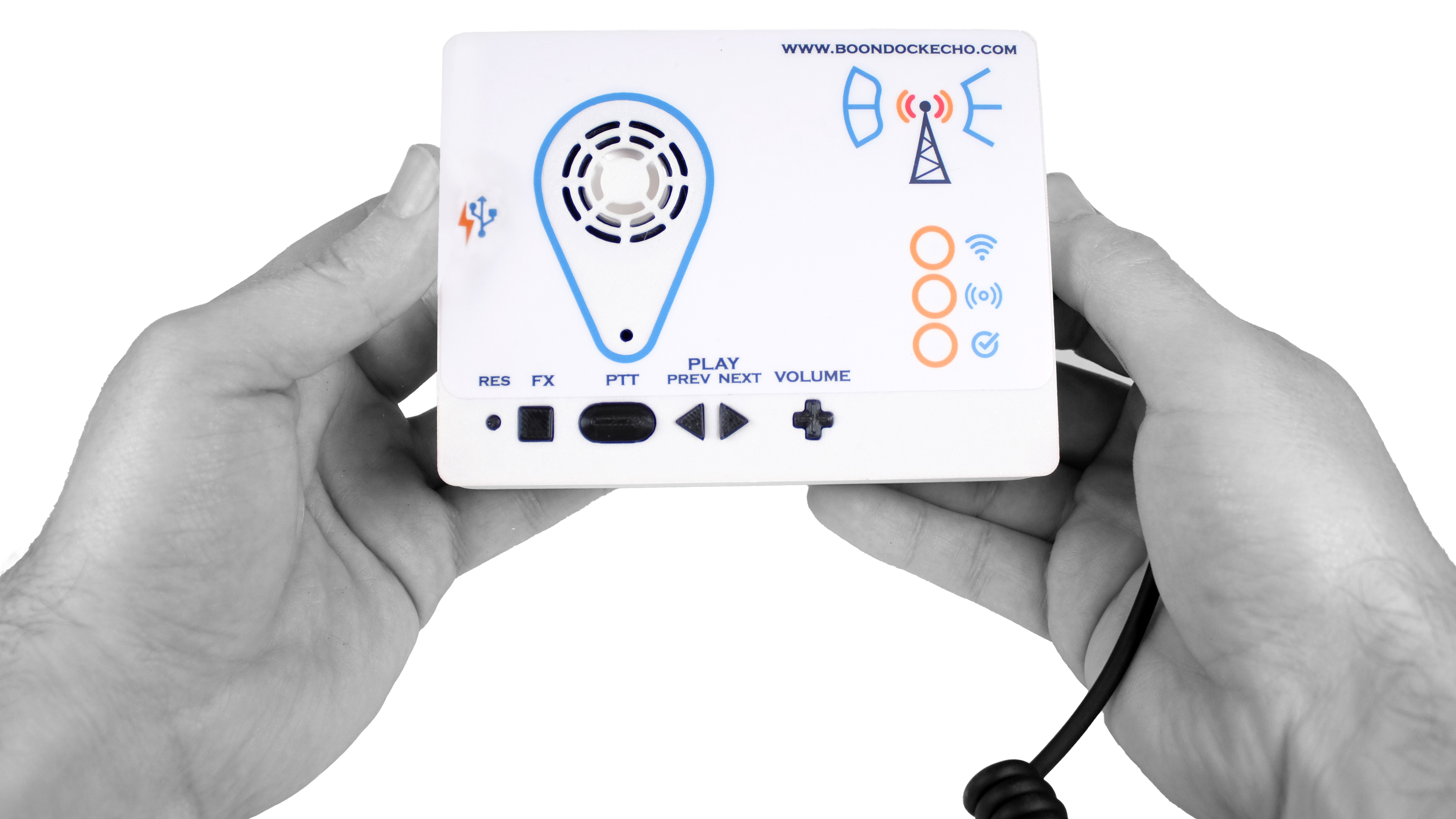
That is the problem Boondock Echo tries to solve. At its simplest, Boondock Echo is a recording and playback device for two-way radios. At its most interesting, it is a bridge between analog radio habits and modern cloud-based intelligence. It can record radio traffic, store audio, support playback, transcribe speech, clean up noisy audio, translate content, and trigger alerts when specific words, callsigns, or phrases appear. In plain English, it is a radio answering machine with a brain, a memory, and just enough cloud magic to make a handheld radio feel less like 1987 and more like a practical tool for modern field teams.
The idea sounds obvious after you hear it, which is usually the sign of a good invention. Radio users have had repeaters, scanners, logging software, digital modes, and internet gateways for years, but many basic voice-radio workflows still depend on someone being present, awake, caffeinated, and paying attention. Boondock Echo asks a different question: what if the radio could remember?
What Is Boondock Echo?
Boondock Echo is an internet-backed audio intelligence device designed for radio communication. It connects to a compatible two-way radio through an audio interface, records incoming traffic, and allows users to review messages later. Its product positioning focuses on emergency services, amateur radio operators, field teams, off-grid users, and anyone who needs to monitor radio channels without sitting beside a receiver all day like a very patient garden gnome.
The core feature is time-shifted radio. Instead of radio traffic being an all-or-nothing live event, Boondock Echo turns it into something closer to voicemail or a searchable call log. Recordings can be saved, reviewed, and managed through a web dashboard. When connected to online services, the device can add AI transcription, keyword alerts, denoising, translation, cloud storage, and remote access. Offline, it can still function as a standalone recorder, saving basic audio files locally for later playback.
That dual personality matters. In the field, internet access is never guaranteed. A device that becomes useless the moment Wi-Fi disappears is not a field tool; it is a desk ornament with ambitions. Boondock Echo’s ability to operate in a standalone mode gives it practical value for users who may be camping, coordinating volunteers, monitoring weather radio, working in remote areas, or dealing with spotty connectivity.
Why Radio Needs an Answering Machine
Anyone who has used a two-way radio knows the pain. A message comes in while you are refilling coffee, helping someone unload gear, tightening a tent line, or trying to remember where you put the spare battery. By the time you get back, the speaker is silent. Someone may have said something important. Or maybe it was just Bob asking if anyone found his folding chair again. The problem is that radio does not tell you which one it was.
Boondock Echo makes radio communication more forgiving. For amateur radio nets, it can capture check-ins and traffic. For community emergency groups, it can provide a record of transmissions. For outdoor teams, it can help people review messages after stepping away from the radio. For scanner and monitoring enthusiasts, it can help turn raw audio into a more organized archive. For public-service events, it can preserve details that might otherwise disappear in the rush of activity.
This is not about replacing radio discipline. Good operators still need clear speech, proper identification, legal operation, and sensible procedures. Boondock Echo is more like a notepad that never gets bored. It does not roll its eyes during long nets. It does not wander off during the one important transmission. It simply listens, records, and gives the human operator a second chance.
Hardware: ESP32 Brains, Radio Ears
Boondock Echo began as a maker-style project built around ESP32-based audio hardware. The ESP32 platform is popular because it combines processing power, wireless connectivity, and a friendly development ecosystem in a small, affordable package. In Boondock Echo, the local hardware handles jobs such as digitizing audio, interacting with the radio, playing back recordings, and communicating with online services when available.
The project’s early design used off-the-shelf parts, including ESP32 audio kit hardware, a battery-friendly enclosure concept, audio input and output connections, pushbuttons, speaker support, and a 3D-printed case. As the project matured, the team explored custom hardware, better radio compatibility, improved enclosures, and a more polished user experience. That progression is important because radio audio is not always plug-and-play. A handheld radio’s speaker output and microphone input can have very different electrical expectations. Push-to-talk behavior, cable wiring, audio levels, and connector standards can all turn a “simple cable” into a tiny electrical soap opera.
Boondock Echo’s product materials describe compatibility through a TRRS audio jack that follows the Digi-Rig-style approach, with support for recording, transmitting audio, cloud control, and multi-device management. That means the device is not just passively listening; depending on configuration and legal use, it can also route audio back toward a radio. For users building more advanced workflows, that opens the door to scheduled recording, remote playback, message forwarding, and distributed monitoring.
The Cloud Dashboard: Where the Magic Gets Organized
The physical device is only half the story. The real charm of Boondock Echo is how it transforms messy radio audio into organized information. A dashboard can collect recordings, show message history, make playback easier, and support features such as favorites, schedules, remote controls, station presets, and keyword alerts. Instead of scribbling “someone said something about the north gate around lunch?” on a damp notepad, a user can review the actual audio and, when transcription works well, search the text.
Cloud processing also enables features that would be difficult to run entirely on a small embedded board. Denoising can reduce hiss, static, and rough audio. Speech-to-text can convert spoken messages into readable logs. Translation can make multilingual communication more practical. Keyword alerts can notify users when a critical phrase is spoken, such as a callsign, location, team name, or emergency term.
Of course, the cloud is both powerful and slightly needy. Advanced features may depend on internet access, accounts, servers, and privacy decisions. If you are recording sensitive communications, you need to think carefully about consent, retention, access control, and local rules. Boondock Echo’s open-source direction and self-hosting possibilities are valuable because some users will prefer to run their own infrastructure rather than send recordings to a third-party server. In radio terms, trust is not optional equipment.
Real Use Cases: Where Boondock Echo Makes Sense
Amateur Radio Operators
For ham radio operators, Boondock Echo fits naturally into net monitoring, repeater listening, club activities, experimentation, and emergency-preparedness practice. A ham operator might use it to record local repeater traffic during a scheduled net, archive training exercises, or catch callsigns while away from the shack. The keyword alert feature is especially appealing because callsigns are the radio equivalent of someone waving across a crowded room.
However, amateur radio users must stay within licensing rules. Recording received audio is one thing; transmitting or retransmitting through a radio introduces legal responsibilities. U.S. amateur radio operation is regulated by the FCC, and users should understand the rules that apply to their station, service, frequency, and use case. Boondock Echo is a tool, not a permission slip.
Emergency Communication and Community Watch
The project has roots in emergency communication thinking, including community monitoring scenarios such as fire watch activity. This is where Boondock Echo feels especially practical. During storms, wildfires, public events, search operations, or volunteer deployments, radio traffic can become constant. Humans get tired. Batteries die. Someone always needs a sandwich. A recording system helps preserve important details and allows teams to review messages that might otherwise be missed.
Groups using NOAA Weather Radio, local radio nets, or field-team channels may benefit from the ability to capture time-sensitive audio. NOAA Weather Radio broadcasts official weather information, watches, warnings, forecasts, and hazard updates continuously, which makes it a natural example of radio traffic that can be useful to record, review, and monitor. Boondock Echo does not replace official alerting systems, but it can become one more layer in a communication plan.
Outdoor and Off-Grid Users
Campers, overlanders, trail crews, field researchers, and remote-property owners often use radios because phones are unreliable outside the glowing comfort zone of cell towers. In those situations, radio remains useful because it is simple and local. Boondock Echo adds memory to that simplicity. A team can return to camp and review messages that arrived while people were away from base. A weather-monitoring setup can keep a record of broadcasts. A remote post can preserve audio traffic without requiring someone to babysit the speaker.
The catch is power and connectivity. For a serious field setup, users should think about battery capacity, charging, storage space, cable strain relief, weather protection, and whether cloud features are actually available in the location. A rugged case and a good cable may matter more than the fanciest AI feature when the device is bouncing around in a dusty truck.
Hands-On Impressions: Simple Idea, Surprisingly Deep Workflow
The most impressive thing about Boondock Echo is not that it records audio. Plenty of devices record audio. The impressive part is that it understands the specific annoyance of two-way radio communication: radio is live, but real people are not always available. That gap creates missed information. Boondock Echo fills the gap with a workflow that feels natural.
In a practical setup, the experience starts with connecting the device to a radio through the proper cable, powering it, and configuring the dashboard or local recording mode. Once audio is flowing, the value becomes obvious. You can leave the radio monitoring a channel, then return later to review what happened. With transcription enabled, the recordings become easier to scan. With keyword alerts, the system can nudge you when a message deserves attention. That is a very different experience from passively listening to a speaker and hoping your brain catches everything.
The interface concept is also smart because it does not try to turn radio into a bloated social network. Radio users do not need animated stickers or a “seen at 3:42 PM” drama factory. They need logs, playback, alerts, and controls. A good Boondock Echo dashboard should feel like a tool, not a toy. Based on public demonstrations and descriptions, that practical design philosophy appears to be the point.
Strengths: What Boondock Echo Gets Right
It Solves a Real Problem
Many gadgets are solutions wandering around with a tiny flashlight looking for a problem. Boondock Echo is not one of them. Missing radio messages is a real issue. If you have ever monitored a channel for more than ten minutes, you understand the appeal immediately.
It Blends Old and New Technology
Boondock Echo respects the usefulness of analog voice radio while adding modern storage, transcription, alerting, and remote access. That balance is clever. It does not demand that every user abandon existing radios or rebuild an entire communication system. It attaches intelligence to tools people already understand.
It Supports Open-Source Thinking
The project’s open-source direction is a major advantage for technically inclined users. Public repositories, hardware files, firmware, and server components create room for experimentation, self-hosting, and community improvement. In the radio world, where many users already enjoy building antennas out of wire and optimism, openness matters.
It Scales Beyond One Radio
Multiple Boondock devices can support more complex monitoring arrangements. That could mean listening to multiple channels, creating a broader radio-monitoring setup, or organizing messages from different stations. For field teams, that multi-device approach is more useful than a single recorder sitting alone like a lonely robot intern.
Limitations: The Fine Print Wearing Hiking Boots
No hands-on look would be complete without talking about trade-offs. Boondock Echo is promising, but it is not magic. Transcription can struggle with noisy audio, clipped transmissions, heavy accents, local jargon, callsigns, weak signals, or people who speak like they are auctioning cattle during a thunderstorm. AI denoising helps, but bad audio remains bad audio with better posture.
Cloud features are another consideration. Remote access, transcription, translation, and alerting are most powerful when connected, but field use often happens where internet service is weak. Users should plan for both online and offline workflows. The device should be judged not only by what it can do on a perfect Wi-Fi network, but also by what it can still do when the internet disappears behind a mountain.
Cabling and radio compatibility can also be tricky. Different radios use different connector layouts, levels, and push-to-talk behavior. A successful deployment may require the right cable, careful setup, and testing before the device is trusted during an important event. The phrase “we will figure it out on-site” has ruined more field operations than rain, mosquitoes, and mystery extension cords combined.
Privacy and legality deserve serious attention. Recording radio traffic may be allowed in some contexts and sensitive in others. Transmitting through a connected radio requires proper licensing and compliance. Teams using Boondock Echo for public-service or emergency-related workflows should create clear procedures for who can access recordings, how long logs are kept, and what information should not be transmitted casually.
How It Compares With Other Radio Tools
Boondock Echo sits in an interesting middle ground. It is not merely a scanner. It is not a repeater controller in the traditional sense. It is not a full digital radio network. It is closer to a smart audio gateway for analog radio. That makes it attractive because it can add useful features without forcing every participant to change equipment.
Compared with a basic voice recorder, Boondock Echo is more integrated. A recorder can capture audio, but it will not automatically organize cloud logs, trigger alerts, or manage multi-station monitoring. Compared with advanced digital systems, Boondock Echo is more approachable for people who already rely on simple radios. Compared with smartphone apps, it keeps radio at the center of the workflow instead of assuming cellular coverage exists everywhere.
The best way to think about it is this: Boondock Echo is not trying to make radios trendy. It is trying to make them less forgetful.
Who Should Consider Boondock Echo?
Boondock Echo makes the most sense for people who already use radios often enough to feel the pain of missed messages. Amateur radio operators, community emergency volunteers, event coordinators, rural property owners, field researchers, outdoor groups, scanner enthusiasts, and technically curious makers are all natural audiences.
It may be overkill for casual users who only turn on a walkie-talkie twice a year to ask where the marshmallows went. But for users who monitor repeaters, weather radio, field channels, or volunteer nets, the value is easy to understand. A searchable radio memory can turn chaotic audio into usable information.
The ideal user is someone who appreciates radios but also wants modern conveniences: logs, notifications, remote access, and the ability to review what happened. In other words, it is for people who love radio but do not want to be chained to the speaker like a medieval communications monk.
Field Experience: Living With a Radio That Remembers
The most realistic way to appreciate Boondock Echo is to imagine it during a long weekend field event. The radio is sitting on a folding table under a canopy. There is a battery box nearby, a notebook with three different pens that will all disappear by noon, and a volunteer who insists the antenna position is “probably fine.” Normally, every message depends on whoever happens to be sitting near the radio. If that person steps away, gets distracted, or misunderstands a callsign, the team may lose context.
With Boondock Echo in the loop, the atmosphere changes. The radio is still live, but the pressure eases. A missed call is no longer gone forever. Someone can review the recording and confirm whether the message said “north trail,” “north gate,” or “Norton ate the trail mix.” That may sound funny, but small misunderstandings are exactly where field communication gets messy. A simple playback button can prevent a surprising amount of confusion.
The experience also makes radio feel more collaborative. Instead of one operator holding all the information in memory, the group can review the log. If a coordinator arrives late, they can catch up. If a message sounds important, it can be marked for later. If a keyword alert fires, the team can focus on the relevant transmission instead of combing through hours of audio. That is especially useful when traffic is intermittent: five seconds of important speech hidden inside two hours of silence and static is the kind of problem technology should be forced to solve.
There is a learning curve, but it is not the scary kind. The main hands-on lesson is preparation. Test the radio cable before the event. Confirm audio levels. Check that recordings are actually being saved. Practice playback. Verify that the dashboard is reachable. If using cloud features, test the network connection. If using offline mode, confirm local storage. Label the cable, because unlabeled radio cables multiply in bags and begin a secret life of chaos.
Another experience-related lesson is that transcription should be treated as an assistant, not a court reporter. Clean speech, strong signal, and good audio levels help enormously. Sloppy radio habits still create sloppy text. Boondock Echo can make radio smarter, but it cannot force humans to stop mumbling into a microphone from inside a rain jacket. Operators should still speak clearly, use standard procedures, and repeat critical details.
The biggest emotional benefit is confidence. When a team knows it can replay messages, the radio becomes less stressful. People stop hovering around the speaker with the facial expression of someone waiting for toast to launch. The device quietly turns live radio into a reviewable timeline. That is not flashy, but it is useful. And in field communications, useful beats flashy every time. Flashy is what you call a device right before the battery dies.
Boondock Echo’s hands-on appeal is that it does not ask radio to become something else. It simply gives radio a memory, a search box, and a nudge system. For anyone who has ever missed an important transmission, that feels less like a luxury and more like a long-overdue apology from the universe.
Final Verdict: A Smart Upgrade for Serious Radio Users
Boondock Echo is one of those inventions that makes you wonder why radio did not always work this way. Two-way radio is immediate, resilient, and simple, but it has historically been terrible at waiting for you. Boondock Echo changes that by adding recording, playback, transcription, alerts, and cloud-connected organization to familiar radio workflows.
Its best use cases are not casual novelty scenarios. The real value appears when missed messages matter: emergency preparedness, public-service events, community monitoring, outdoor operations, amateur radio nets, and field communication. The device is especially compelling because it combines embedded hardware, open-source development, cloud intelligence, and practical radio experience in a way that feels grounded rather than gimmicky.
It is not perfect. Users must plan for cables, compatibility, licensing, privacy, internet availability, and transcription quality. But those are manageable trade-offs for a tool that solves a genuine problem. Boondock Echo gives radio users what email, voicemail, and chat users have taken for granted for decades: the ability to come back later and see what they missed.
For radio people, that is a big deal. For everyone else, think of it this way: Boondock Echo is the friend who actually takes notes during the meeting. Except this friend connects to a handheld radio, stores audio, listens for keywords, and never eats the last granola bar. That is progress.