Time crystals sound like something a wizard would keep in a drawer next to the dragon snacks. In reality, they are one of the strangest and most serious ideas in modern physics: a phase of matter that repeats not mainly through space, like salt or diamond, but through time. Instead of atoms lining up in a repeating pattern, the system returns again and again to a rhythmic quantum state. It is not magic, but it is close enough to make your brain briefly ask for a coffee break.
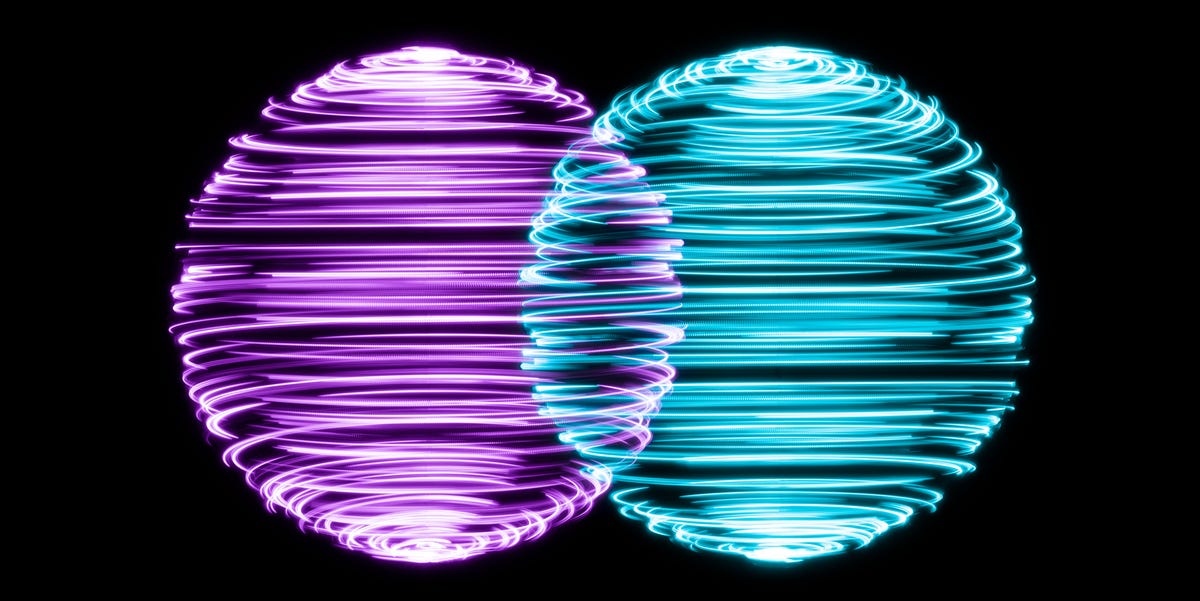
The latest mind-bending milestone is that scientists have paired two time crystals and made them interact as a single two-body system. That matters because a lone time crystal is already weird; two time crystals communicating with each other is where the idea starts looking less like a laboratory curiosity and more like a possible building block for future quantum technology.
The achievement came from research involving superfluid helium-3, magnons, ultralow temperatures, and the kind of experimental setup that makes a normal refrigerator look like a lunchbox. The short version: researchers created two neighboring time crystals, watched them exchange quantum excitations, and showed that their motion stayed coherent while the pair behaved like a controllable system.
What Is a Time Crystal?
A regular crystal has structure in space. In table salt, atoms repeat in a neat three-dimensional pattern. In diamond, carbon atoms arrange themselves in a rigid lattice. If ordinary matter had a love language, it would be “repeat after me.”
A time crystal takes that idea and rotates it into the time dimension. Its defining feature is a recurring pattern of motion or state change. The system does not simply sit still in its lowest-energy condition. Instead, it displays a stable, repeating rhythm. That is why time crystals are often described as matter with order in time rather than only in space.
This does not mean a time crystal is a free-energy machine. Nobody has built a cosmic battery that runs forever and charges your phone while explaining quantum mechanics. Time crystals do not break the laws of thermodynamics. They operate under special quantum conditions, often isolated from outside disturbance or driven in controlled ways. The “perpetual” language is catchy, but the physics is more precise: a time crystal shows persistent periodic behavior without heating up like an ordinary driven system would.
How the Idea Went From “Impossible” to Experimental Physics
The modern time crystal story begins in 2012, when Nobel Prize-winning physicist Frank Wilczek proposed the concept of quantum time crystals. The idea was provocative because it seemed to challenge a basic expectation: matter in its ground state should not keep changing in time. Physicists debated the proposal intensely, and later work clarified that equilibrium time crystals in the original sense face major theoretical limits.
But the controversy did not kill the idea. It refined it. Researchers began focusing on non-equilibrium systems, especially discrete or Floquet time crystals. These are systems that are periodically driven, yet respond at a rhythm different from the drive itself. Imagine pushing a child on a swing every second, but the swing settles into a stable motion that repeats every two seconds. That “subharmonic” response is one signature of discrete time-crystalline order.
By 2017, time crystals had moved from theory into the lab. One major experiment used trapped ions, while another used nitrogen-vacancy centers in diamond. These studies showed that time-crystalline behavior was not just a clever equation wearing a lab coat. It could be observed in real quantum systems.
Then quantum computers entered the chat. Researchers using Google’s Sycamore quantum processor, in collaboration with academic teams, demonstrated time-crystalline order in a programmable quantum system. That was a major step because quantum computers allow scientists to engineer and measure exotic states of matter with unusual precision.
The Breakthrough: Pairing Two Time Crystals
The pairing of two time crystals is especially important because physics is not only about making strange things. It is about making strange things interact in predictable ways. A single exotic state may be fascinating, but technology usually requires control, connection, and communication. A qubit alone is a physics demo. Qubits linked together become a quantum computer. The same basic logic applies here.
In the paired time crystal experiment, researchers worked with superfluid helium-3, a rare isotope of helium that becomes a quantum fluid at extremely low temperatures. Within this superfluid environment, they created time crystals using magnons. Magnons are quasiparticles associated with collective spin excitations. If that sounds abstract, think of them as coordinated ripples in the magnetic behavior of a quantum material.
The scientists created two adjacent magnon-based time crystals. When the two were allowed to interact, they exchanged magnons. This exchange produced oscillations in their populations, a signature connected to the AC Josephson effect, a famous quantum phenomenon originally associated with superconductors. In other words, the pair did not merely sit next to each other like two awkward strangers at a physics conference. They interacted, exchanged information, and behaved as a coherent two-body quantum system.
Why the AC Josephson Effect Matters
The Josephson effect is one of those physics ideas that sounds like it should require a secret handshake. In simple terms, it describes how quantum particles can tunnel or move between two separated systems while maintaining a relationship between their phases. In superconductors, this can produce oscillating currents. In the time crystal experiment, the researchers observed an analogous effect through the exchange of magnons between two superfluid time crystals.
This matters because it shows that time crystals are not isolated party tricks. They can participate in known quantum dynamics. That is a big deal. Scientific ideas become more powerful when they connect to established frameworks. The paired time crystals did not behave like random weirdness; they behaved in a way that could be studied, modeled, and potentially controlled.
Why Scientists Care About Time Crystals
Time crystals are exciting because they sit at the intersection of condensed matter physics, quantum information, thermodynamics, and symmetry. Symmetry is one of the deepest ideas in physics. A normal crystal breaks spatial symmetry because it chooses a repeating arrangement in space. A time crystal breaks time-translation symmetry because its behavior repeats in time in a structured way.
That may sound philosophical, but it has practical implications. Quantum technologies depend on fragile states that are easily destroyed by noise, heat, and measurement. If time crystals can maintain coherent behavior for relatively long periods under the right conditions, they may eventually help researchers design better quantum memories, frequency references, sensors, or information-processing systems.
To be clear, nobody is putting a time crystal inside your laptop next Tuesday. The experimental conditions are extreme, and the physics is still young. But early quantum computing also looked wildly impractical. Today, major laboratories and technology companies are racing to build useful quantum machines. Time crystals may become part of that broader story, especially if scientists learn how to create and control them in more accessible systems.
Does This Mean Perpetual Motion Is Real?
No, at least not in the cartoon sense. A time crystal is not a loophole that lets humanity throw away batteries, retire power plants, and run refrigerators on vibes. The phrase “perpetual motion” gets attached to time crystals because their repeating behavior can persist without ordinary energy loss in special quantum settings. But this does not produce usable free energy.
A helpful comparison is a planet orbiting the sun in space. The motion can continue for a very long time, but that does not mean you can plug a toaster into Jupiter. Similarly, time-crystalline motion is not an energy fountain. It is a stable pattern within a quantum system.
The paired time crystal result actually makes the story more scientific, not more mystical. By showing that two time crystals can interact in a controlled way, researchers are moving beyond “look, this strange thing exists” toward “look, this strange thing follows rules we can test.” That is the difference between science and a late-night internet rabbit hole with dramatic background music.
What Makes the Paired System So Difficult?
Time crystals are delicate because interaction with the environment can disturb the quantum behavior that makes them interesting. Pairing two of them is tricky because you need them close enough to interact but not so disrupted that their time-crystalline order falls apart. It is like trying to introduce two soap bubbles at a dinner party without letting either one pop.
The helium-3 setup helped solve this problem. Superfluid helium-3 provides an unusually clean quantum environment, and the magnon condensates can be studied with precision. At temperatures close to absolute zero, thermal noise is dramatically reduced. That gives researchers a better chance of observing subtle quantum effects before the outside world barges in and ruins the party.
The result was a coupled system in which the two time crystals maintained coherent periodic motion while exchanging magnons. This is why the experiment is often described as a first step toward using time crystals in quantum information processing. Interaction is essential. Without it, a time crystal is like a violin sealed in a glass box: beautiful, but not yet part of the orchestra.
Possible Applications in Quantum Computing
The most discussed long-term application is quantum memory. Quantum computers need ways to store information without losing coherence. Today, maintaining quantum information is difficult because quantum states are famously fragile. They can be disturbed by heat, vibration, electromagnetic noise, and even measurement itself. Quantum engineers spend a lot of time fighting decoherence, which is basically the universe whispering, “Nice superposition you have there. Shame if something happened to it.”
Time crystals may offer a new route to stable quantum behavior. Because they naturally settle into repeating patterns, they could potentially act as robust timing elements or memory components. The paired time crystal experiment suggests that these systems can be coupled and manipulated, which is necessary for any real device architecture.
Another possible application is precision measurement. Systems with stable periodic behavior can be useful as references, much as atomic clocks use consistent atomic transitions to measure time with extraordinary accuracy. Time crystals are not replacements for atomic clocks today, but their unusual stability makes them interesting candidates for future sensing and timing research.
Why This Discovery Is Bigger Than Its Headline
The headline “Scientists paired two time crystals” is flashy, and frankly, it deserves to be. But the deeper message is that researchers are learning how to build condensed matter physics in the time domain. Traditional materials science studies how structures behave across space: lattices, defects, waves, surfaces, and boundaries. Time crystals invite scientists to ask similar questions about structures that repeat through time.
Can time crystals have defects? Can they form networks? Can they transfer information? Can they be engineered into devices? Can they survive outside highly specialized laboratory systems? These are not science-fiction questions anymore. They are research questions.
The paired time crystal experiment is important because it shows interaction. Interaction is where complexity begins. One drumbeat is rhythm. Two drumbeats can become music. Two time crystals exchanging magnons may not be a symphony yet, but it is at least the first rehearsal.
Common Misunderstandings About Time Crystals
Misunderstanding 1: Time crystals are physical crystals you can hold
Most time crystals are not shiny rocks. They are quantum states created in carefully controlled systems. Some recent experiments have explored visible or more accessible time-crystalline patterns, but the paired time crystal work involved ultracold quantum matter, not a gemstone from a futuristic jewelry store.
Misunderstanding 2: Time crystals break physics
They do not break physics. They stretch intuition. Time crystals obey quantum mechanics and thermodynamics when correctly understood. The excitement comes from the fact that they reveal behavior classical intuition would not predict.
Misunderstanding 3: Time crystals will power devices for free
No free energy is involved. The repeating behavior is not a usable energy source. The technological interest lies in stability, coherence, and controllability, especially for quantum information systems.
Experience Notes: Understanding the Paired Time Crystal Breakthrough
One of the best ways to appreciate this discovery is to start with something familiar: rhythm. A metronome ticks. A pendulum swings. A clock hand moves. These are ordinary repeating systems, but they gradually lose energy unless something drives them. A time crystal is different because its rhythm is a quantum form of order, not just a mechanical motion being pushed along.
For students, science writers, or curious readers, the paired time crystal experiment offers a wonderful lesson in how physics advances. Big discoveries rarely arrive as a single lightning bolt. They usually develop in stages. First comes a strange theoretical proposal. Then comes criticism. Then researchers revise the idea. Then someone finds a system where the effect can actually be observed. Then the question changes from “Can it exist?” to “Can we control it?” Pairing two time crystals belongs to that control stage.
A useful classroom demonstration is to compare three ideas: a regular crystal, a driven oscillator, and a time crystal. A regular crystal repeats in space. A driven oscillator repeats because energy keeps being added. A time crystal repeats as a stable phase of matter under quantum conditions. The comparison helps prevent the common mistake of thinking “anything that moves rhythmically is a time crystal.” Your kitchen blender is not a time crystal, even if it sounds like it is trying to open a portal.
Another helpful experience is to think about communication. A single phone is impressive technology, but the real magic begins when phones connect. Likewise, an isolated time crystal proves that unusual temporal order can exist. Two interacting time crystals show that this order can become part of a larger system. That is why the pairing experiment matters so much. It suggests a path from isolated discovery to engineered quantum behavior.
For science communicators, the challenge is balancing wonder with accuracy. Time crystals are genuinely astonishing, so there is no need to exaggerate. Saying they “break the laws of physics” may attract clicks, but it muddies the science. A better explanation is that time crystals break time-translation symmetry while still obeying quantum rules. That phrase is less dramatic than “physics exploded,” but it has the advantage of being true.
For technology watchers, the most realistic mindset is cautious excitement. Time crystals may help future quantum computers, but the road from ultracold helium-3 experiments to commercial devices is long. Many breakthroughs spend years or decades in the laboratory before becoming practical. Still, the paired time crystal result is exactly the kind of foundational step that future technologies often need. It shows not only that a strange state can exist, but that it can be made to interact, exchange excitations, and behave in ways researchers can study.
The experience of reading about paired time crystals is a reminder that modern physics is not finished. Matter still has surprises. Time still has tricks. And the universe, despite centuries of human investigation, continues to behave like the smartest kid in class who keeps solving problems in ways nobody expected.
Conclusion
The first pairing of two time crystals is a milestone in quantum physics because it transforms time crystals from isolated curiosities into interacting systems. By creating two neighboring time crystals in superfluid helium-3 and observing their exchange of magnons, scientists demonstrated that time-crystalline order can participate in coherent quantum dynamics. That is a major step toward understanding whether these exotic phases of matter could someday support quantum memory, precision sensing, or new forms of information processing.
The discovery is not a promise of free energy, a shortcut to time travel, or a gemstone that makes your microwave philosophical. It is something better: a real, testable advance in our understanding of matter, symmetry, and time. For a field that began as a controversial theoretical idea in 2012, the progress has been remarkable. Time crystals are no longer just a weird thought experiment. They are becoming systems scientists can build, pair, probe, and maybe one day use.
Note: This article is written as an original SEO-friendly synthesis based on real peer-reviewed research and reputable science reporting, with no copied source text or embedded source links.