Note: This article is written for web publishing and synthesizes verified information from reputable museum, manufacturer, design, and retail references. Source links are intentionally omitted per request.
Why the Eames La Chaise Still Looks Like It Landed From the Future
The Eames La Chaise Lounge Chair is not the kind of chair that politely sits in the corner and minds its business. It enters a room like a movie star who knows the lighting is good. Designed by Charles and Ray Eames in 1948, La Chaise is part lounge chair, part sculpture, part design-world flex, and part “please do not place laundry on me, I am important.”
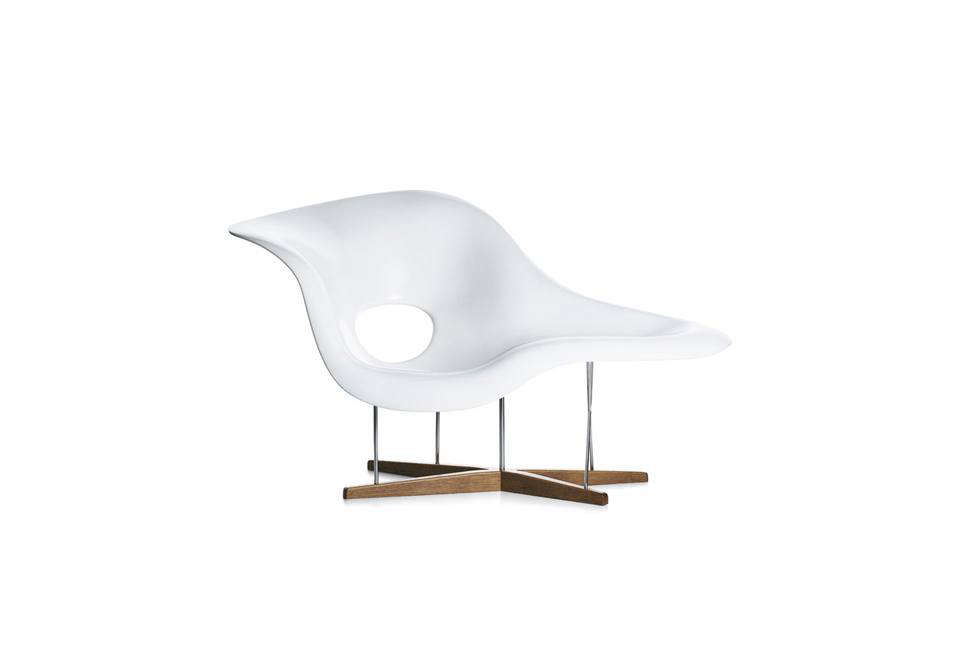
Unlike the more familiar Eames Lounge Chair and Ottoman, La Chaise is not a leather-and-plywood club chair built for cigar-room comfort. It is airy, white, curvy, and dramatic. Its form seems to float above a delicate arrangement of chrome-plated steel supports and a wooden base. It is the chair equivalent of a modern art museum whispering, “Relax, but make it iconic.”
What makes La Chaise fascinating is not only its beauty. It also tells a bigger story about postwar American design, experimental materials, modern living, and the Eameses’ belief that furniture could be functional, playful, and emotionally alive. It was designed for a low-cost furniture competition, yet today it is considered a luxury collectible. That irony is so strong it practically deserves its own ottoman.
The Origin Story: A Chair Born From a Museum Competition
La Chaise was created for the Museum of Modern Art’s 1948 International Competition for Low-Cost Furniture Design. The competition responded to a real postwar need: smaller homes, changing lifestyles, and a growing demand for furniture that could be mass-produced, affordable, comfortable, and suitable for modern apartments.
Charles and Ray Eames were already deeply interested in molded forms, new materials, and furniture that could support the body without looking like a heavy Victorian throne. Their entry for La Chaise explored the possibilities of a molded shell that could hold a person in several positions. Sit upright, lean sideways, stretch out, daydream about becoming an architectLa Chaise was ready.
The chair did not win a prize. The judges admired its inventive molded construction, but they also considered it too specialized and too expensive to manufacture at the time. In other words, La Chaise was brilliant, but 1948 production technology looked at it and said, “Absolutely not, we have budgets.”
Still, the design refused to disappear. It remained one of the Eameses’ most memorable unrealized ideas until Vitra finally put it into production in 1990. That delay gave La Chaise an almost mythical quality. For decades, it was not just a chair; it was a beautiful “what if?” from one of the most influential design partnerships of the twentieth century.
The Inspiration: Gaston Lachaise’s “Floating Figure”
The name La Chaise is a clever double reference. In French, “la chaise” means “the chair,” but the name also honors sculptor Gaston Lachaise. The chair was inspired by Lachaise’s sculpture Floating Figure, a reclining female form known for its generous volume, calm power, and suspended, dreamlike presence.
That sculptural influence is easy to see. La Chaise does not behave like a standard lounge chair with predictable arms, back, and seat. Instead, it curves and opens like a shell, inviting the body to discover its own posture. It is not bossy furniture. It does not say, “Sit exactly here, shoulders at 90 degrees, no snacks.” It says, “Find your angle. Be fabulous.”
This connection between sculpture and furniture is one reason La Chaise remains so beloved by collectors, interior designers, and design historians. It blurs the line between an object you use and an object you admire. Many chairs are designed to disappear into a room. La Chaise is designed to be noticed, discussed, photographed, and possibly stared at by guests who pretend they are only “checking the craftsmanship.”
Materials and Construction: Lightness With Engineering Backbone
The original concept used bonded shell construction, chrome supports, and wooden feet. Modern production versions by Vitra use a smooth white lacquered shell, chrome-plated tubular steel supports, and a solid wood base. Depending on the listing and market, the shell is commonly described as polyester resin or polyurethane with a lacquer finish, while the base may be oak or walnut in an oiled or natural finish.
The magic of the chair lies in how these materials work together. The shell provides the visual drama: a wide, flowing, biomorphic surface that seems more carved than manufactured. The steel supports give the structure its floating effect. The wooden base grounds the whole object, adding warmth and a little visual “don’t worry, physics is still involved.”
Typical Dimensions
La Chaise is not small. It usually measures about 59 inches wide, 34 to 35 inches deep, and roughly 34 inches high, with a low lounge-style seat height. It weighs around 60 pounds, depending on the version and retailer specification.
Those numbers matter because La Chaise needs space to breathe. Place it in a cramped corner and it may look like a sports car parked in a broom closet. Give it visual room, and it becomes a centerpiecean elegant, sculptural anchor for a living room, gallery-like entry, reading area, or design-forward office.
Organic Design: The Eameses at Their Most Sculptural
Mid-century modern design is often associated with clean lines, honest materials, and practical forms. La Chaise includes those ideas, but it also leans heavily into organic design. Organic design favors shapes inspired by the body, nature, movement, and softness rather than rigid geometry.
The Eameses were masters at making experimental ideas feel friendly. Their molded plywood chairs, fiberglass shell chairs, storage units, tables, toys, films, and exhibitions all carried a sense of curiosity. La Chaise fits that pattern. It is technically ambitious, but it does not feel cold. It has humor. It has charm. It looks like it might be comfortable at a cocktail party, even if it had to explain modernism three times.
Its shape also reflects the Eameses’ fascination with adaptable seating. Instead of dictating a single correct posture, La Chaise supports multiple ways of lounging. You can sit diagonally, recline across it, lean into one curve, or stretch out in a relaxed position. It is not a recliner with buttons and cup holders. It is more like a landscape for the body.
Why La Chaise Was Too Ahead of Its Time
One of the funniest truths about design history is that “ahead of its time” often means “nobody could afford to make it yet.” La Chaise was intended for a low-cost furniture competition, but its construction was too complex for economical mass production in 1948.
That tension makes the chair historically important. It shows how modern designers were pushing industry forward, sometimes faster than factories could comfortably follow. The Eameses were not simply styling furniture; they were testing production methods, material behavior, and new ideas about domestic life.
Their molded shell chairs from the same period became practical commercial successes. La Chaise, however, remained more difficult. It was expansive, sculptural, and technically demanding. In the end, it became less of a mass-market solution and more of a design icon. That may not have solved the postwar housing crisis, but it did give the world one extremely photogenic chaise.
How to Use the Eames La Chaise in Interior Design
Because the Eames La Chaise Lounge Chair has such a strong personality, it works best when the room gives it a clear role. Treat it like a functional sculpture, not just another seat.
1. Make It the Centerpiece
La Chaise thrives in open space. A minimalist living room, loft, gallery-style home, or modern office lounge can use the chair as the visual focal point. Its white shell contrasts beautifully with wood floors, concrete, stone, neutral rugs, and textured walls.
2. Pair It With Quiet Companions
Because the chair already has drama, pair it with furniture that knows how to behave. Low tables, simple shelving, neutral sofas, and soft lighting work well. Avoid surrounding it with too many competing statement pieces unless your decorating goal is “auction house after espresso.”
3. Use Negative Space
Negative space is the empty space around an object, and La Chaise needs it. The chair’s silhouette is part of its appeal. Leave enough room around it so the curves, steel supports, and wooden base remain visible from multiple angles.
4. Add Texture, Not Clutter
A nearby wool rug, a floor lamp, or a subtle side table can make the setting feel livable without stealing attention. The goal is to make the chair look intentional, not stranded.
Authenticity, Value, and Collectibility
Authentic Eames designs are produced through authorized manufacturers and retailers. For La Chaise, Vitra is the official producer, and reputable retailers present it as an authenticated design classic. Because the chair is expensive and visually famous, buyers should be careful with replicas, vague listings, and suspicious prices that look like they were generated by a very optimistic calculator.
An authentic Eames La Chaise is not an impulse purchase. It is a serious investment piece, often priced in the five-figure range. But that price reflects more than materials. It includes licensing, craftsmanship, design heritage, production complexity, and the cultural value of owning one of the Eameses’ most sculptural works.
For collectors, La Chaise offers something different from the more common Eames Lounge Chair. The Lounge Chair and Ottoman is iconic comfort. La Chaise is iconic experimentation. One says, “Settle in.” The other says, “Welcome to the conversation.”
Comfort: Can You Actually Sit in It?
Yes, La Chaise is usable, although it is not designed like a conventional TV chair. It supports a range of sitting and reclining positions, but its experience depends on body type, posture, and expectations. If you want a chair for eating chips during a six-hour streaming marathon, this may not be your most practical choice. If you want a sculptural lounge that turns sitting into a small design event, La Chaise delivers.
The wide shell invites informal lounging rather than upright task sitting. It is especially well suited for reading, relaxing, posing with unusual confidence, or enjoying a quiet moment in a room where design matters. Think of it as a chaise for contemplation, not a command center for remote controls.
Care and Maintenance
Because La Chaise has a lacquered shell, metal supports, and a wooden base, care should be gentle and consistent. Dust it with a soft cloth, avoid abrasive cleaners, and clean spills promptly with manufacturer-recommended methods. Keep it away from harsh sunlight when possible, because finishes can change over time with heavy UV exposure.
The chair’s beauty comes from its clean surfaces and uninterrupted shape, so clutter is the enemy. Avoid treating it like a shelf, coat rack, or emergency laundry platform. La Chaise may be polite, but it has standards.
Why the Eames La Chaise Still Matters
The lasting appeal of La Chaise comes from its rare combination of history, beauty, experimentation, and personality. It belongs to the postwar story of American modernism, yet it does not feel trapped in the past. It still looks fresh because it was never merely fashionable. It was exploratory.
Charles and Ray Eames believed design should improve life, but they also believed in delight. La Chaise captures both. It is useful, but not ordinary. Comfortable, but not sleepy. Elegant, but not stiff. It reminds us that furniture can be serious without becoming boringwhich is a public service, honestly.
For homeowners, designers, and collectors, the Eames La Chaise Lounge Chair is more than a famous object. It is a lesson in how far a chair can go when designers treat sitting as a creative problem rather than a square cushion with legs.
Experience Notes: Living With, Seeing, and Styling the Eames La Chaise Lounge Chair
Encountering an Eames La Chaise in person is different from seeing it in a photo. Online, it can look like a beautiful white shape. In a room, it has presence. The first impression is usually scale. It is wider and more open than many people expect, and because the shell floats above the base, it feels lighter than its measurements suggest. That floating quality is a major part of the experience. It looks substantial and weightless at the same time, which is a neat trick for something that is definitely not made of clouds.
The best way to experience La Chaise is to walk around it before sitting. From the front, it looks open and inviting. From the side, it becomes more aerodynamic and sculptural. From behind, the steel supports and wooden base reveal the engineering that makes the visual lightness possible. This is why designers often treat it as a 360-degree object. Unlike a regular lounge chair that can be pushed against a wall, La Chaise benefits from being visible from several angles.
Sitting in it is less formal than expected. The chair does not force one posture. Instead, it encourages small experiments: leaning back, turning slightly, stretching across the shell, or sitting sideways with a book. It feels more like choosing a position on a smooth sculptural surface than sitting in a chair with obvious boundaries. Some people immediately love that freedom. Others may need a minute to understand where their body wants to settle. That moment of adjustment is part of the charm.
In home interiors, La Chaise works best when it is given breathing room and paired with warm textures. A white shell can feel gallery-like, so wood floors, soft rugs, natural textiles, and indirect lighting help balance the look. A small side table nearby is practical, but it should be visually quiet. Nobody wants a clunky table photobombing one of the most elegant chairs ever made.
One useful styling approach is to place La Chaise near a large window or in a reading corner with a floor lamp. The daylight emphasizes the curves of the shell, while evening light creates shadows under the chair that make the floating effect stronger. Another approach is to use it in an entry gallery or open-plan living space where it can act as a sculptural transition between zones.
From a practical ownership perspective, La Chaise asks for respect. It is not fragile in the decorative-object sense, but it is a high-value piece with refined finishes. Shoes, sharp objects, heavy bags, pets with ambitious claws, and toddlers holding markers should be managed with wisdom and possibly snacks as distractions. Regular dusting and mindful placement go a long way.
The most rewarding part of La Chaise is how it changes the mood of a room. It signals curiosity, confidence, and appreciation for design history. It does not simply fill space; it gives the space a point of view. That is why, decades after its 1948 debut, the Eames La Chaise Lounge Chair still feels exciting. It is not just a place to sit. It is a reminder that everyday objects can be imaginative, poetic, and just a little bit theatrical.
Conclusion
The Eames La Chaise Lounge Chair remains one of the most memorable achievements in modern furniture design because it combines sculpture, engineering, comfort, and history in one unforgettable form. Designed by Charles and Ray Eames for a 1948 MoMA competition, inspired by Gaston Lachaise’s Floating Figure, and finally produced decades later by Vitra, it represents both the ambition and playfulness of mid-century modern design.
It may not be the most practical chair for every home, but practicality was never its only purpose. La Chaise exists to elevate a space, invite new ways of lounging, and prove that a chair can be more than furniture. It can be an idea, a sculpture, a design landmark, and yes, an excellent conversation starter when guests run out of things to say about the weather.