Sapo: As a kid, The Twilight Zone looked like a spooky black-and-white show full of aliens, talking dolls, nervous airplane passengers, and twist endings that made adults say, “Classic!” Rewatching it later reveals something much richer: Rod Serling’s legendary anthology was not just trying to scare viewers. It was teaching them how fear works, how prejudice spreads, how loneliness bends people, and how society can become very weird before anyone admits it.
Introduction: I Came for the Monsters, I Stayed for the Moral Panic
When you watch The Twilight Zone as a kid, the fun is obvious. A gremlin appears on a plane wing. A lonely man finally gets time to read. A quiet suburban street collapses into hysteria. Someone wakes up in a world that looks normal until it absolutely does not. It is creepy, clever, and short enough that you can watch one episode and still pretend you are going to bed on time.
But the older you get, the stranger the show becomes. Not because the monsters get scarier, but because the humans do. Created and hosted by Rod Serling, the original Twilight Zone aired from 1959 to 1964 and used science fiction, fantasy, horror, and suspense to explore big American anxieties: conformity, racism, censorship, nuclear fear, mob mentality, nostalgia, loneliness, and the sneaky little ways people justify cruelty when they are scared.
As a kid, I thought The Twilight Zone was mainly about shocking endings. As an adult, I realize the twist was often just the receipt. The real purchase had already happened in the characters’ choices. Here are four things I completely missed about The Twilight Zone as a kidand why the show still feels oddly fresh, even when the cars have fins and everyone speaks like they are auditioning for a courtroom drama.
1. The Real Monsters Were Usually Human
When you are young, you naturally look for the creature. Where is the alien? Where is the ghost? Where is the spooky puppet, and why does it look like it knows my browser history? The Twilight Zone certainly offers plenty of strange visitors, unexplained forces, and supernatural punishments. But in many of its best episodes, the monster is not hiding in the shadows. It is standing in the front yard, pointing a finger at a neighbor.
“The Monsters Are Due on Maple Street” Is Not Really About Aliens
One of the clearest examples is “The Monsters Are Due on Maple Street.” As a kid, it plays like a suspense story: power goes out, people panic, and maybe aliens are involved. That is enough to keep a young viewer glued to the screen. But the adult version of your brain notices the more uncomfortable part. The aliens barely have to do anything. They simply interrupt normal life, and the neighborhood does the rest.
The episode is often read as a warning about Cold War paranoia, McCarthyism, and the dangerous human craving for scapegoats. The neighbors do not need evidence. They need someone to blame. A car starts by itself, a man has an odd habit, someone owns a radio, and suddenly everyone is one suspicious glance away from forming a tiny suburban mob. It is terrifying because it feels less like fantasy and more like a community meeting with bad lighting.
Fear Makes People Terrible Detectives
That is something I missed as a kid: fear does not make people smarter in The Twilight Zone. It makes them faster, louder, and more certain. The show repeatedly asks what happens when ordinary people stop thinking and start reacting. The answer is usually: nothing good, and possibly a shattered window.
This is why The Twilight Zone still works. The technology may look old, but panic never goes out of style. A rumor spreads. A group decides it already knows the villain. Someone says, “I’m just asking questions,” while holding a metaphorical torch. Suddenly, Maple Street is everywhere.
2. Rod Serling Was Sneaking Serious Ideas Through the Back Door
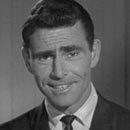
As a kid, I knew Rod Serling as the serious man in a suit who appeared at the beginning or end of episodes looking like he had just stepped out of a cloud of cigarette smoke and moral disappointment. I did not understand that his calm introductions were part of the show’s genius. He was not merely presenting spooky stories. He was guiding viewers into social commentary without making it feel like homework.
Science Fiction Was the Disguise
The Twilight Zone arrived during an era when television networks and sponsors were cautious about controversial subjects. Serling had experienced censorship earlier in his career, and the anthology format gave him a clever workaround. If a story about racism, authoritarianism, war, or public hysteria was too direct, he could move it to another planet, another dimension, or a neighborhood invaded by possible aliens. Apparently, a network executive was less nervous when the moral crisis had antennae.
That is the adult-level magic trick. The show looks like escapism, but it is often confrontation wearing a Halloween mask. “Eye of the Beholder” is not just a story about a woman’s face. It is about beauty standards, conformity, and the cruelty of a society that calls its own prejudices normal. “The Obsolete Man” is not only about a librarian in a dystopian state. It is about the danger of governments that erase inconvenient people and inconvenient ideas. “He’s Alive” is not only about a shadowy figure influencing a hateful man. It is about the recurring nature of extremism.
The Show Trusted Viewers to Think
What I missed as a kid was how much respect The Twilight Zone had for its audience. It did not explain every theme with a giant neon sign reading, “This is about society, please take notes.” Instead, it let the story do the work. The final narration might sharpen the point, but the emotional lesson usually came from watching people trap themselves.
That trust is rare. Many shows tell viewers exactly what to feel. The Twilight Zone gives you a banker, a nervous flyer, a lonely child, a frightened neighborhood, or a desperate actor, then quietly asks, “So, what would you do?” Unfair question, Mr. Serling. Very rude. Very effective.
3. The Twist Endings Were Not Just Tricks
When people talk about The Twilight Zone, they often mention the twist endings first. That makes sense. The show gave pop culture some of its most memorable final turns. But as a kid, I treated those endings like magic tricks. Surprise! The book was not what we thought. Surprise! The person was dead. Surprise! Humanity is the problem again. Classic humanity.
Rewatching the show makes one thing clear: the best endings are not random shocks. They are moral boomerangs. The ending flies back and hits the character in exactly the place they refused to examine.
“Time Enough at Last” Is Funny Until It Hurts
“Time Enough at Last” is a perfect example. Henry Bemis, played by Burgess Meredith, is a bookish bank teller who wants only to read in peace. As a kid, I focused on the famous ending. It is simple, cruel, and unforgettable. But the adult reading is much sadder. Henry is not merely a man who likes books. He is someone whose inner life is constantly belittled by the people around him.
The episode works because the twist does not come from nowhere. It grows out of Henry’s isolation, his dependence on one fragile object, and the brutal gap between getting what you want and getting what you actually need. The ending is not just “gotcha.” It is tragedy wearing glasses.
“Nightmare at 20,000 Feet” Is About Being Unbelieved
“Nightmare at 20,000 Feet” has a famous monster on an airplane wing, and yes, the creature now looks a bit like it was assembled from carpet and bad intentions. But the episode’s deeper fear is not only the gremlin. It is the terror of seeing something real and having everyone around you treat you as unreliable.
That is an adult fear. Kids worry about monsters. Adults worry about not being believed when the wing is clearly being tampered with by a furry aviation criminal. The episode turns a simple premise into a nightmare about credibility, anxiety, and helplessness.
The Endings Reveal Character
The more you watch, the more you realize the twist endings are not decorations. They are diagnoses. A greedy person discovers the cost of greed. A nostalgic man learns the past cannot shelter him. A conformist society reveals its ugliness. A paranoid crowd becomes the danger it feared. The final moment simply turns on the lights.
4. The Saddest Episodes Were the Ones I Understood Least
As a kid, I wanted the creepy episodes. Give me aliens, dolls, masks, time loops, and mysterious towns where nobody behaves like they have read a safety manual. The quieter episodes felt slower. Now, those are often the ones that hit hardest.
“Walking Distance” Is a Ghost Story Without a Ghost
“Walking Distance” follows Martin Sloan, a stressed advertising executive who returns to his childhood hometown and somehow steps into the past. As a kid, I saw it as a time-travel story. As an adult, it becomes something more painful: a story about the impossibility of going home in the way we want to.
Martin does not just miss a place. He misses a version of himself. He wants the safety of childhood, the comfort of parents, the sweetness of a world before deadlines, disappointments, and whatever adult invented “performance metrics.” But the episode gently refuses to give him permanent escape. The past is beautiful because it is gone. That is a harsh lesson to receive from a half-hour TV episode wearing a neat little suit.
The Show Understood Loneliness
The Twilight Zone is full of lonely people: readers, travelers, veterans, performers, children, outcasts, and dreamers who do not fit the world around them. The show’s science fiction often begins where ordinary sadness becomes unbearable. A person wants time, youth, recognition, beauty, revenge, silence, or love. Then the Zone gives it to them in the worst possible way.
That is another thing I missed. The show is not cynical because it punishes people. It is compassionate because it understands why they are desperate in the first place. Even when characters make foolish choices, the writing often lets us feel the wound underneath.
Black-and-White Made the Feelings Bigger
The visual style also matters. The black-and-white photography, the theatrical acting, the sharp shadows, and the economical sets create a dreamlike pressure. The world feels familiar but slightly drained of comfort. A street, a diner, a hospital room, or an airplane cabin becomes a moral laboratory. There is nowhere for the characters to hide, and no modern special-effects explosion to rescue them from having a conversation with their conscience.
Why The Twilight Zone Still Feels Modern
The original Twilight Zone is old television, but it is not dusty television. Its pacing can be slower than modern streaming dramas, and some effects have aged in ways that are charming rather than terrifying. Yet the core ideas remain sharp. People still fear outsiders. Societies still punish difference. Technology still promises comfort while creating new anxieties. Public panic still spreads faster than facts. Nostalgia still sells us a past that never fully existed.
That is why the series continues to influence science fiction, horror, prestige TV, and anthology storytelling. Shows like Black Mirror owe a creative debt to the idea that speculative fiction can hold a mirror to everyday life. But The Twilight Zone often did it with remarkable economy. In about 25 minutes, it could introduce a world, build dread, turn the premise, and leave viewers staring at the wall like the wall owed them an explanation.
The show’s secret is not only that it predicted cultural fears. It understood human patterns. Give people power, and some become cruel. Give people comfort, and some become numb. Give people fear, and some become dangerous. Give people a miracle, and they may discover they asked for the wrong one. That is not dated. That is Tuesday.
Experiences I Connect With “4 Things I Missed About The Twilight Zone as a Kid”
Rewatching The Twilight Zone later in life feels a little like finding an old toy in the attic and discovering it has been judging your choices for decades. I remembered the eerie music, the mysterious narration, and the famous twists. I did not remember how often the show made me uncomfortable for reasons that had nothing to do with monsters. That was the surprise. The episodes had aged, but the questions had not.
One experience that changed how I saw the series was watching “The Monsters Are Due on Maple Street” after spending years online, where rumors can grow legs, buy shoes, and sprint around the world before breakfast. As a kid, the episode felt like a scary neighborhood story. As an adult, it felt like a manual for how quickly people can become suspicious when normal routines break. The aliens in the episode barely need a plan. They just create confusion and let human insecurity do the heavy lifting. That is funny in a dark way, but it is also painfully recognizable.
Another experience came from revisiting “Time Enough at Last” during a period when everyone seemed busy, distracted, and allergic to quiet. Henry Bemis once looked like a cartoonish bookworm to me. Now he feels like anyone who has ever wanted one uninterrupted hour to enjoy something meaningful. His story is exaggerated, of course, but the emotional core is real. People need space for their inner lives. When they do not get it, even a fantasy about total solitude can start to look temptinguntil the show reminds us that isolation is not the same as freedom.
“Walking Distance” also grew heavier with time. Childhood nostalgia is easy when you are young because childhood is still close enough to touch. Later, nostalgia becomes trickier. You start to understand that wanting to return to the past often means wanting to visit people, places, and versions of yourself that no longer exist in the same way. The episode captures that ache beautifully. It does not mock Martin Sloan for wanting to go back. It simply tells him he cannot live there.
What I appreciate most now is that The Twilight Zone made serious ideas entertaining without flattening them. It could be spooky, funny, sad, theatrical, and philosophical all at once. It had the confidence to trust viewers with ambiguity and the courage to end stories with consequences. As a kid, I watched for the strange doorway. As an adult, I realize the doorway usually opened inward.
That may be the real reason the show lasts. The “twilight zone” is not only outer space, another dimension, or a creepy town with suspiciously empty sidewalks. It is the place people enter when fear, desire, prejudice, loneliness, or nostalgia takes over. The show asks whether we can recognize that place before we are trapped inside it. And if that sounds a little dramatic, well, imagine Rod Serling saying it in a suit. Suddenly it works.
Conclusion: The Zone Was Always Deeper Than the Twist
The biggest thing I missed about The Twilight Zone as a kid is that the show was never only about the supernatural. It was about human nature under pressure. The aliens, dolls, gremlins, time machines, and alternate realities were memorable, but they were often tools. The real subject was what people reveal when comfort disappears.
Rod Serling’s masterpiece remains powerful because it combines entertainment with moral imagination. It can scare you with a creature on a plane wing, then disturb you more deeply with a crowd turning on its own neighbors. It can make you laugh at an ironic ending, then leave you thinking about loneliness, conformity, censorship, or regret. That is a rare trickand unlike some of the show’s special effects, it has not aged a day.
Watching The Twilight Zone as a kid is fun. Watching it later is humbling. You realize the show was not hiding its meaning. You just had to grow into the right pair of eyes to see it.