Note: This article is original, web-ready content based on real information about Bolivian and Andean textile traditions, including aguayo cloth, frazadas, Aymara weaving, camelid fibers, vintage wool textiles, and artisan home decor.
Some pillows whisper. Bold Bolivian pillows walk into a room wearing a brass band, a handwoven poncho, and the confidence of someone who knows the sofa was boring before they arrived. These colorful throw pillows are more than decorative accessories. They are small, square invitations to the Andes: rich stripes, earthy wool, geometric rhythm, saturated color, and a handmade character that makes mass-produced cushions look like they skipped personality day.
Bolivian pillows are often made from traditional textiles such as aguayo cloth, vintage ponchos, or frazadas, the thick handwoven wool blankets used across Andean highland communities. Their appeal is easy to understand. They bring warmth, story, texture, and instant visual energy to a room without requiring you to repaint the walls, buy a new couch, or explain to your family why the living room suddenly has “a design concept.”
For homeowners, designers, collectors, and anyone whose couch has been emotionally beige for too long, bold Bolivian pillows offer a smart way to combine global style with practical comfort. They work in rustic homes, modern apartments, bohemian bedrooms, layered reading corners, and minimalist rooms that need one brave object to break the silence.
What Are Bold Bolivian Pillows?
Bold Bolivian pillows are decorative cushions inspired by or made from traditional Bolivian and Andean textiles. Many feature handwoven wool, vivid stripes, geometric bands, symbolic motifs, or patchwork panels. Some are newly made by artisans, while others are created from vintage textiles that may be decades old. These older fabrics often carry a depth of color and texture that new factory cloth has a hard time faking, no matter how many marketing adjectives it puts on the tag.
The term can include several related styles. Aguayo pillows are typically made from colorful Andean carrying cloths known for bright bands and symbolic designs. Frazada pillows are made from heavy woven blankets originally valued for warmth in high-altitude climates. Vintage Bolivian textile pillows may be cut from old ponchos, mantles, or woven panels, preserving fragments of textile history in a new home decor format.
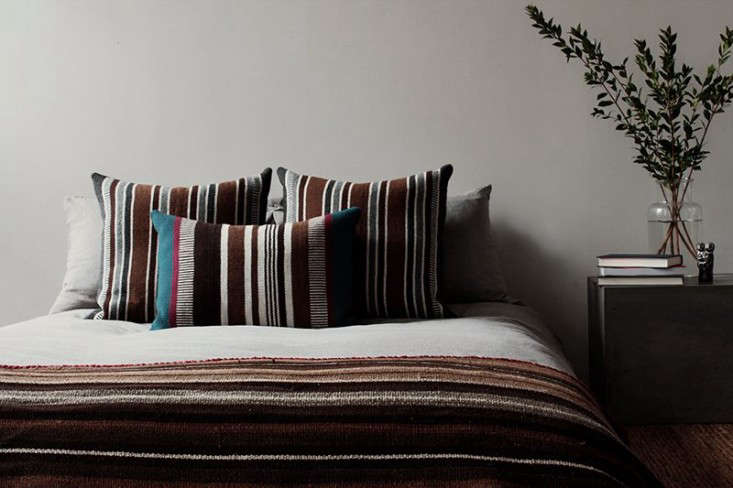
What connects them is a strong visual identity. These pillows are not shy. They use color blocking, stripes, woven texture, and handmade irregularity to create movement. A single pillow can become the accent piece in a room. A group of them can turn a plain sofa into a small festival, minus the street closures and questionable parking.
The Textile Roots: Aguayo, Frazada, and Andean Weaving
To understand Bolivian pillows, it helps to understand the textiles behind them. In the Andean region, weaving has long been more than a practical craft. Textiles can communicate community identity, status, geography, memory, and belief. Aymara and Quechua weaving traditions are especially important in Bolivia and neighboring Andean countries, where wool and camelid fibers have been used for clothing, carrying cloths, bags, blankets, and ceremonial garments.
Aguayo: Color With a Job to Do
An aguayo is a rectangular woven cloth traditionally used in Andean communities for carrying goods, wrapping bundles, and carrying babies on the back. It is practical, durable, and deeply recognizable thanks to its bands of color and symbolic patterns. In home decor, aguayo fabric is often turned into cushion covers, table runners, bags, and wall accents.
Aguayo-inspired pillows are loved for their color. Reds, greens, blues, yellows, pinks, blacks, and creams may appear in rhythmic arrangements that feel both ancient and surprisingly modern. Place one on a gray couch and suddenly the couch has opinions. Place three together and the room starts speaking fluent “collected, not decorated.”
Frazada: The Blanket That Became a Pillow
Frazadas are thick handwoven wool blankets associated with Andean highland life. They were traditionally made for warmth and everyday use, not just display. Because high-altitude regions can be cold, especially at night, a sturdy wool blanket was a household essential. When vintage frazadas are repurposed into pillows, they bring that same durable, substantial character into modern interiors.
Frazada pillows often feel heavier and more textured than standard cotton throw pillows. Their woven surfaces may show age, irregularity, fading, or repaired areas. These details are not flaws in the usual sense. They are part of the charm. A vintage textile pillow with a slightly uneven stripe is much more interesting than a perfectly printed cushion that looks like it was designed by a spreadsheet.
Why Bolivian Pillows Feel So Bold
The boldness of Bolivian pillows comes from more than bright color. It comes from contrast, repetition, structure, and texture. Many designs rely on stripes of different widths, creating a sense of movement. Others combine strong color fields with smaller decorative bands. The result is energetic without feeling random.
Color That Carries Meaning
In Andean textiles, color often carries cultural and symbolic meaning. Red may be associated with celebration, life, sacrifice, or important events. Green can suggest nature, fertility, and hope. Darker tones may add gravity, mystery, or balance. While modern buyers do not need to decode every shade like a secret map, knowing that color has deeper roots adds richness to the experience of living with these pieces.
From a design perspective, the colors also solve a common decorating problem: how to make a room feel alive without turning it into a circus tent. The trick is balance. A bold Bolivian pillow can sit beautifully against neutral linen, leather, wood, rattan, white walls, or charcoal upholstery. The pillow brings the spark; the surrounding materials keep the room from yelling.
Texture You Can Actually See
Many Bolivian pillows are made with wool, alpaca, llama, sheep wool, or blended fibers. These materials create a visible woven surface. Unlike printed pillows, where the design sits on top, woven pillows have pattern built into their structure. That means the design has depth. The fibers catch light differently. The surface changes slightly depending on the angle. It is decor with a pulse.
How to Style Bold Bolivian Pillows at Home
The easiest way to style bold Bolivian pillows is to let them be the star and make the rest of the room their supportive friend. They work especially well when paired with simple furniture, natural materials, and a controlled color palette.
On a Neutral Sofa
A beige, gray, cream, or white sofa is the perfect stage for Bolivian throw pillows. Choose one large square pillow as the main accent, then add a smaller lumbar pillow in a related color. For example, a red-and-indigo aguayo pillow can pair with a brown leather lumbar cushion or a cream wool pillow. The goal is contrast without chaos.
In a Bohemian Living Room
Bolivian pillows are natural friends of boho decor. Pair them with woven baskets, plants, vintage rugs, low wood tables, clay pottery, and layered throws. The key is to vary scale. If your rug already has a strong pattern, choose pillows with broader stripes. If your rug is simple, go for pillows with tighter woven details.
In a Modern Minimalist Space
Minimalist rooms can handle bold pillows beautifully because the rest of the space gives them room to breathe. A single Bolivian pillow on a clean-lined black, white, or tan chair can feel like art. It adds humanity to a space that might otherwise look like nobody is allowed to eat crackers there.
On the Bed
Bolivian pillows also work well in bedrooms. Use them as accent cushions in front of plain bedding. White linen, oatmeal cotton, deep navy, olive, or rust-colored bedding can all work depending on the pillow’s palette. A long lumbar pillow made from a vintage textile can create a boutique-hotel look without the boutique-hotel minibar prices.
How to Choose Authentic and High-Quality Bolivian Pillows
Because “global inspired” decor is everywhere, it is worth knowing what to look for when choosing Bolivian pillows. Authenticity does not always mean antique or expensive, but it does mean the piece should have a clear relationship to real textile traditions, honest materials, and responsible sourcing.
Check the Material
Look for wool, alpaca wool, llama fiber, sheep wool, cotton blends, or clearly described textile content. Frazada pillows are often wool and may feel thick or slightly coarse. Aguayo pillows may be wool, cotton, acrylic, or a blend depending on whether they are traditional, contemporary, or made for export.
Look for Handwoven Character
Handwoven pillows may show slight irregularities in stripe width, texture, or color. This is normal and often desirable. Perfect sameness can be a sign of machine production. Of course, “imperfect” should not mean poorly made. Seams should be secure, closures should function, and the pillow should hold its shape.
Ask About Origin and Sourcing
Good sellers usually describe where the textile comes from, whether it is newly woven or vintage, and whether artisans were paid fairly. If a pillow is made from a vintage Bolivian poncho or frazada, the seller should say so. If it is newly made by artisans, that should also be clear. Vague descriptions like “ethnic pattern pillow” are not always wrong, but they are not exactly winning the transparency Olympics.
Consider the Insert
A beautiful cover needs the right insert. For a full, designer look, choose an insert slightly larger than the cover. A 20-inch cover often looks better with a 22-inch insert. Down, feather, down-alternative, and wool inserts can all work. If allergies are a concern, hypoallergenic down-alternative is a practical choice.
Care Tips for Bolivian Wool and Textile Pillows
Many Bolivian pillows, especially those made from wool or vintage textiles, should be handled with care. Always check the seller’s instructions first. When in doubt, spot clean gently or use professional dry cleaning. Avoid aggressive washing, harsh detergents, bleach, and hot water. Wool does not appreciate drama.
Rotate pillows occasionally so one side does not receive all the sunlight or pressure. Keep them away from damp areas, and do not leave vintage wool pillows outdoors unless they are specifically designed for outdoor use. If you have pets, consider placing these pillows where claws and enthusiastic chewing are less likely. A Bolivian frazada pillow can survive highland cold, but your puppy named Biscuit may still be its greatest test.
Why They Work in Modern American Homes
Bold Bolivian pillows fit beautifully into American interiors because they offer something many homes are missing: warmth with a story. Modern furniture can sometimes feel too smooth, too new, or too predictable. A handwoven pillow adds texture, age, and cultural depth. It says the room was assembled over time, not purchased in one panicked Saturday afternoon.
They also support the broader trend toward meaningful home decor. Consumers increasingly want objects that feel personal, handmade, sustainable, vintage, or connected to real craft traditions. Bolivian pillows meet that desire without demanding a full design overhaul. They are small enough to be flexible and strong enough to change the mood of a space.
Best Rooms for Bold Bolivian Pillows
In the living room, they make sofas and accent chairs feel more layered. In the bedroom, they add warmth and color to simple bedding. In a home office, one bold pillow can soften a reading chair and make Zoom backgrounds look slightly less like a hostage situation. In an entry bench, they create a welcoming first impression. In a sunroom, they pair beautifully with plants, wood, clay, and woven shades.
The only room where caution is needed is the kitchen or dining area, where food stains lurk like tiny villains. If you use Bolivian textile pillows near food, choose darker colors or removable covers. Tomato sauce and vintage wool are not destined soulmates.
Design Pairings That Always Work
Bolivian pillows pair well with leather, especially cognac or dark brown. The warmth of leather complements the depth of wool and woven stripes. They also look excellent with rustic wood, white plaster, black metal, cane, rattan, jute, and linen. For rugs, try flatweaves, natural fiber rugs, or simple vintage rugs that do not compete too aggressively.
For wall color, warm whites, clay tones, sand, charcoal, olive, and deep blue make strong partners. If your pillow has red or pink accents, let those colors appear once elsewhere in the room, perhaps in art, flowers, or a small ceramic piece. Repetition creates intention. Without it, the pillow may look like it wandered in from another apartment and is too polite to leave.
Common Mistakes to Avoid
The first mistake is using too many bold patterns at the same scale. If every pillow has tiny stripes, every rug has tiny diamonds, and every throw has tiny zigzags, the room can feel busy. Mix large-scale patterns with small-scale ones. Give the eye a place to rest.
The second mistake is ignoring texture. A Bolivian pillow looks better when surrounded by contrasting surfaces. Pair thick wool with smooth leather, soft linen, polished wood, or matte ceramics. Texture contrast makes the pillow feel intentional.
The third mistake is buying purely for color without considering size. A large square pillow can anchor a sofa. A lumbar pillow can break up a row of squares. A small accent pillow can work on a chair but may look lonely on a king-size bed. Size matters, even in pillow politics.
Experiences Related to Bold Bolivian Pillows
Living with bold Bolivian pillows is a different experience from living with ordinary decorative cushions. Standard pillows often disappear into the background. They do their job, behave themselves, and rarely start conversations. Bolivian pillows, on the other hand, tend to become the object people notice first. A guest sits down, pauses, touches the woven surface, and asks, “Where did you find this?” Suddenly, your sofa has become a cultural ambassador with excellent posture.
The experience begins with the visual shift. A room that once felt flat can feel collected almost instantly. Imagine a plain cream sofa against a white wall. Nice, clean, respectableand perhaps one step away from looking like a furniture showroom where nobody has ever laughed. Add two bold Bolivian pillows with stripes of crimson, indigo, gold, and charcoal, and the room changes. The sofa now has rhythm. The colors pull warmth from the floor, echo the wood tones in the coffee table, and make the whole space feel more awake.
There is also a tactile experience. Many Bolivian textile pillows have a firmer, more substantial feel than soft printed cotton cushions. The woven wool may be slightly rugged, which is part of its appeal. You do not buy these pillows because they feel like marshmallows. You buy them because they feel real. They have grain, weight, and surface. They remind you that fabric can be built, not just printed.
For people who enjoy decorating slowly, bold Bolivian pillows are satisfying because they mix well with pieces gathered over time. They do not demand a perfect matching set. In fact, they often look best when nothing matches too perfectly. A vintage wood chair, a travel photograph, a handmade bowl, a stack of books, and one Bolivian pillow can create a corner that feels personal rather than staged.
Another experience is seasonal flexibility. In winter, these pillows feel cozy and grounded, especially when paired with wool throws and warm lighting. In summer, they can still work if balanced with white cotton, pale linen, and natural textures. Their color brings energy without requiring heavy decor. You can move them from sofa to bed, from bench to reading chair, and each time they create a slightly different mood.
Perhaps the best experience is the quiet reminder that home decor can carry a story. A bold Bolivian pillow is not just a square object placed behind your back. It can be a piece of textile heritage, a fragment of skilled weaving, a nod to highland landscapes, and a celebration of color in a world that too often defaults to gray. It is comfort, craft, and character in one compact package. Not bad for something that also supports your lower back during movie night.
Conclusion
Bold Bolivian pillows are more than colorful home accents. They are expressive pieces of artisan decor rooted in Andean textile traditions, from aguayo cloth to wool frazadas and vintage woven garments. Their strength lies in the combination of color, craftsmanship, texture, and story. They can revive a neutral room, add soul to modern furniture, and create a layered interior that feels warm, worldly, and lived-in.
Whether you choose a bright aguayo cushion, a heavy wool frazada pillow, or a one-of-a-kind vintage textile piece, the goal is not to make your home look like everyone else’s. The goal is to make it feel more alive. And if a pillow can do that while looking fabulous on a couch, frankly, it deserves the good spot.