Note: This original article synthesizes public information from McDonald’s official menu details, company statements, food-safety context, fact-checking coverage, and U.S. consumer reporting. Source links are intentionally omitted for clean web publishing.
The McRib has always been less of a sandwich and more of a seasonal weather event. It disappears, people complain, it returns, people cheer, and then someone on the internet inevitably asks, “Wait, what exactly am I eating?” That question roared back into the spotlight after a viral video from inside a McDonald’s kitchen showed how the iconic McRib is prepared. The clip gave viewers a behind-the-counter look at the sandwich’s journey from pork patty to sauce-covered cult objectand, as the internet likes to do, it reacted with the calm measured restraint of a raccoon discovering a locked trash can.
Some viewers were fascinated. Others were grossed out. A few probably ordered one immediately, because curiosity is a powerful condiment. The controversy was not simply about the McRib itself, but about what happens when fast food preparation becomes visible. We love convenience, consistency, and barbecue sauce. We are less enthusiastic when the machinery behind that convenience looks, well, like a fast food kitchen during a rush.
What the Viral McRib Video Appears to Show
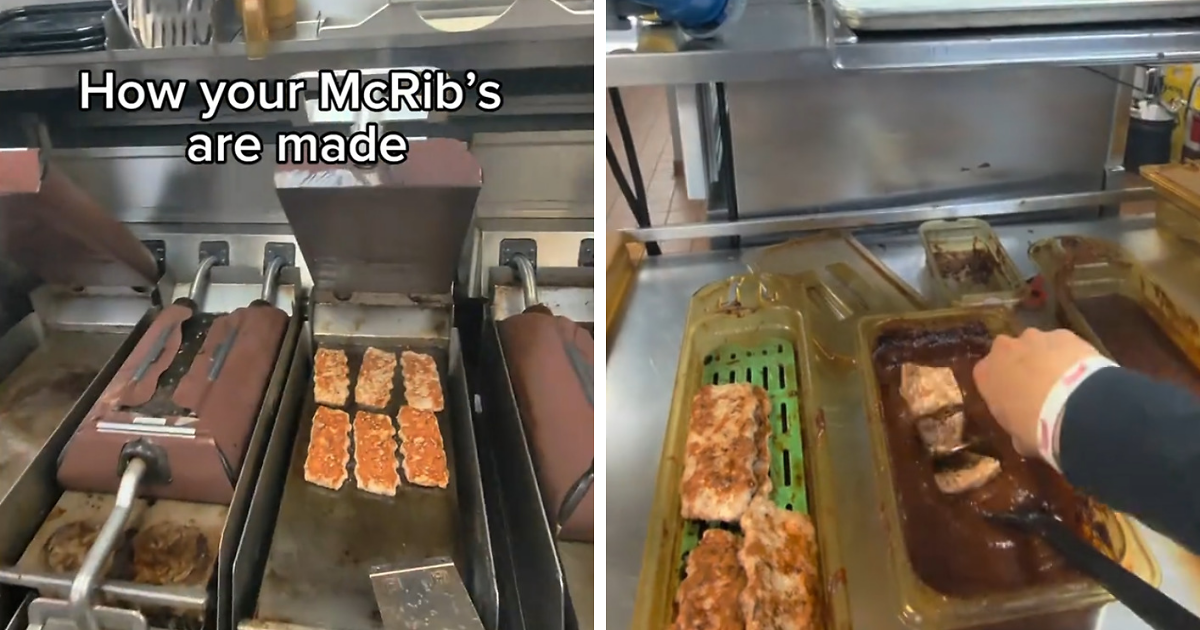
The viral McDonald’s kitchen video reportedly shows an employee preparing McRib patties in a restaurant setting. The patties appear to be cooked or heated, moved to a tray, coated in McRib barbecue sauce, allowed to sit or drain, and then later assembled on a toasted bun with slivered onions and pickles. In other words, the basic process lines up with what McDonald’s publicly says the McRib is: seasoned boneless pork dipped in tangy BBQ sauce, topped with onions and pickles, and served on a toasted homestyle bun.
But the internet was not clutching its pearls because onions were involved. The reaction centered on the visual side of the video: frozen-looking patties, sauce containers, kitchen trays, grills, and the general industrial reality of fast food production. Many people know, intellectually, that fast food is made in batches, held for speed, and assembled according to standardized procedures. Seeing it happen on camera is different. It turns the magic trick around and shows the trapdoor.
That is where the “not happy” part comes in. Some commenters questioned cleanliness. Others said the McRib looked less appetizing before its glossy barbecue transformation. A few focused on the patty’s shape, arguing that the rib-like appearance makes it feel more mysterious than a standard burger patty. The video did not prove that the sandwich is unsafe, but it did something almost as powerful online: it made people feel unsure.
What Is Actually in a McRib?
According to McDonald’s own product description, the McRib starts with seasoned boneless pork. It is dipped in barbecue sauce, topped with slivered onions and pickles, and served on a toasted homestyle bun. The sandwich is famous for its pork patty shaped to resemble a small rack of ribs, even though it does not contain bones. That design choice is part branding, part engineering, and part “because a round pork patty would not have become a national personality.”
The McRib is also listed at 520 calories in McDonald’s U.S. nutrition information. Like many fast food items, it is not trying to be a spa retreat on bread. It is salty, sweet, tangy, smoky, soft, crunchy, messy, and intensely engineered for craveability. The sauce does a lot of heavy lifting, and McDonald’s knows it. In 2024, the company even promoted a limited-edition half-gallon jug of McRib sauce, proving that for some fans the sandwich is basically a barbecue sauce delivery vehicle with architecture.
Why the McRib Looks So Different Behind the Scenes
Fast food is designed for speed and consistency, not glamour photography. A McRib patty sitting in a restaurant prep area will never look like the final sandwich in a promotional image. Neither will a burger patty, a chicken filet, or a tray of fries before the salt and packaging do their little Broadway number. This does not automatically mean something is wrong. It means restaurant food often has an awkward middle stage.
The McRib is especially vulnerable to this kind of reaction because its identity depends so heavily on transformation. Before the barbecue sauce, onions, pickles, and bun, the patty can look plain and processed. After assembly, it becomes the messy seasonal sandwich people chase across town. The viral video collapsed those two versions into one uncomfortable moment. It is the culinary equivalent of seeing your favorite superhero in sweatpants before the cape goes on.
The McRib’s Cult Status Makes Every Reveal Bigger
Part of the reason this video spread so quickly is that the McRib is not a normal menu item. It has scarcity built into its personality. McDonald’s has repeatedly brought it back for limited runs, often in the fall or holiday season, creating a cycle of anticipation. Fans track its return, post about it, debate it, and occasionally treat it like a rare comet made of pork and sauce.
McDonald’s has leaned into that reputation for years. The company has described the McRib as more than a sandwicha cultural moment, a limited-time event, and a fan favorite. That strategy works because scarcity creates urgency. When people think something might disappear again, they are more likely to buy it, talk about it, and defend it like it has a tiny barbecue-flavored flag.
But scarcity also creates scrutiny. When a product becomes legendary, customers expect the story to match the experience. A behind-the-scenes video can puncture the myth. Suddenly, the McRib is not a seasonal legend. It is a patty on a grill, sauce in a container, pickles in a bin, and a worker moving quickly during a shift.
Why Some Viewers Were Uncomfortable
The strongest reactions to the video were emotional, not technical. Viewers saw industrial food prep and interpreted it through their own expectations. Some people expect fast food kitchens to look spotless at every second, even during active service. Others understand that a working kitchen can look busy, greasy, and imperfect without necessarily being unsafe. The problem is that short viral videos rarely provide enough context to tell the difference.
A tray may look stained because it has been used heavily. A grill may look messy because it is actively cooking food. Sauce may look unappealing in bulk but delicious on a sandwich. None of that proves a food-safety violation by itself. At the same time, customers are allowed to care about what they see. If a video makes people question hygiene, freshness, or handling practices, the brand has a trust issue to manage, whether or not the clip shows an actual problem.
This is the risk of radical visibility. The internet wants transparency, but transparency often looks less polished than marketing. A commercial gives you steam, shine, and a perfect sauce drip. A kitchen video gives you tongs, timers, trays, and fluorescent lightingthe least romantic lighting known to humankind.
The “No Rib Meat” Debate Adds Fuel to the Fire
The viral video also landed in a broader conversation about what consumers expect from the McRib. In recent public debate, critics and legal complaints have questioned whether the name and shape of the sandwich lead customers to assume it contains actual pork rib meat. McDonald’s has maintained that the McRib is made with 100% pork and has rejected allegations that it contains certain lower-grade organ meats claimed by critics.
This distinction matters. The McRib is a rib-shaped boneless pork sandwich, not a rack of ribs pulled from a smoker in Kansas City and tucked lovingly into a bun by a pitmaster named Earl. For many customers, that is not news. For others, the name “McRib” creates an expectation that may not match the product. The controversy is less about whether the sandwich has bonesit clearly does notand more about how much consumers think a product name should reveal.
Food branding often plays in the space between literal description and appetite appeal. “Chicken nuggets” are not tiny golden chickens. “Fish sticks” are not sticks from fish trees. But when a product uses the word “rib” and has a rib-like shape, some consumers naturally wonder where marketing ends and misunderstanding begins.
Fast Food Prep Is Built for Consistency, Not Romance
One reason McDonald’s became a global fast food giant is consistency. Customers expect a familiar taste whether they order in Ohio, Texas, Florida, or California. That consistency requires strict procedures, standardized ingredients, holding systems, cooking times, packaging rules, and employee training. It also means the food is not prepared like a backyard barbecue where someone spends six hours tending smoke and telling stories about their secret rub.
The McRib’s preparation reflects that system. Patties are cooked or heated according to restaurant procedures, coated in sauce, and assembled quickly when ordered. The final product is meant to taste familiar every time. That is the bargain of fast food: less handmade romance, more repeatable satisfaction. You are not buying mystery; you are buying predictability with extra sauce.
Still, customers increasingly want both convenience and transparency. They want fast food that is quick, affordable, tasty, and made in a way that feels clean and understandable. That is a difficult balance for any large chain. The more people see behind the counter, the more they realize that mass production is not always visually charming.
Why the McRib Keeps Coming Back Anyway
Despite recurring criticism, the McRib continues to return because it does something few fast food products can do: it creates conversation. People who love it talk about loving it. People who dislike it talk about disliking it. People who have never tried it talk about whether they should. That is marketing gold with barbecue sauce on its shirt.
The sandwich has nostalgia, scarcity, and controversy all working together. Its flavor profile is simple but effective: sweet and tangy sauce, savory pork, sharp onions, sour pickles, and a soft bun. It hits familiar American barbecue notes without requiring a smoker, a picnic table, or a relative arguing about charcoal.
The viral video may have turned some viewers away, but it also reminded everyone that the McRib exists. In the attention economy, outrage and appetite sometimes sit at the same table. A person may comment, “That looks disgusting,” and then spend the next twenty minutes thinking about barbecue sauce. The human brain is not always a well-managed restaurant.
What This Says About Modern Food Transparency
The McRib video is part of a larger trend: customers want to know more about what they eat, but they often react strongly when they see the unfiltered reality. Food manufacturing, restaurant prep, and supply chains are rarely pretty. Even high-quality food can look strange in bulk. Raw dough, marinated meat, sauce vats, frozen patties, and prep containers are normal parts of the food world, but they do not always inspire confidence on TikTok.
Brands now operate in a world where any employee, customer, or passerby can turn a private process into public content. That can be good when it shows care, cleanliness, and craft. It can be damaging when a clip appears messy, rushed, or confusing. The challenge for chains like McDonald’s is not only to maintain food safety standards, but to communicate them clearly before a 20-second video writes the story for them.
Should You Still Eat the McRib?
That depends on what bothered you. If the video made you realize you prefer less processed food, that is a fair personal choice. If you expected actual rib meat and now feel misled, you may decide the sandwich is not for you. If you already knew the McRib was a boneless pork patty covered in sauce and still enjoy it, the video may not change anything.
The most reasonable takeaway is not panic. It is awareness. The McRib is a limited-time fast food sandwich made for flavor, speed, and consistency. It is not a craft barbecue plate. It is not pretending to be health food. It is a saucy seasonal product with a loyal fan base and a talent for starting arguments.
For customers, the best approach is simple: read ingredient and nutrition information when it matters to you, pay attention to local restaurant cleanliness, and make your own decision. For McDonald’s, the lesson is equally clear: behind-the-scenes content can shape public trust faster than any polished ad campaign.
Experience-Based Reflections: Why This McRib Moment Feels So Familiar
Anyone who has worked in or even closely observed a busy quick-service restaurant knows there is a difference between “unsafe” and “not camera-ready.” Lunch rush is controlled chaos. Timers beep. Gloves change. Trays move. Sauces spill. Crew members repeat the same motions hundreds of times. A kitchen can be following procedures and still look intense to someone who has only seen the final sandwich in a wrapped box.
That is why the McRib video hits such a nerve. It reminds people that fast food is not created by menu-board magic. It is assembled by workers under pressure, often in small spaces, with hot equipment and constant demand. A customer sees a sandwich. An employee sees inventory, prep timing, holding rules, order screens, cleaning schedules, and a line of cars wrapping around the building like a hungry snake.
From a consumer experience perspective, the McRib is also unusually personal. People do not talk about it like they talk about a basic cheeseburger. They remember when they first tried it. They compare this year’s version to last year’s. They joke about its return as if an old friend has wandered back into town wearing barbecue cologne. That emotional attachment makes disappointment sharper. When a behind-the-scenes video looks less appetizing than expected, fans may feel like the sandwich betrayed the legend.
There is also a lesson here for content creators and restaurants. Short videos are powerful, but they are not complete explanations. A clip may show one stage of preparation without showing cleaning procedures, temperature controls, food-safety checks, or the full timing of service. Viewers fill in the gaps with assumptions. Sometimes those assumptions are reasonable. Sometimes they are dramatic enough to deserve their own reality show.
For publishers, the best way to cover viral food videos is to avoid turning every kitchen clip into a scandal. The stronger angle is analysis: what did the video show, what did it not show, what does the company say, what do customers expect, and why did the reaction become so emotional? That approach respects readers instead of simply throwing them into the outrage fryer.
For customers, the McRib situation is a reminder to balance curiosity with context. If a local restaurant looks dirty, that matters. If a product’s marketing seems confusing, that matters too. But if the shock comes mainly from seeing bulk sauce, frozen patties, or a fast-moving prep station, it may be worth remembering that most restaurant food has an awkward backstage phase. Even a fancy dinner has prep containers somewhere. The difference is that nobody is usually filming them with dramatic music.
For McDonald’s, the experience points to a bigger branding challenge. The company has spent decades making food feel familiar, fun, and convenient. Now customers also want openness. They want to know what is in the food, how it is handled, and whether the name matches the reality. The McRib can survive jokeshonestly, jokes may be part of its natural habitatbut trust requires clarity.
In the end, the viral McRib kitchen video did not kill the sandwich. It probably made the McRib even more famous. Some people will avoid it. Some will defend it. Some will buy one just to see what the fuss is about. That is the strange genius of the McRib: whether people are hungry, horrified, nostalgic, or simply nosy, they keep talking about it. And in fast food culture, being talked about is almost as valuable as being lovedespecially when barbecue sauce is involved.
Conclusion
The viral McDonald’s kitchen video revealed something simple but powerful: people want transparency, but they also want their food fantasies left slightly intact. The McRib is a seasoned boneless pork sandwich with barbecue sauce, onions, and pickles. Its preparation may look industrial because it is part of a massive fast food system built around speed and consistency. That does not automatically mean the sandwich is unsafe, but it does explain why some viewers reacted negatively.
The bigger story is not just how the McRib is made. It is how modern consumers respond when iconic foods are stripped of their marketing glow. The McRib remains a limited-time legend, a messy comfort food, a branding masterclass, and a recurring internet argument. Love it or side-eye it from across the parking lot, the sandwich still knows how to command attention.